It’s a Bird, It’s a Plane….

A headline on the front page of yesterday’s newspaper caught my eye. (“Polk” refers to the county where we live.)

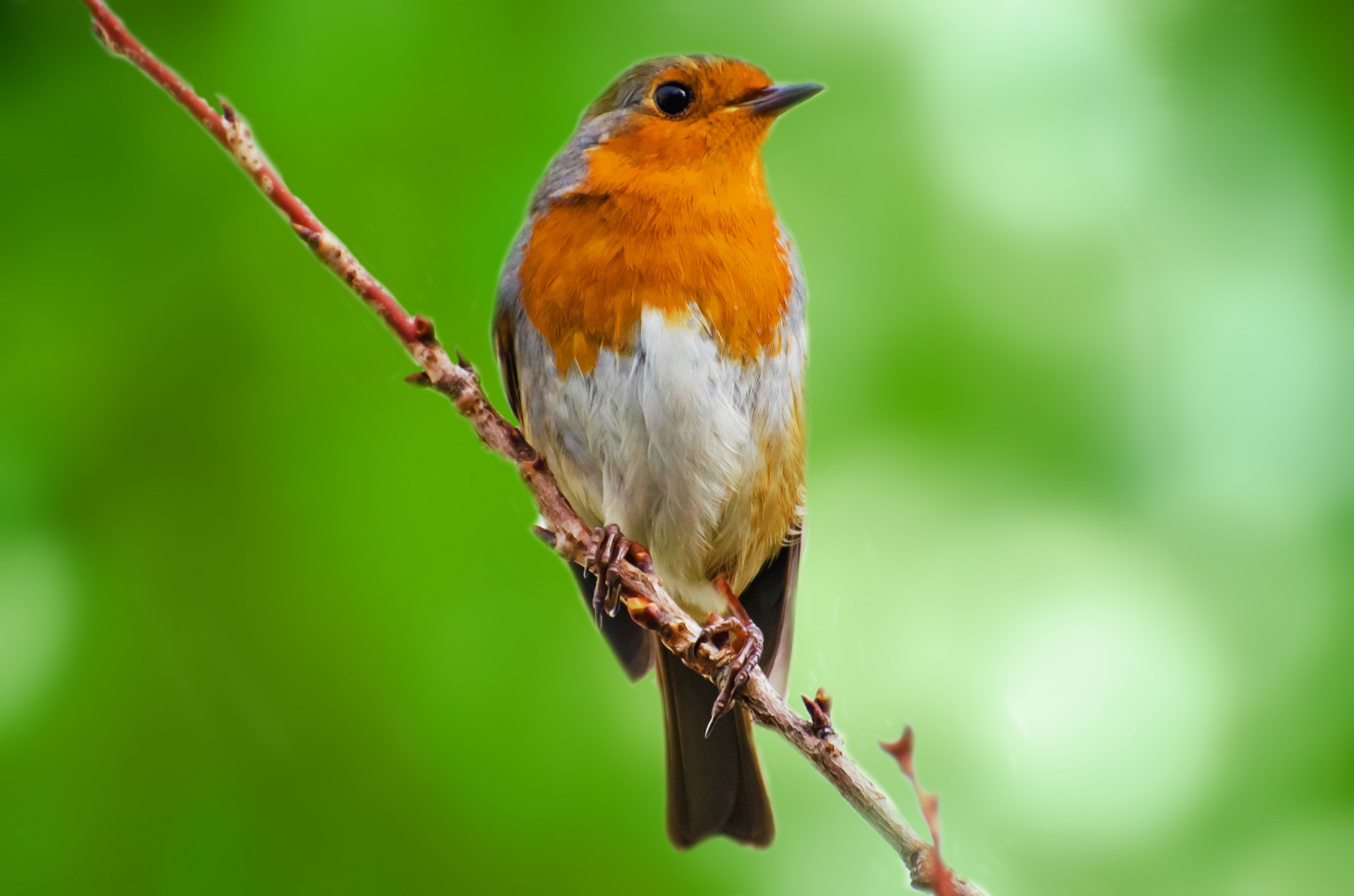
Duke Energy Making Polk Lines More Avian Friendly

Why “avian friendly”? What’s wrong with “bird friendly”?

Here’s the likely explanation: Somebody on the newspaper staff had an English teacher who liked fancy words. The truth, though, is that pompous words don’t impress anyone. If you want to be a good writer, don’t try to cram as many big words as possible into your sentences. Your first goal should be to have something interesting to say.

A couple of hours after I read about the avian friendly electrical lines, I happened to visit the newspaper’s website. I found this improved version of the headline there:

Duke Energy Moves to Keep Birds on Wires Fireproof

It’s still clumsy, but at least it’s talking about birds.

Here’s how I would have written that headline: 

Duke Energy Making Polk Electric Lines Safer for Birds

This is a good opportunity to remind you about a neurological principle that’s solid gold can for writers: There’s an ongoing movie track inside our heads. Good writers exploit this principle by providing a steady steam of pictures for their readers. 

Let me give you two examples of what I’m talking about. Take a look at this sentence:

John and Mary planted annuals near the front door.

It’s a fine sentence. But if you change “the” to “their,” it becomes a better sentence because your brain sees John and Mary twice, rather than once:

John and Mary planted annuals near their front door.

I use this “create a picture” principle all the time. Let’s take another look at the first sentence in my post for today:

A headline on the front page of yesterday’s newspaper caught my eye. 

My sentence includes four items that you can see: headlinefront page, newspaper, eyeGood writers are always looking for words with eye appeal. Is that something you strive to do? If not, it’s a good habit for you to start developing right away.

bird-public-domain-pictures-net


Share

“Presentize”?

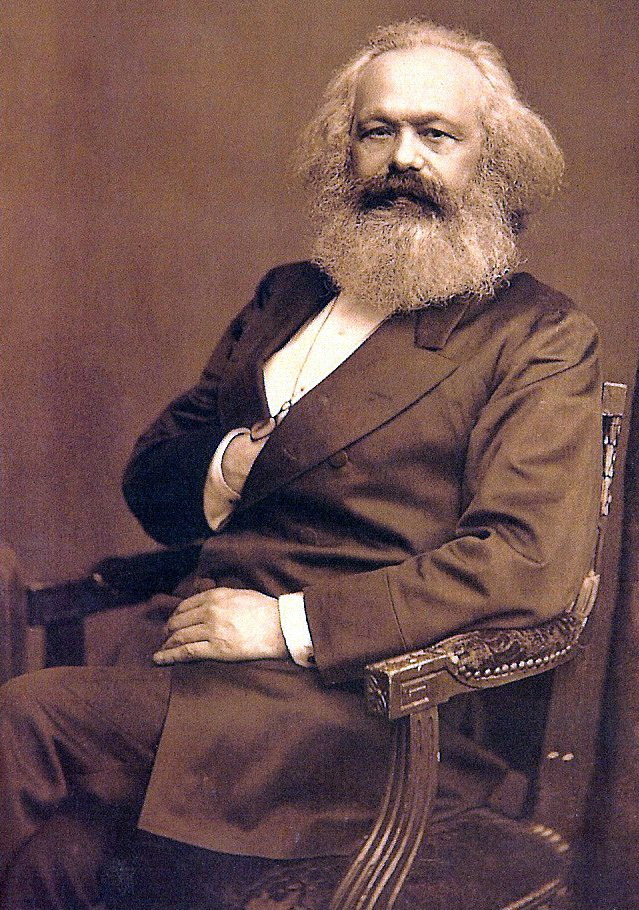
Years ago when I was writing my book about Bernard Shaw, I knew I was facing a daunting task. But there was one thought that gave me solace: I didn’t have to study Karl Marx.

Although Marx’s writings were once a huge influence on Shaw’s economic and political thinking, they became less important as Shaw grew older…or so the scholars thought. Huge sigh of relief from Jean.

And then, unexpectedly, I found out that the opposite was true – a story for another day. (Preview: The starting point of the story was that James Hillman was getting over a bout with the flu. I am not making this up.)

What I discovered was that Marx had a huge effect on the way we think about language. Jacques Derrida was an avid Marxist, for example. Yes – alas – I ended up studying Karl Marx. 

All of which explains why I made a point of reading an article about Marx in a recent New Yorker magazine: “Karl Marx, Yesterday and Today.”

The author, Louis Menand, specializes in language and writing, making him one of my favorite New Yorker writers. So I was astonished when I read Menand’s comment about historians who try to read Marx in the context of his own era:

The mission is worthy. Historicizing—correcting for the tendency to presentize the past—is what scholars do.

Presentize? Really, Louis?

Talk about a made-up word! If you Google presentize, you come up with…nothing. How did presentize end up in the New Yorker?

And yet…it works. Menand’s sentence has an elegant balance between historicize (an accepted word) and presentize.

(Historicize, incidentally, means “to interpret something as a product of historical development,” “to make historical,” or “to narrate as history.”)

Allow me a moment to explain why presentize shocked me so much. New words tend to have a slangy or jargonish feel, and it’s a good idea to avoid them when you’re writing for publication.

Invented words ending in –ize are a particular problem. Here’s an example I made up myself: Someone writing about cooking might be tempted to include batterize (meaning “dip in batter”) in a recipe for fried chicken. (I just Googled batterize. Mercifully no one seems to have tried to use it as a cooking term.)

So: Was it ok for Menand to coin the word presentize? Here’s the thing: After you’ve built a reputation (as Menand has done), you’re allowed to run a red light now and then.

I’m trying it myself in my latest piece about Shaw – not coining new words, but trying to inject some energy into the steady and impersonal tone you usually hear in scholarly writing. I’m not sure how well it will work, and I may end up throwing away the whole thing. But geez – it’s fun to try it!

Karl Marx

                       Karl Marx


Share

Are Long Sentences Better?

Like many states, Florida is gradually moving toward decriminalizing marijuana use. Last week the commissioners in a nearby town were thinking about softening the penalties for possession of small amounts of pot. Here’s the opening sentence from a November 11 newspaper article about the controversy:

LAKELAND — The City Commission chose not to buck the advice of municipal, county and state law enforcement officials by pursuing an ordinance to reduce the penalties for Lakeland Police Department’s enforcement of minor marijuana possession.

I was befuddled when I read that sentence, and I don’t think it was entirely my fault. The journalist who wrote it chose to cram everything into one sentence instead of recounting the events step-by-step. Result: confusion.

If you rewrite the information as an unfolding narrative (story), the information becomes clear right away:

LAKELAND – There’s a growing feeling that Lakeland Police Department’s penalties for minor marijuana possession are too severe. But when the City Commission started considering an ordinance that would reduce penalties, law enforcement officials from the city, county and state pushed back. In the end, the City Commission voted down the ordinance.

You probably noticed that I ended up with three sentences instead of one. Breaking a complicated sentence into several smaller ones is my favorite way to solve a writing problem. Strangely, though, I don’t often come across that advice in books about writing. (Naked, Drunk and Writing is a notable exception.)

I suspect that many writing instructors are members of the “long sentences are good” club – and that’s unfortunate. When I conduct writing workshops, I often find that writers are afraid of simplicity and clarity. They may not remember how to use a comma or apostrophe, but they continue to cling to the complicated sentence patterns their instructors preferred.

Here’s a common-sense principle for you: Long sentences with lots of commas don’t make you look smart. If you want to impress readers, work on your thinking skills. Read.  Join a writing group, or find a writing buddy. Master the usage principles that writers tend to overlook (parallel construction, clear pronoun references, and so on).

Most important, don’t confuse complicated writing with good writing. They’re not the same thing!

marijuana_plant_03

Share

Finding an Energy Source

The Shaw paper I’ve been working on has been stalled for several weeks. Much of the energy I normally use for writing has been diverted into the presidential election. Ever since the political conventions this summer I’ve been volunteering for the Get Out the Vote effort, and I’m feeling more urgency as Election Day approaches.

It’s not just that I get tired walking from house to house in Florida’s heat. Canvassing requires digging deeply into my reserves of psychic energy. I’m a strong introvert, and talking to strangers isn’t easy for someone like me.

Whatever energy I have left over has been invested in (of course) dancing. Saturday morning I took a folk dance class before I headed out to knock on doors for my candidate.

Two things that happened have stuck in my head, and it finally occurred to me that they have something in common – something that can perhaps be applied to writing.

The folk dancing I’m learning is a stylized form often used in classical ballet. (The technical term is “character dancing.”)  There are three adults in the class and ten children.

Usually we adults have a hard time with the class because so many steps require jumping or hopping. But on Saturday the kids were struggling too, and the teacher was trying hard to help them with a tricky pattern.

And then – unexpectedly – she started grinning and talking about a friend of hers who trained horses. Watching the children today, she said, she suddenly realized they were colts!

And then it was okay that they were struggling. They’re supposed to. They’re colts, for heaven’s sake. (The teacher had the grace not to say that we adults were old nags!)

Here’s the point, though: She was making meaning by combining two dissimilar things – something that writers do all the time. That kind of connection is the basis for allegory and metaphor, but that’s not what I want to talk about today.

What interests me right now is energy. When those colts found their way into the ballet studio Saturday morning, the energy level changed. Suddenly it was ok to be young and awkward, with your limbs going every which way.

I started thinking about energy again while I was canvassing. Several children – maybe six or seven years old – were playing in front of an apartment building when I walked up with my clipboard and campaign button. They were wildly excited when they found out which candidate I was representing.

Suddenly I wasn’t tired any more, and the Florida heat didn’t matter. It was fun to be treated like a celebrity, but there was more. That enthusiasm had to be coming from somewhere. This election was really important to those children’s parents and grandparents, and the entire building was buzzing.

Back to writing. It requires high levels of energy, but most people have never been taught that simple truth. I know so many people who would love to write a memoir, a short story, a poem – even a letter to the editor – but they can’t find a way to rev up that writing engine. Sadly, many of them eventually get tired of struggling with that inertia and simply give up.

Experienced writers, on the other hand, know that there are many ways to crank up that energy: talking, drawing, reading, taking notes, visualizing the finished project.

And maybe sometimes – as long as it doesn’t become a habit! – we need to give ourselves a break.

Tomorrow is Election Day. Starting Wednesday, I’ll be coming back to my Shaw project. That’s a promise.

Vote


Share

First Aid for Students Doing Research Papers

It’s crunch time! This month many students are writing research papers. If you know a student who could use some help, consider sharing these tips for student researchers. You can find more resources at www.ResearchPaperSteps.com.

Ten Tips for Successful Research Papers

  1. Before you begin, review the directions from your instructor.
  2. Start working on your research paper well before the due date.
  3. Ask a librarian for research suggestions (and write them down!).
  4. Plan your research paper carefully.
  5. Select a keyword that’s central to the point you’re making.
  6. Build your research paper around the keyword you selected.
  7. Take advantage of your instructor’s email, office phone, or office hours when you need help.
  8. Use your computer’s spellchecker and grammar checker.
  9. Use the free tutoring and other services offered by your school or college.
  10. Before submitting your research paper, ask a friend or family member to read it and give you feedback.

A+ grade ok


Share

Happy Hallowe’en!

Why is the apostrophe there?

The answer is that I like it. The original name for Hallowe’en was the Eve of All Hallows, so it used to have a “v”: Hallows Even (think “evening”). When the “v” disappeared, an apostrophe was substituted (the same thing we do when we contract did not into didn’t).

“Hallow” is an old word for “holy” that you can still hear in the Lord’s Prayer: “Hallowed be thy name.”

I often hear “hallow” pronounced like the word “hollow.” But if you know the history of this holiday, you’ll be careful with that a: Hallowe’en.

Here’s a brief account of how Hallowe’en got started. The Christian calendar designates November 1 as All Saints Day. Churches hold special celebrations to honor all the holy people who lived in earlier times.

Christians used to believe that on the evening of All Saints Day (October 31), the spirits of the dead came back to Earth. Those who were not-so-holy used their visiting time for pranks. Hence it became an ideal time for unruly adolescents to create all kinds of mischief: Any resulting damage could be blamed on the dead.

Over time, All Hallows’ Eve evolved into Hallowe’en. Or Halloween, minus the apostrophe.

Both are correct. I often use the apostrophe because I like the idea that our language still has hints of its history embedded in the spelling of some of our words.

But here’s the thing: If I were writing professionally, I would probably omit the apostrophe so that I’d be consistent with what other contemporary writers are doing.

English usage isn’t as cut-and-dried as many people think it is. Sometimes we’re allowed to make choices. I think it’s important for writers to be able to explain the reasons for their choices (as I just did).

Happy Hallowe’en! I hope you’ll have fun today.

halloween-flickr


Share

Omit Needless Words

What popped into your head when you read the title of today’s post? If “Strunk and White” wasn’t your answer, you have some serious reading to do.

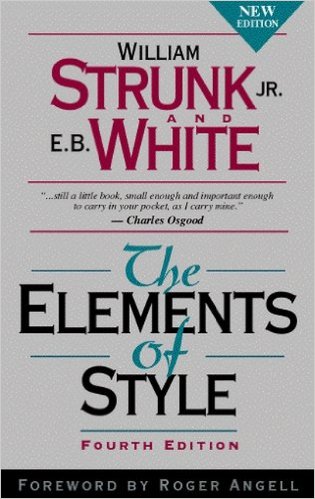
“Omit needless words” is one of the writing rules included in The Elements of Style, a classic writing guide by William Strunk, Jr. and E. B. White. (Strunk was the original author; after his death, White made some revisions and updates.)

Although I have a couple of quibbles with the writing advice, I continue to venerate The Elements of Style as the best book on writing ever written. Most writers do. You can find it in any library – but what you really need to do is purchase your own copy and reread it until you’ve memorized its content. (My copy is only 85 pages long. This is doable.) If you’re as broke as I was when I decided I wanted to be a writer, the full text of Strunk’s original 1918 version is available online at Bartleby.com.

I started thinking about the injunction to “Omit needless words” while I was reading a first-person essay by an Ethiopian refugee that was published in the New York Times Magazine this June. The author, Sehba Sarwar, used to work as a medical interpreter in Houston. The essay recounts a humorous conversation she had with a patient who was experiencing difficulty with an – um – intimate part of his body.

When Strunk and White urged writers to “Omit needless words!” they were thinking about expressions like “the reason why is that” (you should substitute “because”) and “used for fuel purposes” (you should substitute “fuel”). But I thought about another application for their useful advice. Here’s an excerpt from the beginning of Sarwar’s essay:

A local doctor, Dr. R., was on the line. “I need a favor,” he said. “I have this Amharic-­speaking gentleman. He has limited English. Can you come now to help with interpretation?” I told Dr. R. that I could be free in 30 minutes. When I was sure my client understood what she had to do, I let her go and walked to his office three buildings away.

A couple of those details – she was seeing another client, Dr. R’s office was three buildings away – have nothing to do with the story. Why slow down the tale by mentioning them? And there’s another problem: She’s setting up the expectation that the time and distance elements somehow affected her story. They didn’t, and readers are apt to be confused (I was, anyway) that they’re not mentioned again.

I often read personal essays that make the same mistake. Here’s how writing (good writing) works: Every detail helps create the effect you’re working for. It’s sort of like constructing a building, brick by brick. If the detail doesn’t help you communicate your message, delete it.

I should add a caveat here. When you start writing your piece, you should include everything, for two reasons. First, you don’t know what will turn out to be important later. Second, you shouldn’t block the flow of ideas by editing prematurely.

But when you’re working on your final draft, be sure to heed that useful advice from Strunk and White: “Omit needless words.”

51q3typgjnl-_sx313_bo1204203200_


Share

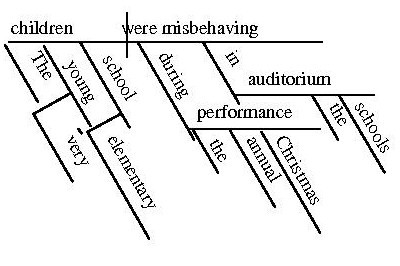
Is Sentence Diagramming Helpful?

Marilyn vos Savant is reportedly the smartest person in the world – but she doesn’t know a lot about writing. In one of her columns she advocated studying grammar (especially diagramming sentences) in order to “express yourself clearly and well.”

Sounds like common sense, doesn’t it? But problems abound.

Not everyone agrees about what constitutes the rules of grammar. I’m careful to use possessives with gerundives, for example – but many professional writers don’t bother with that rule any more. The same goes for misplaced modifiers, indefinite pronoun references, and errors with parallel construction. Many professional writers occasionally sacrifice grammatical correctness in order to make a sentence sound more natural. (I do it myself.)

Marilyn vos Savant does make a good point about pronouns: “Misplacing even one pronoun can totally confuse a listener.” Yes! Yes! But you don’t have to spend hours diagramming sentences. What you need to do is a) learn how to recognize pronouns and b) make a habit of slowing down to double-check them.

Here are some pointers. Any writer can easily master these principles in far less time than it takes to learn how to @#$%&! diagram sentences.

1. Learn how to recognize common pronouns: he, him, she, her, it, we, us, they, them, this, that. These are the pronouns most likely to cause problems.

2. Double-check pronouns during the editing step. Pronouns are so common that we tend to skip over them.

3. Always follow this and that with a noun (a person, place, or thing). This handy rule automatically eliminates most indefinite pronoun reference errors. (I wish I could remember who taught me to do this. That person deserves canonization, in my opinion.)

Main Street was closed for an emergency this morning. That’s why I was late for work. INDEFINITE PRONOUN REFERENCE 

Main Street was closed for an emergency this morning. That problem caused me to be late for work.  CORRECT

You don’t have to be fussy about this rule in conversation and informal writing. But you should be careful any time you’re writing for publication.

4. Don’t use he/him if there are two males in a sentence. (The same principle applies to using she/her when there are two females.)

John and Sam spent Saturday morning getting his house ready for cold weather. [whose house?]  CONFUSING

John spent Saturday morning helping Sam get his house ready for cold weather.  BETTER

OR 

Sam spent Saturday morning helping John get his house ready for cold weather. BETTER

Bottom line: There’s a lot to learn about writing. Invest your time wisely!

Sentencediagram 2


Share

Time Travel

This month I’ve been working hard on a big writing project. The upside is that it’s been fun. The downside is that it’s been eating up a lot of my time and energy.

Saturday night I decided I deserved a break, and I spent some time on YouTube looking for videos that might be fun to watch. Egad. I found several new-to-me videos of talks by James Hillman, a psychologist who had a profound effect on my thinking.

When Hillman died almost five years ago, I figured I was done…I’d read and heard all of his work. This is one time I’m glad I was wrong.

I’m saving these Hillman videos for a YouTube binge when my project is finished in a week or two. But I did take a few minutes to watch the beginning of one video where Hillman is a featured speaker at a psychology conference. Everything came flooding back – the exhilaration I used to feel when I cracked open a new Hillman book or pressed the button to listen to a new audio tape.

Hillman took up a huge amount of space in my brain (and my time) for years. It was frustrating because I was writing my book about Shaw and supposed to be focusing my attention there. Hillman at times felt like a guilty pleasure.

Maybe I shouldn’t have felt so guilty. Although Hillman is mentioned only a few times in my book, he was a huge influence on what I was thinking and writing. Other writers have told me about similar experiences – some unconscious forces seem to be shaping our choices, although we may not understand what’s going on until much later.

That moment of time-travel set me thinking about why Hillman was so exhilarating to read. Here’s what I’ve come up with so far: He never told me something I already knew. In fact he often challenged what I already knew.

Isn’t that what every writer should be doing?

Now think about a typical English class and a weary instructor marking up piles of students’ papers. Imagine having your paper handed back with a comment like this from your instructor: “I’m bored, Jenny. Start over and give me something interesting to read.”

Do English teachers ever write comments like that one? (I never did, I’m sorry to say.)

Everyone agrees that too many people write poorly. Perhaps the solution isn’t more workbooks, more grammar, more tests. Maybe we need to find new ways to stimulate students so that they have something powerful and important to write about.

The TARDIS

                           The TARDIS

____________________________________________________________

Short Pencil Point Deviant Art okUSAGE NOTE

Consider this question: Where did you use to live?

Instead of a quiz today, I’m going to explore a usage issue that has no definite answer. Take another look at the question I just asked. Is use to live correct – or would you make it used to live?

Every good writer knows that used to requires a -d at the end:

I used to live in New York.  CORRECT

But what if the sentence includes did or didn’t? I prefer to omit the -dWhere did you use to live?

But I’ve seen many writers add a -d to the end. Where did you used to live?

If you do some research, you’ll find there’s no definitive answer to which is right. I’m happy to say that The Cambridge Dictionary does it the same way I do (no -d). You can read what they have to say about it by clicking here.

How did you use to handle this issue, and what do you do about it now?

Share

A Sentence I Read Twice

“Readers shouldn’t have to read a sentence a second time.” What a useful guideline for writers!

But some sentences compel a second reading for a good reason: They’re so well written that they’re worth a second look. I came across one of those sentences yesterday in a book I’m enjoying very much: Unorthodox: The Scandalous Reject of My Hasidic Roots, by Deborah Feldman.

I no longer remember how I heard about the book or why I initially wanted to read it – but I’m realizing that I was on to a good thing.

It’s a memoir written by a woman who was reared in a strict Jewish sect and made a dramatic decision to leave. What’s really astonishing is that her mother had taken the same step earlier, even though it meant abandoning her children. As I said, it’s a powerful book.

But let’s look at the sentence that hit me so hard:

After two antsy days of my helping Bubby serve the holiday meals, carrying the trays of food from the kitchen to the sukkah and back, Chol Hamoed is finally here.

[I’ll offer you some help. Chol Hamoed is a four-day break in the middle of the strict Jewish observance of the Sukkot holiday. A sukkah is a temporary wooden structure where meals are eaten during Sukkot. Bubby is the author’s grandmother.)

Now I have three questions for you: Which word stopped me in my tracks, why, and what did I do after I’d read the sentence a second time?

Did you figure out which word sent me reeling? My (“my helping Bubby”).

Why? Because without it, the sentence would be a dangling modifier. (Chol Hamoed is a holiday, so it couldn’t help serve the holiday meals.)

After two antsy days of helping Bubby serve the holiday meals, carrying the trays of food from the kitchen to the sukkah and back, Chol Hamoed is finally here.  DANGLING MODIFIER

What did I do next? Mumble “Simon & Schuster?” to myself, and then check the spine of the book to see if I was right about the book’s publisher.

I was.

Most publishers would probably have left the dangling modifier alone. The sentence sounds more natural without the added my. (I might have omitted it myself.)

But a meticulous copyeditor decided to add that extra speck of quality to the sentence. Simon & Schuster is the only publisher I’m familiar with that still does that kind of copyediting.

Wouldn’t it be nice if we all had that kind of reputation? “Of course the apostrophes are right. After all, [insert your name] wrote this piece!

Careful attention to detail is rare in our increasingly laid-back, take-it-easy approach to life. (When was the last time you dressed up to go out to eat? Do you remember when people wore corsages for airplane trips?)

I’m not trying to persuade you to make ultra-formal choices whenever you’re writing. I often choose the casual option myself.

Here’s the thing, though. I think through my options. I try not to settle on the first thing that comes into my head.

To put it another way: I’m looking forward to the day that my delete key is worn out.

Are you?
feldman_unorthodox-rep-jpg-opt325x493o00s325x493


Share