About that Indefinite Pronoun Reference…

A recent Instant Quiz sparked some useful comments that I want to talk about today. Here’s the controversial sentence:

When I fell for Jimmy, it seemed that my love for him would last forever.

If you’re a strict grammarian, it has to refer to the closest preceding noun. (If you were using formal grammatical terminology, you’d say that it needs an antecedent.)

In the Instant Quiz, the closest noun (antecedent) is Jimmy. Since it clearly doesn’t refer to Jimmy, a grammarian would say that it is an indefinite pronoun reference.

Or maybe a grammarian wouldn’t say that.

My friend Janis Koike noted that sometimes it doesn’t need an antecedent: It’s raining. It seems to be a bit cool in hereThe Cambridge Dictionary agrees with Janis (so do I, incidentally). This usage is called an “empty subject or object” or an “anticipatory it.” It’s perfectly grammatical.

Let’s push on. Another visitor to my blog offered this useful example:

Christmas falls on a Sunday this year. Did you know that?

A strict grammarian would probably circle that in red. But since there’s no confusion about what that means, does the sentence really contain an error? Of course not.

_________________________________________

So I’d like to spend a few minutes looking at this notion of an indefinite pronoun reference and trying to figure out what writers need to know about it.

Let’s begin with a sentence that clearly has a problem with pronoun reference:

While Sally was shopping with her mother, she selected a perfect dress for her to wear to Joe’s wedding.  INDEFINITE PRONOUN REFERENCE

Who selected the dress, and who was going to wear it to the wedding? Not clear. My hunch is that Sally selected the dress for her mother, but there’s no way to be sure.

Here’s a rewrite that clears everything up:

During their shopping trip, Sally selected the perfect dress for her mother to wear to Joe’s wedding.  CORRECT

Now let’s look at a different issue with pronouns. Here’s a sentence fragment – and a question: What is it?

Although the Financial Committee approved the budget, it

The logical answer is…the budget. Here’s how the complete sentence might read:

Although the Financial Committee approved the budget, it didn’t win the Planning Board’s approval.

But it could have a different meaning if you finished the sentence this way:

 it looked like the Planning Board would ask for changes.

Now it is an “empty subject” – a perfectly respectable construction, as explained in the Cambridge Dictionary.

_________________________________________

But I wouldn’t use Version #2 of our sentence in a professional writing task.

Here’s why. When you read Version #2, your brain automatically decides that it refers to the budget. So there’s a millisecond of confusion when your eyes come to the next word, looked.

Although the Financial Committee approved the budget, it looked

Wait a minute! A budget can’t look.

Of course your brain quickly figures out what’s going on: “it looked like the Planning Board would ask for changes.”

That millisecond of confusion is nothing to be concerned about, right? It’s like a tiny burst of static when you’re listening to a radio broadcast – or a blip on a computer screen.

images

But think about this. Isn’t it annoying to listen to a broadcast that really interests you – and then miss a couple of words because of that burst of static?

_________________________________________

Few things please me as much as hearing someone say that a piece I’ve written is easy to read. (I still remember with pleasure a compliment from one of the members of my dissertation committee: “Although the ideas in Mrs. Reynolds’ doctoral dissertation are very complex, her sentences are clear and readable.”)

Strangely enough, the words most likely to gum up a sentence are the easy ones we don’t worry about. I’d put and, it, and that at the top of my list, and you would probably be surprised if you saw how much time I spend trying to get those words to behave themselves. 

To my way of thinking, that effort is worth it. I know how annoyed I feel when I have to reread a sentence or paragraph to decipher its meaning. Do unto others is a sound ethical principle – and it works just as well for writers.

Share

Are You Enthusiastic about the Word “Enthuse”?

In yesterday’s post I commented on an awkwardly punctuated sentence in the September 12 issue of The New Yorker magazine. About an hour ago I found another astonishing sentence in the same article:

He has at times enthused about good-natured restaurants with inexact kitchen standards, like Sammy’s Roumanian Steakhouse, on the Lower East Side.

You might be thinking that I’m bothered by the comma after Steakhouse – and you would be right. I think that comma is optional, and I prefer to omit commas unless they’re absolutely necessary.

I don’t like the bouncy feeling I get when I read a sentence with many commas. (My own rule of thumb is “No more than three commas in a sentence.” It’s a rule I frequently break, but it’s also prompted me to simplify many a tangled sentence.)

But my real problem is with “He…enthused.” If you asked me to predict something that will never, ever happen (“Donald Trump will never be elected,” “Queen Elizabeth II will never abdicate,” “the word enthuse will never find its way into The New Yorker“), I would have put all my chips on the last one.

But there it was, on page 51 of the September 12 issue.

I hate the word enthuse.  That sentence on page 51 prompted me to ask myself why I feel so strongly about it. I came up with two reasons for hating it:

  1.  It doesn’t have a respectable pedigree. Language experts say that enthuse is a back formation – a made-up word derived from the legitimate word enthusiasm. To put it differently: You’re not allowed to make up new words.
  2. Enthuse is a weak word. Say it aloud: You’re not going to hear any enthusiasm in those two syllables. That long u vowel doesn’t work (at least not for me).

But are those valid objections? Many words we use every day are back formations. Escalate is one: Back in the 1960s it was a suspect word. Everyone knew what an escalator was, but English teachers were horrified when people started to turn that useful noun into a verb.

Fast forward to 2016, and we all use escalate without thinking twice about it.

What about my complaint that enthuse is a weak word? Clearly that’s an opinion that probably wouldn’t count for much with many people. But I’m going to take a moment to defend my position.

I wish writers would pay more attention to the sounds of words, and I have a good example for you. Back in the 1960s, the Avon cosmetics company marketed an appealing fragrance called Occur!

I would have fired the person who came up with that name. Occur (a short word with two short vowels) does not convey excitement, or fascination, or romance. Adding the exclamation mark doesn’t help.

Back to enthuse. Here’s a question for those of you who want to sharpen your writing skills. What steps did I take to research enthuse?

  1.  I used a library database to read the entry for enthuse in the Oxford English Dictionary. Turns out it was first used in 1827, and it’s appeared in a number of respectable publications over the years. That’s a reason to allow enthuse.
  2. I checked the American Heritage Dictionary to see if its Usage Panel has an opinion about enthuse. They sure do: In 2009, 67% of the panel rejected enthuse. That’s a majority and an argument for prohibiting enthuse.

What’s the bottom line? I would say that enthuse is ok for ordinary conversation, but I would advise professional writers to avoid it.

I’m a member of the editorial board for Shaw: The Journal of Bernard Shaw Studies. Based on today’s research, I’d put a red line through enthuse if it showed up in a submission I was evaluating. More important, I’d be able to back up my decision – even if a copyeditor at The New Yorker argued differently.

The_New_Yorker_wordmark 2

Share

What Was the Copyeditor Thinking?

A recent issue of The New Yorker (a meticulously edited magazine that I look forward to each week) featured a lively article about food critic Pete Wells.

It also included this problematic sentence. What do you think of it?

This reasoning seems civil, though, as Wells acknowledged, it means that his pans focus disproportionately on restaurants that have corporate siblings.

(I should explain that pans here means “negative reviews.”)

There are two commas around though and as Wells acknowledged. They convey a clear message: Change your voice there. (Try reading the sentence aloud, and you’ll see that the commas work fine.)

But I maintain that the sentence should have been revised. Why? For one thing, it’s confusing. I don’t think it makes sense the first time you read it. Red flag!

I don’t care how sophisticated and successful you are: No one should have to reread one of your sentences to figure out what you’re saying.

And there’s a usage problem. Two commas signify that optional words can be omitted. Let’s try reading the sentence this way:

This reasoning seems civil, though, as Wells acknowledged, it means that his pans focus disproportionately on restaurants that have corporate siblings.

It’s a run-on! There should be a comma after civil.

There’s a simple fix: Delete the comma after civil. Here’s the result – a perfectly readable sentence:

This reasoning seems civil though, as Wells acknowledged, it means that his pans focus disproportionately on restaurants that have corporate siblings.

restaurant-pixabay


Share

An Encounter with the Unconscious Mind

Today I’m going to write about something odd that happened last week. My hunch is that many writers have had the same experience.

Wednesday morning I suddenly woke up, wide awake and raring to go, at the ridiculously early hour of 5 AM. I lay there for about 15 minutes trying to go back to sleep and finally gave up.

What woke me up were ideas about a writing project. I don’t mean that I was facing a deadline. The project that woke me up is due in January, for heaven’s sake.

I’d been thinking about that project for several weeks. Apparently my unconscious mind (where a lot of my writing takes place) finally decided enough of this and insisted that I download the ideas for the project from my brain onto my computer. 

Here’s what’s really interesting. (Crazy is probably a better word.) I have another project – an urgent one due this month – that I’ve been pushing to finish. Get it done, get it done, get it done.

Unconscious Mind wouldn’t let me work on the looming project that morning (or the next day, when I finally finished writing up my ideas for January). It was easier to stick  with the January project than to waste time arguing with my unconscious.

If you’re a writer, you probably have these encounters with the psyche all the time. And if you’re a poet or a fiction writer, you’re positively haunted.

The first step, of course, is to start believing that part of your mind really does all its thinking in a secret place hidden from your awareness..

Here’s a story I used to tell my college students. It’s from Vance Packard’s Hidden Persuaders, a book that was a bestseller in the 1950s. In a market study, consumers were given three packages of laundry detergent and asked to record the results.

The consumers’ comments showed that Detergent #1, in a light-blue box, didn’t thoroughly clean the clothing. Detergent #2, in a bright-yellow box, did a better job but faded the colors. Detergent #3, in a yellow-and-blue box, did an excellent job.

Here’s the rub: It was the same detergent. Only the colors on the box were different.

Strange and wonderful are the workings of our brains!

____________________________

Most people are slow to discover the amazing powers of the unconscious mind. One reason is that most of us did our first writing in school – under duress – at the direction of an English teacher with a red pen. That partnership with the unconscious doesn’t begin until you give yourself permission to write for pleasure, exploring the things that interest you.

And that’s a shame, because so many would-be writers never arrive at that wonderful place where the adventures begin.

hypnosis-flickr-ok

Share

The Tunnel

I’m feeling at loose ends right now.

Last Sunday night I watched the final episode of The Tunnel on PBS. It was a 10-part crime drama about a murder victim – two victims, actually – found in the middle of the tunnel between England and France.

I was intrigued by Else and Karl, the two detectives who worked together to solve the mystery. So tonight I’m feeling a little sad that I have no TV show to look forward to.

Wikipedia tells me that a second series has already been made, and I’m sure many viewers will want to see Else and Karl again. But I won’t be tuning in even though I usually enjoy crime dramas. (I thought the Prime Suspect series with Helen Mirren was the best TV I’ve ever seen.)

I had two problems with The Tunnel. One was that I missed a lot of the dialogue. The show aired at 10:30 PM, too late for me to turn the TV volume way up. (We live in a fourth-floor condo). Making matters worse, I couldn’t get the caption feature on the TV to work. Couldn’t the director have insisted that the characters speak clearly?

The second problem was too many characters.  Ye gods and little fishes – new characters came (and went, often via the morgue) every week. I couldn’t keep them all straight. I started rereading the episode summaries on Wikipedia every Sunday night just before the latest episode aired.

OK, maybe I’m not the ideal viewer for a series like this. But my husband and I watched all the Prime Suspect episodes (twice!) without the benefit of captions or a Wikipedia summary – and we had no trouble following the plots.

Here’s something you may remember my mentioning recently: Walt Disney is supposed to have insisted on making the drawings for his animated features so vivid that children could follow the story without words. That strikes me as a worthy goal for TV as well.

Since writers don’t have the luxury of explanatory pictures, we have to achieve the same clarity through words. Not easy – but I have two suggestions. (Warning: They’re not the typical advice about plot, character development, and so on.)

  1.  Have someone else read and comment on what you’ve written. Take that feedback seriously. If you’re anything like me, you’re going to want to defend what you’ve written. Resist that temptation. Your attitude has to be that if even one person misses the point of what you’re trying to say, it’s time to revise.
  2. Watch your reactions as you read. When you’re caught up in something you enjoy, take it apart to see how the author did it. When something isn’t working for you, figure out what’s wrong and what’s missing.

Breaking news: My husband (who’s been watching me mope around) just suggested that we watch a rerun of Death in Paradise (another PBS crime series with a lighter touch).  Since it’s a series I already know well, maybe I can focus some of my attention on figuring out how the production company has been able to keep the series going strong for five seasons. Something to think about!

The_Tunnel_Sky_Atlantic_Logo


Share

Imaginary or Real?

Today’s post is a follow-up to something I said in a recent post about “gaslighting” (manipulating people into questioning their sanity): “If you’re a student of postmodernism, you know that naming these forms of manipulation empowers victims to fight back.”

My purpose today is to draw a connection between gaslighting and Jacques Derrida’s insistence that “there is nothing outside the text.” That quotation from his book Of Grammatology has often been used to show that deconstruction is a silly and irrelevant word game. Postmodern thinkers supposedly believe that the world is just a figment of our imagination.

I’m going to argue that deconstruction is both serious and relevant. Our useful term “gaslighting” is a perfect example.

What Derrida actually said (remember that he was writing in French!) was “there is no outside-text” (il n’y a pas de hors-texts). We can’t get away from language because we need words to process our experiences.

Even people who don’t have access to language (think of Helen Keller before Anne Sullivan became her teacher) have a system of symbols that serve as words. (For example, Keller used to stroke her face as a sign for “mother.”)

Suddenly Derrida doesn’t seem so nutty!

But there’s more. An important postmodern dictum is that if something doesn’t have a name, it doesn’t exist. You’re allowed to be skeptical about that – but I’m asking you to at least consider what it means.

Gaslighting is a perfect example. In the original Gas Light play (thanks, Jenna!), Bella Manningham thinks she’s going crazy. The truth, though, is that her husband Jack is manipulating events to make her distrust her perceptions and thoughts. She is powerless.

Fast forward to a modern-day woman or man – “Dana” – who’s being manipulated in the same way by a romantic partner, spouse, family member, or boss. Dana – like Bella Manningham – is powerless.

But then Dana talks to a therapist who explains the term “gaslighting.” Dana begins to see a pattern: Every thought, word, and action has been discounted by the person in power: “You’re overreacting. “You’re hysterical.” “You’re confused.” Once Dana recognizes the pattern and starts looking for other ways to respond, the game is over.

The same principle applies to many psychological issues. There’s no exit ramp when you’re in the grip of a feeling. It engulfs you. But find a name for what you’re feeling – depression or anxiety, for example – and you can put some distance between the disorder and yourself. Once you find a new vantage point, everything begins to look different.

Talk to any parent, and they’ll say they often tell their children to “Use your words!” What they’re really teaching children is that if you name the problem or feeling, you can classify it and start to deal with it.

Here’s a sad example: the lack of a name is one major reason sexual abuse is so devastating to children. Because they can’t process what has happened to them, the abuse falls into the unconscious and runs rampant, hidden underground where no one can see what it’s doing. But if we teach children that the problem has a name, they can classify it and start finding their way back to health.

I’m also thinking about Betty Friedan’s groundbreaking book The Feminine Mystique and its exposure of “the problem that has no name.” Women’s lives were never the same again after Friedan published her book.

Words are more than just a label that we slap on things. They organize and interpret our existence. Let’s be grateful for the gift of language – and for the thinkers who are trying to pull back the curtains on its mysterious inner workings.

A Gas Light

              Gas Light


Share

Gaslighting

Here’s a question for you: Is gaslighting a word? It’s a term I first came across in Carolyn Hax’s advice column in the Washington Post. Gaslighting refers to manipulative behavior that makes people think they’re crazy. But if you check a current dictionary, you won’t find that definition of gaslighting there.

The term harks back to Gaslight, a 1944 thriller starring Ingrid Bergman, Charles Boyer, and Joseph Cotten. The movie depicts a villain who marries a beautiful woman and tries to convince her that she’s insane. One tactic is to insist that the gas lighting in their home is working just fine when in fact the lights often dim and flicker.

(Bergman, incidentally, is my favorite actress.)

Before I get into the is-it-a-word issue, I’d like to take a moment to look at the phenomenon of gaslighting. Ask yourself whether this has ever happened to you: You’re having an impossibly hard time with someone who’s behaving badly – but everyone else thinks you’re the one with the problem.

It could be a teacher (she frequently mistreats her students, but parents and administrators insist that she’s doing a great job), a parent (the kids are miserable, but Mom or Dad is highly respected in the community), a relationship (you were supposed to be the perfect couple, and everyone is shocked when you finally break up), or someone you used to hang out with (a charming enemy who spins endless tales about what an awful person you are).

If you’re a student of postmodernism, you know that naming these forms of manipulation empowers victims to fight back. (I keep thinking about a professor I once had who kept talking about the power of naming. You can’t combat a problem if you don’t know it’s there. Naming it is the first step to victory.)

But then there’s my original question: Is gaslighting even a word? The dictionaries don’t list it, and my spellchecker displays an angry red line every time I type it. What do you think?

I’m going to argue that gaslighting is indeed a word, and I’m going to call on the American Heritage Dictionary to back me up. Here’s their definition of what constitutes a word:

A sound or a combination of sounds, or its representation in writing or printing, that symbolizes and communicates a meaning….

There’s nothing here about proper grammar, or English teachers, or a panel of experts who bestow word status. And there’s no mention of inclusion in a dictionary. If a sound or a group of letters communicates meaning, it’s a word. (Hello, gaslighting!)

At least once a month I come across a Facebook post or a blog entry declaring that irregardless (or anyways or bestest or some other nonstandard expression) isn’t a word.

I have two things to say about the people who make these pronouncements: First, they’re wrong. Second, they’re betraying their ignorance of basic linguistics.

Just for the record: I don’t like any of those words myself. (I don’t say binky or tum-tum or yukky either.) But they’re all words. (I just thought of something: I hate the word respective. Can I say that it’s not a word?)

We English teachers would be doing everyone a big favor if we taught our students the categories that professionals use to classify words: standard, nonstandard, colloquial, slang, and so on.

Back to gaslighting. (There’s the angry red line again, even though I’ve added gaslighting to my online dictionary.) I’m fascinated that a movie dating back before I was born has been resurrected in our everyday conversation, and I’m wondering what the future status of gaslighting will be.

Will it make its way into a future edition of our standard dictionaries? Very possibly. But that won’t make it a real word. Gaslighting achieved that status the first time someone used it in speaking or writing.

Can we all please stop the nonsensical “it’s not a word” talk? 

IngridBergmanStamp

Share

Words and Pictures

“A picture is worth a thousand words” – true or false?

The best answer is probably “sometimes.” Twice in recent months, pictures of young children suffering the ravages of war have awakened a tidal wave of emotion that no newspaper editorial or political speech could create. At other times pictures won’t do the job: It takes words – lots of them – to present a concept or support a controversial point.

Today I want to look at the pictures vs. words issue from a different angle. I just finished making an instructional video that will be part of a large writing project that’s due in October. The process was both challenging and fun.

I started with a PowerPoint (the fun part). Then I inserted the slides into video software (all the time thinking @*#$%! because the software is hard to work with), and added a narration I’d recorded.

While I was selecting pictures for my video, I started thinking about a remarkable article I’d read in the New York Times Magazine. It’s about a professional couple and Owen, their autistic son. Owen is now in his twenties, and he’s gradually learned how to talk and connect emotionally with other people – a remarkable achievement. The article chronicles years of therapy, parental love, and special education classes that eventually opened a whole new world for Owen.

And there was one more thing: A VCR and a pile of animated Disney videos, including The Little Mermaid, Aladdin, Dumbo, and The Jungle Book. From the time Owen was a toddler, he was fascinated by Disney’s animated films, watching them over and over in the family basement. His parents worried about Owen’s obsession with Disney – there was a whole world outside that basement, and Owen wasn’t interested.

But as the years went by, Owen used those videos to teach himself about language, emotions, and life. Animation was the key that unlocked an important door for him. In the New York Times Magazine article, Owen’s father, Ron Suskind, notes that Walt Disney used to tell his film makers that “the characters and the scenes should be so vivid and clear that they could be understood with the sound turned off.”

That principle – the pictures should do most of the work – needs to take center stage if you’re creating a PowerPoint or an instructional video. If you try it yourself, you’ll see how challenging it is: How do you depict, say, defeat, or leadership, or intelligence? The hunt is on!

I’ve sat through PowerPoint presentations that were nothing more than big blocks of text on a projection screen. Why even bother making a PowerPoint? You might as well just read your paper.

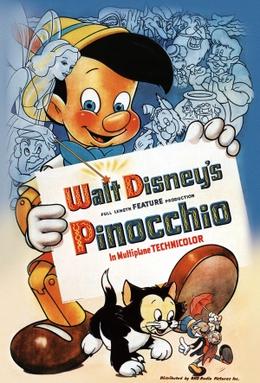
OK, I’ve given you some advice about PowerPoints and videos. But what about plain old writing, like I’m doing here? The picture of Pinocchio below really doesn’t tell you anything about what I’m trying to say. I’ve already written half-a-thousand words, and I’m not finished.

But Walt Disney has something useful to teach those of us who usually stick to words. What do you and I think about when we’re writing: topic statements? adverbial clauses? transitions? Or do we think about unlocking a door for readers who are waiting for what we have to say to them? 

Regretfully, many writing courses skip over the most important aspect of writing: having something to say to someone who needs to hear it.

Owen found a whole new life during the hours he spent with Mowgli, Ariel, and the other Disney characters. What are you creating for your readers?

Pinocchio poster

Share

James Hillman

Four big writing projects are looming. Don’t feel sorry for me: I’m having fun with them. But to escape from the pressure this weekend, I did some recreational reading that had nothing to do with the tasks ahead.

On Saturday I took a break to reread (as I thought) the New York Times obituary of James Hillman, a psychologist and postmodern writer who…quite simply…transformed my life and my brain. Hillman died in October 2011, and I was shaken by his death, even though he was 85 and I’d known he was ill.

The obituary mentioned that a writer named Dick Russell was working on a two-volume biography of Hillman, with Part I due in two years. Let’s see: 2011 + 2 = 2013. How did it happen that a book certain to rock my universe was published three years ago without my knowing about it?

Surely I’d read that obituary back in 2011 when Hillman died. I’m such a maniac that I’ve read just about everything Hillman published. How did I forget that a biography was forthcoming? Ten minutes after I’d read the obituary, I had the Kindle edition of The Life and Ideas of James Hillman: Volume I: The Making of a Psychologist loaded on to my ASUS Transformer. Do you want to guess how I spent the rest of the weekend?

Please note that I’m not encouraging you to read the biography, which is a book that only a Hillman fanatic could love. I’m finding it tough going. Here’s a typical Hillman quote from the biography: “Analysis is the result of the decline in collective culture….It becomes healing and spiritual discipline when it is an individual phenomenon in the protestant model of I, ‘ego,’ who will work on transformation and development and healing.”

Do you know what that’s all about? I don’t.

So – why has Hillman been so important to me? Lots of reasons.

I first came across Hillman’s name back in 1987 when I was trying to finish my doctoral dissertation. After an exhilarating start, I was finding the going almost impossibly difficult. I had fallen into a severe depression, mixed with fears that I might be impossibly crazy and would never get better. (Spoiler alert: I wasn’t, and I did.)

While I was grappling with this mess, I came across an intriguing paragraph from a book called Insearch, by a writer I’d never heard of – James Hillman – quoted in another book. Something stirred in my gut, and I started checking libraries.  I was lucky enough to find a copy of Insearch in a library in the next town. (Among other problems, my husband and I were so broke that I couldn’t afford to buy any books.) I read Insearch three times through without stopping. What I experienced on almost every page was a voice saying, “You’re not crazy.”

I wish I’d taken notes while I was reading. I have no idea what points Hillman was making that had such a powerful impact on me. What I do know is that I slowly started finding my way back.

I’ve since learned that most doctoral students go through a similar experience, and I’ve come to the conclusion that there is something archetypal – something far bigger than the typical stresses of graduate school – that causes those crises.

And that, ladies and gentlemen, is one of the most important lessons I learned from James Hillman: Our problems aren’t always personal. They don’t always hark back to a dysfunctional childhood. They’re not always caused by character defects or relationship problems. Large, mysterious forces swirl within us and outside us, and sometimes we have to fight for our lives to come to terms with them.

Thank you for that, James Hillman.

Here’s another example. In 1992 I was all set to travel to a Shaw conference – my first – to be part of a panel of New Shaw Scholars. I had written a paper about Bernard Shaw’s Pygmalion that I considered (and still do) the proudest achievement of my life. I had a suitcase packed, and an attractive outfit and makeup ready to go, and an appointment to get my hair done….

I was diagnosed with shingles in my left eye less than a week before my flight to Virginia for the conference. I was a mess – an angry rash on my forehead, an eye patch, and persistent headaches and exhaustion. My bewildered doctor gave me permission to go to the conference anyway. (To his everlasting credit, he never said, “Are you nuts?” and over months of treatment he saved my vision in that eye.)

I presented my paper, attended every session of the conference, flew back home – and spent the next month lying in bed in a darkened room.

Common sense would diagnose overwork (I was juggling an impossible schedule at the time) and overexcitement. But Hillman, I think, would say that the academic gods had thrown down a challenge: Proving that I was worthy to claim a serious place in the world of scholarship. (I was a community college English professor, and people of my ilk didn’t do serious academic work.)

I shook my fist at the gods and dragged myself to the airport.

I hope that everyone who goes through a dark time (and that’s roughly 100% of the human race) is able to find the help they need, just as I did. But I want to veer off in another direction here.

James Hillman knew how to make meaning. I have never – after hours and hours spent reading his books – come across a trivial or banal idea. It’s true that I sometimes hold my head in dismay and wonder what the hell he’s talking about. But that’s a small price to pay for the all exciting discoveries I’ve made while reading his books.

Do you aim for that kind of excitement when you write?

James Hillman

Share

Reflections on My Trip

I’m still recovering from jet lag.

I’m also reliving many experiences from my trip to the Norwegian fjords and the city of Newcastle, England. Some thoughts:

  • Newcastle residents speak a dialect called Geordie, a reminder that travel in Britain used to be a formidable undertaking, and towns and cities were much more isolated than they are now. Result: Wide variations in how English was spoken.
    Nowadays travel in the British Isles is quick and easy – my sister’s train ride from Edinburgh to Newcastle took only 90 minutes.
  • To my ears, the way some Britons say fjords sounds a lot like fields, creating a lot of hilarity on this trip until I finally figured out what was going on. (Some of the conversations probably resembled Abbot and Costello’s “Who’s on First?”)
  • The Norwegian language is so similar to Danish and Swedish that speakers can understand one another much of the time. That family of languages is the father of English, and I spotted similarities every time I looked at a sign.
  • Norwegians’ fluency with English is astounding (and embarrassing to American monoglots like me).
  • My sister and I were the only Americans on our cruise. I tried hard to be a good ambassador for the US (not easy for a transplanted New Yorker like me who never quite mastered the art of slowing down).
  • Passengers who saw me on the dance floor asked me where I did my training. (Answer: Florida.) Ballroom dancing developed into an art form in England, which still hosts the world’s most prestigious competition every year in Blackpool. I was proud to say that we American dancers can cut a rug too.
  • My sister and I hiked up a mountain to view the Briksdal glacier in Norway. Signs on the path showed the outer boundaries of the glacier in the 1800s, in 1920, and in 1940. The glacier has receded so much that hikers no longer get close to it. Europeans don’t quibble about climate change: They see the effects all around them.
  • We visited Edvard Grieg’s home near Bergen and – as part of our visit – were treated to a 30-minute live concert by the resident concert pianist. Could other museums and historical sites follow their example?

Norwegian Flag

Share