Category Archives: Writing Skills

Effective Exposition

I was caught off guard at the last meeting of the writers’ group that gets together regularly in a conference room in our public library. We were talking about an excerpt from a mystery novel called Murder in Silk that member Carol Corley had submitted.

Karen White had been struck by a sentence in Carol’s novel: “It was only a little after 6 pm., but it was already dark.” It was something I hadn’t noticed until Karen pointed it out: You know not only the time of day, but the time of year. In the warmer months, it gets dark much later.

That’s good exposition – a writing issue that befuddles even bestselling authors. For a novel to make sense, readers need to know what’s going on – the basic Who, What, When, Where, and Why of a story. But if you focus all your attention on the 5 W’s, as they’re called, your story never gets moving. Here’s an example of what not to do:

Joe and Jane are both high-school sophomores. They’ve been dating secretly because Jane’s parents are old-fashioned and strict, and they think she’s too young to date. Lately there’s been a complication because Joe is starting to get interested in Becky, a transfer student who’s enrolled in his biology class.

The problem with this paragraph is that it’s all background – we still haven’t seen Joe and Jane moving forward with their story.

Good writers (like Carol) know how to let readers in on what’s going on without pausing the story. And so, instead of an additional sentence telling us “It was a December evening,” Carol wrote that it was “already dark” at 6 pm. And there’s more: That already underlines the feeling that things are moving quickly – exactly the feeling you want in a mystery novel.

How do you learn how to do exposition? You can read a book about fiction writing, sign up for a workshop or class, or look for resources online. Many writers (including me) think the best approach is to study how effective writers do it. Pull your favorite novels off the shelf, turn to the first page, and see how the authors pulled it off. In fact that’s great advice for any writer. Daniel James Brand, author of the bestselling Boys in the Boat, says he learned tons by studying Lauren Hillenbrand’s Seabiscuit. (Here’s a link to a post about Boys in the Boat and Seabiscuit.)

If all of this sounds a little overwhelming, take a deep breath and read on. The big point I want to make is that writing doesn’t just happen: The best authors plan, work, and rework their material. If you’re a masterful writer, much of that labor is done unconsciously. To get to that stage, though, you have to spend many hours wrestling with your material. The good news is that it’s often fun and exhilarating.

So – don’t be put off by that big, abstract word “exposition.” Start writing and see where the words take you. Most important, keep thinking about your readers. Who are they? How are they reacting? What can you do to keep your story moving? You’re on your way – and so is your story.Mystery Wikipedia 2
Share

Is There an Apostrophe in Presidents’ Day?

Monday, February 15, is Presidents’ Day, and many people will spend some time thinking about the accomplishments of our US Presidents.

Some people will also be thinking about that apostrophe: Presidents’ Day.  Why does the apostrophe go after the “s” – and is it really necessary?

Let’s deal with placing the apostrophe first. The US government uses the apostrophe, but not everyone does. I just saw a Volkswagen ad for a Presidents’ Day sale that didn’t use the apostrophe. This is another example of our ever-changing language: Sometimes apostrophes disappear, and possessive nouns become adjectives.

But officially it’s Presidents’ Day. The apostrophe goes after the “s” because we’re honoring Presidents. If we were honoring a single President, it would go after the “t”: President’s Day.

Apostrophes are easy to do (despite what you may remember from school!). Spell the word, and put the apostrophe after the last letter. This trick will work every time.

teacher = teacher’s

teachers = teachers’

people = people’s

puppy = puppy’s

puppies = puppies’

Dan = Dan’s

Louis = Louis’ (or Louis’s)

Let’s go on to the second question: Why is the apostrophe necessary? The answer is that there’s an “of” hidden here: It’s really the Day of the Presidents. Any time you have an “of” idea, use an apostrophe: cat of Joan = Joan’s cat. Pay of a week = a week’s pay.

This may be different from what you heard in school. Teachers often say that apostrophes show ownership, but that can be misleading. For example, take a look at this sentence:

Don’t sit there: That’s Mary’s seat.

Chances are Mary doesn’t own that chair! But it’s the chair of Mary because she usually sits there.

Click here to learn more about apostrophes. You can try a practice activity here, and I’ve posted a presentation about apostrophes here.

Enjoy this wonderful holiday!

Presidents' Day

 Presidents’ Day

Share

Distractions

Today’s post was inspired by something I noticed in yesterday’s Snuffy Smith comic strip. Loweezy (Snuffy’s wife) is telling an unhappy little Tater “It takes fewer muscles to smile than to frown.”

That sentence bothered me, and I was still thinking about it this morning. It’s an interesting problem: The strip was too grammatical. Here’s how the characters in the Snuffy Smith strip usually speak: “Prob’ly warning ‘em not to tangle wif US!!” Loweezy, a minimally educated resident of Hootin’ Holler, would have said “less muscles.” 

We English teachers keep insisting that good English usage is akin to a moral issue: It’s the right thing to do. I’m thinking that there’s another, deeper reason for paying attention to usage: You don’t want to distract your readers. They should be paying attention to what you wrote rather than how you wrote it (unless you’re a postmodern author – but that’s a subject for another post).

I recall reading a mystery novel that drove me crazy because the main character was an English teacher who was telling the story in her own words.  She made several pronoun errors and constantly misspelled all right. That’s not how English professors write. (Interestingly, the book was done by a fine publisher that seems to have laid off its copyeditors to save money.)

Loweezy and Tater started me thinking about other distractions. Here’s one. Before I get into it, I need to explain that I hate the word respective. It’s almost always unnecessary, and writers who use it sound pompous.

I also need to explain that I adore Carole King (yes, I checked to make sure she spells Carole with that final “e”!). She has three marvelous things going for her – she co-wrote the song “Will You Still Love Me Tomorrow,” she published a wonderful memoir (A Natural Woman), and she always looks like she’s having an absolutely fabulous time.

Back to respective. She used it no less than seven times in her book, always unnecessarily. I read the book quickly, so I was very aware that the respectives kept coming. Why, Carole, why?

Can I give you an example? I defy you to give me a reason why there’s a respective in this sentence about Sir Paul McCartney’s delightful mimicry during an appearance on Late Night with David Letterman:

Playing the respective roles of David Letterman and Paul Shaffer, McCartney completely captured the essence of both men.

Can we do one more? You may have heard of Marjorie Margolies-Mezvinsky, a terrific writer who’s also Chelsea Clinton’s mother-in-law. In 1976 Marjorie publishedThey Came to Stay, the true-life story of how she adopted two little girls from Asia. It’s a wonderful book, but one thing drove me crazy: Every time she sat down, she said she “slipped” into a chair. That’s fine once or twice, but after a while I started imagining her stepping on a banana peel and whizzing across the floor. Just sit down, dammit!

OK, I’m almost finished – but please let me make one more point. I think my English-teacher rants over the years missed an important angle. I kept talking about good usage as an abstract idea. The more important factor is that good usage sweeps away the distractions so that readers can settle back and enjoy what you’re reading. Forty years later, do you really want your audience to picture you slipping on a banana peel?

A Natural Woman 2

Share

A Spelling Question for You

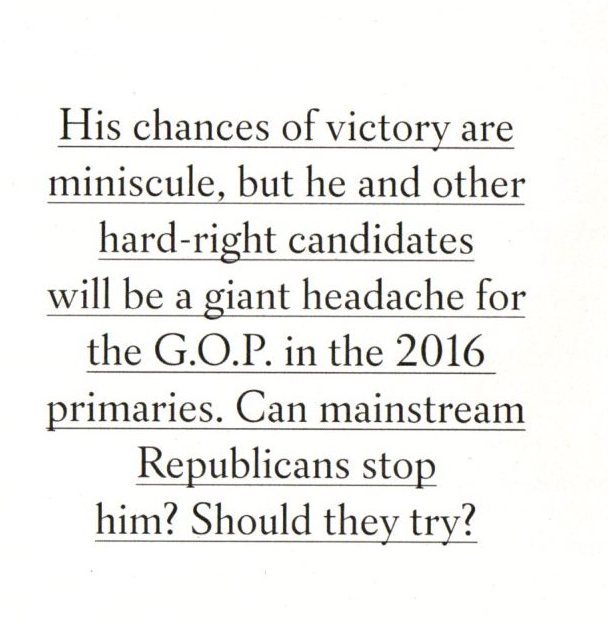
I’m using a different format for today’s Instant Quiz: A headline from a 3/22/15 New York Times Magazine article about Ben Carson. Your job is to find the mistake.

miniscule

Did you notice that minuscule is misspelled? And are you as shocked as I was? This is The New York Times Magazine, for heaven’s sake! Theodore Bernstein (a famed NYT copyeditor who wrote some marvelous books about writing) would have fainted.

How could this happen? My suspicion is that the New York Times is saving money by cutting back on its editing staff. I would also guess (although I can’t be sure) that the person who did the headline was chided afterwards for not using a spellchecker. Surely many readers pointed out the misspelling.

Spelling and spellcheckers have been on my mind lately, and that’s unusual for me. I’m a natural-born good speller (nothing to be proud of, unfortunately – there’s no correlation to intelligence). The only words I consistently have trouble with are those with double letters. I have to look up Cincinnati every time, for example.

But here’s the point: Even though it’s a nuisance, I continue to look up those words…over and over, again and again. I know my limitations, and I don’t trust my memory.

I had a shock a couple of days ago when I uploaded the Kindle file for my latest book, What Your English Teacher Didn’t Tell You. The website posted a notice that I had 13 spelling errors. Turns out all those errors came from a “Can you spot the  errors?” activity in my book. I was pleased that Kindle allowed the mistakes to stand after I approved them.

This please-use-correct-spellings policy is new to the Kindle website, and I heartily approve. Too many self-published books are rife with errors. I was on another self-publishing website one day and spotted a book with a spelling error in a common word in the title.

But we should remember that this fetish about spelling is relatively new to our language. Spelling used to be highly individualistic; nobody cared much about consistency. Shakespeare famously spelled his own name in various ways over his lifetime.

Back to minuscule (a word that, I confess, I used to misspell myself long ago when there were no computers and no spellcheckers). Here’s how I learned to get it right every time: Think about the word minus.

Some recommendations: Use the spellchecker even if you consider yourself a good speller. (Those little red lines have often saved me from embarrassment.) Be aware that spellcheckers aren’t infallible. If you don’t know how to spell a word, look it up. If you can’t find it in the dictionary, call a library and ask a reference librarian to look it up for you. (That’s what they’re paid to do!)

Bee Pixabay ok


Share

Are Dictionaries Wrong?

Gene Weingarten is a columnist for the Washington Post who makes humorous observations about a wide variety of topics. He is a favorite in our household – my husband and I always look forward to Mondays, when his column appears in our local newspaper. When our newspaper dropped Weingarten’s column, there was such a howl of protest that it was quickly brought back.

Weingarten (like me) gets cranky about the path that English usage is taking.  His latest column  suggests, in a funny way, that today’s dictionary editors are idiots. You can read it here: http://wapo.st/1a4du1Z?tid=ss_tw

Weingarten has my sympathy. I too insist that infer and imply have different meanings, that irregardless is an ugly word, that it’s important to pronounce both r’s in library, and so on. But my commentary about these words is going to travel in a different direction.

First, he’s chosen the wrong enemy. His gripe is against lexicographers, not the editors of dictionaries. Lexicographers are researchers who chart changes in the way we define and use words over a period of time. Railing against them is about as useless as shaking your fist at a cartographer (a person who makes maps) because we no longer have a country named Bohemia. To put it differently: Shooting the messenger doesn’t change anything.

Weingarten wants us to go back to the 1959 Webster’s Unabridged Dictionary, which was still taking a strong stand against all the linguistic usages that were bothering him. I shouted “Hallelujah!” and made a couple of fist pumps when I read his suggestion. But there are problems lurking beneath this apparently sensible idea.

First, back in 1959 there were just as many curmudgeons railing against the way language was changing. Off the top of my head, I can give you two examples. Enthuse, which experts condemned as a “back formation” from enthusiasm, was coming into widespread usage. Contact, which had always been a noun, was starting to be used as a verb. 

Here’s an uncomfortable fact that everyone who loves language has to learn to live with: There was never a golden age of language. Did you know that silly meant “innocent” 800 years ago? When silly began evolving into its present meaning, I’m sure there were cranks who complained bitterly about the deterioration of the English language.

Suppose, though, that we did manage to turn back the clock to 1959, limiting ourselves to the usages prescribed in the dictionary that Weingarten wants us all to use. Here’s what you’d find: A dingbat was a printer’s ornament. Software, burritos, and graffiti didn’t exist. The only people who talked about hybrids were biologists. Halloween was always written with an apostrophe (Hallowe’en).

Like Weingarten, I see changes rushing toward us that set my teeth on edge. The word woman is going to disappear eventually: More and more people are using women as both a singular and plural word. All right is going to be replaced by the one-word version that I despise so much that I’m not going to type it here. Although as a synonym for however will become accepted in formal writing.

What can we do about all this? Just sit back, take it all in, and marvel at the stubborn vitality of our wonderful language.

Dictionary Pixabay ok


Share

Your Amazing Brain

If you read my blog regularly, you know that I have a longstanding gripe about the way writing is taught: Textbooks and curriculums don’t build on what students already know.

Here’s an example. Below are two incomplete sentences. Finish them any way you like – that’s not the point. Here’s what I want you to think about: Which version indicates that Marilyn wasn’t invited to the party? Choose A or B.

A)  Everyone was invited to the party, but Marilyn

B)  Everyone was invited to the party but Marilyn

You choose B), right? You could tell that in version A), Marilyn was invited but probably wouldn’t be able to come:

Everyone was invited to the party, but Marilyn had other plans that evening.

Everyone was invited to the party but Marilyn and Dennis.

Here’s my point: You know more than you think you do!

Now let’s build a rule out of what you just did. Any time you use and or but, stop and think: Are you starting a new sentence? If so, use a comma before you start your new sentence. (It acts just like a period.)

Everyone was invited to the party, but Marilyn had other plans that evening. [A new sentence follows but]

I had a hot fudge sundae, and Joe had a milkshake. [A new sentence follows and]

I had a hot fudge sundae and a root beer. [There’s only one sentence]

You can download a free handout about commas at . 

Neurons Kindle ok

Share

About Those Tabebuia Trees…

A few days ago I posted some comments about this sentence from a gardening column my husband was writing:

Such plants include azalea, cape honeysuckle, camellia, tea olive, Carolina jessamine, and tabebuia trees.

I pointed out that our brains would automatically turn every plant listed into a tree. And I wondered whether a list in Latin would work the same way.

My friend Jenna passed that question on to a professor of Latin and Greek. The professor said she would have rearranged the items in the list, just as my husband and I did. And she pointed out that “tabebuia” in the original sentence is an adjective, while all the other items are nouns.

If you remove “trees,” tabebuia turns back into a noun:

Such plants include azalea, cape honeysuckle, camellia, tea olive, Carolina jessamine, and tabebuia.

This language of ours never ceases to amaze me.

(Thanks, Jenna!)

Tabebuia

Tabebuia

Share

Making an Index

I just created an index for a soon-to-be-published book called What Your English Teacher Didn’t Tell You. It’s been fun working on the book, but it’s also taken up huge amounts of time. So I’m looking forward to holding the finished book in my hands…except that there will be tons more to do: getting endorsements and setting up the Kindle edition, for starters.

But my topic today is the index. I did not use index cards this time. I relied on the indexing function in Word, which did an excellent job except that it required more clicking than I thought necessary, and some of the page numbers are wrong.

And there was one big problem that I’d forgotten. The index function uses Section Breaks to create columns (necessary because I’m trying to keep the book a manageable size). When I finished marking all the entries and clicked “OK,” my entire manuscript turned into three columns. All the work I’d done on formatting and page numbers was destroyed.

Well, not really. I have dealt with Section Breaks (the nastiest and most stubborn feature in Microsoft Word, and that’s saying a lot) many times. I just used the Find and Replace feature to remove all of them, fixed the index, and then put the rest of them back. I fixed the page numbers, and everything was fine (except for the time I wasted having to redo everything).

But I wonder what an inexperienced writer would have done. Sob? Give up on the book? Hire someone to fix the file?

Self-publishing is not for the faint of heart. The bad news is that you need some highly sophisticated technology skills, and it takes time to learn enough so that you can solve the problems that inevitably appear. The good news is that the options available to writers are better than they’ve ever been if you have the grit to stick with a project and teach yourself what you need to know.

Still ahead: Fixing the page number errors in the index. Sigh. How did that happen?

index card ok

Share

McDonald’s Is Winning!

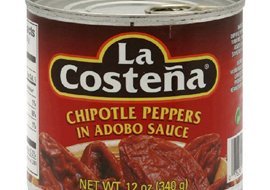
Here’s a headline I saw in a newspaper last week: McDonald’s Winning Fast-Food Fight with Chipotle. In recent years McDonald’s has been struggling to keep up with Chipotle (a company that sells burritos) and other food chains.

Well, good for McDonald’s!

But read that headline again: McDonald’s Winning Fast-Food Fight with Chipotle.

If you know that chipotle can also refer to a jalapeño pepper, your brain might do the same thing mine did: Flash a picture of  a McDonald’s throwing a can of chili at an opponent.

Better wording would be “McDonald’s Winning Fast-Food Fight against Chipotle.”

506b054cfb04d60a47001292._w.1500_s.fit_

Share

The Spider Spins Again

Stieg Larsson, author of The Girl with the Dragon Tattoo and two subsequent best-selling books, died in 2004. But those three books were so popular that another author,  David Lagercrantz, has stepped up to give us another exciting tale about Lisbeth Salander: The Girl in the Spider’s Web. Several of my friends have already read it.

Lois Smith, a writer friend, recently made a good point about the wording of the title: Spider’s Web, she says, is a better choice than Spider Web.

Technically it’s the difference between a possessive noun (spider’s) and an attributive noun (spider). Here are two more examples:

dog’s collar (possessive)

dog collar (attributive)

Linguistic experts who keep track of language trends are noticing that attributive nouns are replacing possessives more and more often. It’s not hard to see why: Speech is easier when we skip that apostrophe + s.

But sometimes that apostrophe + s is useful. Lois pointed out that spider’s web makes the spider “much more ‘possessive,’ more dangerous to the poor girl entangled within its steely filaments, than the plain spider web.” She added that spider web “just doesn’t have the same creepy feel. Funny, the big difference in my mind when the possessive is added.”

She’s right – and her comments point to an important principle: Our brains are hyper-sensitive to language. Small changes can make a big difference.

Here’s an example from Naked, Drunk, and Writing by Lara Adair:

“The airport’s over there,” he said, pointing out the window. WEAK

It’s a perfectly grammatical sentence – but it’s much improved if you break it into two sentences so that we can see him pointing:

He pointed out the window. “The airport’s over there.” STRONGER

I find this example especially intriguing because it defies conventional wisdom that writers need long, sophisticated sentences. (How many of us had essays returned to us with “choppy” written in red ink in the margins?) The truth is that sometimes a short, punchy sentence works better.

How to tell? The best route is to do a lot of experimenting and revising.

spider 2

Share