Category Archives: Writing Skills

Hyphens Would Have Helped!

When I was on Facebook a couple of minutes ago, I saw a picture that stopped me in my tracks, for two reasons. It was an picture of an ugly spider, but the caption said that it was a bird.

I looked more closely to see if it was a bird that had developed some really amazing camouflage. Nope – definitely a spider.

And then I figured it out. It’s a picture of an Australian bird-eating spider (more precisely, an Eastern tarantula). But the caption said bird eating spider, leading me to believe that I was looking at a bird that was eating a spider.

Bottom line: Hyphens would have helped: bird-eating spider.

Just in case you’re a person who’s intimidated by hyphens (as I was for years), here’s another example:

man eating shark (a man with a knife, a fork, and a very large fish on a plate)

man-eating shark (keep your distance!)

Not that difficult after all!

Queensland 2


Share

Because, Because, Because

My husband is the garden writer for our local newspaper. Years ago, when he started writing for the paper, he had an editor who had a fetish about the word because. She thought it was a bad word, and if it ever slipped into a column he had written, she would call and tell him to substitute another word.

Ridiculous, of course. Good writers use because all the time.

But over the years I’ve come to realize that because is a tricky word, and her anti-because campaign probably could be traced back to a wise warning from some teacher in her long-forgotten past.

If you’re not careful, the word because can open the door to a dangling modifier. It happened to me in a letter I was writing just this week:

Charlie does as much of the palm pruning as he can even though a landscape crew comes every week because workers tend to butcher the trees.

It sounds as if a landscape crew comes because workers butcher trees. The problem is that the because idea comes directly after landscape crew rather than after my reference to Charlie’s free labor for our condominium.

I solved the problem by inserting a pair of commas so that even though a landscape crew comes every week becomes the “soft” part of the sentence. What sticks in your head is the “loud” part: Charlie does as much of the palm pruning as he can. If you read the sentence aloud, you can hear that there’s no possibility of confusion:

Charlie does as much of the palm pruning as he can, even though a landscape crew comes every week, because workers tend to butcher the trees.  BETTER

And that leads me to a major gripe with the way writing is taught. Students endlessly label parts of speech and circle various categories of clauses and phrases. Many students never – not even once – are asked to grapple with the kind of sentence I just used as an example.

Maybe that’s why my husband’s editor was so confused about the word because.

By the way, this is what a palm tree is supposed to look like: thick and green. Never cut a green leaf from a palm tree. Yellowing leaves should be left alone too – the tree draws nutrients from them. (It’s ok to cut totally brown, dead leaves. Here’s a link for more information: http://edis.ifas.ufl.edu/ep443)

Sabal ok


Share

Improving a Sentence

Here’s a sentence I read a few days ago in a newsletter about literature. Read it yourself and see if something seems awkward to you:

Many biographers debate whether Leonard could or should have gone the next step for his wife by replacing the ineffectual bromides, milk diets and rest cures she got from a dozen doctors with psychoanalysis.

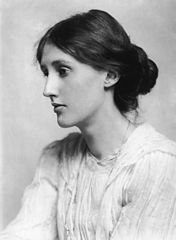
Here’s what bothers me: It sounds as if she got the ineffective cures from doctors afflicted with psychoanalysis. Of course if you think about it for a moment, you realize that’s not what the writer meant. The sentence is trying to say that Virginia Woolf (Leonard’s wife) should have been treated with psychoanalysis rather than “the ineffectual bromides, milk diets and rest cures she got from a dozen doctors.”

There’s a simple guideline that tells you why this sentence is awkward: It breaks up words that should go together: “replacing with psychoanalysis.” Here’s one way to improve the sentence:

Many biographers debate whether Leonard could or should have gone the next step for his wife by rejecting the ineffectual bromides, milk diets and rest cures she got from a dozen doctors and replacing them with psychoanalysis.

Before we go on (I think the sentence still needs improvement), I’d like to explain why there’s no comma after “a dozen doctors” (she got from a dozen doctors and replacing them with psychoanalysis). There’s no need for fancy grammatical terminology. Just zoom in on the word and. Is it followed by a sentence? (There’s an easy way to tell: Does it start with a person, place, or thing?)

replacing them with psychoanalysis

No. So there’s no comma because replacing isn’t a person, place, or thing. (Click here and look at Comma Rule 2.) 

Let’s go back to the improved sentence, which still isn’t good enough, in my opinion. There’s too much information to be crammed into one sentence. I especially dislike “could or should have” – it hints at a big issue and deserves its own sentence. Here’s my revision:

Many biographers debate whether Leonard should have insisted on psychoanalysis instead of  the ineffectual bromides, milk diets and rest cures she got from a dozen doctors. It’s a complicated question because….

I didn’t complete the sentence because I don’t know why Leonard might not have been able to try psychoanalysis for Virginia. Perhaps no competent practitioner was available. Or Virginia might have resisted the idea. Or there might have been some other problem that I haven’t thought of.

I hope I’ve made my point. Sometimes clumsy writing conceals a gap in the writer’s understanding. Fixing a bad sentence isn’t always a matter of shifting a few words or inserting some new punctuation.   Sometimes you have to rethink what you’ve written or go back to the library.

Virginia Woolf 2

Share

The Comma Queen

The New Yorker magazine (which features writing so good that it sometimes gives me chills) has a new video feature: Veteran copyeditor Mary Norris, aka the Comma Queen, is offering insights into the thinking processes she uses when she works on a New Yorker article. You can view the kick-off video at this link: http://www.newyorker.com/culture/culture-desk/the-comma-queen-series-premiere

Sigh. The video full of grammatical jargon. Why? Why? Why? After more than 30 years as an English professor, I can tell you that most students never really get a handle on what subjects and predicates are. They have no idea what an independent clause is. Mind you, I’m not complaining about my students. What I’m complaining about are English teachers and editors who can’t find a more straightforward way of talking about language.

Here’s an example from the video. Mary’s question: Is the comma after sixteen necessary?

Her mother, Rachel Faucette, the daughter of an Englishwoman and a Frenchman, inherited her father’s Nevis plantation at sixteen, and was married off, very young, to Johann Michael Lavien, an older Danish man with aspirations to be a planter.

In the video, Norris patiently explains that inherited…and was married off is a compound predicate and therefore should not be interrupted with a comma.

That’s great if you’re an English major and can instantly identify a compound predicate. But what if it’s been, say, 40 years since you sat in an English class and you can’t remember?

Here’s how I would talk about this sentence: Zoom in on the word and. Ask yourself if there’s a new sentence right after it. (It’s easy to tell: See if it starts with a person, place, or thing.)

and was married off

Is there a sentence after and? Nope. (If it read she was married off you’d have a sentence and need the comma.)

Quick. Simple.

While we’re at it…I started this post by praising the writing in The New Yorker. But I don’t like the sentence we’re talking about today: There’s too much information.

Rachel Faucette:

  • was someone’s mother
  • was the daughter of an Englishwoman and a Frenchman
  • inherited his Nevis plantation when she was sixteen
  • married Johann Michael Lavien
  • was young when she married

Oh, and there are three more pieces of information: Her husband was older and Danish, and he aspired to be a planter.

You’re going to cram all of that into one sentence? Why? Why? Why?

The_New_Yorker_wordmark 2

Share

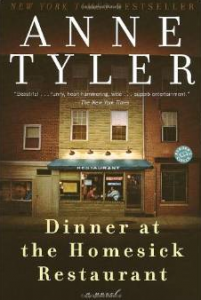
Dinner at the Homesick Restaurant

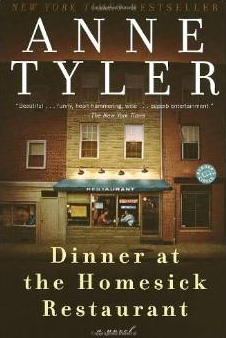
Last week I caught a few minutes of novelist Anne Tyler’s appearance on the Diane Rehm Show. Tyler impressed me – she was warm, honest, and funny. I especially liked her reason for not putting her family members into her novels. That would be unkind, she said, and anyway she doesn’t like to write about things she’s actually experienced. She’d rather explore what it would be like to live a different life.

Soon after that I headed for the library to borrow Dinner at the Homesick Restaurant, which Tyler said was her favorite of the novels she’d written. It’s a hugely successful book, and Diane Rehm devoted a whole show to talking about it a few months ago.

Alas, I hated the novel. The only reason I finished it is that my book club is going to be meeting in two weeks, and I needed a book to talk about.

I realize that nobody’s going to be impressed that I disliked a bestselling book that garnered more than 140 favorable reviews on Amazon.com – along with favorable comments in The New York Times, Newsweek, and other publications. But I think my reasons for disliking it are worth a look – especially if you, reading this, aspire to become a writer. So here goes!

1.  I don’t think Tyler ever heard of the venerable “Show, don’t tell” rule for writers. The novel begins with a long narration that tells the story of Pearl’s life up to the time that her marriage gets into trouble. We don’t see her life – we’re told about it. 

For example, one day Pearl receives a check from her estranged husband. Soon after that she decides to get a job. We don’t see the events that motivated her decision, and we don’t know what she was feeling. Much of the book is written that way – big chunks of exposition. Here’s what writers are supposed to do: Invent situations that reveal character.

2. The book gets off to a slow start. I almost quit reading. Bad again. Here’s an example of how it should feel to read a book: Last year I was thrilled to discover a John Grisham novel that I hadn’t read. I brought it home from the library and plunged in. After the first chapter I realized I’d already read it. But by then I was so involved with the unfolding story that I read it straight through all over again. (Advice to writers: Read Grisham and try to pace your work the way he does.)

3.  The characters aren’t likable.

4.  The characters don’t make sense. Pearl seems decent, albeit boring, and it was a shock to discover that her children thought she was abusive. Pearl later acknowledges that she was harsh sometimes and attributes it to the stress of single motherhood. What stress? What was she struggling with? What was she feeling? We never see it.

5.  Interesting vignettes appear from time to time – and then get dropped. Anne’s son has some emotional problems. Did they ever get resolved? We don’t know.

6.  I didn’t care about any of the characters.

I work with members of a writing group who endlessly hear me beg them to work their material. It’s not enough to come up with a story and interesting characters. You need a point of view. You need to create experiences not only for your characters, but for your readers. They should feel tension, anger, relief, and joy. They need to be surprised, worried, and exultant. I felt none of that in Tyler’s book.

Why did so many people post positive reviews of this novel? I don’t know. Maybe I missed something. Maybe I’m not as astute as I think I am.

Or maybe (and I think this is the real reason) they don’t know what it’s like to read a novel that is so engaging that you can hardly put it down to cook dinner or take the laundry out of the dryer. You don’t want to go to bed before you finish it, even though the print is so blurry that you can hardly make out the words.

If you’re a writer, that’s what you need to strive for.
Homesick 2

Share

Holding Back

There aren’t enough good books about writing out there. If you want to learn about English usage, you can’t do much better than Theodore Bernstein’s books. Right now I’m reading an absolutely marvelous book called Naked, Drunk, and Writing by Adair Lara – absolutely the best book on the craft of writing that I’ve ever read.

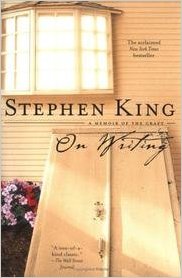
I didn’t like Stephen King’s On Writing as much as I thought I would. But there’s a marvelous chapter that shows how he revised a few pages of his work – everyone should read it. (How often do you get to watch a real writer – a successful one – at work?)

Here’s my favorite point in that chapter: Don’t do your readers’ work for them. In other words, don’t include any unnecessary explanations.

It’s a problem I run into all the time in writing workshops – and, oddly enough, in police reports. (One of the hats I wear is expertise in police report writing – I have a book and a website.)

Here’s what I mean. Officers often write something like this:

Alma responded to his threats by throwing the mashed potatoes on the floor. George became even angrier and retaliated by slapping her face.  TOO MUCH EXPLANATION

You don’t need to explain that Alma was responding “to his threats,” or that George “became even angrier and retaliated.” It’s obvious from the two actions (throwing the mashed potatoes on the floor and slapping) that both people are angry. So all you need to write is the following:

Alma threw the mashed potatoes on the floor. George slapped her face.  BETTER

I often come across the same problem – unnecessary explanations – in my writing groups. For example, recently a group member wrote that he thought he was having a heart attack. Because he was all alone, he called a friend and asked for a ride to an emergency room. His description of that evening repeated what readers already knew:

I called George and told him I was having pains in my chest. I was terrified and wanted to go to the emergency room. Could he drop everything and drive me there?  TOO MUCH EXPLANATION

All that’s needed are a few words: 

I called my friend George. Ten minutes later I saw the headlights of his car in my driveway.  BETTER

Until I read King’s On Writing, I’d never thought about this issue of unnecessary explanations. “Don’t do your readers’ work for them.” It’s good advice for any writer.

Stephen King On Writing

Share

One Word or Two?

That big game we’ll all be watching tomorrow – you know, the one with all the commercials – is the Superbowl? Or the Super Bowl?

Door #2 is the correct one: It’s the Super Bowl.

How do you know? I find Google a tremendous help for questions like this one. When I Googled “superbowl,” the official website for the game came up: www.Superbowl.com. Yes, I know that it’s spelled as one word there. But when I clicked on the website, here’s how the heading read: 2014 Super Bowl.

I could also have clicked on a website with a reputation for accuracy and fact-checking, such as www.NYTimes.com or www.ESPN.com.

Real pros – professional writers, proofreaders, copyeditors, and editors – constantly ask these questions and double-check the answers.

Enjoy the game tomorrow!

Super Bowl or Superbowl?

Super Bowl or Superbowl?

Share

Fixing Sentence Problems

A couple of days ago I got into a conversation about writing with a friend. She was surprised that I rarely discuss formal grammar in the English classes I teach and the two writing groups I facilitate. So what do I talk about?

Good question. I’m going to answer it by commenting on two sentences that caused me to do some analytical thinking in the last 24 hours.

1.  The latest issue of The New Yorker (December 23 and 30, 2013) features a provocative article about plant neurological systems that includes two subject-verb agreement errors on the same page (94). (Where was the copyeditor?) Here’s the first one:

It is only human arrogance, and the fact that the lives of plants unfold in what amounts to a much slower dimension of time, that keep us from appreciating their intelligence and consequent success.

If you read the sentence aloud, you’ll hear the mistake right away. The sentence is talking about human arrogance. The section beginning “and the fact that…” is extra, and your voice drops there. You’ll realize right away that the verb should be keeps us.

It is only human arrogance, and the fact that the lives of plants unfold in what amounts to a much slower dimension of time, that keeps us from appreciating their intelligence and consequent success.

2.  While typing for my husband today, I had some misgivings about this sentence (I should explain that he’s the gardening columnist for a newspaper):

Although podocarpus (P. macrophyllus) can grow 50 feet tall in sun or shade and make a handsome evergreen tree, it’s usually cultivated as a shrub.

The word “make” bothered me. If you link it to can, the sentence sounds correct: you’re saying podocarpus can grow tall and can make a tree. “Make” sounds right.

But if you’re reading quickly and not thinking about that word “can,” the sentence sounds wrong. Podocarpus makes (not make) a tree. I asked my husband if he wanted to take a chance on having readers think he made a mistake.

Nope. So we had to look for a solution. And there was another problem hidden within the sentence: The word and, which sets up a loose connection between the ideas he was writing about“A podocarpus grows tall and makes a tree…” Isn’t there’s a direct relationship between a penchant for growing and the resulting height of the tree?

So I started looking for a way to both avoid  ambiguity (is make right or wrong?) and set up a stronger connection between the two ideas in the sentence.

Here’s my solution (which, I’m happy to say, my husband really liked):

Although podocarpus (P. macrophyllus) can grow 50 feet tall in sun or shade to make a handsome evergreen tree, it’s usually cultivated as a shrub.

Amazing: Just replace “and” with “to,” and the sentence is much better.

Back to my original point: Writing is a complex activity. Good writers have to grapple with all kinds of issues. Writing teachers and professional writers need to learn how to talk about our mental processes. That kind of problem solving should be an important part of every writing class.

Pencil with "Y" Circled For Yes

Share