Category Archives: Writing Skills

React!

I just finished reading The Ear of the Heart, a fascinating biography of former Hollywood and Broadway actress Dolores Hart. In 1963, at the height of her career, she stunned the entertainment world by entering Regina Laudis, a contemplative Benedictine monastery in Connecticut. A college friend of mine who joined an active religious order in Connecticut once saw Hart working in an apple orchard with a group of other novice nuns.

Because much of the book is written in Hart’s own words, you can watch the seeds of her religious vocation grow. One comment about her acting career is particularly telling. Hart says that she made marvelous friends during the long days and weeks of filming, so that the cast and crew became a family – but the family always fell apart when the filming ended and everyone returned home.

So it was not surprising that she longed for a stable and permanent family (her parents’ relationship was full of turmoil). She began making retreats at Regina Laudis, made friends with some of the nuns, and fell in love with the monastery.

But she soon discovered that that monastic life was very different from those mystical retreats. Her superiors – wary of a Hollywood star accustomed to luxury and fame – were harsh. Living conditions were arduous. She remembers that she was so cold after evening prayers on winter nights that she used to sit on the hallway radiator before going to bed in her unheated cell.

Most seriously, friendships between the nuns were prohibited. Although there was an hour of recreation every day, nuns were permitted only one topic of conversation: their daily work on the monastery farm and buildings.

Hart’s voice is honest and real, but I often felt that something was missing in her book: Her reactions. Did she think about leaving? And what forces drove her to stay?

She makes only one statement about that long and difficult transition: For the first three years she cried herself to sleep every night. (Later on, changes prompted by Vatican II brought a vast improvement in monastic life, and Dolores – “Mother Dolores” by then – became a leader in her community.)

If I’d had a chance to edit Hart’s book, I would have asked her to describe her reactions to those experiences. What was she thinking and feeling when she shivered after evening prayers – listened to unending conversations about weeding, mopping, and hoeing – endured yet another rebuke from a superior?

But wait a minute. A writing rule (one of my favorites) states that you shouldn’t do your readers’ thinking for them. Couldn’t readers figure out for themselves that Hart was upset by those experiences?

The answer is no.

“Upset” is a catch-all word that says very little. When you start digging into what “upset” means, you come up with a long list of reactions Hart could have had: anger (at herself or the monastery), betrayal (because no one warned her what it was going to be like), stubbornness, guilt (because she was having so many unspiritual feelings), regret, sadness, disappointment, loneliness…and probably some I haven’t thought about.

And when you start thinking about the forces that compelled her to stay…well, there’s probably another whole book to be written.

What ultimately makes writing worth reading is the inner life of the writer. That’s true whether you’re writing fiction, nonfiction, or poetry. Every word you write is shaped by your personality and experience…even if you’re trying to write impersonally.

After a close friend read my book Pygmalion’s Wordplay (a scholarly treatment of the writings of Bernard Shaw that rarely includes the words I and me), she told me that she understood me for the first time. Egad.

Whenever you sit down to write, no matter what the task is – please, please react. We’re interested in you, your thoughts and feelings, and the connections you draw to other experiences, ideas, and memories. Don’t hold back!

Share

Am I a Grammar Snob?

During my first year as an English instructor, I went to a beautiful New York restaurant for dinner with the rest of the staff. Shortly after we sat down, the server brought us a basket of warm, fragrant bread. I took a slice, buttered it, and happily started eating – and horrified my boss, who explained that you’re supposed to tear off small pieces and eat them one at a time.

Good grief. No one ever told me there were rules about eating bread and butter.

I’ve told that story to countless English classes over the years. Students who had worked as restaurant servers had stories of their own to share about silverware, napkins, and other issues connecting with fine dining. One favorite topic was the procedure for ordering wine (just look at the cork – don’t sniff it). 

Those discussions were always lively and fun, and they were an effective lead-in to my main topic: The question of snobbishness. Students readily agreed that table manners aren’t snobbery: They’re common sense. Most of us adapt our eating habits according to the situation, and we do same with English usage. I don’t tear bread into small pieces when I eat at home, and I don’t always use Standard English either. But both sets of skills are highly useful when I attend a conference or meet with an editor.

The question of snobbishness has been on my mind lately in connection with a provocative video denouncing grammar snobbery made by Mona Chalabi for The Guardian (a British newspaper company) last month.

Chalabi quickly destroys the most common argument for good usage – that it helps us understand one another. Nobody, she says, is confused if you say less items instead of the more correct fewer items.

More serious, according to Chalabi, is the damage wrought by grammar snobbery, which she says “is often used to silence those who have less of a voice in society….We should spend more time listening to what others have to say and less time focusing on the grammar that they say it with.”

Hear, hear! Too often English usage is taught as if Moses was carrying a copy of Fowler’s English Usage when he came down from Mount Sinai. We should always respond to – and respect – a writer’s ideas before we start correcting punctuation and sentence structure. Often there’s no need to butt in with corrections at all.

But I would argue that there are some points that Chalabi overlooked. In Derridean fashion, her own impeccable English undermines her point. The video’s title, for example, is a perfect example of parallel construction (a rhetorical principle that confuses many professional writers): “Patronizing, Pretentious, and Just Plain Wrong.” Would we be listening with the same respect if she used slang to make her argument?

She’s mistaken about one of her supporting points – that there used to be a rule against starting sentences with and and but. There’s no such rule and never has been. (I used to make bets with my students about this. Nobody ever claimed the $100 I offered to a student who could prove me wrong.)

I have another reason for arguing that English usage is relevant. Nonstandard usage conveys the message that you’ve never acquired the habits of looking and listening. I once knew an English professor who always substituted “antidote” for “anecdote.” And I just read a wonderful biography of Dolores Hart (the Hollywood star who became a nun) that distracted me on every page because all the periods and commas were positioned outside the quotation marks.

Somehow these two people (and I’ve known many others like them) have never noticed that they’re out of step with everyone else. (I can’t help wondering if they ever acquired table manners!)

There’s also the issue of pride. Professional people care about quality. My husband has been a garden writer for more than 20 years. He goes over his columns carefully before he submits them to the newspaper – and he always takes one additional step: Asking me to proofread them.

I don’t think he’s ever cracked a copy of Fowler’s English Usage, and he’s not much interested in abstruse topics like indefinite pronoun reference and gerundives. But he takes pride in his writing, and I respect him for that.

And there’s one more thing. Standard English sometimes serves as a kind of bonding tool. Educated people can instantly recognize one another, and that’s not always a bad thing. Let me give you a non-academic example.

Years ago a TV magazine ran an article about the Honeymooners TV show – long a favorite in my family. (My husband still carries in his wallet his membership card in a long-ago Honeymooners fan club.)

About halfway through the article, I started screaming – with joy, I should add – because the writer referred to Ralph Kramden and Ed Norton (central characters in the show) as Racoons.

Wow.

Ralph and Ed were members of the Royal Order of the Racoons – always misspelled (whether deliberately or not) on the show.

Very likely the editor of the magazine wanted to fix the spelling, and the writer held firm. I can picture him arguing that real fans of the show (like me) would instantly recognize him as a brother.

And now I will raise the tail of my imaginary racoon hat (a Racoon lodge ritual) to salute all the other Honeymooners fans who are reading this. And then it will be time for some proofreading of my own – undoing all the automatic corrections of Racoon in today’s post. Ain’t language fun?

Two members of the Royal Order of the Racoons

     Two members of the Royal Order of the Racoons

Share

Who or Whom?

Few writers feel confident using whom. As a result, some writers have dropped whom and use who exclusively. Other writers overuse whom, figuring they’ll be right at least part of the time.

If you’re not sure, the first mistake is the way you want to go. Whom is rapidly disappearing, so it isn’t required for conversation and most writing tasks. I reserve whom for two situations: writing for publication and teaching a class.

English teachers (remember, I’m one of them) have to bear a lot of the blame for the gradual disappearance of whom. Ask an English teacher for an explanation of who and whom, and you’ll hear a lot of jargon about transitive verbs and objects of prepositions. Not surprisingly, many people simply give up.

Since you’re reading this post, you’re a special person who would like to crack the mystery of who and whom. Let me show you a trick.

Memorize this phrase: He for who and him for whom. (You can sing it if you know the song “Tea for Two”!)

Any time you’re wondering whether whom is correct, plug in the word him and see if it works. (Both words end in the mmm sound – another aid.)

Give the package to anyone who/whom answers the door.

Would you say him answers the door or he answers the door? He answers it! Use who. (You’re singing, right? He for who and him for whom.)

Give the package to anyone who answers the door.

The same trick works for whoever (use he) and whomever (use him). (That mmm sound is still there in whomever and him to help you.) Incidentally, mistakes with whomever are common even with highly educated people.

Let’s try one:

The invitation is good for whoever/whomever wants to attend.

Which works better: him wants to attend or he wants to attend? He wants to attend! Use whoever:

The invitation is good for whoever wants to attend.

Let’s do one more, ok?

This shirt will look good on whoever/whomever it fits.

It fits him or it fits he? It fits him! Use whomever:

This shirt will look good on whomever it fits.

If you stayed with me for all these examples, congratulations! You’ve learned a usage skill that eludes even some professional writers.

Whooom?

                               Whooom?


Share

I Would Have Nixed It

I just found something that bothered me in the May 15 issue of The New Yorker, a magazine that prides itself on its writing and copyediting. I was reading “Happy Together,” an article about a new type of housing in New York, and I came across this:

Common’s Crown Heights members had first dibs on the rooms, and many are relocating, including Chavez, who wants to try out a new neighborhood, and She, who wants to be closer to his girlfriend.

Because I like shorter sentences, I would have broken it in two:  “Common’s Crown Heights members had first dibs on the rooms. Many are relocating, including Chavez, who wants to try out a new neighborhood, and She, who wants to be closer to his girlfriend.”

But that’s not what bothered me. My problem is with first dibs. I think it’s redundant because dibs are always first. (I just Googled “second dibs,” and all I came up with was a resale shop in New Jersey.)

It’s true that our language permits some redundancy for clarity and emphasis – but I don’t think redundancy is needed here. I would have nixed first.

The_New_Yorker_wordmark 2

Share

Should You Write Long Sentences?

There’s a widespread misconception that special rules apply to long sentences. I’ve known people who believe that any long sentence is a run-on. (Wrong!) Some of my students used to think that any long sentence had to have at least one comma. (Also wrong!) And I’ve known people who always insert a semicolon right in the middle of a long sentence. (Wrong again!)

The truth is that long sentences are just like any other sentences; the usual comma and semicolon rules apply. There’s no special mystery to solve when you write a long sentence.

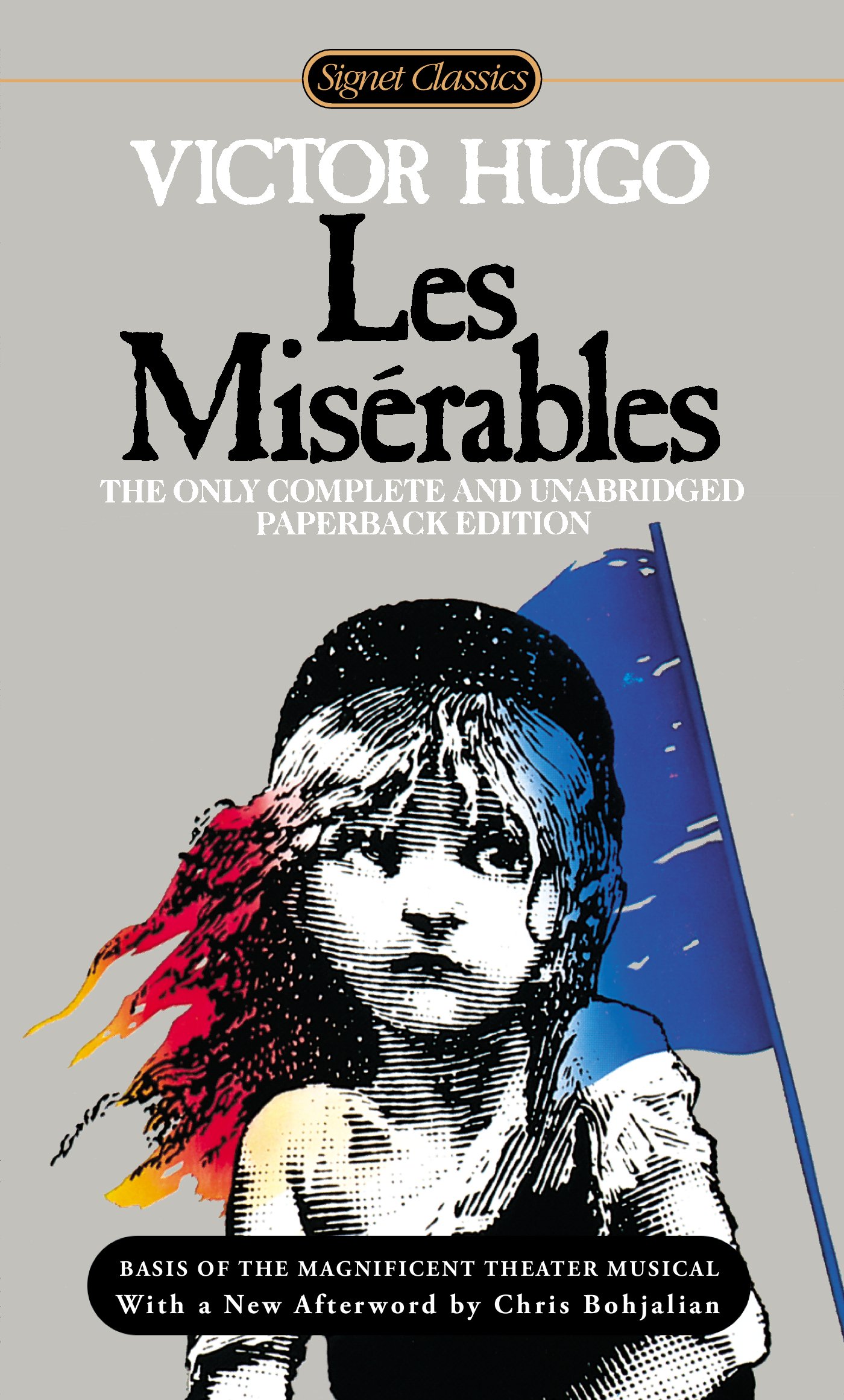
But there is one issue to watch for: Cramming too much information into a lengthy sentence. You won’t be violating any usage principle, but you might end up with a clumsy sentence that’s difficult to read. Here’s one I came across in a story about author Victor Hugo on a literary website:

On his eightieth birthday in 1881, it took six hours for 700,000 to parade past his house; more than that turned out for his state funeral in 1885, among which would have been a few from the first Romantic Army.

Here’s my version:

On his eightieth birthday in 1881, it took six hours for 700,000  people to parade past his house. More than that turned out for his state funeral in 1885. Among them would have been a few from the first Romantic Army.

Les Miserables ok

Share

A Closer Look at Languages

James Harbeck is a language expert I’ve mentioned in previous posts. (Here’s one: http://wp.me/pU98s-1RQ.) I like his sense of humor and his unconventional take on linguistics issues.

Here’s a recent post that fascinated me. Harbeck says that most languages have distinctive features that allow you to identify them at a glance – even if you don’t speak the language. It’s fun to read – and convincing!  http://theweek.com/articles/617776/how-identify-language-glance

James Harbeck

      James Harbeck

Share

Another Quotation within a Quotation

Several friends have been interested in my previous post about quotation marks, and a few of them asked questions about punctuating a quotation-within-a-quotation. I found a reliable resource at the OWL (Online Writing Lab) website sponsored by Purdue University: https://owl.english.purdue.edu.

One intriguing comment came from a friend who was amazed that writers actually insert quotations within quotations. She’d never heard of this practice. Or maybe (as she admitted herself) she’d just never noticed. (Did any of you notice that I used this construction in a post last week – about Elizabeth Smart’s talk about the word “purity”? Click here to read the post.)

Here’s the sentence I wrote:

“I felt so dirty and filthy,” Smart said in her talk at Johns Hopkins. She remembered a religion teacher who used an analogy with chewing gum. “I thought, ‘Oh my gosh, I’m that chewed up piece of gum, nobody re-chews a piece of gum, you throw it away.’ And that’s how easy it is to feel like you no longer have worth, you no longer have value.”

I promise to switch to another topic in my next post! (But quotation marks are interesting, aren’t they?)


Share

How to Use Quotation Marks

Over the years I’ve taught thousands of students how to use quotation marks. The whole lesson takes just a few minutes. Here the gist:

In the US, commas and periods always go inside the quotation marks. There are no exceptions. (Other countries may do it differently.)

I always put a few sample sentences on the chalkboard, and then I ask if there are any questions. There’s always a kindhearted student who wants to set me straight without embarrassing me:

“But Dr. Reynolds! You forgot to mention that commas and periods go outside quotation marks if a sentence is incomplete, or it’s the title of a poem, or…”

Sigh.

Here’s what I’m always tempted to say (but haven’t so far): “How is it that you made it all the way to college without learning the meanings of always and no exceptions? And how come you’ve never noticed that no book or newspaper or magazine published in the US ever uses quotation marks in the way you’re describing?”

Luckily the better angel on my right shoulder always comes to my rescue with a gentle rebuttal: “No, Mary (or John or Antonio or Liz), in the US commas and periods always go inside the quotation marks. Here’s a project for you: Pay attention to the books and articles you read for the next few days, and see if you can find any exceptions. I guarantee you won’t, unless there’s a British publisher.”

Mary (or John or Antonio or Liz) always solemnly promises to bring a pile of examples to the next class to prove that I’m wrong. And of course that never happens.

It’s true that writers in the UK put commas and periods outside – but that usage is not appropriate in the US.  I’ve often encountered well-read students who use British spellings (favourite, honour) and inverted commas (‘To be or not to be, that is the question’). But you can’t adopt those usages in the US.

Similarly, you can’t practice American usage in the UK. When I wrote an article about Bernard Shaw for a British publisher last year, I was careful to use inverted commas, with the periods and commas outside, and British spelling.

OK, I’ll concede two exceptions: If you’re quoting from a British book or magazine, of course you use the original spelling and punctuation. And inverted commas – also called single quotation marks – are appropriate for a quote within a quote:

“I’m leaving early,” said Jenny, “because ‘I have miles to go before I sleep’ and a term paper to finish.”

While we’re at it, let’s deal with a few more rules about quotation marks:

  • Use quotation marks for titles of short works, such as poems and magazine articles. But don’t use quotation marks for the title of something you’ve written – such as a paper for school or an article for a magazine – unless it’s a quotation.
  • Don’t use quotation marks to sound folksy, apologize for an unconventional expression, or emphasize a word or phrase. Professional writers don’t use quotation marks this way, and you shouldn’t either.

I have some examples of what not to do from a recent Hints from Heloise newspaper column.

Here’s warning from Heloise about buying bags of frozen vegetables:

If the veggies did not stay frozen completely, they “thawed” a little and then froze into a block!

Here’s a tip for using cupcake liners to shape burgers:

I place one on the bottom, one on top and “squash” to flatten the burger to the desired thickness.

Those quotation marks don’t serve any purpose: Don’t use them.

The same principle applies to slang and colloquialisms. If you want to say that your child can’t go to sleep without his binky, and your sister thinks your macaroons are delish, use those words without apology. Or – if they bother you – substitute words you like better: pacifier, delicious.

To put it succinctly: “Ditch” the quotation marks. Oops! I meant that you should just ditch them.

 Heloise

                Heloise

Photo by Larry D. Moore CC BY-SA 3.0.

Share

Fighting the Trend

In my recent post about Harriet Tubman and Andrew Jackson, I deliberately made an error  – at least in the minds of some editors:

Many progressives are pleased that the Treasury Department decided to replace President Andrew Jackson’s picture with Harriet Tubman.

What’s the mistake? I didn’t use that of:

Many progressives are pleased that the Treasury Department decided to replace President Andrew Jackson’s picture with that of Harriet Tubman.

Here’s the reason. I hate that of. It’s clumsy, I distrust it, and I refuse to use it. I’ve lived a long life, and I have a sharp eye. I don’t recall seeing the irritating that of very much in the past. I think it’s a recent fetish, and I refuse to sign on.

(Some of you may be thinking that there’s an alternative that bypasses the problem, and you’re right: Many progressives are pleased that the Treasury Department decided to replace President Andrew Jackson’s picture with Harriet Tubman’s. That was actually my first version – but then I wouldn’t have had a jumping-off point for today’s post!)

Back to that of. Here’s a typical example that sets my teeth on edge:

The monthly condo fee in Springside is higher than that of Rosedale.

Here’s an alternative that I like better:

The monthly condo fee in Springside is higher than Rosedale’s.

But some authorities forbid this usage on the grounds that buildings are inanimate and can’t be owners. A pox on them. People use possessives that way all the time:

The building’s exits need to be clearly marked.

If objects can’t be owners, there would be no need for a possessive form of it:

My favorite blouse is missing one of its buttons.

The rules of English usage – as I never tire of saying – are created by the people who actually use the language. Don’t let anyone use a convoluted logical principle to talk you into adopting an awkward construction.

The Association Fallacy in Formal Logic

         The Association Fallacy in Formal Logic


Share

We the People…

Today you’re getting a bonus – two bonuses, in fact. My primary objective is to clear up an apostrophe issue with the word people. You’ll also get a linguistics lesson, and you’ll learn an unusual rule about plurals.

I’m going to begin with a tale from my early days as a college English instructor. A major publisher had just issued the first edition of a comprehensive English handbook that is still in print, many editions and millions of copies later.

And there, in an example box, was a sentence containing the word peoples’. Gack: The apostrophe should have been before the s – people’s. And this in an English handbook!

Nobody – not the author, the editor, or the copyeditor – caught the mistake. It was too late for the publisher to do anything about it: The book had already been printed and distributed. (The mistake was corrected in the next edition.) 

You don’t have to be clairvoyant to figure out how that mistake happened. Apostrophes are usually (and stupidly) taught with a rule that goes like this: “Before the s if it’s singular, after the s if it’s plural, but before the s if it’s a special plural – a plural that doesn’t end with s, such as men, women, children, and people.

Of course many people (ha!) immediately forget about those special plurals, and that’s how we end up with mistakes like “childrens’ health” and “Dr. Reynold’s office.”

There’s an easier way. Just spell the word or name, and put the apostrophe after the last letter. This trick will work 100% of the time.

Dr. Reynolds – Dr. Reynolds‘ office

children – children‘s health

people – people‘s wishes

But some of you whose knowledge of English is deep and broad are protesting that peoples’ wishes can be correct in some circumstances. You’re right!

Anthropologists use people to signify the members of a nation, community, or ethnic group. A diverse country or region would be inhabited by various peoples. So, for example, you could talk about “the peoples of Australia.”

If you’re a royalty fan, you probably remember a famous story about King George VI (father of the present Queen) and an exchange with some of his subjects during the Blitz. On one of his visits to a bombed-out neighborhood, someone called out, “Thank God for a good king!” His quick-thinking response was, “Thank God for a good people!”

Most of us would have said “Thank God for good people” – but his choice of a good people reinforced the idea of British unity.

Back to peoples. Scientists often use plurals to signify diversity. If you keep goldfish in an aquarium, they’re fish. But if the tank holds several species – angelfish, tetras, and gouramis – they’re fishes.

One topic remains: That lesson in linguistics I promised you.

The Elements of Style by Strunk and White contains this astonishing injunction (which I’m going to debunk in a moment):  “The word people is not to be used with words of number, in place of persons. If of ‘six people’ five went away, how many ‘people’ would be left?”

There’s some linguistic history behind this silly rule. Our word people traces its origin back to the Latin word populum (“the population”). Clearly populum can’t be used with a number. The proper Latin word for an individual is persona. So it makes sense that you can’t talk about “six people.”

Except that you can.

The golden rule for language is that rules are made by the people (persons?) who use that language. If you do a Google search, you’ll discover that professional writers use people with a number all the time. Here’s an example from a March 1 article in the Washington Post:

Six people were shot and wounded — one of them critically — in Southeast Washington on Monday afternoon and early Tuesday, according to D.C. police.

If you check the Oxford English Dictionary, which traces the history of words in English, you’ll discover that writers have been using people with a number as far as Chaucer.

But what about that etymology problem? The answer is that a word’s origin doesn’t determine its meaning: Common usage does. Think of the word manuscript, for example. The original Latin means “written by hand.” But if you submitted a handwritten manuscript to a publisher today, it would be unceremoniously tossed in the trash.

I hope you enjoyed today’s triple lesson (and the nod to royalty!).

King George VI

    King George VI

Share