National Grammar Day

Today is National Grammar Day – an appropriate time to think about the role that grammar plays in our lives.

I’ve been thinking – a lot – about an intriguing statement by James Harbeck in his Sesquiotica blog. Harbeck is a writer who specializes in language issues. Here’s what he said: “Not everything you do with language is a matter of grammar.”

Amen, amen.

Spelling mistakes, for example, aren’t grammar errors. I  have trouble spelling words with double letters. All the grammar instruction in the world isn’t going to help me spell Cincinnati correctly.

Clumsy sentences, poor word choices, and boring ideas aren’t grammar issues either.

Revising a weak article or essay takes multiple skills. (I know all about this, having done plenty of weak writing myself.) You need a strong thesis, powerful examples, and the ability to organize and develop ideas. You have to know how to grab your readers’ attention – and how to hold on to it.

Here are my favorite remedies for poor writing:

  • a friend who takes your writing seriously
  • a voracious reading habit
  • a sense of curiosity and wonder about language

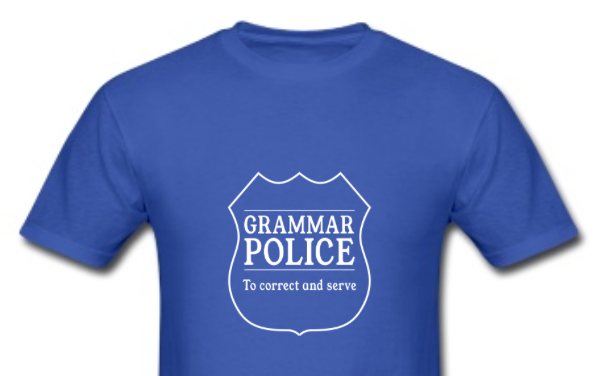
 I’ll be wearing my Grammar Police t-shirt today to honor National Grammar Day. But I’ll also be reminding anyone willing to listen that grammar should be only one of many tools in a writer’s toolbox.

Grammar Police ok


Share

Misty Copeland’s Notoriety

Today’s word is notoriety.

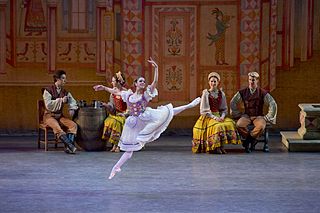
I’m a fan of Misty Copeland, the first black ballerina to be promoted to principal dancer by the American Ballet Theatre. Last year I thought Misty was a marvelous judge for the So You Think You Can Dance TV show, and I enjoyed seeing her do the peasant pas de deux in a performance of Giselle that I saw in New York.

So I was very interested in A Ballerina’s Tale, a recent documentary about her life that was broadcast on PBS. But at one point I was puzzled: The documentary said that Misty had trouble dealing with the notoriety that followed a European tour.

Notoriety? The documentary didn’t mention anything scandalous.

And then I realized that the film makers were using notoriety as a synonym for “fame.” But the two words have very different definitions. Fame is positive; notoriety (related to the word “notorious”) is negative.

Here’s how you could use notoriety correctly in a sentence:

Donald Trump’s notoriety is causing anxiety for some Republican leaders.

If you want to use the word fame, you could write this sentence:

Donald Trump’s fame is helping him win Republican primaries.

It looks as if these two words are blending into one, and we are gradually losing a useful word from our language. I’m sorry that is coming.

Misty Copeland in Coppelia

                         Misty Copeland in Coppelia


Share

Dr. Seuss Raises Some Questions

Today is Dr. Seuss’s birthday.

Of course I read Dr. Seuss (1904-1991) as a child. My mother liked to shop at thrift stores, and one day she came home with a pile of Children’s Digest magazines. It’s hard to imagine it now, but Seuss (who hadn’t yet achieved superstar status) allowed Children’s Digest to publish condensed versions of To Think That I Saw It on Mulberry Street and some of his other books.

I grew up and became a teacher, and one of my gigs was teaching second grade for half a school year when the regular teacher was ill. It was an opportunity to discover some of the marvelous children’s literature that had arrived on the scene while I was busy with college, Shakespeare, and the Beatles.

Dr. Seuss, I learned, had found a way to burst through the strait jacket of limited vocabulary lists for beginning readers. Even my struggling second-grade readers (the “Bluebird” group, I think they were) could read and relish The Cat in the Hat.

I haven’t heard about a movement to canonize Dr. Seuss (his real name, incidentally, was Theodor Seuss Geisel) – but I’ll gladly sign on if someone wants to take up the cause.

But I’m going to swerve off course and talk about some issues that popped up this morning when I read an article about Dr. Seuss’s birthday. Here’s a Seuss quotation that set me thinking:

I like nonsense, it wakes up the brain cells. Fantasy is a necessary ingredient in living, it’s a way of looking at life through the wrong end of a telescope. Which is what I do, and that enables you to laugh at life’s realities.

I like to imagine that Dr. Seuss and another favorite writer of mine, post-Jungian psychologist James Hillman, are off in a corner of heaven somewhere having a marvelous talk about the power of imagination.

But I’m going to focus on grammar. (Did you know that Friday is National Grammar Day? Are you excited?) Take a look at this sentence:

I like nonsense, it wakes up the brain cells.

It’s actually two sentences. When a group of words starts with a person, place, or thing, you can count on it – it’s a sentence. (It falls into the “thing” category.) So the sentence (and the one that follows) needs a period. (A semicolon would also work nicely.)

I like nonsense. It wakes up the brain cells. Fantasy is a necessary ingredient in living. It’s a way of looking at life through the wrong end of a telescope.

Regular readers of this blog know that I use a red typeface when a sentence is wrong and blue for the correct version. So how come I didn’t use red for “I like nonsense, it wakes up the brain cells”?

It’s because I tremble at saying that Dr. Seuss made…gasp…a mistake. If those commas were good enough for him, who am I to argue?

But how do we know he really wrote those sentences that way? On the first page of The Cat in the Hat, Seuss punctuated a similar sentence correctly:

The sun did not shine.
It was too wet to play.

The obvious next step for me was to check the original source for today’s quotation. I wandered around Google Books this morning and found that Seuss quotation dozens of times – but not one of the books I checked gave a source.

Remember back in high school when you learned how to do citations – and how tedious it was? There’s a reason for that drudgery. Mention the word “sources” to any scholar, and you’ll hear a long tale of woe about the quotations that got away – or were captured only after an arduous pursuit that rivaled the search for Dr. Livingstone.

One more thing: Readers with an eye for grammatical correctness are wondering if I’m going to mention the fragment in the Seuss quotation:

Which is what I do, and that enables you to laugh at life’s realities.

I just did.

Have fun celebrating Dr. Seuss’s life and work today! (And if you’re wondering about that extra “s” after the apostrophe in “Seuss’s,” yes – it’s legal, though not required. You’re allowed to add that “s” when a name ends in s, like mine: Jean Reynolds’s wonderful blog.) (Just kidding.)

Dr. Seuss

                  Dr. Seuss

Share

Here Comes the Bride

Here is a question I get all the time: Is it correct to say “Here comes the bride”? And what do you say if you want to include the groom?

Here are the answers: “Here comes the bride” is correct. If you want to include the groom, you should say “Here come the bride and groom.”

Here is how you do it. (It’s easy!) Just flip the sentence around. This will work with any sentence that starts with “here” – and it also works with sentences that start with “there.” So you’re getting a two-for-the-price of one deal.

Flip the sentence around!

                         Flip the sentence around!

Let’s see how this “flip” works:

Here (comes, come) the bride.

The bride COMES here….Here comes the bride.  CORRECT

Here (comes, come) the bride and groom.

The bride and groom COME here….Here come the bride and groom.  CORRECT

Here comes the bride!

                       Here comes the bride!

Did you notice that I’ve sprinkled a few of these “Here…” sentences in today’s post? Let’s look at them.

Here (is, are) the answers.

The answers ARE here….Here are the answers.  CORRECT

Here (is, are) how you do it.

How you do it IS here…Here is how you do it.  CORRECT

(Grammar books love to make this sound hard with a lot of talk about demonstratives and singular and plural subjects and verbs. But none of that jargon is necessary. My “flip” trick will work every time.)

Let’s try a few with “there”:

There (is, are) a problem with your order.

A problem with your order IS there…There is a problem with your order.  CORRECT

There (goes, go) my ex with her new boyfriend.

My ex GOES there with her new boyfriend…There goes my ex with her new boyfriend.  CORRECT

One more thing: You can change here is to here’s and there is to there’s if you like. 

You can download a free subject-verb agreement handout that covers this rule and others by clicking here.

(Is, Are) there any questions?

Any questions ARE there…Are there any questions?  CORRECT  

Share

Finesse!

Here’s something I do often: read books about writing. Here’s something else I do often: gripe about books about writing. I’ll be talking about some of those complaints in upcoming posts.

Today I want to offer a general observation (okay, a gripe) about these books: Even the famous ones tend to dance around the topic of writing without really telling you what to do. (Adair Lara’s wonderful book Naked, Drunk and Writing is a notable exception.)

For example, here’s something I hear all the time from writers who are headed in the wrong direction: “I want readers to make up their own minds about ________.” (Fill in the blank – a character, action, or situation).

Translation: You haven’t really worked your material. You don’t yet know your characters, or you haven’t really dug into your plot. Good writers care – a lot – about what’s happening to the people they’re writing about. If you’re not deeply involved with your characters, why on earth should your readers care about them?

One remedy is to have the other characters react to what’s unfolding. In fact this is a handy rule of thumb for anyone who’s writing fiction, a personal essay, or a memoir. If you’re creating a scene where several people are present, each one should react to everything that happens.

Of course then you’re faced with another problem – potential chaos as responses fly from one person to another. But skillful writers pull this kind of thing off all the time.

Here’s an example from Ernest Hemingway’s masterful story “The Killers.” Two thugs have just walked into a diner to kill a man named Ole Anderson. They’ve heard that Ole comes to the diner every evening at six. George, who waits on customers, sends young Nick Adams to find Ole and warn him.

“Mixing up in this ain’t going to get you anywhere,” the cook said. “You stay out of it.”

“I’ll go see him,” Nick said to George. “Where does he live?”

The cook turned away.

Hemingway moves the story along by having Nick decide to deliver the warning to Ole. But we’re not allowed to forget about the cook – and it takes just four words: The cook turned away.

(How many of us are afraid to write short sentences because we’re worried about sounding juvenile? But Hemingway didn’t worry about it!)

Here’s something else I hear from writers that immediately raises a red flag: “My story is going to build up slowly.” So will your readership! You have to sell whatever you’re writing quickly. Readers who don’t feel engaged are going to start looking for something else that’s more interesting.

I used to ask my college students to find the first interesting word in an essay they were handing in and then count how many words it took to get there. Skilled writers usually put an attention-getter into the first or second sentence.

Other sins are telling readers what they already know and doing readers’ thinking for them. I’m going to address these in a future post, but for now I’m going to suggest that you do what I did – think about those warnings.

“Don’t do your readers’ thinking for them” is an idea I first came across in Stephen King’s On Writing. He offers only one brief example – but it’s a principle I’ve thought about again and again, in all kinds of contexts, and I’ve learned a lot that way.

And now I’ve arrived at my most important point: You know more than you think you do. You’ve been reading for almost your entire life. As a kid you probably read books under the covers when you were supposed to sleeping. Decades later, you’re still reading voraciously (all writers do it).

Maybe you’ve even done what I did – sneaked away from a dinner party because you were so absorbed in a book (in my case it was Emma Donoghue’s Room) that you couldn’t wait to see how it turned out.

Before I finish this post, with its list of no-nos and don’ts, I want to leave you with an example of what writers should be doing. Here’s a sentence written by Ryan King, a member of a prison writing group I used to sponsor.

“With the other inmates, I finesse my way through the shoulder-butting and out the door.”

Suddenly you’re there in the prison dorm, and you know what kind of person Ryan is, and you understand what kind of people his inmate companions are, and it hits you what he’s up against. All of that happens in only 16 words. Whew.

That’s exactly what we’re talking about, isn’t it?

Bunk beds prison Wikipedia


Share

Thinking and Writing

If you had taken a writing course with me back when I was teaching at a community college, your first assignment would have been to write a story about someone you knew. 

There were two conditions: The story had to have taken place within a short time span (30 minutes max), and it had to illustrate a quality – good or bad – about the person at the center of the story.

I always introduced the assignment with a favorite story about my husband. Back when we were dating, Charlie took me to a restaurant in New York City. After the meal we started strolling back to my apartment – and then Charlie suddenly walked over to a homeless man who was staggering down the sidewalk. He put his arm around the man and they walked off together, leaving me standing there.

Five minutes later Charlie was back (relief!). “I hope you didn’t mind,” he said. “I saw that the man had been drinking and didn’t know where he was. I was afraid he’d get hit by a car. He said he lived on the next block, so I walked him to his door.”

I always asked students what quality they thought the story illustrated. After some discussion they would usually come up with several good ones, such as “compassion” or “caring.” Then it was time for them to choose a story of their own, write it down, share it with their peer group, and hand it in to me.

Over the years I read many marvelous stories about students’ friends, ministers, teachers, parents, and grandparents. But I also read papers from students who couldn’t grasp what the assignment was all about. Some students would record their mothers’ entire life story. Others would write about someone they barely knew.

I remember a student who wrote about a camping trip organized by her father, who had divorced her mother a decade earlier. Her story vividly portrayed her brother and sister, but Dad was a shadowy figure who did very little but put up the tent and build the campfire.

When I asked what quality she was writing about, she couldn’t answer. “To tell you the truth,” she finally said, “I never got to know him. He had been gone for a long time, and the camping trip was supposed to be a new beginning. But things never quite worked out.”

Looking back, I suspect she (and the peer group she worked with) learned more from that unsuccessful writing task than any other assignment that semester. (She eventually earned an A in the course.)

That simple assignment, she learned, wasn’t so simple after all. Students used to tell me that this “tell a story that illustrates a quality” was much harder than they expected. It’s easy to list a series of facts about a grandparent or youth minister. It’s much harder to focus on a single quality and then find a story to match.

I started thinking about all of this yesterday when my friend Gustavo A. Rodríguez Martin sent me a link to a writing booklet called Writing: A Teaching Guide published by the New York City Board of Education. As part of a summer writing project, students were asked to interview one another, choose interesting stories, and write them down. The instruction booklet is engaging and well written, and I was hugely impressed by the whole project.

The booklet was published in 1989. If someone wanted to do this project today, I’d suggest publishing the stories through an on-demand service so that students could have a book that puts themselves and their writing front and center – for a cost of less than five dollars per student.

Back to teaching writing. Here’s what I learned over many years of teaching (and doing my own writing): It’s all about thinking, selecting your material, and working it.  The secret ingredient in a successful writing task is usually the stories (another reason I always started the semester with the “story about someone you know” assignment).

I’m going to add one more thing: Writing is (or should be) about pleasure. Yes, writing can feel like drudgery. It can be tiring, confusing – even exasperating. But it should also be fun and exhilarating: “Look what I’ve done!” “Where did that wonderful detail come from?” There should be a real and lasting sense of accomplishment. Alas (and I’m as guilty of this as anyone), so often the only feedback students get is a grade and a list of corrections.

After some years of teaching, I made some changes in the way I responded to student writing. On the day an assignment was done, I sat down with each group and read each student’s paper.  My goal was to simply honor what was written. Although it was a simple procedure that didn’t take long, it transformed the energy in my classroom and had a powerful effect on those student writers.

The booklet I mentioned a moment ago – Writing: A Teaching Guide – got it exactly right. Here’s the statement of purpose for the biography assignment:  “Our goal was to plan a series of thematic units that would encourage meaningful language use in an enjoyable and serious atmosphere.” I couldn’t have said it better.

Conversation Wikipedia ok


Share

Thank You, Google Books!

Today’s topic is Google Books – an online service that’s revolutionizing research.

In a post last week, I complained that Carole King used the annoying word “respective” seven times in her otherwise-marvelous book A Natural Woman. One of my friends read that post and was gracious enough to say that she enjoyed it – but she also had a question: How did I come up with the number “seven”? I got the feeling that said friend was expecting me to confess that I’d guessed at the number.

But I didn’t guess, and I didn’t count the respectives as I was reading. I did find seven respectives in King’s book – quickly – with the help of Google Books.

My generation is the only group that can really appreciate Google Books. We’re making the transition from old-style research to the Digital Age, and we can still remember how tedious research used to be.

Here’s what’s going on: Google has made a commitment to scan every published book in the world – all 130 million of them. So far 25 million books have been scanned. Plans are to complete the scanning  by the end of the 2000s. (You can read more about the project at this link.)

Google is not alone in this. Various organizations and scholars are doing similar projects that are more narrowly focused. So, for example, my friend Gustavo A. Rodríguez Martín is busy creating a database from books by and about George Bernard Shaw.

This just in: Gustavo just said readers of this blog might want to visit https://archive.org/. There are millions of digitized books and other resources, all free! (Thanks, Gustavo!)

Back to Carole King. I went to Google Books and searched for her book  A Natural Woman. A search box popped up. I typed in respective, and every sentence using that word appeared on my computer screen – seven of them. (A caveat: For copyright reasons, Google Books will sometimes provide only three instances of a search term per book. I got lucky with respective.)

I first stumbled on this amazing search feature when I was putting the finishing touches on an essay about Shaw and education for a friend’s book. To my horror, I discovered that I’d omitted the source for an important quotation. In the Bad Old Days, that would have meant an afternoon stumbling around the library looking for the quotation.

But this is the digital age. With trembling hands (I was new to Google Books), I typed the quotation into Google – and seconds later the name of the book came up. It was one of the 25 million that have already been digitized. Fist pump! Google even provided the page number (something it’s started doing far less often, again for copyright reasons -sigh).

Another example: The copyright limitations on many of Shaw’s plays have expired, and that means I can copy and paste lengthy quotations into articles I’m writing – there’s no need to prop open a book and type them myself.

One more example: A few months ago I created a series of instructional videos about writing a research paper (click here to see them – they’re free). It didn’t take long for me to realize that I needed an actual research paper to use as an example, so I wrote one about ragtime.

I have a nice library about ragtime right here in my living room – it’s my favorite music – but there are gaps. For example, I needed information about a historic ragtime performance at the Paris Exposition in 1900. In the Bad Old Days, I’d have spent an hour driving to a university with a good library.

But now we have Google books! I typed “ragtime” and “Paris Exposition” into Google, and pages from books about ragtime with exactly the information I needed popped onto my screen.

Young scholars don’t know how lucky they are. (I know, I know – I’m sounding like those geezers who love to tell you how they walked through two feet of snow to get to school! I can’t help it.)

  • I remember card catalogs and having to wait, shifting my weight from one foot to another, because somebody was already using the drawer with the cards I needed.
  • I remember requesting a book or magazine, waiting and waiting for it to be delivered – and then discovering that the pages I needed had been ripped out.
  • I remember going through the indexes of maybe 20 books hoping that one of them had the information I needed.
  • I remember hearing my professors reminisce about patiently go through hundreds of old books, page by page, looking for a particular word to tabulate how it was used. (I did that myself in graduate school with seventeenth-century British fiction.)

You young researchers don’t know how lucky you are!

Google Books Wikipedia ok

Share

Arguing with Myself

I often argue with myself when I’m writing. Here’s what’s really awful: Sometimes I lose the argument.

Here’s what I mean. There are a few words and phrases I absolutely hate and have vowed never to use – for example, being, he or sheaffect. But occasionally these offenders show up in my writing, and I can’t get rid of them no matter how hard I try.

I think I need to explain why I have a problem with these particular words. Being tends to gum up sentences, in my experience. One problem is that it often introduces noun phrases, and they’re too static for really good writing. (“The fact that” falls into the same category.)

Here’s an example: The parking lot next door is being used as a hangout by some teens who live in the neighborhood.

I think the sentence would be livelier if it were rewritten: Some teens who live in the neighborhood are using the parking lot next door as a hangout.

So: Being is not welcome in my sentences. But it often finds its way into my writing anyway in sentences like this: Being late for the meeting caused so many problems that I’ll never do it again. I’ve wasted a lot of time trying to get rid of that pesky being – but dammit, the sentence worked better that way. So sometimes it stays on, mocking me every time I reread it.

He or she is an expression I particularly hate, and I waste big blocks of time trying to get rid of it. Usually I just make the sentence plural, like this:

Be sure to ask suspects to cooperate before you put handcuffs on them.

But there’s a problem: I write law enforcement articles, and sometimes I want to talk about one suspect in a particular situation. I made a New Year’s resolution to start using “they” in these sentences, but that can be awkward too. So all too often, with a sigh, I write sentences like this:

Watch the suspect carefully for signs that he or she might be reaching for a hidden weapon.

The last @#$%! word in this group is affect. Unlike many people I know, I don’t have any problem distinguishing between affect and effect – one of the benefits of years of reading.

But there’s a serious problem with affect: It’s vague. “The new tax proposal is likely to affect your tax rate.” Will it benefit me or make me pay higher taxes? That blasted affect doesn’t give me a clue.

So affect isn’t welcome in my sentences either – except that sometimes affect turns out to be exactly the right word, despite my protests:

The unexpected snowstorm affected everyone’s weekend plans.

I could use changed, but that’s another vague word. (I used to beg my students not to use affect in their essays, and of course I carefully explained why. “Use benefited, or worsened, or damaged, or improved,” I would plead. “Find a word that tells me more about what happened.” Invariably – 100 times out of 100 – the papers would come back with the word change substituted for affect.)

But maybe there’s a way to summon all my writerly powers and banish these these three offenders forever. I’m going to try to put them into a single sentence. Maybe they’ll feel that they’ve had their moment to shine and won’t come back to pester me. Here goes:

Everyone who’s busy being a writer already knows how clumsy words can affect his or her writing and should do his or her best to avoid them.

Done! Poof – begone!

Confused ok


Share

Effective Exposition

I was caught off guard at the last meeting of the writers’ group that gets together regularly in a conference room in our public library. We were talking about an excerpt from a mystery novel called Murder in Silk that member Carol Corley had submitted.

Karen White had been struck by a sentence in Carol’s novel: “It was only a little after 6 pm., but it was already dark.” It was something I hadn’t noticed until Karen pointed it out: You know not only the time of day, but the time of year. In the warmer months, it gets dark much later.

That’s good exposition – a writing issue that befuddles even bestselling authors. For a novel to make sense, readers need to know what’s going on – the basic Who, What, When, Where, and Why of a story. But if you focus all your attention on the 5 W’s, as they’re called, your story never gets moving. Here’s an example of what not to do:

Joe and Jane are both high-school sophomores. They’ve been dating secretly because Jane’s parents are old-fashioned and strict, and they think she’s too young to date. Lately there’s been a complication because Joe is starting to get interested in Becky, a transfer student who’s enrolled in his biology class.

The problem with this paragraph is that it’s all background – we still haven’t seen Joe and Jane moving forward with their story.

Good writers (like Carol) know how to let readers in on what’s going on without pausing the story. And so, instead of an additional sentence telling us “It was a December evening,” Carol wrote that it was “already dark” at 6 pm. And there’s more: That already underlines the feeling that things are moving quickly – exactly the feeling you want in a mystery novel.

How do you learn how to do exposition? You can read a book about fiction writing, sign up for a workshop or class, or look for resources online. Many writers (including me) think the best approach is to study how effective writers do it. Pull your favorite novels off the shelf, turn to the first page, and see how the authors pulled it off. In fact that’s great advice for any writer. Daniel James Brand, author of the bestselling Boys in the Boat, says he learned tons by studying Lauren Hillenbrand’s Seabiscuit. (Here’s a link to a post about Boys in the Boat and Seabiscuit.)

If all of this sounds a little overwhelming, take a deep breath and read on. The big point I want to make is that writing doesn’t just happen: The best authors plan, work, and rework their material. If you’re a masterful writer, much of that labor is done unconsciously. To get to that stage, though, you have to spend many hours wrestling with your material. The good news is that it’s often fun and exhilarating.

So – don’t be put off by that big, abstract word “exposition.” Start writing and see where the words take you. Most important, keep thinking about your readers. Who are they? How are they reacting? What can you do to keep your story moving? You’re on your way – and so is your story.Mystery Wikipedia 2

Share

Is There an Apostrophe in Presidents’ Day?

Monday, February 15, is Presidents’ Day, and many people will spend some time thinking about the accomplishments of our US Presidents.

Some people will also be thinking about that apostrophe: Presidents’ Day.  Why does the apostrophe go after the “s” – and is it really necessary?

Let’s deal with placing the apostrophe first. The US government uses the apostrophe, but not everyone does. I just saw a Volkswagen ad for a Presidents’ Day sale that didn’t use the apostrophe. This is another example of our ever-changing language: Sometimes apostrophes disappear, and possessive nouns become adjectives.

But officially it’s Presidents’ Day. The apostrophe goes after the “s” because we’re honoring Presidents. If we were honoring a single President, it would go after the “t”: President’s Day.

Apostrophes are easy to do (despite what you may remember from school!). Spell the word, and put the apostrophe after the last letter. This trick will work every time.

teacher = teacher’s

teachers = teachers’

people = people’s

puppy = puppy’s

puppies = puppies’

Dan = Dan’s

Louis = Louis’ (or Louis’s)

Let’s go on to the second question: Why is the apostrophe necessary? The answer is that there’s an “of” hidden here: It’s really the Day of the Presidents. Any time you have an “of” idea, use an apostrophe: cat of Joan = Joan’s cat. Pay of a week = a week’s pay.

This may be different from what you heard in school. Teachers often say that apostrophes show ownership, but that can be misleading. For example, take a look at this sentence:

Don’t sit there: That’s Mary’s seat.

Chances are Mary doesn’t own that chair! But it’s the chair of Mary because she usually sits there.

Click here to learn more about apostrophes. You can try a practice activity here, and I’ve posted a presentation about apostrophes here.

Enjoy this wonderful holiday!

Presidents' Day

 Presidents’ Day

Share