Time Machine

In a recent episode of The Big Bang Theory, Sheldon Cooper decided that life in the present was unbearable. His solution was to turn the calendar back to 2003, with hilarious results.

Everyone knows that you can’t turn back the hands of time – well, everyone except English teachers. Ignoring the principles of linguistics and common sense, we stubbornly cling to usages that were current when we were in high school.

That means my verbal preferences are frozen in the 1960s, when I went to high school and college. I will spell all right as two words until my dying day. I never put hopefully at the beginning of a sentence, I avoid using impact as a verb, and I hate the word enthuse.  Time has passed me by, and I don’t mind a bit. I’m one of a handful of people who still use the apostrophe in Hallowe’en.

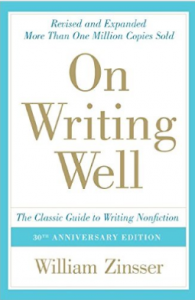
Turns out, though, that I haven’t been living in a time machine after all. I just read a chapter in William Zinsser’s On Writing Well that made me realize how much my verbal choices have changed over the years. I’ve been part of a language revolution without even knowing it!

Back in the 1960s, Zinsser was a member of the Usage Panel that votes on the acceptability of various words and constructions for The American Heritage Dictionary. I was amazed to find that many words I use all the time were considered controversial back then.

Questionable verbs included trigger, rile, escalate (which was born in the Vietnam era), contact (accepted by only about a third of the panel), outsource, and stonewall (which first became a verb in the Nixon era)

Problematic nouns included blog, laptop, geek, boomer, Google, multi-tasking, slam dunk, trek (rejected by more than half the Usage Panel), senior citizen (rejected by 97% of the Panel), dropout, funky, downer, vibes, rip-off, and bummer

Trendy jargon that earned a thumbs-down from the Usage Panel included TV personality, downsizing, and ongoing.

Most language changes have happened so gradually that nobody noticed them. Words and constructions that were once considered abhorrent seem perfectly normal just a generation later.

The most important principle for all of us to remember is that the process will continue, whether we like it or not. One-word spellings of all right and a lot will soon be widely accepted (sigh). I expect to see binky (colloquial for “pacifier”) in a dictionary any day now. And no one knows what other changes are coming.

It’s a downer and a bummer for many of us senior citizens – but it’s also a testimony to the health and vitality of our wonderful language.

Share

Polish Your Resume

I just read a terrific article about resumes. If you’re searching for a job, you’ll find some excellent advice by reading “Gone in Six Seconds” by Danielle Krause. (You may have to do a Google search to find it – I’m having problems getting the link to work.)

What really excited me were the writing tips. For example, Danielle Krause recommends listing your specific achievements instead of describing yourself in glowing terms (“dynamic,” “innovative,” “strong communication skills”). Have you won any awards? Implemented any significant changes? Completed any important projects? Krause’s “be specific” advice applies to almost every type of writing.

The usage tips are just as useful. Krause says she reads many resumes that contain the following mistakes:

  • errors with capital letters
  • inconsistent punctuation with bullet points
  • inconsistent verb tenses
  • mistakes in parallelism

I see these mistakes repeatedly in many types of writing tasks. So here are some tips:

  • Capitalize brand names and organizations – Apple, Excel, Chamber of Commerce.
  • Don’t capitalize job titles, college majors, or careers – administrative assistant, accounting, nursing, law enforcement. Languages are the exception because they’re always capitalized – English, Tagalog.
  • Don’t use periods with bullet-list items unless they’re complete sentences (like these).
  • Stick to present or past tense. Don’t mix tenses.
  • Parallelism adds a professional touch to your writing. If a sentence contains a list, make sure all the parts match. (You can learn more about parallelism at this link.)

Resume Dollar


Share

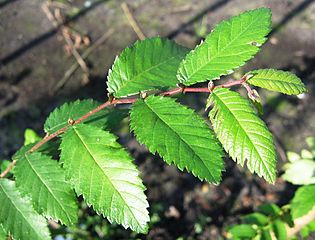
Florida’s Winged Elm

My husband is a professional writer who does two weekly gardening columns for our newspaper. Here’s a sentence he wrote for a recent column about winged elms (a popular tree in Central Florida). Does anything strike you as you read it?

One of few Florida natives that have recently burgeoned in popularity, this deciduous tree grows rapidly in sun or light shade, forming an upright, vase-shaped crown.

This sentence is an example of a hotly contested issue among English instructors and professional writers and editors. My camp says that the sentence is correct as written. But many experts would write the sentence this way, with has instead of have:

One of few Florida natives that has recently burgeoned in popularity, this deciduous tree grows rapidly in sun or light shade, forming an upright, vase-shaped crown.

Who’s right? I’ll leave it up to you. I used to allow my students to do it either way. (My husband – who wrote the sentence without discussing it with me – delighted me by coming down on my side of the question.)

But I’m convinced (of course!) that my way is the right way. Here’s my reasoning. See what you think:

1.  I ask myself what I see when I visualize the sentence.

This is one of my favorite ways to analyze a sentence and untangle a usage problem. What do I see here? “few Florida natives.” So I’d write it this way: “One of few Florida natives that have recently burgeoned in popularity…”

2.  I try rewording the sentence. Contrasting the two sentences can lead me to the correct verb.

One Florida native that ___ recently burgeoned in popularity….

One of few Florida natives that ___ recently burgeoned in popularity….

To me, these two clauses are different. The first is clearly about one native tree.  The second is more complex: The winged elm is one of several trees that recently burgeoned in popularity.

So I would write:

One Florida native that has recently burgeoned in popularity…

One of few Florida natives that have recently burgeoned in popularity…

What’s your take on this?

You can click here to download a free subject-verb agreement handout. Today’s issue is discussed in Rule 6.

Winged Elm

                        Winged Elm 

Share

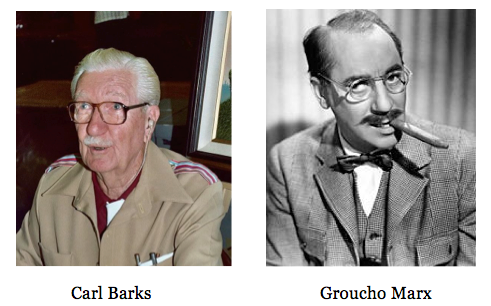
Carl Barks and Groucho Marx

Today I’m going to write about an unusual writing practice: Counting syllables.

Last week I came across a reference to counting syllables in an anecdote about Groucho Marx in a delightful book by Dick Cavett, the former host of a popular TV talk show. Cavett was interviewing Marx, a comic actor who also used to host a TV show.

Cavett asked Groucho if he’d seen the musical play Hair, which featured Broadway’s first frontal nudity scene with both sexes.  “No,” Groucho answered. “I was going to see it, but I went home, took off my clothes, looked at myself in the mirror, and saved seven dollars.”

The audience roared. But Groucho deliberately got the ticket price wrong, according to Cavett: “The figure he chose for the price of an orchestra seat was of course not the correct figure, but it had the right number of syllables for the joke.”

Cavett went on: “People will think an old comedian is crazy when he tells a young writer to change a line from ‘There are twelve chickens on the lawn’ to ‘There are fifteen chickens on the lawn,’ but he’s right. Because of the rhythm, fifteen is a funny number and twelve is not.”

How many people count syllables?

I don’t, but some writers do. There’s a rhythm to good writing, and you may have to experiment – even fudge a detail or two, as Groucho did – to get the rhythm right.

Let’s hear from another successful writer, Carl Barks. He was the cartoonist who did Donald Duck and Scrooge McDuck comic books for Disney for many years. (Don’t underestimate Barks and his work: George Lucas called Barks’s comics “a priceless part of our literary heritage.”)

Here’s Barks talking about his working method: On many pages of his stories, he said he had “two climaxes, one at the end of the first four panels, and at the bottom of the page. The reason: He felt he needed “something to cause the person to read on further.”

I was impressed when I read this. Climaxes are a hugely important writing concept – one that I didn’t hear much about until my Ph.D. program.

But Barks did something else as well. Any guesses about what it was? According to Barks, “At times I would count the syllables in the words, to make sure that the dialogue would flow like music, from one panel to another.” Barks said he would sometimes use a word his young readers didn’t know “because I was counting syllables, and that particular word happened to have the right number to cover the exact meaning.”

I think these two men were on to something. Sometimes teachers and editors forget that the sound of a sentence is just as important as the grammar. I often spend five or ten minutes revising a sentence to get it exactly right – and then recoil the next day when I go back to read it. “Who wrote that?” I ask, with gritted teeth. The unpleasant truth is that I did.

Just a moment ago I revised this sentence: I’ve never counted syllables, but I think Barks and Marx were onto something. Why? “Barks and Marx” are rhyming words, and I didn’t want readers distracted while they were reading this post. Here’s the revised sentence (I substituted “these two men”): I’ve never counted syllables, but I think these two men were on to something.

The nugget of gold here isn’t really about climaxes or counting syllables. What impressed me about both men is that they didn’t settle for the first thing that came into their heads. They found a way to make it better.

When I was a college instructor, many of my students were weak writers. That wasn’t surprising, since they had landed in my developmental writing class because they couldn’t pass the college entrance exam in writing.

But so often I felt that they could do perfectly well if they would just spend a little more time on an assignment:  Experiment. Try a different approach. Ask someone else (it doesn’t have to be an English major) for feedback. Even little changes -the difference between twelve and fifteen – could be the first step on the road to success.

Barks & Marx (hah!) figured it out. Have you?

Carl Barks and Groucho Marx 2

Photo of Carl Barks by Alan Light, CC BY 2.0, https://commons.wikimedia.org/w/index.php?curid=3366723


Share

An English Teacher Falls to the Floor

I’ve been waiting to write about something that comes up frequently in my writing group. The problem was that I couldn’t come up with a good example. I finally found one in a gardening column I was typing for my husband.

Charlie was writing about resurrection plants that dry up and look dead – sometimes for years – until a rain shower revives them. One plant in this category – Selaginella lepidophylla, aka “spikemoss” – has an even more remarkable quality. Here’s what my husband wrote about it. Notice anything?

Interestingly, even wholly dead specimens uncurl when moistened because the cells responsible for rehydration continue to expand after death.

I had doubts about that “wholly dead” – but before I could say anything, Charlie raised the point himself. “Dead is an absolute term,” he said. “You can’t be wholly dead, can you?” (In fact I just raised that point in a recent post.)

My thoughts exactly. But after we talked about it for a couple of minutes, we agreed that “wholly” should say in. Why? Because he wanted to emphasize that he was talking about plants that really, really, really were dead.

It’s an issue that comes up all the time in my writing group. Rules are rules, aren’t they? Don’t good writers have to follow them 24/7?

Instead of giving a direct answer, I usually raise another question: Which came first, rules or language?

The answer – of course – is that language came first. Rules were an attempt to pass on what good writers were doing so that the rest of us could follow in their footsteps.

My standard advice is to write the problematic sentence both ways – following the rules and breaking them. Then set the sentence aside. After some time has passed, read both versions and decide which one feels better. Use it without apology. If someone raises an objection, say – loudly – I like it this way.

(I always picture an English teacher falling over dead when I say this. Sorry!)

I’m going to leave that unfortunate English teacher lying on the floor (in the spirit of this “resurrection” post, I’ll bring her back to life in a minute). I want to explain why I voted for “wholly dead.”

Every book of writing advice ever written urges writers to aim for brevity. “Omit needless words!” is the solemn advice from Strunk and White’s classic The Elements of Style. William Zinsser’s On Writing Well has a whole chapter about avoiding verbal clutter.

The problem with this sensible advice is that it sometimes clashes with other essential writing principles: Be emphatic. Be clear. Sometimes an apparently unnecessary word can be useful and should stay in. Our language is full of redundancies (the lofty term is “overdetermination”). They’re so much a part of our everyday lives that we never notice them.

Take a look at this sentence:

He takes his car to the dealership for an oil change twice a year.

How many times does this sentence tell you he’s male? Not once but twice: He/His.

And how many times does it tell you that we’re talking about just one person? Three times! He/takes/his.

Everyday communication usually takes place in less-than-perfect surroundings. The TV is on, an ambulance siren is blasting, other people are talking. But even if you miss big chunks of a conversation, you’re likely to know exactly what was said: The redundancy in our language ensures that you won’t miss anything important.

(Surprising fact: Much of this research was done by telephone companies. Their studies showed that static and interference don’t cause problems with most phone conversations. The redundancy built into our English language has saved phone companies from wasting a lot of money on unnecessary upgrades.)

Let’s bring that English teacher back to life and talk about Charlie’s column. He wanted to make sure his readers got the point: Even a dead-as-a-doornail spikemoss specimen can revive – slightly, for just a few moments – when it’s given some water. How do you show that you’re no longer talking about the specimens that lie dormant for years and dramatically spring back to life?

That two-syllable word does the job nicely: Wholly dead. Nobody is going to miss the point – even if the kids are squabbling in the background, the microwave is beeping, and the dog is barking.

Spikemoss is amazing. So is our language!

Selaginella lepidophylla - the common name is "spikemoss"

Selaginella lepidophylla – the common name is “spikemoss”


Share

Does Sentence Diagramming Help?

I sometimes talk with people who assume that I must yearn for the good old days when students learned how to take sentences apart.

They’re partially right. Many of my college students had never spent any time thinking about how language works and how sentences are put together. Teaching them to slow down and notice language was both a challenge and a pleasure.

But sentence diagramming is not the answer. And – truth to tell – it’s a skill I never acquired.

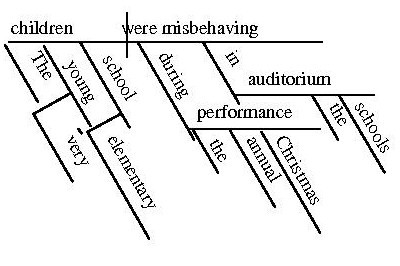
Below is a sentence diagram I found online. Let’s take a close look to see if it would help students sharpen their writing skills:

The very young elementary school children were misbehaving during the annual Chistmas performance in the school’s auditorium.

Sentencediagram 2

Suppose you dictated this sentence to – say – a class of eighth graders. What mistakes would they be likely to make – and would sentence diagramming help them do better?

Based on 40 years as an English instructor, I can tell you that these students would probably:

  • misspell “elementary,” “annual,” “performance,” or “auditorium” (and perhaps other words)
  • forget to capitalize “Christmas” (and perhaps mistakenly capitalize “school”)
  • omit the apostrophe in “school’s”
  • insert an unwanted comma somewhere for the dubious reason that this is a long sentence, so surely it needs a comma

Would a background in sentence diagramming help those students avoid any of those mistakes? No.

More important, though – would any of those students know that this is a static sentence that should be rewritten? No again.

The sentence is perfectly grammatical, but it’s weak. The words “were misbehaving” don’t help us see and hear the chaos in that auditorium. We need to substitute details like these:

  • flipped the auditorium seats up and down
  • climbed over the seats
  • shouted to their friends
  • ran up and down the aisles
  • threw spitballs at their classmates

I would encourage students to write at least two sentences about the misbehavior so that they can include several examples without making the sentence uncomfortably long.

Basic English usage isn’t hard to master. There are four pronoun rules, five subject-agreement rules, three comma rules, and two ways to use an apostrophe. A semicolon is like a period. There are a few rules for capital letters…and not much more. Even advanced usage doesn’t have a burdensome amount of content.

Does sentence diagramming instill any of those skills?

The answer, sadly, is…no.

Students need English teachers who can efficiently teach the usage skills needed for effective writing. More important, students need to learn how to use language to communicate ideas and experiences – express themselves vividly and powerfully – and showcase what they know.

C

Share

Carolyn Hax and Passive Voice

A few days ago I discussed a New York Times article that linked grammatical choices to morality. A recent Carolyn Hax column makes a similar point. (Hax is the advice columnist for the Washington Post.)

In that column, a woman asked how to get an old friendship back on its former footing. Problems erupted during a stressful time when she made an unfortunate remark to a friend. Things got worse when the woman repeated that mistake, and now she feared that she’d lost a friend permanently.

Hax (a columnist who impresses me) pointed out that the woman’s own description of the events hinted at an underlying problem: “it happened again,” passive voice vs. the more accurate “I did it again” (from Hax’s column).

I would label “it happened again” active voice, not passive. (It is the subject, and happened is the verb.) But Hax’s larger point is spot on: The woman’s sentence structure was an attempt to distance herself from her own behavior.

This example underlines what postmodern language theorists have been telling us: Language isn’t neutral. Unintended messages often lie hidden within the choices we make when we write and speak.

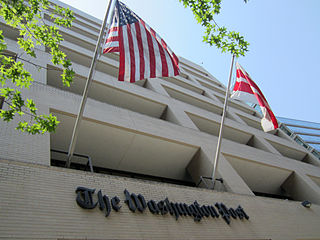
The Washington Post building


Share

More about Passive Voice

In a recent post, I noted that writers disagree – sometimes fiercely! – about passive voice. 

I came out sort of in the middle – passive voice can be useful, but there are risks.

One troublesome feature I mentioned was that passive voice tends to omit the subject of the sentence. Compare these two sentences:

Joe threw the ball.  ACTIVE VOICE

The ball was thrown.  PASSIVE VOICE

Both sentences are perfectly grammatical – but the second one doesn’t explain that Joe did the throwing.

Today I want to look more closely at this feature of passive voice, and I want to focus on something that might surprise you: Magical thinking.

Language, we think, is a pretty straightforward affair. We talk about everyday life: I went to the movies. Larry and Susan split up. A cold front is coming. Where’s the magic?

Take a closer look, though, and you’ll see that we often attribute magical properties to language.  Here’s something that happens to my husband and me all the time: We want to know what kind of weather we’ll encounter on an upcoming trip. A weather forecast predicts mild temperatures and sunny weather. I turn to my husband and say, “Great! No rain!” And then gloom descends. “Uh-oh – I shouldn’t have said that.”

I’ve called up the jinx, and he and I know there will be a deluge during our whole vacation.

Another example: During the trip he comments that our car has been wonderful – not a speck of trouble since we drove it out of the dealership. Uh-oh: Before we’ve driven another 100 miles, the transmission will fail, or the radiator will overflow, or the serpentine belt will break.

If you’re a baseball fan, you’re familiar with the jinx. Many sportscasters won’t mention that there’s a no-hitter in the works for fear of spoiling the pitcher’s chance for a perfect game.

What does this have to do with passive voice? Criminal justice experts used to believe that you could magically ensure an officer’s honesty by banning the words “I” and “me.” If a police report said “I saw a bulge in the suspect’s right pocket,” the officer might be lying. The remedy was passive voice: “A bulge was seen in the suspect’s right pocket.” 

If you spend even a minute thinking about this, you’ll see how ridiculous it is. Honesty and integrity are hard-won character traits. You can’t instill them with verbal tricks.

But generations of police officers were taught to write reports this way, and the tradition has stuck. Police trainers are still struggling to reverse course and persuade officers that it’s ok to write in active voice.

Because I have a report-writing blog, I read many police reports. I’ve found that the effort to undo the passive-voice habit has been only partially successful. Many reports start out in active voice (“I interviewed MacKay”). But near the end, passive voice invariably finds its way back in, with sentences like these:

The suspect was handcuffed.

The evidence was logged into the Evidence Room.

Barton was transported to jail.

An essential piece of information is missing in each sentence: Who handcuffed the suspect, logged the evidence, drove Barton to jail?

Imagine that you’re an officer testifying in court about a crime you investigated. The defense attorney has some questions about an injury related to the way handcuffs were used on her client. You gulp and realize that you weren’t the one who did the handcuffing – another officer at the scene did it

Your mind races. Who was it? Everyone in the courtroom is staring at you. You look hopefully down at your report, and here’s what you find: The suspect was handcuffed. No name.

Finally you remember that it was Officer Peterson. You look desperately around the courtroom, and then you sigh. No, he’s not here. The trial has to be postponed, and you’ve embarrassed yourself and your agency.

Let’s review what we learned today:

  • Passive voice is grammatical but risky
  • It sometimes omits the person who performed the action
  • Magical thinking about language is very common

It’s a fascinating topic, this language of ours!

Magic Wand Pixabay ok

Share

Let’s Not Lose These Words!

Early in my career as an English teacher, the All in the Family TV show premiered and became a huge hit. In an idle moment one day I looked up “dingbat” – Archie Bunker’s endearing term for his muddle-headed wife – in the dictionary. I was astonished to learn that a dingbat was a printer’s ornament. Really?

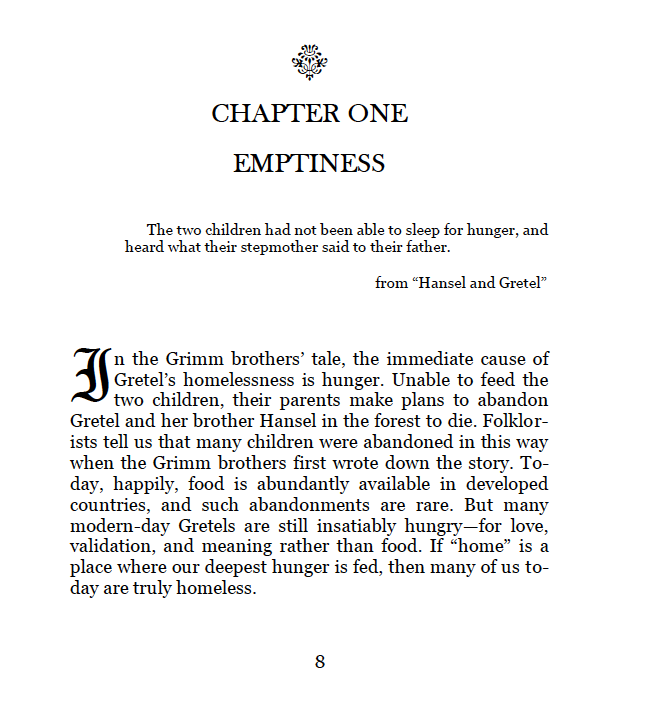
Fast forward to 2011, when I published my book Gretel’s Story: Finding the Way Home and used a decorative dingbat at the beginning of every chapter:

Gretel's Story: Finding the Way Home

                                             Gretel’s Story: Finding the Way Home

Fast-forward again, to 2016: I just looked up dingbat in the latest edition of the American Heritage Dictionary and found that “silly person” was the first definition. “Printer’s ornament” has dropped to definition #4.

Deploring this kind of change is about as futile as shaking your fist at the sky because a sudden thunderstorm has disrupted your plans to go swimming. Language changes. That’s a fact of life. Get over it!

But now I’m going to argue against myself. Sometimes we need to fight – mightily – against those changes, forestalling them as long as we can. I’m talking about the danger of losing useful words from our language.

Here are four words that – count on it – won’t be around much longer:

disinterested   infer   unique   comprise

I don’t mean that people are going to stop using them. What I’m talking about is the loss of their special meanings.

  • Disinterested is not the same as uninterested – but more and more people are using the words as synonyms. Disinterested means “impartial.” You would want a disinterested judge if you went to court to settle a dispute.
    “Interest” in this context means “involvement,” as in “She has an interest in that software business.” When we use disinterested to mean “not interested” or “not caring,” we’re losing a useful word from our language.
  • Similarly infer does not mean “imply.” Infer means “deduce.” But those two words are gradually acquiring the same meaning – and there goes another useful word. (Here’s an example of how to use infer correctly: When Carole came to work without her wedding ring, I inferred that she and Joe had split up.)
  • Unique is another word we’re probably going to lose. Unique does not mean “unusual.” Unique means “one-of-a-kind.” My fingerprints (and yours) are unique – but they’re not unusual. (Well, I just looked at mine, and they’re pretty ordinary – I can’t vouch for yours.)
    Many people say “very unique” when they mean “very unusual.” You can’t have “very unique” fingerprints or snowflakes! They’re either one-of-a-kind or they’re not. (In the same way, you can’t be “very pregnant” or “very dead.” You either are or you’re not.)
  • Today’s final word is comprise, which does not mean “compose,” even though it’s often used that way. Comprise means “include.” Here’s an example: The committee comprised two residents from each floor. If you say “is comprised of,” we’ve lost another useful word from our language.

Let’s keep these wonderful words going as long as we can, ok?

Archie and Edith Bunker

Archie and Edith Bunker

Share

Passive Voice

Last week I had two reminders that passive voice is a controversial topic. A friend gently chided me about a passive voice sentence I’d included in a law enforcement newsletter I’d just sent out. Here’s what he wrote:

Had I been the officer’s supervisor, I would have suggested active voice, from “Richard is enjoying his new job as a school resource officer ” to “Richard enjoys his new job as a school resource officer.”

A few days later, passive voice was the subject of a Grammarly quiz question honoring National Grammar Day. The quiz was designed to determined how fanatical you are about grammar (I scored high). One of the questions asked whether I considered passive voice a) outdated b) acceptable sometimes c) incorrect or d) confusing. I chose b, for reasons I’ll explain in a moment.

Twice in one week…hmmm. Seems the grammar gods want me to weigh in on passive voice.

So, what is passive voice – and why do writers argue about it?

Whenever you’re writing, you can choose to write in active voice or passive voice. Active voice is much more popular, but passive voice is equally correct.

Passive voice is a grammatical construction that emphasizes the receiver of the action, not the doer. In simple English, passive voice flips sentences around. Take a look at these examples:

Joe threw the ball.  ACTIVE

The ball was thrown by Joe.  PASSIVE

Pam drove me to the mall.  ACTIVE

I was driven to the mall by Pam.  PASSIVE

The first point I need to make is that my friend was wrong: “Richard is enjoying” is still active voice. (Technically it’s called progressive present tense.) Passive voice would be “The new job as school resource officer is enjoyed by Richard.”

Now we’re going to turn to another, more problematic aspect of passive voice. Often it omits the doer completely:

The ball was thrown.  PASSIVE

I was driven to the mall.  PASSIVE

Who threw the ball, and who drove me to the mall? The sentences don’t tell you.

And that’s where today’s topic starts to get interesting – and complicated. Passive voice tends to be impersonal, clumsy, and unnatural – pompous, even. Writing experts generally recommend avoiding it. I’ve run into people who believe that passive voice is always wrong. If you use the grammar checker for Microsoft Word, you’ll receive a warning every time you write a sentence in passive voice.

Passive Voice Is Impersonal

But the impersonality of passive voice can be useful – and that’s why I chose b (“acceptable sometimes”) as my answer for the Grammarly quiz.

Suppose, for example, someone has been leaving dirty dishes in the sink in the break room at work. You’re the supervisor, and you don’t want to name the person – you just want the problem to stop. So you post a sign in the break room that uses passive voice:

Dirty dishes have been left in the sink three times this week.  PASSIVE VOICE

You haven’t accused anyone. Passive voice solves the problem nicely!

But that impersonality can create problems – huge ones. Last October the New York Times published an article about the weak portrayal of slavery in Texas textbooks. Take a look at this sentence:

Families were often broken apart when a family member was sold to another owner.  PASSIVE VOICE

Who conducted the sales and broke apart the families? There’s no subject in this passive-voice sentence. That impersonality sucks energy out of the sentence. By contrast, notice the power you feel if the same sentence is written in active voice:

Slaveholders often broke families apart by selling a family member to another owner.  ACTIVE VOICE

Here’s what the Times writer said about the way the Texas textbooks presented slavery:

Though we don’t always recognize it, grammatical choices can be moral choices, and these publishers made the wrong ones.

Are you as astounded as I was? When was the last time you heard someone talk about grammar as a moral issue?

Bottom line: If you choose to write a sentence in passive voice, be sure you have a good reason.

Grammatical choices can be moral choices.

Share