A Royal Birthday

Queen Elizabeth II turns 90 today.

Hip, hip, hurrah!

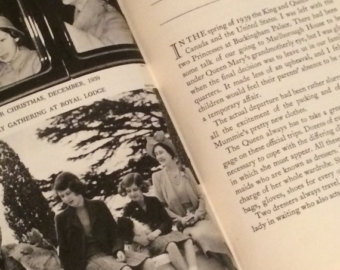
I have been fascinated by the Queen since childhood, and my favorite book has long been The Little Princesses by Marion Crawford, nicknamed Crawfie by the royal family.  Crawfie was the governess to Princess Elizabeth and her sister, Princess Margaret, when they were growing up. It amuses my husband no end to come upon me reading The Little Princesses yet again (and again and again). “Are you sure you have a Ph.D. in English literature?” he’ll say.

OK, I get it. My favorite book is a sentimental bit of fluff. I have lapses and failings just like everyone else.

Except that lately I’ve begun to revise my opinion of The Little Princesses. Upward. I’ve decided that it really is a great book, and today I’m going to talk about why.

One reason is the historical information in the book. Readers get an up-close-and-personal look at the abdication of Edward VIII and its effect on the princesses and their parents. Even more interesting are the descriptions of everyday life during World War II: rationing, coupons, air raids, gas masks, trenches…all seen through the eyes of Crawfie and her young charges. The princesses mix with refugees evacuated to Scotland when London becomes too dangerous. Princess Elizabeth is trained as a military mechanic. Crawfie herself has to register for military service.

Equally impressive is the quality of the writing. It is Crawfie who makes this book so remarkable – or, more precisely, the anonymous ghostwriter who turned Crawfie’s original manuscript into a bestseller. It’s a shame that we’ll never know who actually wrote the final draft, because it is such a model of good writing.

Here’s what I’m talking about. When I work with memoir writers, I relentlessly remind them to insert themselves into the stories they’re telling. “React,” I preach again and again. “Never allow anything to happen without a response from you.” Crawfie – present on every page of The Little Princesses – exemplifies that advice.

Here, for example, is a snippet from Crawfie’s account of the abdication:

On December 3, 1936, the newspapers carried a grim headline: THE KING AND HIS MINISTERS. GREAT CONSTITUTIONAL CRISIS. I had been out. I bought an evening paper just outside in Hamilton Gardens, and I remember I read the headline while I waited for the door to open.

And here’s an excerpt from Crawfie’s account of the coronation in 1937 (“Lilibet” was Princess Elizabeth’s nickname):

When they finally got home again, I asked Lilibet, “Well, did Margaret behave nicely?”
“She was wonderful, Crawfie. I only had to nudge her once or twice when she played with the prayer books too loudly.”

 The Little Princesses exemplifies the “show – don’t tell” principle that many writers never quite get a handle on. Crawfie doesn’t step back and reflect: She takes us into the royal household with her so that we can watch the two princesses grow up. Because Crawfie is always there, so are we. As a result everyone in the book – even the royal pets – is right before us, lively and real. Even if you aren’t as besotted with the Queen as I am, you might be surprised by how much fun it is to read this book.

Happy birthday, Your Majesty!

The Little Princesses by Marion Crawford

                The Little Princesses by Marion Crawford

Share

Annie Besant

Whenever I visit New York, I spend hours walking around Manhattan. A favorite stop used to be the East West Living Bookstore at Fifth Avenue and 14th Street (sadly, it closed its doors in 2010). It was a mystical place that sold incense and other spiritual accessories, along with a wide selection of books about depth psychology I couldn’t find anywhere else in those pre-Amazon days.

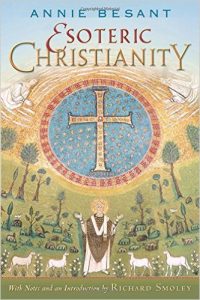
One sunny afternoon while I was searching for a book by Carl Jung, I spotted a brightly colored display of brand-new paperbacks on a countertop. Curious, I walked over to take a look. It was a set of books by Annie Besant.

I reeled.

Annie Besant was a British political activist and author I had encountered in my Shaw studies. She was a revolutionary thinker who was far ahead of her time (1847-1933). (Heck – she would probably be ahead of her time if she were living today.)

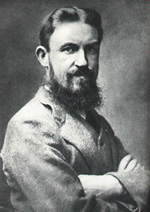
Shaw – a revolutionary thinker himself – had been romantically entangled until her until she broke his heart by giving up politics for theosophy, a mystical approach to enlightenment. Her writing created a minor sensation for a time back in the late 1800s and then fell into obscurity.

But there in front of me was a sparkling display of her books, looking as if they’d just been published. It was as if I’d stepped into a time machine. I abandoned my search for the book by Jung and stumbled to the door.

When I stepped outside, I was sure I was going to bump into a youthful Shaw and some of his friends on the sidewalk. I staggered down Fifth Avenue, oblivious to taxis, pedestrians, and flashing DON’T WALK signs, until modern-day New York finally reclaimed my consciousness.


All writers are time travelers. That doesn’t mean that we need an extensive background in history and literature. It does mean we’re alive on some level we can’t explain and stirred by things incomprehensible even to those nearest and dearest to us.

And it means we’re constantly tossed back and forth between the need for self-discipline – lots of it – and the necessity for wandering down twisting streets that apparently lead nowhere.

I would have been a much better college student if I’d spent less time listening to the Beatles, mooning over Richard Burton, and standing in line for cheap tickets to see Nureyev and Fonteyn. And I would be a better Shaw scholar if I’d systematically read all the major works by and about GBS instead of gobbling up books by Jung, Fromm, and Hillman.

But I wouldn’t be as good a writer.

Share

Distractions – For and Against

Distractions are bad. Except when they’re good.

Here’s a useful rule of thumb for writers: Don’t distract your readers. They shouldn’t have to stop to look up a word or allusion. They shouldn’t be confused by a character’s puzzling or inconsistent behavior. Sentences should make sense the first time they’re read. If you’re writing words or phrases in a foreign language, the context should make the meaning clear.

I’m thinking right now of one of my all-time favorite books, The Hatter’s Phantoms by Georges Simenon. (Go to the Barnes & Noble website if you decide to buy it – the description of the book at Amazon.com gives too much away.) 

Why would I read a mystery over and over? Surely I know all the twists and turns by now. The answer is that The Hatter’s Phantoms makes me feel as if I’m in a small town in France, and I love that feeling.

Good writing is like that. Your everyday reality dissolves, and you find yourself living someone else’s life, or embracing their ideas, or taking on their problems or successes. Nothing should be allowed to break that spell.

Simenon (a Belgian novelist who was one of the world’s best-selling writers) was a master at drawing you in to the characters and settings of his books. Pick up anything he’s written (his Inspector Maigret mysteries are wonderful) – and you’re off to France, the setting he chose for most of his books.

But sometimes distractions are good. Sometimes (and this is a postmodern idea) writers want to call attention to themselves. Writers with an agenda employ various strategies to ensure that you hear their voices while you’re reading – quite a trick, when you think about it, but some writers (Bernard Shaw was one) are masters at it.

I’m about halfway through Maureen Corrigan’s So We Read On, a marvelous book about F. Scott Fitzgerald’s masterpiece The Great Gatsby. Corrigan’s writing is so good – often so clever – that I keep putting the book down to take a breath and wonder how she does it. That’s a distraction – a wonderful one.

And then there are writers who take on someone else’s voice. I’m thinking of the five-year-old boy who narrates Emma Donoghue’s Room (one of the best novels I’ve ever read). In order to figure out what he’s talking about, you have to become a five-year-old yourself. (More distractions while you figure out what he’s seeing and unable to understand.)

And now two things are going on inside your head. You’re making plans to get your hands on one of the books I’ve recommended, and you’re also trying to figure out how distractions – which seem to be a bad thing – can also be beneficial.

I’m trying to get you to question the way you usually write your stories or present your ideas. Most of the time we adopt a traditional third-person, omniscient narrator or expert. There’s a wise, anonymous person offstage who’s doing the talking (as I’m doing here).

But your writing will be richer and more interesting if you try your hand at other possibilities. Invent an “I” to tell your story. You can be a wise old sage, a young person on the brink of adulthood, or a person of the opposite sex. You can take on another identity even if you’re writing nonfiction. Try sounding younger or older, or angrier, or funnier, or…just try something different.

Very likely you’ll return to the traditional third-person, omniscient narrator or expert after your experiment. That’s fine – honest! The benefit is that you will have explored some new writing options, and that experiment will bring new vitality to your writing.

In other words: Make a mess. Fool around. Get it wrong. All writers need to stray from the tried-and-true pathway once in a while. Please give it a try!

wander 2

Share

Writing as Therapy

During my years as an English instructor, I often read interesting and thoughtful essays submitted by my students. Sometimes, though, a student would submit a long, emotional paper about a personal problem. I remember papers written by students who were trying to make a decision about breaking off a relationship or accepting a marriage proposal. There were students nursing broken hearts or mourning the loss of a parent or grandparent.

Their raw emotions made powerful reading, but they didn’t match the goals for the course I was teaching. No matter what was going on in the hearts and souls of those students, they were still looking to me for help with their writing skills.

What I used to do was meet privately with them, listen to what was going on in their lives, and then gently guide them into other writing topics. Sometimes I offered to set up an appointment with a counselor from Student Services. I’m happy to say that most of those students were grateful to be offered another chance at a good grade. The yearning for a college degree was motivation enough to try again with a less painful topic.

As time went by, I started to see that those outpourings pointed to an important paradox about writing. Barbara Johnson is a brilliant scholar who expressed it succinctly and powerfully: “To mean…is automatically not to be.”

Language can communicate meaning and convey emotion. What it can’t do – at least not very well – is convey both at the same time. When we’re using emotion-filled sounds and words to vent what we’re feeling, we may not be communicating the meaning of what’s going on. Someone who’s listening may need details and context in order to help – and those things require sentences.

But expressions of emotion can be valid and important. Language is truly one of the great therapeutic tools (as Freud recognized when he instituted his “talking cure”). Over the years I’ve often done a kind of “talking cure” on my own, retreating to a private place to download my deepest feelings onto paper. Often there have surprises when a new perspective or insight seemed to write itself on the piece of paper in front of me. Writing – even when it starts out as an incoherent jumble of words – can take on a life of its own.

So there’s nothing wrong with emotional writing, even though it doesn’t fit neatly into a college composition course. And what I’ve gradually come to realize is that good writing requires both emotions and ideas. Often I’ve started to write something, only to abandon it halfway through because I was still in an emotional place and hadn’t yet uncovered any ideas to explore. And sometimes the opposite happens: I’m working on an interesting idea with lots of potential – but I can’t do anything with it because the passage of time has drained away all its energy.

I’m convinced that one of the biggest challenges we face as writers is finding that middle ground between being and meaning. We need a gut connection to the subject we’re writing about, but we also need to be able to think about it.

And that raises an interesting question: Is there an element of therapy in every writing task? I need to think about that. I hope to have more to say about it later.

Therapist Couch Adobe ok
Share

Grammar, Anyone?

Years ago, when I was working as a consultant, my presentations often included a filmed interview with a man who was a business writing expert. You could tell from the clothing and the scratchy soundtrack that the film was old. Still, it was the best film about business writing I’ve ever seen, and it was always a big hit with the people who watched it.

I have – alas – forgotten most of the content of the film, but one point in the interview stayed with me: The expert said that English “never had any grammar” until some self-appointed language authorities started to impose their own system of rules. Yikes. No grammar? English has always had grammar! Think of those workbooks I labored over in grade school! Think of Noam Chomsky!

I’ve always wished that I’d had a chance to track down that expert (I can’t remember his name) and ask what he meant. That’s never going to happen, but in a way that’s a good thing because it means I’ve had to come up with my own answer to that question.

Grammar has been on my mind for the past few days in connection with two Instant Quiz questions I posted on this blog. (I always delete them after a couple of days, so don’t try looking for them.)

Here’s Quiz #1: 

The arena is located about two miles West of Smithville. 

The correct answer is that you should lower-case west because it’s an adverb. And now (gulp!) I’m going to confess that I was surprised to find out that west was an adverb. When I went to school back in the 50s and 60s, we didn’t spend much time on parts of speech. Most of the smattering of formal grammar I know came from four years of high-school Latin. (Ablative absolute, anyone?)

Here’s my reason for making west lower case: “west of Smithville” isn’t the name of a real place, like the Midwest or the Deep South, so there’s no capital letter.

This back-and-forth discussion is an example of something I’ve been preaching about lately: Learning from other people’s thinking processes. Although I rarely think about grammatical categories, obviously many other writers and teachers do. We can learn from one another.

But then I started thinking about writing the sentence differently. Would west still be an adverb?

The arena is west of here.

Because a grammarian would classify “is” as a linking verb, west can’t be an adverb. But it’s not really an adjective either, at least not in the usual sense. We might have an “old arena” or a “big arena,” but it is certainly not a “west arena.”

I’m sure someone has worked out a grammatical explanation for this. I even considered looking for one myself – and then I backed off. Who cares what part of speech it is? There’s no chance that someone is going to confuse the adverb west with the adjective west. There’s no word “westly.”

Hang on to that thought while we go on to Instant Quiz #2:

A thick buttery crust adds a special touch to ordinary macaroni and cheese.

I  would insert a comma between the adjectives thick and buttery:

A thick, buttery crust adds a special touch to ordinary macaroni and cheese.

But sometimes you don’t insert that comma between two adjectives. How do you know when it goes in – and when it stays out? My friend Gustavo A. Rodriguez Martinez said he’d been told that comma isn’t required with two adjectives in the same semantic category.  (Another confession: I’d never heard of that rule!) So, for example, there’s no comma if you’re talking about a “big fat cat.” Makes sense.

But Gustavo sensibly noted that “good old” works the same way – and those adjectives aren’t related. And then I thought of my own example:

Several clients said they liked our fresh, new look.

I would insert the comma even though “fresh” and “new” are semantically related, violating the rule we’ve been talking about.

Now I want to swing back to Mr. Business Writing from that vintage film and his declaration that English “never had any grammar.” Maybe what he meant was that English has never needed any grammar.

Before you run screaming for the nearest exit, hear me out.

If you study Latin, which doesn’t bother much with word order, you have to learn grammatical cases and their endings: nominative, objective, dative, ablative, and so on.

But if you grew up speaking English, you generally don’t need familiarity with subjects, predicates, adverbial clauses (a term I never really got the hang of), gerundives, and so on. Even tiny children quickly figure out word order: Joe loves Jane is different from Jane loves Joe (as many heartbroken suitors know all too well). 

Because of the consistent way English sentences are structured, you can solve many usage problems without a lengthy detour into grammatical theory. For example, focusing on the beginning of a sentence will often clear up dangling modifiers, run-ons, fragments and subject-verb agreement errors. You can fix most pronoun problems without resorting to grammar terminology.

Formal grammar, on the other hand, is often a confusing waste of time. Indulge me while I give you an example of the nonsensical way we teach language skills. Take a look at this chart, which you’ll find in just about every English grammar book ever published:   Present-Tense Verbs 2Schoolchildren are solemnly told that English has a singular second-person verb (you cook) and a plural one (you cook). Can you see any difference between them?

I can’t either. So why do we write the chart that way? Because that’s how Latin verbs work, and English grammar theory is based on Latin.

Here’s another problem: Despite the heading, these aren’t really present-tense verbs. Picture this situation: Your mother just had a bout with the flu, and you call her to ask how she’s feeling. She says she’s almost back to normal. “Great!” you say. “So what are you doing right now?” “I cook,” she says.

Really? Yes, the chart says that “I cook” is the first-person, present-tense, singular form of cook. But what your mother would really say is “I’m cooking.” Can you find “I’m cooking” on the chart?

I can’t either.

And why do we have a six-part-chart for present-tense verbs when five of the elements are the same (I cook, you cook, we cook, you cook, they cook)? By now you can probably answer that question yourself: It’s because Latin present-tense verbs have six endings.

I’ve had many students who were in the habit of saying “He don’t” instead of “He doesn’t.” I teach them the rhyming phrase “1, 2, I, you” and encourage them to write it on a piece of scratch paper as a reminder when they were working on a writing task. Problem solved – without the need to enter a time machine and travel back to the Roman Empire.
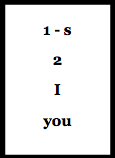
1 2 I you

So I think Mr. Business Writing, with his skepticism about grammar, was on to something really important. Here’s what really troubles me about the way we teach English: Every minute spent memorizing grammatical terms and underlining subjects and predicates is a minute that not spent on actual writing.

Let’s go back to Instant Quiz #2 and the problem of when you insert a comma between two adjectives – and when you don’t. How do you decide? I can’t lay down any hard-and-fast rule. I do it by feel. Or sound. Or I write it both ways and decide which looks better.

I’ve been reading since I was six years old (often under the covers when I was supposed to be asleep). I’ve been listening to words since the moment I was born. All those language experiences should count for something, and we teachers should be building on them instead of approaching English as if it were an alien tongue.

But what if you’re not a native speaker? Much of the same advice applies. Immerse yourself in the language you’re trying to master. Soak up as many language experiences as you can.

Of course some knowledge of grammar is necessary. (You can’t insert a comma between two adjectives if you don’t know what an adjective is.) But – and you can trust me on this, because I’ve done it – you don’t need an extensive background in grammar to be an effective writer.

One more story. When I was working on my doctorate, some of my fellow students requested a course in formal grammar because they were just as befuddled by adverbial clauses and gerundives as I was. The university agreed to set up a course for them.

I secretly thought (and still do) that those doctoral candidates were crazy. They had master’s degrees in English, for heaven’s sake. Some of them were published writers. They were doing perfectly fine with what they already knew about grammar. Wouldn’t that time have been better spent digging deeper at some of the fascinating problems associated with usage, writing, and teaching?

Child Reading in Bed Dollar


Share

The Lizard that Wasn’t There

Even though we live in a fourth floor condominium, lizards sometimes find their way into our living room or kitchen. My husband (who has somehow developed the ability to think like a lizard) is usually able to catch and release them.

So it made sense to call him on my cell phone last week when I got off the elevator and saw a lizard in the hallway. I asked him if he could please come and rescue the lizard – and quickly. It’s a busy spot, and I didn’t want to have to play hallway policeman if a neighbor wanted to use the elevator.

Moments later Charlie was squinting in the dim light at the other end of the hallway. “Where’s the lizard?”

I pointed. “About eight feet in front of you.”

More squinting. “I don’t see it. Are you sure it hasn’t moved?”

“I’m looking right at it.”

Charlie inched ahead, ready to flop onto the carpet if the lizard made a move. And then – at the same instant – we both realized we were trying to rescue a stain on the carpet.

I said a silent prayer of thanks that I hadn’t stopped any hallway traffic to save the life of a carpet stain. Charlie’s reaction was different. He walked over to where I was standing and stared at the spot.

“That’s an amazing optical illusion!” he said. “It really does look like a lizard. I can even see the head. ” He paused. “I wonder if military camouflage experts study this kind of thing – something flat that looks three dimensional.”

Charlie makes these mental leaps all the time. In fact they’re one of the reasons his gardening columns are so popular. For example, when he was writing about plant preferences, he included a reference to Gilligan’s Island: “Right or wrong? Chocolate or vanilla? Ginger or Mary Ann?” (He prefers Mary Ann.)

Most good writers have that same knack for mental leaps and connections. And there’s something else that goes with it: The ability to slow down, watch yourself think, and follow a stream of ideas to its ultimate destination.

Psychologists have a name for that kind of self-awareness: Metacognition – often defined as “thinking about thinking.” It’s a highly useful practice for both writing and everyday life. Often, when I’m reflecting on how I handled a sticky situation, I’ll remember that a hunch or insight flashed in my brain – and was gone before I could grab it and make use of it.

I really need to spend more time thinking about thinking. And maybe we should do something about that carpet stain.

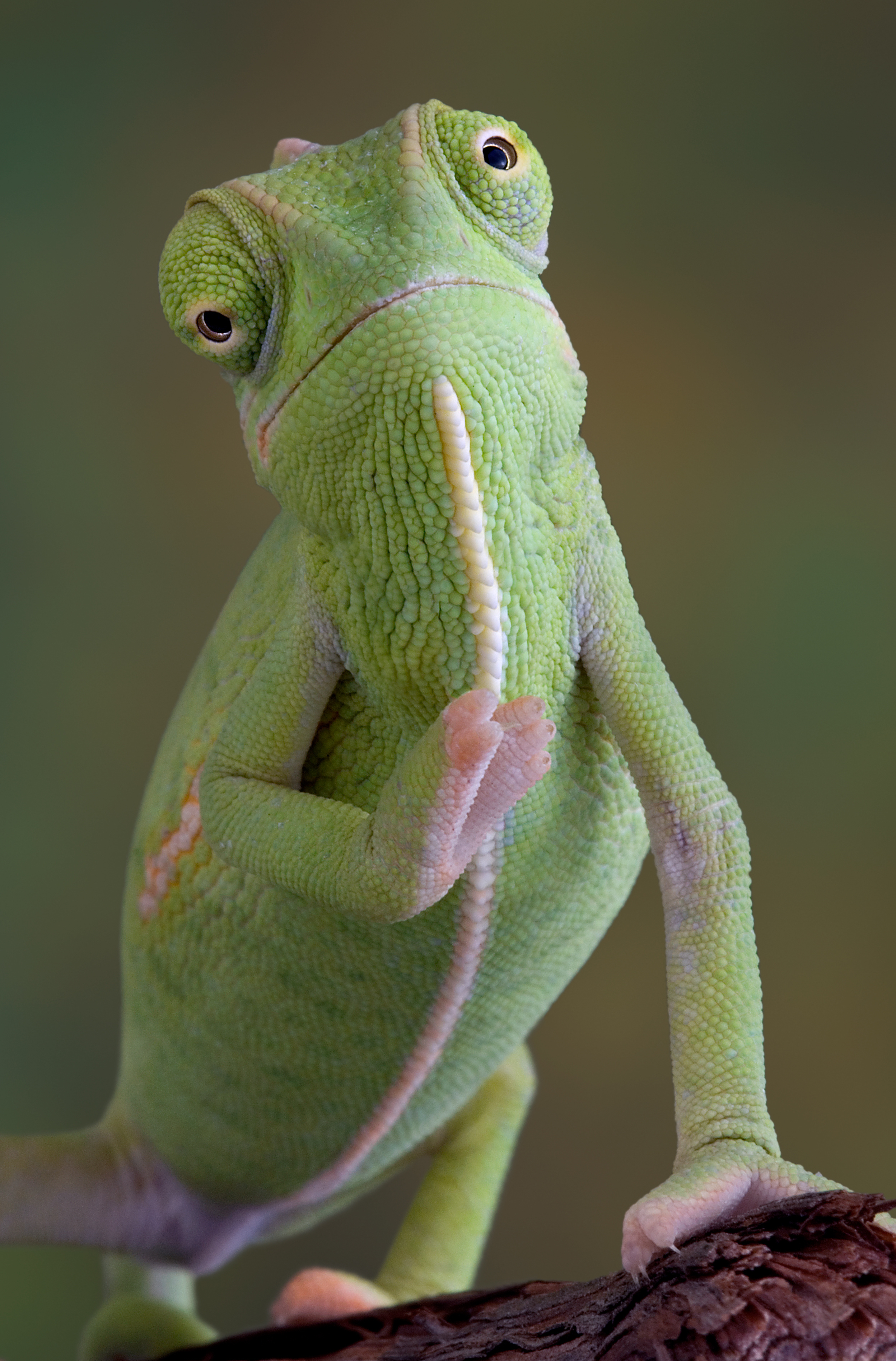
Chameleon Dollar


Share

“Omit Needless Words!”

No writing advice is more hallowed than this edict from William J. Strunk: “Omit needless words!” (If the Strunk name is unfamiliar to you, you need to download a copy of Strunk and White’s The Elements of Style and keep rereading it until you’ve absorbed every scrap of information. It really is the bible of style.)

“Omit needless words!” is stellar advice for writers, but there’s a wrinkle. How do you know which words are unnecessary? (Back when speed-reading courses were the vogue, readers used to be told to skip over the unimportant words. Really? Don’t you have to read the words in order to figure out which are unimportant?)

And there’s another problem with “Omit needless words.” Strunk and White were talking about style, not content. (The book’s title is The Elements of Style, not The Elements of Writing.) “Too concise” can be as bad as “too wordy.” An interesting vignette, article, story, or book is an intricate dance between omissions and inclusions. Beginning writers tend to load up their writing with unnecessary – even boring – information and then forget to include the good stuff.

Today I’m going to offer you two strategies that will help you think about what to omit and what to include. Think of these as training wheels: Eventually they should become so automatic and instinctive that you can whiz down the street on your own.

Training wheels Flickr 2

1. “Arrive late, leave early”: If you’re telling a story, begin at the most interesting point. “Warm up slowly” is great advice for athletes but disastrous for writers. Start paying attention to the story lines in movies, TV shows, books, and magazines. You’ll soon discover that professional writers like to choose the middle of a story as their starting point. Learn from them.

Similarly, often you can let readers draw their own conclusions about the unfolding events in a story. The ring of a telephone, a smile, a few words – often that’s enough to tell readers that a long-awaited wish has been fulfilled: a new bicycle, a date for the prom, a scholarship. You don’t have to add explanatory dialogue. TV and movie writers use this “leave early” strategy all the time, and you can too.

2. “Give me five”: Write a rough draft. Then start over, writing five more sentences for each one you’ve already written. This activity forces you to dig into an experience, memory, or idea. Often you’ll find yourself uncovering intriguing points you had overlooked in your first draft. Work the best of them into your next draft.

A variation is to talk with a friend or family member who can encourage you to add more details to what you’ve already written. I remember a session with my writing group when a member told us about waking up in the middle of the feeling so sick that she knew her life was in danger. That alone would have made a powerful story, but there was more: She was living by herself in a remote Central American village and had to call a friend with a boat to rescue her. 

When the group started asking questions, her story became vivid and real: How frightened she’d been when she woke up, all alone and in great pain. Her frantic search for her shoes and her phone. Her loneliness and fear as she waited on the riverbank for her friend to arrive – and the relief that rushed over her when she saw the light on his boat. Those memories transformed her story into a breathtaking adventure.

Good writers never stop thinking about omissions and inclusions. If you look at the manuscripts of great books from the past, you’ll see that every draft is full of cross-outs and write-ins. Often when a sentence is deleted, another one (or two or three or even more) is added somewhere else. Those classic writers knew what they were doing, and you can learn a lot from them.


Share

The Rhythm of a Sentence

In a recent post I talked about writers who struggle with the rhythm of sentences. The other day I came across a sentence about playwright Sean O’Casey that gets the rhythm wrong. I started tinkering with it, but it’s not so easy to fix.

Here’s the sentence:

O’Casey’s love and admiration for his mother – he lived with her until he was forty, when she died – are shown in his account of his father’s funeral in I Knock at the Door, volume one of the autobiography.

The sentence sputters just when you arrive at its most interesting point: he lived with her until he was forty, when she died… (If you read the sentence aloud, you’ll hear that sputter!)

I tried rewriting the sentence and came up with this:

O’Casey’s love and admiration for his mother – he lived with her until she died when he was 40 – are shown in his account of his father’s funeral in I Knock at the Door, volume one of the autobiography.

It’s better – but not good enough. “Until she died” is still a subordinate (less important) clause – not a good choice for a major event in O’Casey’s life. And the main verb in the sentence is passive – “are shown.” Most seriously, there’s just too much information for one sentence.

I spent more time revising and came up with this:

Volume one of O’Casey’s autobiography, I Knock at the Door, testifies to his love and admiration for his mother. They lived together until he was forty, and it was only her death that separated them.

The ideas make more sense, and now there’s a climax: “it was only her death that separated them.”

Every writer struggles with overloaded and awkward sentences. Ernest Hemingway said that he rewrote the ending of A Farewell to Arms thirty-nine times because he couldn’t get the words right.

All writing is rewriting. Remember that principle the next time you’re doing battle with a sentence that refuses to surrender to your will! 

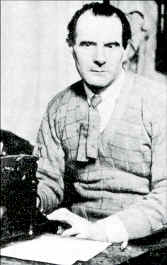
Sean O'Casey

                Sean O’Casey


Share

Red Flags

I often rail against nonsensical pronouncements about language and writing. Today I’m going to turn the tables and rail a bit against my own nonsense.

There are words and expressions I cannot abide. I just used one of them, and it is taking every bit of willpower I can muster not to go back and delete it.

Here it is: I can’t stand the expression “a bit.” It’s weak. If something is small and insignificant enough to warrant the term “a bit,” why are you even talking about it? (I don’t like “every bit” either – for the same reason.)

Here’s another one I can’t stand: “in today’s society.” Based on my experience with thousands of student essays, there’s roughly a 100% chance that any essay containing the phrase “in today’s society” is going to flounder and sputter without every getting to anything interesting.

I just stopped typing for a moment to try to figure out why “in today’s society” always points to a weak paper, and I think I’ve found the answer. No society is homogeneous. There are always conflicting forces and clashing ideas. When a student writes about “today’s society,” that’s a sure sign that she hasn’t done much research or analytical thinking.

But I said at the beginning of this post that I’m focusing on my own nonsense. Of course it’s possible to use the expressions “a bit” and “in today’s society” thoughtfully and intelligently. Here’s my real point: Words sometimes spew out of us at such a rapid rate that we fail to notice that we don’t have anything to say.

Don’t let that happen to you. Start looking for your own red flags. What verbal habits do you fall into when you don’t have something interesting to say? Learn to recognize them and – more important – start building habits that will help you uncover interesting ideas. Develop your curiosity. Read. Expose yourself to new experiences.

Here’s one practice that I wish I had stumbled on much earlier in my own life: Studying the thinking habits of other people. I read Carolyn Hax’s advice column in the Washington Post every day because – at least half the time – she has a completely different approach to a problem than I would have taken. I’m working on opening my brain up to new and different ways of thinking.

In today’s society we all need to do that a bit more often.

Red_flag_waving Wiki ok

Share

Coney Island

My husband and I always visit Coney Island when we take a trip back to New York. We eat french fries at Nathan’s, shop for souvenirs at one of the stores on Surf Avenue, and walk along the boardwalk. We both have fond memories of childhood trips to Coney Island, and we continue to marvel that this beautiful beach is available to everyone for the price of a subway token.

Charlie recently decided to use the now-defunct Parachute Jump at Coney Island as the beginning of a recent gardening column about “parachute plants” (plants that can propel themselves through the air). It seemed like a great way to start the column – but no matter what we did to the sentence, we couldn’t get it to work. 

Here’s Charlie’s original sentence. See what you think:

As a Brooklyn-born guy, I and my family often visited Coney Island for its beach, restaurants, and thrill rides. 

I didn’t like “I and my family,” but Charlie sensibly pointed out that “my family and I” is a dangling modifier, sounding like the family was a Brooklyn-born guy.

So we tried again:

As a Brooklyn-born guy, I often visited Coney Island with my family for its beach, restaurants, and thrill rides.

Notice anything? I did – right away. “Its” is an indefinite pronoun reference. The word it has to refer to the previous noun…which in this sentence is family, not Coney Island. This version sounds as if the family, not Coney Island, has its own beach. (Charlie’s family is not that wealthy!)

After a lot more experimentation we found that deleting family gave us a perfectly grammatical sentence:

As a Brooklyn-born guy, I often visited Coney Island for its beach, restaurants, and thrill rides.  CORRECT

But Charlie protested that the idea of family visits to Coney Island in his childhood was getting lost.

We finally settled on the sentence with the indefinite pronoun reference (crossing our fingers that nobody would notice the mistake):

As a Brooklyn-born guy, I often visited Coney Island with my family for its beach, restaurants, and thrill rides.

In our defense, I’m going to cite Mary Norris, copyeditor for The New Yorker and author of Between You and Me: Confessions of a Comma Queen, a delightful book about English usage. Sometimes (gasp!) she allows a prohibited construction to slip through because the sentence works better that way.

It’s sort of the usage equivalent of a parachute jump: Risky…but the results are worth it.

The Parachute Jump at Coney Island

           The Parachute Jump

Share