I Would Have Nixed It

I just found something that bothered me in the May 15 issue of The New Yorker, a magazine that prides itself on its writing and copyediting. I was reading “Happy Together,” an article about a new type of housing in New York, and I came across this:

Common’s Crown Heights members had first dibs on the rooms, and many are relocating, including Chavez, who wants to try out a new neighborhood, and She, who wants to be closer to his girlfriend.

Because I like shorter sentences, I would have broken it in two:  “Common’s Crown Heights members had first dibs on the rooms. Many are relocating, including Chavez, who wants to try out a new neighborhood, and She, who wants to be closer to his girlfriend.”

But that’s not what bothered me. My problem is with first dibs. I think it’s redundant because dibs are always first. (I just Googled “second dibs,” and all I came up with was a resale shop in New Jersey.)

It’s true that our language permits some redundancy for clarity and emphasis – but I don’t think redundancy is needed here. I would have nixed first.

The_New_Yorker_wordmark 2

Share

Should You Use Correct Grammar When You’re Texting?

You might expect me to answer that question with an emphatic yes, but I’m not going to do that today. I’m not going to say no either. Instead I’m going to argue that it’s the wrong question.

Some background first. The Huffington Post recently published the results of a YouGuv poll showing that most people aren’t bothered at all by grammar mistakes in texts. (According to the poll, there was slightly more concern about grammar mistakes in emails.)

I’m a stickler about the rules of English. Shouldn’t I be concerned? The answer is no, for several reasons.

First, texts and emails are closer to conversation than formal writing, so looser rules apply. I suspect that if you could do a brain scan of someone typing on a laptop or a smartphone, you’d see neurological activity that’s quite different from – say – writing a business report.

Here’s why I think that’s true: I’ve noticed the difference in my own behavior. I’m endlessly chagrined by the mistakes that slip past me when I send an email. Egad! Who wrote that? Gulp – I did.

I’ve noticed too that I don’t pick up mistakes in emails sent to me. Someone apologizes later for a garbled email, and I realize that I didn’t see any of the mistakes. Mind you, I’m a maniac who can spot a typo in a book or student essay from 10 feet away.

I have another gripe about the poll. (If you visit this blog often, you aleady know what I’m going to say.) What we’re talking about are usage – not grammar – mistakes. Grammar is the structure of a language. I rarely hear anyone make a mistake with word order, which is where you find the fundamental grammar of our language.

Problems with capital letters, apostrophes, and the like are usage problems, and (as I said a moment ago), the rules aren’t as strict for informal situations. In fact many usage rules (such as the aforementioned capital letters and apostrophes) don’t come into play at all when we’re talking. Perhaps our brains transition to talking mode when we’re texting, and that’s why we’re more casual about punctuation and spelling.

I’m not losing any sleep about it. 

Mistake

Share

Should You Write Long Sentences?

There’s a widespread misconception that special rules apply to long sentences. I’ve known people who believe that any long sentence is a run-on. (Wrong!) Some of my students used to think that any long sentence had to have at least one comma. (Also wrong!) And I’ve known people who always insert a semicolon right in the middle of a long sentence. (Wrong again!)

The truth is that long sentences are just like any other sentences; the usual comma and semicolon rules apply. There’s no special mystery to solve when you write a long sentence.

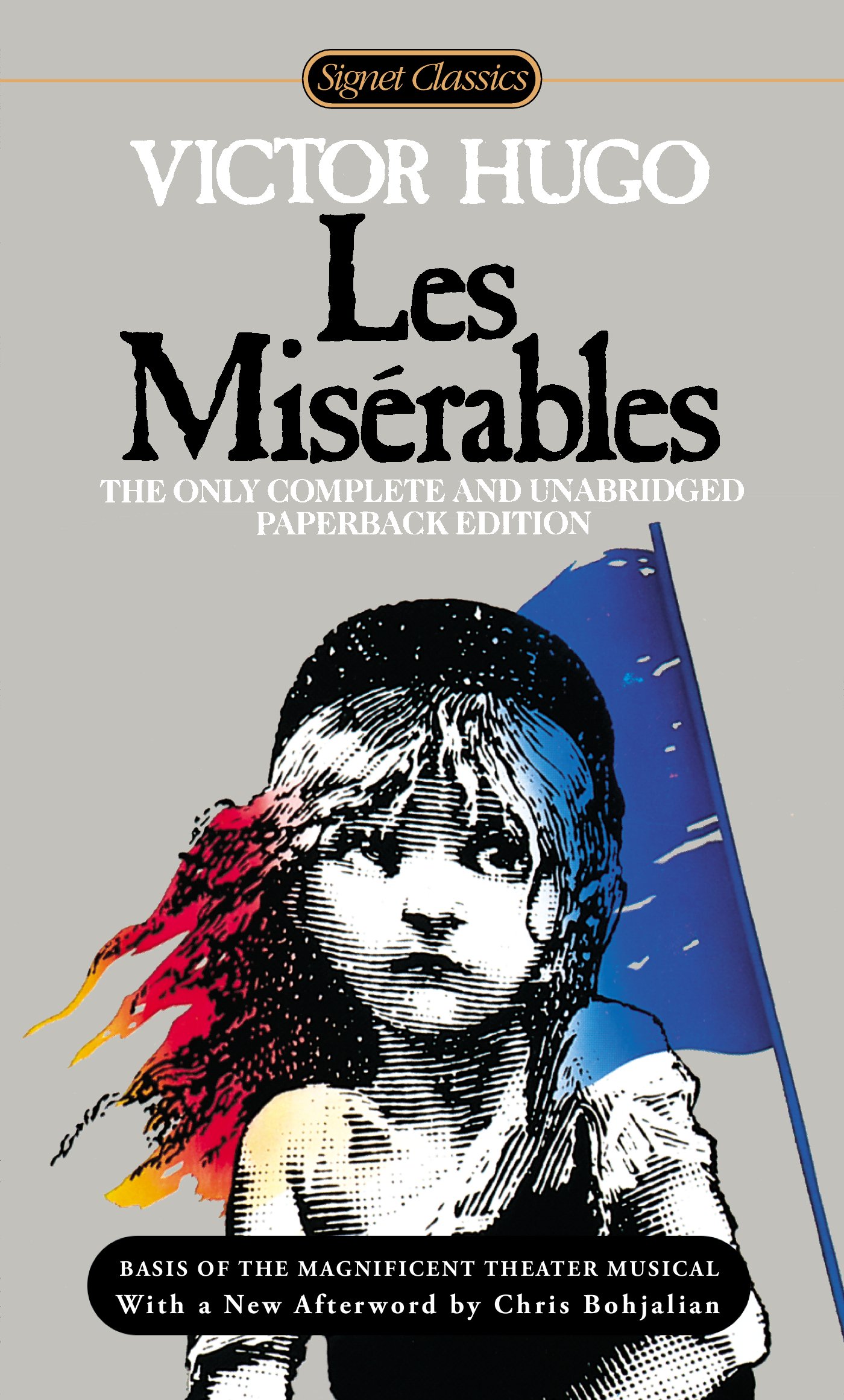
But there is one issue to watch for: Cramming too much information into a lengthy sentence. You won’t be violating any usage principle, but you might end up with a clumsy sentence that’s difficult to read. Here’s one I came across in a story about author Victor Hugo on a literary website:

On his eightieth birthday in 1881, it took six hours for 700,000 to parade past his house; more than that turned out for his state funeral in 1885, among which would have been a few from the first Romantic Army.

Here’s my version:

On his eightieth birthday in 1881, it took six hours for 700,000  people to parade past his house. More than that turned out for his state funeral in 1885. Among them would have been a few from the first Romantic Army.

Les Miserables ok

Share

A Closer Look at Languages

James Harbeck is a language expert I’ve mentioned in previous posts. (Here’s one: http://wp.me/pU98s-1RQ.) I like his sense of humor and his unconventional take on linguistics issues.

Here’s a recent post that fascinated me. Harbeck says that most languages have distinctive features that allow you to identify them at a glance – even if you don’t speak the language. It’s fun to read – and convincing!  http://theweek.com/articles/617776/how-identify-language-glance

James Harbeck

      James Harbeck

Share

The Statue of Liberty

I’m typing this on an airplane flying from John F. Kennedy Airport in New York to Orlando, about 45 minutes from where I live in Central Florida. I had a wonderful time in New York – so good, in fact, that I can’t pick one event and call it the highlight.

My first priority on this trip was to see a performance of Jerome Robbins’ Dances at a Gathering. A secondary one was to check off yet another item on my gotta-go list of New York attractions. That one I chose this year didn’t quite get done, for a happy reason: There was so much to see at Ellis Island (former immigration station for New York) that I’ll have to go back.

Small groups of people are permitted to don hardhats and visit the decaying buildings that comprised the immigration hospital at Ellis Island. I was one of the lucky few yesterday, and it was an amazing glimpse at what our forebears went through to enter this country – and the services that were provided for them. My grandparents came through Ellis Island, and I wish – I wish – I knew what that experience had been like for them. (Everybody: Please write your memoirs. Don’t worry about punctuation or organization, and don’t try to write a besteller. Just write them down.)

But today’s real topic is the Statue of Liberty, which we passed on the ferry that took us to Ellis Island. I’ve been to Liberty Island several times to make the wobbly-legged walk up the spiraling stairs to the Crown on Lady Liberty’s head.

Her real name is Liberty Enlightening the World. She was a gift from France honoring the friendship between our countries and America’s commitment to freedom. The French, having endured their own bloody struggle for liberty, were impressed by America’s determination to allow ideas – all ideas, including the scary ones – to circulate freely. It’s still a strongly held value: No matter how bone-headed your thoughts are, no one can stop you from expressing them.

There’s a nice tie-in here with my previous post on dissemination, but I’m going to swerve in a direction you might not be expecting. Instead of talking about the importance of free speech, I want to use the Statue of Liberty as an example of Derrida’s ideas about dissemination.

As I pointed out in that earlier post, you can’t control what happens to a message once you start disseminating it. It can be misunderstood or misquoted. It might be mistranslated, shortened, or lengthened. It can fall into the wrong hands. There’s no way to predict the journey a message will take once you open your hands and allow it to fly away.

The Statue of Liberty is a perfect example of the unpredictable nature of dissemination. In 1886, when Liberty Enlightening the World was dedicated in New York Harbor, it bore an intellectual messsage: Lady Liberty’s torch symbolized the quest for wisdom.

But the immigrants who passed by that statue as they made their way to Ellis Island saw something different:  A loving mother whose torch lit the way to the Golden Door. In 1903, “The New Colossus” by Emma Lazarus was inscribed on the statue’s pedestal:

Give me your tired, your poor, your huddled masses yearning to breathe free
The wretched refuse of your teeming shore.

Within a few years the statue’s meaning changed yet again: Her image was emblazoned on war bonds and patriotic posters to inspire Americans to fight a treacherous enemy in two world wars.

Could her meaning change again? Of course. There’s no telling what thoughts and feelings she will inspire 100 years from now – or 50, or 10.

The same holds true for our own messages. No matter how clearly you think you stated it (think of Auguste Bartholdi and  the years he spent designing and sculpting his famous statue), there’s no telling what message will be conveyed to those who behold it. Such are the marvels – and frustrations – of our wonderful language.4066553303_dd5401d1a0_o

Share

Dissemination

A few years ago, the email system at the college where I was teaching went haywire. Long-deleted emails came back to life and circulated randomly throughout the system. Some found their way to the President’s computer, and embarrassed faculty and staff members had to explain past events they’d assumed were both private and forgotten.

I don’t know whether any of my emails took that journey, but it wouldn’t have mattered if they did. When email first came to the college, a wise friend told me to treat all my electronic communications as if they were public property. I was smart enough to heed his advice: no gossip, no secrets, no snide jokes.

So the point is that we should all be careful with email, right? Wrong.

Today’s topic is dissemination, a term Jacques Derrida used to describe the random – often problematic – journeys that language can take.

If you’ve studied postmodern linguistic theory, you know that many mistakes we label “human error” can actually be laid at the door of language. All behaviors involving words are risky. Wise politicians try to avoid issuing flippant statements that can surface later in an opponent’s TV ad. Professional broadcasters are taught to treat all microphones as if they were live. And many of us learned as teenagers that there’s no safe place to hide a diary.

Let’s return to that wise advice I was given when I started using email – and expand it. You’re reading this blog because you want to sharpen your writing skills. One of the most important lessons you can learn is to treat all written communication with respect. You never know when your own words will take off in an unforeseen direction:

  • someone accidentally hits “reply to all” instead of just “reply”
  • an instructor shares something you’ve written with another student or instructor
  • while you’re out of the room, someone reads a piece of paper on your desk
  • someone looks over your shoulder at your computer screen
  • an intimate letter you’ve written is passed around to other people
  • someone misses the point of a joke and accuses you of racism or sexism

Another story. One evening I went to a meeting in the office complex attached to a church. Because the speaker function on the phone at the receptionist’s desk hadn’t been turned off, everyone at the meeting heard a parishioner leave a lengthy voicemail message – intended only for the pastor – about his marital problems.

Ouch.

Of course the pastor should have leaped up and intercepted the message. Because he didn’t, I assign most of the blame for that violation of privacy to him. But it’s also true that anyone could have walked into that complex and played back the saved messages. Those things happen.

Language is powerful, that power can be used for both good and for ill, and – most important – the person actually using the language cannot control where those words go and how they’re used.

You and I constantly size up the people we meet to decide whether or not they’re trustworthy. We need to treat language with the same wariness and respect.Eavesdropping Adobe

Share

Another Quotation within a Quotation

Several friends have been interested in my previous post about quotation marks, and a few of them asked questions about punctuating a quotation-within-a-quotation. I found a reliable resource at the OWL (Online Writing Lab) website sponsored by Purdue University: https://owl.english.purdue.edu.

One intriguing comment came from a friend who was amazed that writers actually insert quotations within quotations. She’d never heard of this practice. Or maybe (as she admitted herself) she’d just never noticed. (Did any of you notice that I used this construction in a post last week – about Elizabeth Smart’s talk about the word “purity”? Click here to read the post.)

Here’s the sentence I wrote:

“I felt so dirty and filthy,” Smart said in her talk at Johns Hopkins. She remembered a religion teacher who used an analogy with chewing gum. “I thought, ‘Oh my gosh, I’m that chewed up piece of gum, nobody re-chews a piece of gum, you throw it away.’ And that’s how easy it is to feel like you no longer have worth, you no longer have value.”

I promise to switch to another topic in my next post! (But quotation marks are interesting, aren’t they?)


Share

How to Use Quotation Marks

Over the years I’ve taught thousands of students how to use quotation marks. The whole lesson takes just a few minutes. Here the gist:

In the US, commas and periods always go inside the quotation marks. There are no exceptions. (Other countries may do it differently.)

I always put a few sample sentences on the chalkboard, and then I ask if there are any questions. There’s always a kindhearted student who wants to set me straight without embarrassing me:

“But Dr. Reynolds! You forgot to mention that commas and periods go outside quotation marks if a sentence is incomplete, or it’s the title of a poem, or…”

Sigh.

Here’s what I’m always tempted to say (but haven’t so far): “How is it that you made it all the way to college without learning the meanings of always and no exceptions? And how come you’ve never noticed that no book or newspaper or magazine published in the US ever uses quotation marks in the way you’re describing?”

Luckily the better angel on my right shoulder always comes to my rescue with a gentle rebuttal: “No, Mary (or John or Antonio or Liz), in the US commas and periods always go inside the quotation marks. Here’s a project for you: Pay attention to the books and articles you read for the next few days, and see if you can find any exceptions. I guarantee you won’t, unless there’s a British publisher.”

Mary (or John or Antonio or Liz) always solemnly promises to bring a pile of examples to the next class to prove that I’m wrong. And of course that never happens.

It’s true that writers in the UK put commas and periods outside – but that usage is not appropriate in the US.  I’ve often encountered well-read students who use British spellings (favourite, honour) and inverted commas (‘To be or not to be, that is the question’). But you can’t adopt those usages in the US.

Similarly, you can’t practice American usage in the UK. When I wrote an article about Bernard Shaw for a British publisher last year, I was careful to use inverted commas, with the periods and commas outside, and British spelling.

OK, I’ll concede two exceptions: If you’re quoting from a British book or magazine, of course you use the original spelling and punctuation. And inverted commas – also called single quotation marks – are appropriate for a quote within a quote:

“I’m leaving early,” said Jenny, “because ‘I have miles to go before I sleep’ and a term paper to finish.”

While we’re at it, let’s deal with a few more rules about quotation marks:

  • Use quotation marks for titles of short works, such as poems and magazine articles. But don’t use quotation marks for the title of something you’ve written – such as a paper for school or an article for a magazine – unless it’s a quotation.
  • Don’t use quotation marks to sound folksy, apologize for an unconventional expression, or emphasize a word or phrase. Professional writers don’t use quotation marks this way, and you shouldn’t either.

I have some examples of what not to do from a recent Hints from Heloise newspaper column.

Here’s warning from Heloise about buying bags of frozen vegetables:

If the veggies did not stay frozen completely, they “thawed” a little and then froze into a block!

Here’s a tip for using cupcake liners to shape burgers:

I place one on the bottom, one on top and “squash” to flatten the burger to the desired thickness.

Those quotation marks don’t serve any purpose: Don’t use them.

The same principle applies to slang and colloquialisms. If you want to say that your child can’t go to sleep without his binky, and your sister thinks your macaroons are delish, use those words without apology. Or – if they bother you – substitute words you like better: pacifier, delicious.

To put it succinctly: “Ditch” the quotation marks. Oops! I meant that you should just ditch them.

 Heloise

                Heloise

Photo by Larry D. Moore CC BY-SA 3.0.

Share

The Problem of Purity

Elizabeth Smart is an American activist and contributor for ABC News. At the age of 14 she was abducted from her home in Salt Lake City, Utah, and forced into a sexual relationship with her kidnapper. Nine months later she was rescued.

In a 2013 speech at Johns Hopkins University, Smart made news by challenging abstinence-only sex education programs. (You can watch a clip of Smart’s talk here, and you can read more about it here.)

“Abstinence only” is a form of sex education that emphasizes waiting until marriage for sex. Abstinence was an important principle in Smart’s Mormon upbringing, and she says it was a factor – a negative one – in her captivity.

What’s especially interesting to me is the language factor – and I’ll get to that in a moment.

“I felt so dirty and filthy,” Smart said in her talk at Johns Hopkins. She remembered a religion teacher who used an analogy with chewing gum. “I thought, ‘Oh my gosh, I’m that chewed up piece of gum, nobody re-chews a piece of gum, you throw it away.’ And that’s how easy it is to feel like you no longer have worth, you no longer have value.”

A postmodern theorist would say that purity contains within it the concept of impurity: Neither term makes sense without the other. If you teach young people to value the state of purity, you’re also implanting the idea that it is possible to be impure – with devastating consequences to a teenager’s confidence and self-worth.

Thankfully, few young people endure the trauma that characterized Smart’s captivity. But sexual abuse of children is an all-too-common phenomenon (some experts say that one in four girls is victimized). I think Smart has a point: Setting up a pure/impure dichotomy may not be an effective way to discuss sex with young people.

As I said in an earlier post, I’ve spent a lot of time thinking about our ongoing struggle with language. Elizabeth Smart’s story is a powerful example of a principle that’s easily forgotten: The hidden layers of meaning in a word can undermine our most sincere efforts to make this world a better place for everyone.

Elizabeth Smart

                   Elizabeth Smart

Share

Sidney Poitier

Several people have been asking questions about obtaining permission to reprint. Instead of taking you through the steps, I’m going to tell you a true story about a particularly thorny permissions problem I ran into myself.

Some years ago I wrote a study skills textbook for college students. Early in the writing process I spent several Saturday mornings in the biography section of local library, scanning the early chapters to look for true stories from famous people about their early learning experiences.

I struck gold with actor Sidney Poitier’s memoir This Life. (He’s since written another one.) Poitier described arriving in New York City from the Bahamas as an ambitious 17-year-old with little education and limited funds. He supported himself washing dishes and dreamed of becoming an actor – but he couldn’t read well enough to get through an audition.

A Jewish waiter saw Poitier struggling to read a newspaper and offered to help. Years later, Poitier vividly remembered those reading lessons. One especially helpful skill was learning how to figure out the meaning of a word from the context. It was an impressive story, well told, and I gladly paid the Alfred A. Knopf publishing company $100 for permission to copy Poitier’s story in my chapter on reading.

Happily, my study skills book eventually went into a second edition. But not so happily, I had to redo all the permissions, and the Poitier selection became a problem. Knopf no longer owned the rights – they had been transferred to Poitier’s law firm.

In those pre-Internet days, it was no small feat to learn who Poitier’s lawyers were – and that was only the beginning of my struggles. The permissions fee was too small for the firm to be concerned about. I called multiple times, explaining that my book was about to go into production and I desperately need that permission form. Each time they promised to take care of it and immediately forgot.

One morning I went through my spiel for about the twentieth time (it seemed that someone different answered the phone whenever I called). I was put on hold. After several minutes, someone came on the line and asked what I wanted.

I was getting fed up with telling my story over and over – but common sense won the day, and I politely explained what I wanted.

“Can you tell me more?” the voice asked. And suddenly it dawned on me that I was talking to Poitier himself. The attorney’s office had patched my call through to his home phone.

I explained how impressed I’d been with his story about the dishwasher and newspaper lessons. Poitier gave me his fax number and asked me to send the chapter to him so he could see what I’d be doing with his story.

Three days later I opened my mailbox and found the signed permission form there. He was the only author who didn’t ask for a permissions fee.

A great and generous man.

(Because I’ve been hearing so many questions about modes of development, I’m adding a postscript. If I’d described the permission steps in a general way, this would have been a process article. Because I told you a story that happened once, it’s a narrative.)

Actor Sidney Poitier received the Presidential Medal of Freedom from President Barack Obama in 2009.

Actor Sidney Poitier received the Presidential Medal of Freedom from President Barack Obama in 2009.


Share