Two Negatives Don’t Make a Positive

Here’s an oft-repeated bit of wisdom about English grammar: Double negatives are wrong because two negatives make a positive. So if you say “I don’t have no money,” you’re actually saying you do have money. Right?

Wrong, for reasons that I’ll explain in a moment. But first I want to pull back the curtain on our system for classifying some English usages as mistakes. I’m going to call on two other languages to help us: French and Flemish.

The Nun’s Story, by Kathryn Hulme, is one of my favorite novels, and – I would argue – an extraordinary literary work. Its understated irony makes it one of the rare books that can be read on multiple levels. Hulme’s novel combines the gentle story of a compassionate nun with a stirring account of WWII Belgium, and – hidden beneath the story – an unsparing look at religious principles that have lost their relevance.

 Sister Luke, the central character, is a brilliant nurse who grapples with medical emergencies, an occupying foreign army, and archaic convent rules. But today I want to look at some minor characters: the nuns who do the cooking and cleaning. Unlike Sister Luke, who comes from a prominent Belgian family and speaks French, the servant nuns are farm girls who speak Flemish and do the heavy work of scrubbing and washing. Even though the nuns dress alike, their speech instantly identifies their social class.

Fast forward to 2016, and that linkage has disappeared. People who live in the northern half of Belgium proudly speak Flemish not only on farms, but in universities and government buildings.

Of course English-speaking countries have never faced that kind of linguistic divide. There never was a time when educated people spoke French and farm workers spoke English.

Except that there was.

After the Norman Conquest, French became England’s predominant language. Members of the royal family spoke little or no English, even writing their wills in French.

Only uneducated rural workers spoke English, and a simplified version at that. Most verb conjugations and noun declensions were forgotten. For example, plural nouns in Old English used to be a complicated affair, with six possible endings related to gender and grammatical case: -as, -a, -e, -an, -ena, or –um. Over time most of those were simplified to -s and -es. Only a few plural nouns retained a form of their original –ena ending: men, women, children, and oxen. Clearly these were not aristocrats.

And then a strange thing happened: The English language came roaring back, and that truncated grammar became the medium of Milton and Shakespeare. It’s similar to what happened in Belgium, where people in the Flanders region decided that Flemish – once dismissed as coarse and clumsy – was a perfectly suitable language for business transactions, academic work, and government affairs.

Here’s a sobering truth: All our judgments about elegant or coarse language are the result of social conditioning. The posh accents of the British royal family are the result of a geographic accident: As the population of London grew, the language habits of its wealthiest inhabitants became the gold standard for language. If Cornwall had been an important commercial and government center, we would all think that the Cornish version of English (“Where you to?”) was absolutely gorgeous.

Now let’s return to double negatives. (If you’re an English teacher, prepare for a shock.) The usual explanation about two-negatives-make-a-positive is nonsense, for three reasons: English isn’t math, nobody uses double negatives as a positive, and…most important…double negatives are perfectly respectable constructions in many languages (such as Spanish, Persian, and Russian).

So why doesn’t English have a double negative? Surprisingly, it once did. Double negatives (like those long-forgotten conjugations and declensions) used to be standard in Old English.

And now you have the tools to figure out why we cringe when we hear someone use a double negative: Social conditioning. An all-but-forgotten grammatical construction lived on in low-income areas, and it became a sign of limited schooling.

As Eliza Doolittle would say, “Garn!” And – trust me – if the Cockney neighborhood of London had been a high-income neighborhood when the present Queen was born, you and I would be saying “Garn” too. Or – to put it another way – “Location, location, location” is as important to language as it is to the real-estate business.

Nun's Story

Share

What’s So Bad about Writing?

Two days ago I asked you to listen to two songs (“More than Words” and “Gentle on My Mind”) to see if you could find a common theme between them. (I could have added one more – “Show Me” from My Fair Lady – but it didn’t fit another reason I wanted you to listen to the songs: to make you melt.)

Here’s my main point: All three songs convey an anti-language message. Hartford sums it up in “Gentle on My Mind” when he sings that he’s “not shackled by forgotten words and bonds and the ink stains that have dried upon some line.” Love is real; words are empty. Eliza Doolittle makes the same point in “Show Me” (“Tell me no dreams filled with desire. If you’re on fire, show me!”). And the Extreme musicians plead for something “More than Words” to show that “your love for me is real.”

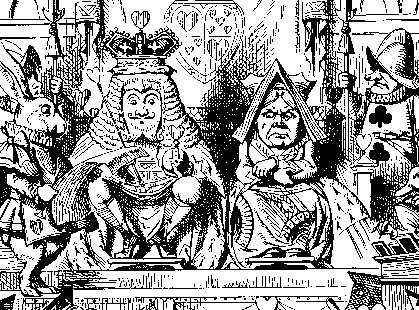
Jacques Derrida has written at length about our cultural bias against language – a tradition that goes back at least as far as Plato. I’ve already mentioned one reason for that bias: Words lack the vitality of lived experience. There’s a good example in Lewis Carroll’s Through the Looking Glass:

Queen_of_Hearts

“The horror of that moment,” the King went on, “I shall never, never forget!”
“You will, though,” the Queen said, “if you don’t make a memorandum of it.”

As time goes by, passions fade and memories grow dim. A written account of an extraordinary experience is just a shadow of what we were feeling at the time.

But you and I are writers. Are we wasting our time in pursuit of a lifeless art? I don’t think so – and I have a quotation from one of the masters to back me up. It’s from the Preface to a collection of letters between Bernard Shaw and actress Ellen Terry. They had a love affair on paper, rarely meeting face-to-face even though they both lived in London. Here’s what Shaw said about their unconventional love story:

Let those who complain that it was all on paper remember that only on paper has humanity yet achieved glory, beauty, truth, knowledge, virtue, and abiding love.

Now I want you to recall the feelings you had when you listened to “More than Words” and “Gentle on My Mind” (or any song or poem that strikes you right in the heart). Where would we be without words to open our souls and teach us about love, beauty, and goodness?

I think Derrida is right when he talks about actions-speak-louder-than-words bias in our culture. But he’s also right when he insists on the enduring value of written words. We writers have untold opportunities to create adventures for our readers. What could be more exciting?

What are you writing about right now?

Share

Gentle on My Mind

“Gentle on My Mind” is the second song I’m asking you to listen to today. One line has a theme in common with “More than Words,” today’s other song. I’ll be exploring that theme in my next post on July 4.

Although most people associate “Gentle on My Mind” with Glen Campbell – it made him famous – the song was written by John Hartford, who won a Grammy for his version.

I used to play this song for my literature classes as an example of one of the best love poems ever written – and for my writing classes as an example of vivid language.

“Gentle on My Mind” is also a good starting point for a discussion of the differences between art and life. I have been married to the same man for 43 years – and no, he doesn’t keep a sleeping bag here: Ours is a permanent and stable arrangement. (How dreary that sounds! It isn’t.) And yet my soul is stirred by this song about a man walking along the train tracks and thinking about that special woman….

Share

More than Words

Today I’m going to ask you to listen to two songs: “More than Words” by Extreme (below) and – in the next post – “Gentle on My Mind” by John Hartford. (Although Glen Campbell made this song famous, Hartford wrote the words and music, and I like to hear him sing it.)

The two songs are very different, but they have something in common. More precisely, there’s a line in “Gentle on My Mind” that has a connection to “More than Words.” I’ll be talking about that commonality in a post two days from now.

For now, please just listen to the two songs. I hope you’ll melt just as I always do when I hear them.


Share

“Making Meaning” in Savannah

Ann Berthoff is the author of The Making of Meaning: Models, Metaphors, and Maxims for Writing Teachers. It’s a remarkable book that I recommend for anyone interested in writing.

I found myself thinking about Berthoff’s book on a trip to Savannah a few weeks ago. Although there’s no place I love more than New York City, Savannah holds a special place in my heart. My husband and I go back often to stroll through the squares, eat ice cream at Leopold’s, and soak up Savannah’s fascinating history.

On a recent trip we decided to make a return visit to historic Bonaventure Cemetery to  learn more about the famous and not-so-famous people interred there. Well, I thought my husband would learn more – I’d already done the tour twice (once without him on a trip with my sister).

Wrong. Yes, we went back to Johnny Mercer’s grave (and listened to a recording of Mercer’s “Accen-tu-ate the Positive” in the mini-bus on the return trip). Yes, we saw the Gracie statue and the grave of Conrad Aiken.

But our tour guide had a completely different way of thinking about the cemetery. (His name is Orlando, and he’s with Dash Tours, if you find yourself in Savannah sometime.) Instead of just listing historic facts, he spent the tour “making meaning” out of our experience.

Orlando helped us see that Bonaventure is actually two cemeteries – a colonial burial place and a Victorian one, with different ideas about death and different memorial practices. He drew connections to Transcendentalism and its influence on public spaces, including the creation of Central Park in New York City.

Then he asked us to look over a fence at an adjacent modern-day cemetery and note how it reflects today’s emphasis on matter-of-fact efficiency: Tidy rows of flat gravestones that can be mowed and maintained with minimum effort.

While I was humming “Accen-tu-ate the Positive” back in the mini-bus, my brain was fitting all kinds of puzzle pieces together. Although I minored in history in college, I’ve rarely heard a better discussion of the differences between past and present.

You’re reading this blog because you like to write. Here’s a project for you: Pull out one of your writing projects (past or present), read it over, and ask yourself this question: Did I “make meaning” about my topic – or did I just list a lot of facts and ideas?

Oak Trees at Bonaventure Cemetery in Savannah

Share

What’s That?

I used to have a friend – “Mary” – who had difficulty with the pronoun that. Here’s an example:

Mary: An antiques store just opened on Central Avenue.
Me: That would be a fun place to visit.
Mary: Visit what?

“Mary” was having some anxiety and depression issues back then, and I think they were interfering with her concentration. (It probably happens to many of us from time to time.)  The connection between language and mental health would make an interesting topic. But I want to go down a different road today and take a look at what Mary’s brain was not doing.

Under normal circumstances, our minds hang on to a word or phrase even after the sounds have faded away. Some hidden part of our mental equipment is thinking, “The person I’m talking to may refer to the antiques store again [or whatever the topic is], so I’m going to hold on to that idea.” (A grammarian would say that we’re connecting a pronoun with its antecedent.)

It’s like a juggler who has three balls – two that he’s getting ready to toss, and one that’s up in the air.

Adobe Juggler

That kind of thinking process is flying under our mental radar all the time. Amazing!

I’m going to give two more examples, and then I want to make a connection to writing.

Take a look at this incomplete sentence:

I was planning to wash the car today, but it…

No problem, right? But watch what happens when I finish the example:

I was planning to wash the car today, but it started raining.

For just an instant, your brain pictured the car [it] raining. Even though you may not have been conscious of that blip, your brain noticed it and paused for a milli-second to make a correction.

images

Now let’s try one more example. Here’s something my husband used to say all the time:

Driving home from work, the radio had an interesting report about the Supreme Court.

If you’re an English teacher, you spotted the dangling modifier right away (the radio didn’t drive home!). But most people wouldn’t experience a blip there. Somehow our brains smoothly translate “driving home” into “While I was driving home.” We don’t picture a radio operating a car (at least I never did, and I heard that sentence many times over the years).

Effective editing requires going back over everything we’ve written (ideally with feedback from someone else) to find all these blips. Not all of them will require corrections – but some will.

Someone whose brain has to keep backtracking may simply give up on your essay, report, or book. We don’t want that to happen, do we?

(Somewhere, far back in my brain, I can hear Mary’s voice asking, “Don’t want what to happen?”)

Share

The Woman Card

When I was in graduate school, I labored long and hard on the proposal for my dissertation about Bernard Shaw. When it was finished, I proudly sent it to my chairman, along with a note asking what he thought of my main point.

Here’s the response I got back: “Which one?”

Oops. I had to start over with a more narrow focus. That tendency to go in too many directions at once is a persistent problem with my writing, and over the years I’ve seen other writers struggle with it too. For example, I’m a member of the editorial board for a Shaw journal, and sometimes I read submissions that go on for a whole page without mentioning Shaw.

Richtungspfeil

I spotted a similar problem this week in an intriguing article in the latest issue of The New Yorker magazine: “The Woman Card – How feminism and antifeminism created Hillary Clinton and Donald Trump.” Jill Lepore is an excellent writer, and the article is interesting and worthwhile – but it kept getting away from her.

Today I’m going to use Lepore’s article as the focus for a mini-lesson in writing. (I encourage you to take a look at her article, available free at the New Yorker website.) Like Lepore (and like me when I was writing my dissertation proposal), it’s likely that you sometimes have difficulty taming a writing task.

Here are some issues to watch for:

1.   Multiple focuses instead of a single thesis

Lepore’s thesis (main point) is easy to spot because it’s stated in her subtitle: “How feminism and antifeminism created Hillary Clinton and Donald Trump.” You’re expecting to hear about the ideas and events that shaped these two Presidential candidates.

But Lepore’s article has several extra thesis statements (the same problem I ran into with my proposal). Here are two of them:

“Long before women could vote, they carried into the parties a political style they had perfected first as abolitionists and then as prohibitionists: the moral crusade. No election has been the same since.”

“Donald Trump is widely viewed as the savior the Republican Party has been looking for since 1948.”

2.  The article frequently gets sidetracked. For example, Lepore traces the history of the women’s suffrage movement, the role of African-American women, attempts to pass the Equal Rights Amendment (which we learn was originally a Republican project), and Clinton and Trump’s political histories (she started out as a Republican, and he used to be a Democrat.) One long section of the article – 2,481 words – doesn’t mention Trump at all, and another one – 755 words – mentions Clinton only once and Trump not at all.

Solutions

At this point you’re probably expecting me to show you how to organize an effective essay, article, or report. But that kind of instruction is widely available in textbooks and online. (Go to www.PlanMyPaper.com to review these skills.)

Today I’d like to do something different. I’m going to discuss two warning signs that a writing task is getting away from you (along with some tips for getting it back on track).

1.   Make a list of keywords, and use the Find feature in your software to make sure they appear in every paragraph. In Lepore’s article, those words would be Clinton, Trump, feminism, and antifeminism. Synonyms like women’s suffrage, equality, liberation and reform are fine too – as long as they’re connected to Clinton and Trump every time you mention them. If you read for more than a minute without encountering one of your keywords, something is wrong. Start revising!

2.  After you finish a draft, use this process to review your piece: Read the first paragraph and the first sentence (only) in every other paragraph. They should all hang together. If there’s a big jump anywhere, start looking for ways to tighten and strengthen your draft.

I’m going to finish this post with a warning you’ve probably heard before. Postmodern language theorists keep telling us that language has a will of its own – a strong one – that can take you and your readers to parts unknown before you notice that you’ve lost your way. Stay alert, and keep a firm hand on the rudder!

Young woman voting

Share

Rules that Seem to Break the Rules

Today I’m going to discuss four usage rules that seem to break the rules. I’ve heard many people say that the correct usage looks wrong to them, and the wrong usage looks right. Today we’re going to focus on the right way, of course.

1.   either/or and neither/nor
These constructions don’t follow the usual “look at the beginning!” rule. You’re supposed to go to or/nor to figure out your verb. (It’s easier than you think!)

Either Jane or the Smiths (know, knows) how to get to the airport.
Either the Smiths or Jane (know, knows) how to get to the airport.

Here are the answers, with clues in bold:

Either Jane or the Smiths know how to get to the airport.
Either the Smiths or Jane knows how to get to the airport.

Either Jane or the Smiths know how to get to the airport.  CORRECT
Either the Smiths or Jane knows how to get to the airport.  CORRECT

2.  I or me?

Many people overuse I because they mistakenly think it’s more elegant. Sometimes me is the correct word (even if your grandmother thinks I sounds better!). The trick is to shorten the sentence – you’ll instantly hear which word is correct:

The Smiths drove Kay and (I, me) to the airport.
The Smiths drove me to the airport.
The Smiths drove Kay and me to the airport.  CORRECT

The Smiths and (I, me) went to the airport.
I went to the airport.
The Smiths and I went to the airport.  CORRECT

3.   well or good?

Many people think well sounds more elegant than good – and that tricks them into overusing it. Often good is the correct word:

I feel good today.  CORRECT
That color looks good on you!  CORRECT
A grilled cheese sandwich sounds good to me.  CORRECT

4.  possessive pronouns (his, hers, ours, yours, theirs, its)

Many people tell me they’re tempted to use an apostrophe in possessive pronouns. Don’t give in to that temptation! Here’s a trick for getting them right: Remember that his is a possessive pronoun. His doesn’t need an apostrophe – and neither do the others.

That locker is hers, and this one is his.  CORRECT
My jacket lost one of its buttons.  CORRECT
Jackie’s car is older than ours, but it looks newer because she takes such good care of it.  CORRECT

Broken Ruler Adobe

Share

Feeling the Ground Shake

A friend of mine is an ex-priest who is still a devout Catholic. I recently heard him give a talk about Gary Wills’ remarkable book Why Priests? A Failed Tradition.

Wills assembled a wealth of historical information to argue that Christianity was never intended to have a separate class of ordained clergy. But in postmodern fashion, the book sent a very different message to my friend (and many other religious-minded readers). What hit him – hard – was the discovery that some apparently timeless principles of the Catholic Church have a far less solid foundation than he used to think. I remember my friend shaking his head and saying, “They didn’t tell us any of this in the seminary.”

You probably already know that I’m not going to talk about religion today – so what’s my point? Here it is: Wills’ book is part of a colossal shift in thought that affects all of us – and it includes language. But before I get there, let me give you a non-religious example of this “shift in thought.”

Not long ago I watched a British TV documentary about the extraordinary range of wildlife that lives in the gardens behind Buckingham Palace. (Regular readers: Are you surprised that I’ve been to Buckingham Palace and seen those gardens? No, of course not.)

It was a charming TV show, but I detected an underlying message – a commercial, almost. The United Kingdom no longer believes in the inevitability of their royal family. They know that it’s the British public – not God or her blue-blooded lineage – who keep the Queen on her throne. For that reason, the royal family has undertaken a quiet public relations campaign to argue for its continued relevance.

Of course nobody is arguing that language is irrelevant, so what point am I trying to make? Here it is: Many of us grew up believing that the principles of correct language usage – like religion, like the divine right of kings – were absolute truths, their origins lost in the mists of time. A beloved English teacher imparted those truths to us, and we feel a solemn obligation to keep that tradition alive.

So it comes as a shock to learn that many of our most revered writing practices arrived late on the scene. Some were decided by amateurs who had no business making pronouncements about language. Many were offhandedly invented by people who operated printing presses. When we hear about these things, we experience the same shock my priest friend did. What is left to believe in? Or (a wail I hear all the time) “There are no more rules!”

In a sense they’re right. That beloved English teacher back in eleventh grade didn’t make the rules. Neither did Strunk and White, or Henry Fowler, or John E. Warriner (author of the grammar book we all used in high school). We, the people who speak English, are the ones who ultimately decide what to discard and what to keep.

If you think I’m overstating my case, let me give you an example. There’s an adverb in English that’s a synonym for stingy. It’s a perfectly respectable word that’s derived from the Middle English nigon. (The word “niggling” is a relative.) No grammar book that I know of has ever tried to make a case against this word, and yet almost nobody uses it anymore. Why? Because it sounds a lot like a racial epithet.

Logical? No. Cowardly? Perhaps. But – for better or worse – that’s how changes find their way into our language. And that’s how princes and princesses find themselves holding salaried jobs (as Prince Andrew is doing) and managing with a couple of domestic workers instead of a huge staff (as Princess Anne is doing).

That’s how religions find themselves reaching out to people who no longer want to be told how to manage, say, their sex lives or their finances. (Did you know that the Catholic Church used to prohibit investors from earning interest on their wealth? When was the last time you heard a sermon about the evils of money-lending and usury?)

Are you feeling the ground shake beneath your feet? I am too – but I’m also sensing the immense power that you and I hold every time we pick up a pen to write or open our mouths to speak. Let’s take a moment to honor our wonderful language – and our role as shapers and deciders of its future.

Earthquake

Share

Is the Period Disappearing?

A recent article in the New York Times noted a distressing trend in social media: Many people are omitting periods (called “full stops” in the UK) from their text messages. According to David Crystal, author of more than 100 books on language, “We are at a momentous moment.” Instant messaging doesn’t require end punctuation, he says: It’s perfectly obvious where the sentence ends, even if there’s no period. “So why use it?” he asks.

Well, I can give you one pretty convincing argument for using it: If you don’t use punctuation conventions, no reputable publisher will touch your manuscript.

So I’m not fretting over the alleged disappearance of the period (or full stop). But I’m intrigued by something that Crystal mentioned in his interview with the Times: In instant messaging, periods are sometimes used to show irony or annoyance. 

For example, picture this scenario: A husband tells his wife that he’s skipping tonight’s school conference because he has too much to do at the office. She immediately suspects the real reason: He wants to avoid a standoff with their daughter’s teacher, who’s been complaining about Janey’s behavior in class. Here’s a snippet of their back-and-forth texts:

She: you just dont want 2 be there

He: hell no i hate these conferences

She: fine.

Can you hear the cold, flat, ok-you-win anger in her response? That period nails it (and nails him for trying to shirk his duties as a father).

____________________________________________________________

Several things are going on here that I think are worth noting. Because Twitter imposes a 140-character limit, it makes sense to omit anything unnecessary – including end punctuation. That doesn’t mean everyone will follow suit. Newspapers have long used space-saving lower-case letters for titles like Queen, Pope, and President. That hasn’t stopped the rest of us from capitalizing those words. So I don’t see a slippery-slope happening here.

But I do see something else: People who send instant messages are learning how to make their texts replicate the human voice. That is an astounding development.

When I’m working with a student writer, I often hear protests when I delete an unnecessary comma: “That’s supposed to indicate a dramatic pause.” “The comma is showing hesitation and uncertainty.”

Nope. It just shows that you don’t know how to use commas.

Writers have only one tool to insert a space into a sentence…the ellipsis. If you’re a strict grammarian, you use an ellipsis only for omitted words (a shortened quotation in a research paper, for example). Despite my general conservatism and crankiness about punctuation, I think it’s ok to use an ellipsis for a dramatic pause – in fact I rather like it.

But – truth to tell – that practice isn’t very useful, for two reasons. One is that an ellipsis looks formal and out of place in a folksy conversation. Another is that those three dots quickly become wearisome. If you’re writing a conversation with many pauses for hesitations and dramatic effect, your finished product is going to look odd.

What to do? Most writers end up either a) taking up drinking or b) doing lots of rewrites until they get the effect they want.

Those are the best answers I can give you…but perhaps all those people who are tapping away on their devices are going to come up with some fresh possibilities for the rest of us.

Are periods disappearing?

                                                             Is the period disappearing?

Share