Butterfly McQueen

I can’t resist adding one more story to my two recent posts about Gone with the Wind.

Back in the early 70s, when I was living in New York City, I did all my banking at a savings-and-loan in Times Square.

One day while I was making a deposit, a middle-aged black woman on another line handed the teller two dollars and asked for a roll of nickels. There was no mistaking that voice! It was Prissy (“I don’t know nothin’ ’bout birthin’ no baby”) – the actress Butterfly McQueen from Gone with the Wind.

Everyone in that lobby (including me) let out a gasp…and then there was pandemonium. Bank business halted as tellers and customers rushed to shake “Prissy’s” hand.  Someone fetched the manager, who came down from his office and solemnly handed “Prissy” her roll of nickels. (I am not making this up.)

So much for blasé New Yorkers.

 *  *  *  *  *

One afternoon a few months later, I was riding the M104 bus back to my apartment on the Upper West Side – and there she was, wearing a coat with mismatched buttons, listening to the Mets game on a transistor radio.

I wanted to talk to her – but then I thought of the chaos that was sure to follow. (Imagine triggering that reaction every time you opened your mouth to speak!)

I got off at my bus stop a few minutes later, leaving Butterfly McQueen – Prissy – to listen to the Mets game in peace.

Click here to see a youthful Butterfly McQueen in a scene from Gone with the Wind.

___________________________________________________________

 
Share

Intelligent and Interesting

How do you get to “intelligent and interesting” without sacrificing readability? It’s a problem that besets every writer.

Today I’m going to use an incident from Kathryn Hulme’s novel The Nun’s Story to show you a useful strategy. Two missionary nuns – Sister Augustine and Sister Luke – are traveling on an ocean liner bound for Africa.

Although the nuns aren’t usually permitted to drink wine, the convent has lifted that prohibition for the cruise so that the two nuns won’t seem different from the other passengers. Hulme describes a dinner during the voyage:

[Sister Augustine] picked up her wine glass and turned it slowly. She smiled back at her companion as though saying, “It’s a good wine. We are blessed with the dispensation to drink of it freely on shipboard so as not to singularize ourselves in the eyes of passengers by drinking water.”

They ate in silence as always, anticipating each other’s needs for salt, more bread, a bit of horse-radish, passing these back and forth with practiced grace and little nods which occasionally caught the eyes of diners at nearby tables and made them stare musingly at the two white sisters who seemed able to read each other’s thoughts.

I first read The Nun’s Story as a teenager. Back then I was completely caught up in the story, and I’m sure I missed the deeper meaning of that dinner on the ocean liner: the superiors at the convent never thought about lifting the rule against talking during meals. The result is that the nuns are “singularized” even though they’re drinking wine like everyone else.

Old-fashioned convents were odd institutions. It would be easy for a writer to portray nuns as ogreish women who have lost their humanity. But Hulme’s novel never does that. Instead she shows us – again and again – how convent traditions got in the way of the purpose they were created for: helping nuns attain ever-higher levels of spirituality. I would certainly place The Nun’s Story in the “intelligent and interesting” category.

* * * * *

In my most recent post, I talked about the positive spin on slavery in Margaret Mitchell’s novel Gone with the WindCould she have written her novel differently – without turning it into a treatise on social justice?

I think the answer is yes. Mitchell could have done what Hulme did – offer readers small details that gradually build a case against slavery. For example, Gone with the Wind could have used a slave funeral to show us – without commentary – some of the indignities of slavery:

  • the white slaveowner conducted the service
  • he was in a hurry
  • the slaves stood a respectful distance behind him
  • the slaveowner walked past the slave’s widow without acknowledging her
  • in a casual conversation later, the slaveowner speculated how much it would cost to replace the deceased slave

A brilliant novelist like Margaret Mitchell could probably have come up with much better ideas than I just did! But I hope I’ve made my point: understated, pointed details can build a powerful case without disrupting the story to explain why slavery was wrong.

The same principles apply to a memoir, a business report – almost anything that a thoughtful person might sit down to write. If you’re an ambitious writer who’s trying to take your writing to the next level, here’s a suggestion for you: keep a journal where you record details of your everyday life. Start looking for the meanings attached to everyday actions.

I’ll get you started with one of my own: After I moved into my own apartment, I came home on many Sundays to eat dinner with my family. My mother used to make oven-roasted potatoes because my father liked them – and mashed potatoes for me. If I were writing a memoir, I would be sure to put two plates of potatoes on the dining-room table.

 
Share

Deconstruction

In my previous post, I used a funeral from Margaret Mitchell’s Gone with the Wind to make a point about language: sometimes conciseness isn’t the answer.

Today I want to focus your attention on something else – an apparently unimportant detail about that funeral. Ashley Wilkes was able to recite the Episcopal graveside service from memory because it was used at the funerals of deceased slaves. I’m going to use that detail to make a point about deconstruction.

Few Americans – alas – have the patience to work their way through the dense and difficult writings of Jacques Derrida, the French philosopher who coined that term. In the US, deconstruction is often dismissed as a silly verbal pastime.

Admirers of Derrida (I’m one) have a different view. We’re interested in “deconstructing” (taking apart) a written work to uncover its gaps and contradictions. In Derrida’s view, seemingly minor details can lead us to new depths of meaning.

 *  *  *  *  *

Gone with the Wind never actually shows us a slave’s funeral – 0r, for that matter, any details about the everyday lives of Tara’s slaves. We never get to see where the slaves live, what they eat, or how they rear their children. The slaves in Gone with the Wind always play supporting roles in the lives of Scarlett O’Hara and her family, friends, and suitors.

So: were slaves given a funeral similar to Gerald’s? Who made the decision to use an Episcopal graveside service – and why? Who planned those funerals and presided over them? How did mourners position themselves at the graveside?

Answering those questions will help us see – vividly and powerfully – how cruelly the institution of slavery robbed African-Americans of even the simplest kind of human dignity: the right to choose how you bury your dead. Even though Mitchell was careful to shield readers from reminders about the realities of slavery, hints found their way into her novel – if we take the time to look for them and think about them.

 *  *  *  *  *

Despite its gaps and bias, Gone with the Wind is a fascinating novel. (You can probably tell I’ve been through all 960 pages many times.) No novel – or any other written work, for that matter – can depict life in all its complexity. The surprise is that the truths we try to suppress will always find their way into a written work – if we have the patience to look for them.

Careful attention to details will help us find answers to some essential questions: Is there a constituency that has been denied a voice? (Think of all the writers from the past who treated women, servants, workers, and minorities as if they were invisible.) Have any important incidents or events been omitted? (Gone with the Wind glosses over the first three years of Reconstruction, when the South missed its chance to right some of its past wrongs.)

Up to now I’ve been talking about a more attentive way to read a novel or nonfiction book. Is there a takeaway for us writers? Yes. We need to keep a lookout for our own gaps and omissions. The questions I just raised about constituencies that have been silenced and events that have been omitted can be good starting points, especially for writers interested in memoirs and fiction.

Perhaps the most important question for writers is whether “thoughtful and intelligent” has to mean “heavy-handed and boring.” If (as I believe) the answer is no, then we have to ask another question: what are the best strategies for writers to attain their goals?

More about all of this in my next post.

Share

“Omit Needless Words” – But Not Always

I was in high school when I read Strunk and White’s classic The Elements of Style for the first time. I was particularly impressed by their famous command to “omit needless words.” For many years – nay, for decades – I relentlessly hunted down unnecessary words and mercilessly deleted them.

Oops! Make that: hunted down unnecessary words. (“Down” is an unnecessary word.)

In recent years my thinking has changed. I’ve started to realize that repetition and wordiness are built into our language and sometimes serve a useful purpose.

Here’s something you instinctively know but may not be aware of: when it comes to language, longer often sounds better. Many writers unconsciously look for ways to lengthen words.

For example, I’ve noticed that more and more people are saying “first dibs” instead of just “dibs,” which has the same meaning. (There’s no such thing as “second dibs,” right?) Most sometimes becomes utmost. We can even use words to make small things smaller: drop becomes a droplet, and the hint becomes the merest hint.

And did you notice that I wrote “more and more people” in the previous paragraph?

While I was planning today’s post, I remembered an incident in Margaret Mitchell’s Gone with the Wind that illustrates our preference for wordiness. Family and friends have gathered to bury Gerald O’Hara, owner of the Tara plantation and father of Scarlett, the novel’s central character.

Because no Catholic priest is available, neighbor (and Scarlett’s secret heartthrob) Ashley Wilkes conducts the graveside service. He comes to the end of the burial prayers and realizes there’s a problem: the Catholic service is too short.

The eyes of the neighbors were expectantly upon him as they settled themselves in easier positions for a long harangue. They were waiting for him to go on with the service, for it did not occur to any of them that he was at the end of the Catholic prayers. County funerals were always long….The neighbors would have been shocked, aggrieved and indignant, had these brief prayers been all the service over the body of their loved friend, and no one knew this better than Ashley.

Ashley’s solution is to improvise a longer service. He’s familiar with the more wordy Episcopal burial prayers because they are used for slave funerals. No one notices what’s going on except Scarlett’s sister Carreen, a devout Catholic who feels betrayed by what Ashley is doing.

I’ll have more to say about Gone with the Wind in my next post. Right now I’d like to spend a few minutes talking about this issue of unnecessary words. Take a look at this sentence:

Joe rides his bike back and forth to school every day.

If you think there’s no redundancy in this sentence, think again. How many times are we told that there’s one person? Three: Joe, rides, and his. And we’re told twice that Joe is male (his masculine name and the pronoun his).

Telephone companies have done extensive research into the inner workings of our language. It makes sense when you think about it: There’s a fine distinction between good-enough technology (a sound business philosophy) and unnecessarily superior technology (bad for the bottom line).

What the phone research showed (reinforced by our own daily experience) is that we can accurately receive a message even if there’s static on the line and a lot of background noise. There’s so much redundancy in our language that we can miss some semantic units and still figure out the gist of what’s being said.

In my own writing, I sometimes allow an unnecessary word to slip into a sentence (sorry, Strunk and White!). For example:

Betsy fell down and cried.

Cheryl’s loud shrieks alarmed the neighbors.

He pressed the foot pedal again, but nothing happened.

The tree fell to the ground with a loud crash.

An editor might argue for deleting the italicized words because they’re not necessary. (I suspect that newspapers are especially wary of unnecessary words because paper is so costly.) I – on the other hand – would be tempted to let the italicized words stand because they reinforce the meaning of the sentence. And here’s something else to think about: words like down, loud, foot, and ground are about the five senses. They give us something to see or hear – more reinforcement.

Bottom line: Strunk and White notwithstanding, I sometimes allow an unnecessary word or two to remain in a sentence. So…how do you decide which words to keep and which to delete? I like to walk away from a finished piece and go back to it the following morning. Reading what I’ve written with fresh eyes allows me to make thoughtful editing decisions. It’s a practice I heartily recommend.

Share

Sequence of Tenses

Today’s topic is sequence of tenses. That’s a fancy name for rules governing verbs – such as when you use past tense (went, liked, saw) and when you use past-perfect tense (had gone, had liked, had seen).

In conversation, you’re probably not going to pay much attention to the rules I’ll be reviewing. (At least I don’t.) Sequence of tenses starts to become important when you want to showcase your skill and precision for a professional writing task.

Let’s start by clearing up a common misconception: You should use the same tense for all the verbs in a sentence. No, no, no. It’s perfectly ok to mix verb tenses.

Take a look at these examples. (All are correct.)

My doctor told me that headaches are a possible side effect of the medication. (told is past, are is present)  CORRECT

The meteorologist said the storm will be over by 8:30. (said is past, will be is future)  CORRECT

Joe recommended taking Central Boulevard because it tends to be quiet this time of day.  (recommended is past, tends is present)  CORRECT

We spent some time discussing store hours for Christmas Eve, which falls on Sunday this year.  (spent is past, falls is present)  CORRECT

If you’re looking for a rule, here it is: trust your common sense. Take a look at this sentence, which needs two past-tense verbs:

Theodore Roosevelt declared that he would not run for a second term.  CORRECT

Let’s go on to past-perfect. In general, past-perfect is needed when two events happened at different times in the past. Use the past participle and had in front of the event that happened first. Most past participles will end with –ed, but a few verbs have special forms: gone, seen, done, and so on.

Although Karen had invited me to stay with her, I booked a hotel room instead.  CORRECT

I returned the DVD when I realized I had seen the movie with Jeff.  CORRECT

There’s an exception. When the sentence includes a time marker (last week, yesterday, in 1902), you don’t need to bother with a past-perfect verb.

After Joan told me about Grisham’s latest novel last week, I reserved it at the library.  CORRECT

Does it seem like there’s a lot to remember? It’s really not as much as you might think. If you review the rules a couple of time and practice writing a few sentences, you’ll quickly master sequence of tenses.

Share

Problem Sentences

Think about a paintbrush. It’s a tool, like a screwdriver – a lifeless object that gets its power from the person holding it. In gifted hands, a paintbrush can create amazing works of art. But without a human hand, the paintbrush just lies there, powerless and inert.

Artist's paintbrush

Language is a different kind of tool. Words can take on a life of their own hours, days, months – even years after they were spoken or written down.

Someone unearths an old speech or memo, and a promising career comes to an end. An overheard conversation wrecks a long friendship. A clumsy sentence destroys a promising business proposal. A typo on a resume aborts a job offer. Or…to give you an everyday example…someone orders a pizza with peppers and gets a pepperoni pizza instead. (That has happened to Charlie and me more than once.)

People tend to underestimate the power of language. When something goes wrong, we call it human error, carelessness, or incompetence. We mistakenly believe that language is completely logical and rational. If you memorize the parts of speech, learn how to diagram a sentence, and master the rules of syntax, you can exercise total control over language.

The truth is that language often finds a way to escape from our curbs, restraints, and intentions. At least that’s what postmodern language experts tell us, and I think they’re right.

Today I’m going to talk about several sentences that seem slippery to me. Somehow they’ve managed to escape the conventional language principles you and I were taught in school.

Let’s start with this pair of sentences. They seem innocent enough, but….

  1. If you want to take the lower bunk, I’ll sleep in the upper one.

2. If you’re looking for a place to spend the night, we have a spare bedroom.

A grammarian might say these are conditional sentences. The first half of the first sentence – your choice of a lower or upper bunk – determines what happens in the second half – the place where I’ll be sleeping tonight. Clear and simple, right?

But take a look at the second sentence. It’s similar to the first one (an adverbial clause starting with if, followed by an independent clause). But the first half of the sentence doesn’t determine the second half. That spare bedroom will be there even if you’re not looking for a place to spend the night.

Can we still call it a conditional sentence? And if put it into a different category, how can we justify that? There’s no syntactical difference between Sentence #2 and Sentence #1.

And what about this sentence?

If you need a ride home, I’ll be at the train station at 6:15.

Talk about slippery! The sentence could mean I’ll come to the station only if you need a ride. That would fit the definition of a conditional sentence.

But the sentence could also mean I’ll be at the station whether you need a ride or not. For example, maybe I’m planning to pick up another passenger at 6:15. In that case, it wouldn’t be a conditional sentence any more. But then what would we call it? And how can we justify placing it in a different grammatical category when none of the words and punctuation have changed?

 *  *  *  *  *

When my husband was writing one of his gardening columns last week, he came up with something like this:

We’ve had five straight days of heavy rain. But the water level in Lake Howard hasn’t risen, at least to a degree the average person would notice.

I thought the second sentence might confuse some readers. After some discussion, Charlie and I came up with this revision:

We’ve had five straight days of heavy rain. But the water level in Lake Howard hasn’t risen, at least not to a degree the average person would notice.

Now the meaning is perfectly clear. But did you notice what happened? We added the word not – yet the meaning of the sentence stayed the same. That can’t be, can it? Shouldn’t adding not completely change the meaning?

I do like apple pie.

I do not like apple pie.

OK, one more example – and this one is just for fun. I can’t resist including this delightful sentence pair I saw on a chalkboard one day:

Time flies like an eagle.

Fruit flies like a banana.

Ah, language!

_

Share

More about Strong Sentences

My friend Janis Koike and I often talk about language issues and writing problems. Recently I put up a post about strengthening weak sentences. Janis quickly responded with an excellent example of her own. Here’s the original sentence, from a business email:

“I am copying Donna to make sure I haven’t missed anything.” (Donna is the manager.)

Janis commented that anything raised a red flag. (I heartily agree!) Here’s her version:
“I am copying Donna to make sure there are no misstatements or omissions.”  STRONGER
Janis’ revision inspired me to compile a list of potentially troublesome words and phrases. Note that these are cautions, not rules. If you find that an expression on the list is working for you, that’s great! Don’t feel obligated to change it.
 
1.  In today’s society
 

When I was teaching college writing courses, I noticed that this phrase turned up again and again in weak, poorly developed papers. It seems to be something that nervous students grab on to when they don’t have a strong position about a topic.

My advice: Avoid generalizing about today’s society. Find some data – tell some stories – get a strong statement from an expert. Always aim to start your papers with a bang.

2.  In my opinion

The English language is full of opinion words and phrases like good, better, worse, should, must, right, wrong. If you think the college library needs to expand its weekend hours, that’s already an opinion. Adding “in my opinion” or “I think” is weak, redundant, and unnecessary. Worse, it sounds like you’re apologizing for what you think.

I can’t resist adding that it drives me crazy when someone says something like this: “I’m sorry, but I think [whatever] is unacceptable.” It feels like they want me to congratulate them for taking a stand. Yuck!

3.  Existing
 
Often you can just delete existing. If your topic didn’t exist, you wouldn’t be writing about it.
 
4.  Individual
 
This is another word that’s often unnecessary. There’s no difference between members and individual membersstudents and individual students….You can probably think of many more examples.
 
 5.  Etc.
 

Etc. can cause a sentence to sputter like a car running out of gas. Revise the sentence to avoid the need for etc. For example, you can introduce the list with “like,” “such as,” or “examples include,” as I did in #2 above.

 *  *  *  *  * 

Dashes are another route to stronger writing – and so is breaking a long sentence into two short ones. Take a look at the three sentences below. Although the basic information is the same in all three, #2 and #3 sound better to me than #1.

  1. For my birthday, my parents gave me an Apple Watch, which I use to enhance my fitness program.

2.  My new Apple Watch –  a birthday gift from my parents – enhances my fitness program.

  3.  My parents gave me an Apple Watch for my birthday. In two weeks my blood pressure had dropped, my heart rate had slowed, and my waist was an inch smaller.

Try experimenting on your own when you sit down to write – it’s a great way to sharpen your sentence skills.

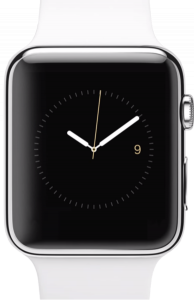
Apple Watch

Share

Cat Stevens

No Instant Quiz today. I wasn’t planning to do any blogging this weekend…but I’ve just read a magnificent New Yorker article about Cat Stevens, and I had to put up a link for you.

Of course I love Morning Has Broken, but I know very little of Cat Stevens’ other work.

No matter. The article – the sheer writing of it – is what I’m so excited about (and, to be honest, a little weepy). The writing in the New Yorker is always good, but this is exceptional even for them.

You, out there, wanting to write better – click the link and read the article. And think about it. And then go forth and do likewise. 

Meaning: Make a connection to whatever you’re writing about. Pay close attention. Be there. And bring with you whatever is hiding in your soul. (That advice applies to me as well.)

(And it wouldn’t hurt to listen to “Morning Has Broken” a couple of times, as I’ve already done this morning.)

https://www.newyorker.com/culture/culture-desk/the-unlikely-return-of-cat-stevens

                                       Cat Stevens

____________________________________________________________


Share

What Did You Learn in High School?

I was an English teacher for more than 30 years. Ours is a noble profession that has helped countless students become skilled writers. I remember my high school English teacher – Bill Testerman – with fondness and gratitude, and there’s a little bit of him in everything I write.

But there’s a gap between what’s often taught in high school English classes and what’s required for success in real-world writing. Today I’m going to discuss three important differences that you might want to look for in your own writing.

1.  Grammar

Very likely you had a teacher or two who told you that memorizing grammatical terms and labeling parts of sentences would magically turn you into a writer. Not true. Most good writers acquired their sentence skills through reading (tons of it, often with a flashlight under the bedcovers when we were growing up).

2,  Sophisticated vocabulary

I used to work with an instructor who endlessly complained about the lack of sophistication in her students’ essays. I wish I’d thought of thrusting one of those essays into her hands and asking her to rewrite it. I can guarantee that the results would have been pompous gobbledygook. You can’t stuff fancy words into an essay about – say – your grandmother’s kitchen or your part-time job at Dairy Queen.

Mind you, I’ve read marvelous – even publishable – student papers about those topics: lively, insightful, and full of vivid detail. But calling your grandmother’s stewpot a “large capacity culinary vessel” doesn’t make for good writing. What’s worse is that the fancy-words habit is difficult to break later on, when you need strong, vigorous writing in the workplace.

3. Hedging

High-school students don’t have the life experience and critical-thinking skills needed for in-depth writing about topics like prison reform, medical marijuana, or legalized prostitution. Not surprisingly, some instructors tell their students to take a cautious middle path when they write about a controversial subject. The papers that come in a week later are empty of content and loaded with qualifiers: rather, somewhat, in most cases, for the most part, usually

It’s not difficult to see why teachers might want to rein in their students’ writing this way. But this cautious approach means that students may never learn how to write with passion and conviction.

Gifted teachers like my beloved Bill Testerman find age-appropriate ways for students to develop the writing and thinking skills needed for real-world success. Today, though, I’m talking to writers, not teachers. Do you have some leftover writing habits that are holding you back? Are you ready to build some new habits that will serve you better? And are you determined to start today?

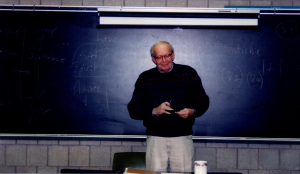
Bill Testerman

                                    Bill Testerman


Share

Jean Cries “Uncle”

Some of you may not be familiar with the “cry uncle” idiom. It means “to admit defeat.” Yes, I am defeated.

During our unwelcome visit from Hurricane Irma last weekend, Charlie and I had no TV and no Internet. I passed the time by rereading one of my favorite books: Watch Your Language by Theodore Bernstein. He was the head copyeditor for the New York Times, and I am indebted to his books for rounding out my knowledge of English usage.

I stretched out on our bed and read – stopping every now and then to read the funniest bits to Charlie – until I came to this, on page 92:

Although, now that this subject has come up, there is a recent president of Columbia whose syntax falls a trifle short of perfection.  FRAGMENT

There was a loud crash as the universe came down around my ears.

I hate that although construction. It’s wrong, dammit. Any idea that starts with although is a fragment…plus you’re supposed to know better than to put a comma after although.

Here are two ways to write this sentence correctly:

However, now that this subject has come up, there is a recent president of Columbia whose syntax falls a trifle short of perfection.  CORRECT

But now that this subject has come up, there is a recent president of Columbia whose syntax falls a trifle short of perfection.  CORRECT

I’ve always assumed that this careless use of although was a recent development. But there it was, in a book by one of my favorite writers…back in 1958.

And the outrage didn’t end there. The very next day the universe mocked me with this Dustin comic strip:

Uncle. I give up. Although, I’ve vowed never to use that construction myself in this blog.

Share