Hurricane Irma

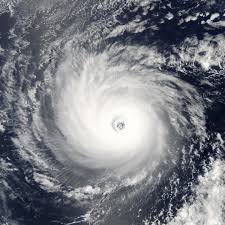
Early this morning, Hurricane Irma went up the west coast of Florida, not far from where Charlie and I – and our cat – live in Central Florida. We live in a big, old, and strong hotel that’s been converted into condos. So we are safe.

I have a hurricane-themed activity that I often use with writing groups. You might like to try it yourself. How would you revise this press release?

The Board of Directors may elect to close the Carter Community Center in the event of an unexpected and severe weather emergency or other event that could aversely impact the safety of citizens and/or staff. The Directors will monitor conditions and reopen the Center when conditions are deemed suitable. Emergency closings will be announced at www.CarterCenter.org. Citizens who do not have access to a computer can tune in to radio station WLCG 620 and TV channel 9 LCTV for emergency closing information.

How did you do? Here are my comments:

  1. Nobody cares who’s going to decide when to close the center. Delete the references to the Board of Directors.
  2. Obviously the directors are going to monitor conditions! Get rid of that sentence too.
  3. All emergencies are unexpected and severe. More deletions.
  4. Anyone – not just citizens who don’t use computers – might want to listen to the radio or watch a TV announcement.
  5. There’s a lot of gobbledygook here: “in the event that,” “aversely impact the safety of citizens and/or staff,” “deemed suitable.” Use everyday language when you make an announcement. For example, “if” works better than “in the event that.”

Here’s a simpler announcement that does the job more efficiently:

The Carter Community Center may close for emergencies. Information will be posted at www.CarterCenter.org. You can also get updates from radio station WLCG 620 and TV channel 9 LCTV. 

Share

Plain Language Part 4

Language is not just the simple communication tool we learned about in school. In this post I’m going to discuss three language categories that can help writers make decisions about vocabulary, sentence structure, and other issues: badge, barrier, and bridge.

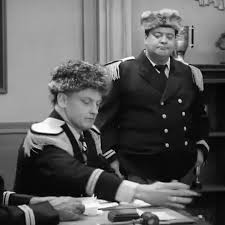
Let me tell you about a memorable language badge. Back in the early 1950s, the Honeymooners was a popular TV comedy show. Although only 39 episodes were filmed, The Honeymooners still has legions of fans (including me) who still loyally watch the reruns.

Years ago I read a TV Guide article that nostalgically looked back at the fun the two central characters in the show – Ralph Kramden and Ed Norton – had as members of an all-male lodge called the Racoons.

Did you notice that misspelling? On the show Racoon was always (whether deliberately or not) misspelled with one “c.” It’s something any true Honeymooners fan would know.

That TV Guide writer (I wish I knew his name) was using Racoon as a badge. (I’ve always wondered how he convinced his editor to allow that misspelling. Maybe the editor was a fan too!)

Badges can be fun and useful – a way for professionals in a particular field to identify and talk to one another, for example. But badges can also create barriers in situations where bridges are needed.

Consider this scenario: A patient is suffering from a worrisome medical condition. She needs a bridge to the doctor who’s managing her treatment.

What he does instead is to show off the terminology he learned in medical school. He’s using language as a badge to impress her…a totally unnecessary effort because she already trusts his professional knowledge. (Why else would she have made the appointment?)

Instead of strengthening the patient-doctor relationship, his medical jargon is putting a barrier between them. What’s heartbreaking is that this scenario is probably repeated thousands of times every day by professionals in various fields.

(What about you? Are you impressed when someone substitutes a fancy word for a simpler one – or are you annoyed?)

* * * * *

The next time you tackle a writing task, take a moment to look for hidden intentions. Are you reaching out to your readers (building a bridge), erecting obstacles (creating a barrier), or putting yourself on display (wearing a badge)?

Sometimes badges are useful to build bonds between writers and their readers. Barriers make sense when you’re narrowing the pool of applicants for a job or performing a similar sorting task.

But most of the time a writer’s job is to build bridges.

              Two Famous Racoons

Share

Plain Language Part 3

Imagine you’re attending a social event in your community. You start talking to a personable young woman who tells you she’s a pediatrician. Later, at the same party, you talk to a personable young man who tells you he’s a children’s doctor.

Which one is more qualified to treat sick children?

Participants at a recent business-writing workshop had a lively discussion about this question. At first several members of the group thought the pediatrician was more qualified because she would have been through specialized university training for treating children. Soon, though, they realized that any children’s doctor would have gone through that program.

So what’s the difference between a pediatrician and a children’s doctor? The answer is none. They’re two names for the same thing. The only difference is that pediatrician is derived from a Greek word (paid) meaning “child.” Children’s doctor is English.

Ironic, isn’t it? We’re proud that we can speak English, a language that’s used all over the world – but we also harbor an unconscious prejudice against it. The uneasy feeling that a “children’s doctor” is less qualified than a “pediatrician” is a remnant of an old misconception that Latin and Greek are better languages than English. For many years schools did most of their instruction in those two languages. (William Shakespeare attended one of those schools.)

The result is that we often lapse into Latin or Greek words when we want to sound smart and important. In reference to sounds more intellectual than about. Cogitate sounds better than think…and so on.

* * * * *

I’ve always envied couples who have mastered the West Coast swing, a smooth and sexy dance that never looked quite right when I tried it. Some years ago I saw a local dance teacher doing a tantalizing West Coast swing with one of her students. I called her the next day and set up a few lessons to learn the moves she was doing.

About 15 minutes into the first lesson, I started to realize why that particular dance had always eluded me. The teacher showed me a better way to count the beats of music. She corrected my posture and head position. She showed me how to work through the parts of my feet – toe, arch, heel – more precisely.

A few minutes later she walked over to the CD player to choose another song. When she came back to the dance floor, I told her I was going to keep coming back so we could work on all the ballroom dances – foxtrot and waltz, rumba and cha cha, two-step and hustle, and all the rest.

Years have gone by, and I still take one or two lessons with her every week.

 * * * * *

Ballroom dancing has its own vocabulary, and my new teacher could have tried to impress me by talking about contra body movement position, proprioception, hip abductors, guapacha timing, and so on.

But she didn’t. Instead she focused on teaching me what I came for: becoming a better dancer.

When I go to a doctor, a dry cleaner, a service station, a dance studio…I look for signs that the people there know what they’re doing and can provide whatever it was that I came for: a cure, a clean dress, a car repair, a chance to learn.

And there’s something else I look for: someone who can answer my questions without making me feel inferior. Businesses should encourage their employees to think about this question: Do you use words to put yourself on display – or to help your customers?

(How would you answer that question?)

In my next post – the last in this series about Plain Language – I’ll be talking about using words as a bridge, a badge, or a barrier.

                  Ancient Roman Forum
Share

Plain Language Part 2

The Nun’s Story is probably my all-time favorite novel. Kathryn Hulme’s 1956 bestseller (subsequently made into a Hollywood movie starring Audrey Hepburn) recounts the struggles of a devout Belgian nun who works in an African hospital. When World War II begins she finds herself back in Belgium, where she defies convent rules to work for the Resistance.

When I first read The Nun’s Story as a teenager, I was too absorbed in Sister Luke’s story (and probably too young ) to appreciate the novel’s sustained irony. Again and again, the convent’s rules and customs get in the way of true spiritual values – but the nuns are too absorbed in their quest for sanctity to realize what’s happening.

Today, though, I’m going to focus on a different aspect of the novel – the languages spoken in the convent. Because Sister Luke is a nursing nun from an upper-class family, she speaks French. Other nuns are assigned to the laundry and kitchen because they grew up on farms and have limited education: they speak Flemish. So we could conclude that Flemish is an earthy, robust language that can’t handle the linguistic demands of a modern corporation, hospital, or university.

And we would be wrong. After WWII, the people of the Flanders region began to rebel against the requirement to use French in schools and business. A strong push for their own language began, and today Flemish is the language of commerce, education, and science.

Linguistics experts tell us there’s no such thing as a “simple” or “primitive” or “coarse” language. Every language has the capacity for subtlety and sophistication. I once knew a counselor who studied sign language so that she could work with hearing-impaired clients. She told me that the sessions where she “talked” with her hands were no different from those where she used spoken English.

So let’s talk about English, a sophisticated and worldly language that’s never been subjected to that kind of prejudice…right?

Wrong. After William the Conqueror and his army invaded England in 1066, French became Britain’s official language. Anyone who wanted a prestigious job made it their business to master the French language. The result was a split in our language that lives on today.

Let’s use roast beef as an example. Wealthy French-speaking families could afford to buy cows for their meat. Poorer families (who spoke English) used cows for working animals and sources for milk and butter. And so we continue to call the live animal a cow (an English word); but when it shows up on a plate, we give it a French name – beef (from boeuf). Today – almost a millennium later – the language is still full of these French/English pairs: legislator/lawmaker, paternal/fatherly, attire/clothing…you get the idea. When we want to impress someone, we automatically switch from English to French.

In my next post – the third in this series of four – I’ll talk more about the prejudice against English that has so often led to mistakes, confusion, and inefficiency.

The Nun's Story

Share

Plain Language Part 1

Last week I conducted a workshop about Plain Language, a federal initiative that directs government employees to write simply and clearly. Although local agencies aren’t covered by the Plain Writing Act of 2010, it makes sense for government documents to be written in everyday English. (You can find resources for better business writing here.)

Or so you would think. The fact is that in many businesses, archaic jargon and tangled syntax are the order of the day. It’s a strange phenomenon. I’ve never met anyone who thinks it’s a good idea to use pompous, stuffy language: “The fluid supply in my writing implement is exhausted” rather than “My pen is out of ink.” When I chat with the participants at a writing workshop, they’re charming and natural. But sit them down to write, and…

Today’s post is the first of four that will dig into our beliefs about language. Where do our ideas about word choice, style, and other writing issues come from – and do we need to re-evaluate them? If you’re unfamiliar with the history of the English language, you may be surprised. Stay tuned!

_

Share

Affect or Effect?

Which is correct: affect or effect – and how do you know? Today I’m going to try to clear up the mystery – and I’ll also offer some unconventional advice about these two problematic words.

Let’s start with the conventional advice. Most sources say that affect is usually a verb, and effect is usually a noun.

Did you notice that little qualifier – usually? First-year college students see that “usually” and start getting nervous.

I would argue that you don’t have to worry about that usually, and I’ll explain why in a moment.

But first let’s deal with “verb” and “noun.” I find it helpful to remember that affect is an action: they both start with “a.”

Smoking affects your health. CORRECT

The weather forecast affected our vacation plans.  CORRECT

Effect is a noun (thing). Looking for a, an, and the can help you determine whether you’re dealing with a noun:

I’m still feeling the effects of that all-nighter I pulled three days ago.  CORRECT

Weight gain is a side effect of that medication.  CORRECT

OK! Let’s move on to the next concept. I have always told (and will continue to tell!) writers to avoid affect. Here’s why: it’s vague.

My new job affected my relationship with Dave.  VAGUE

Did your relationship get better or worse? “Affected” isn’t any help here. When I was teaching first-year college students, I always circled “affected” and insisted that students change it to a more specific word (harmed, improved, weakened, strengthened, etc.) Here’s what I would get:

My new job altered my relationship with Dave.  VAGUE

Sigh.

But there’s good news too. If you really think about what you’re trying to say, and you try hard to come up with a strong word, you’re less likely to get trapped by the affect-or-effect confusion.

And that takes us back to something I said earlier: affect is usually a verb, and effect is usually a noun. So how do you know when things get switched around, so that affect is a noun and effect is a verb?

Here’s the likely answer: when you’re a published, professional writer. To put it differently: those alternative usages are so uncommon that you don’t have to think about them for ordinary writing tasks. (Look me up when you get your doctorate in psychology, and we’ll talk more.)

Here’s what I mean. Psychologists sometimes use affect as a noun in professional articles and books:

One sign of successful therapy is more appropriate manifestations of affect.  CORRECT

Effect can be used as a verb to mean “bring about”:

The committee is working hard to effect better relationships between departments.  CORRECT

The advertising program effected an increase in enrollment.  CORRECT

So – what’s the takeaway for a confused writer? Here are some tips:

  • substitute a more specific word for affect whenever you can
  • use a, an, and the to help you decide when to use effect
  • use a print or online dictionary as a backup when you’re unsure about affect/effect (or any word usage issue)

____________________________________________________________

Share

Google Docs

When I was writing my doctoral dissertation in the mid 1980s, I did much of the writing on a laptop that I hauled to various coffee shops, libraries, and hotel rooms – any place where I could find a quiet corner to work. Before I left home, I always downloaded the latest version onto  a backup disk. Or I thought I did. More than once I sat down to work at some location away from home, only to discover that I’d packed the wrong disk.

Grrrr.

If Google Docs had been available back then, the writing process would have gone much more smoothly for me. Google Docs is a free website that lets writers safely store a project online and access it at any location that has an Internet connection.

But wait – there’s more! Google Docs also has its own word-processing system, so that you can create a new document online.

Google Docs also allows collaboration – highly useful for anyone who does consulting work. You can even open up a window inside a document to chat with a collaborator in real time. (I can remember, years ago at a CCCC conference, hearing Lisa Ede say that she and Andrea Lunsford dreamed of having that functionality available to them. It’s here!)

My only gripe with Google Docs is that it’s not intuitive – not for me, anyway. I would like to have the most useful functions clearly visible on a toolbar. For example, I use Google Docs primarily as a backup for ongoing projects. It annoys me that the upload function is hidden inside a folder. But then maybe what’s important to me isn’t a priority for other users.

Share

Thinking about Copyright

A trip to New York always stimulates my brain to go off in many directions. Last week I found myself thinking – and wondering – about slavery, prodigies, Henrik Ibsen, immigration, Broadway, pianos…and (of all things) copyright. So today you’re going to get a tutorial on copyright, but it will be disguised as a travelogue.

I was delighted to discover a brand-new miniature display only two blocks away from my hotel. I have always loved miniatures – there’s a furnished dollhouse in our bedroom – and Gulliver’s Gate enchanted me. I ended up spending almost two hours looking at Lilliput-sized replicas of famous sites from all over the world. (How wonderful to see my beloved New York Public Library in miniature!) Buses move, traffic signals change from green to yellow to red, chickens peck the ground – I had fun looking at everything.

But I also detected a possible copyright violation. The British display includes an outdoor concert venue where you can see the Beatles perform. (I am not making this up.) Now perhaps the owners of Gulliver’s Gate sought permission to include a filmed performance by the Beatles. But I didn’t see a licensing notice (“used by permission”) anywhere, and it seems unlikely that a brand-new business venture on incredibly expensive Manhattan real estate could afford to pay what would surely be a hefty fee.

When I dropped by the by the New York Historical Society for the Eloise exhibit, my thoughts took a different direction. Licensing notices were posted everywhere – but (as I learned) there’s a problem with Eloise herself. Author Kay Thompson held the rights to the Eloise character (Thompson died in 1998). Therefore artist Hilary Knight, who created the wonderful drawings, is legally prohibited from creating new pictures of Eloise. After the publication of the last Eloise book, Knight embarked on a new career doing artwork for Broadway posters.

My third encounter with copyright happened in a theater on West 45th Street where I watched A Doll’s House, Part 2.  Playwright Lucas Hnath has written a sequel to Henrik Ibsen’s famous play about a woman who leaves her husband and children to find herself. In this case Hnath did what Hilary Knight is forbidden to do: make money off characters created by someone else. What’s different in this case is that Ibsen’s original play is out of copyright because it was created back in 1879.

When a work of art goes into “public domain” because of its age, anyone can do anything with it. That’s why I’ve seen vampire-themed rewrites of classic books by Louisa May Alcott and Jane Austen for sale in New York bookstores.

Every writer needs to be informed about copyright and terms like “fair use” and “public domain.” You can learn more at this link. (And if you want to read about one of my own adventures with copyright – a phone conversation with actor Sidney Poitier – click here.)

Share

Weak vs. Strong Sentences

A recent copyblogger post raised an excellent question: How do you determine whether you’ve written a strong sentence – or a weak one?

My answer is that I have to hear the sentence in my head. Here are three sentences I’ve written myself (sigh) that I’d like to nominate for today’s “weak sentence” award:

Keeping the library open on Sunday afternoons is something Dean Wilson and I agree on.

Taking a cruise was an option that didn’t appeal to me at first, but in the end I enjoyed it.

A widespread custom in many countries all over the world is for communities to plan festivals to celebrate the fall harvest.

Several features of these sentences bother me. (By the way, I’d be interested to know if you’re bothered by these sentences too – or is it just a quirk of mine?) I don’t like “is something” in the first sentence and “was an option that” in the second. More problematic – to my ears, anyway – is the way the first two sentences seem to sputter as they come to a stop.

The third sentence presents a different problem: it seems static. Instead of reading what a widespread custom is, I’d prefer to read what those communities are doing.

Here are my suggested revisions:

Dean Wilson and I agree: the library should be open on Sunday afternoons.

The cruise – which sounded like a bad idea at first – turned out to be a memorable vacation.

Many communities all over the world plan festivals to celebrate the fall harvest.

Problem solved, right? Not so fast! If it’s hard to write strong sentences, it’s even harder to explain how to do it. So I was delighted when I came across that copyblogger post: “3 Advanced Ways to Craft Better Sentences.”

Alas, the advice turned out not to be advanced at all. Use active voice. Don’t overuse a word. Don’t belabor a point. Examine your writing with a critical eye. (Anyone who already knows how to carry out that last suggestion doesn’t need to read articles about writing!)

Even worse, some of the writing – despite the promise in the headline – was weak. For example, author Stefanie Flaxman urges writers to use Google to double-check words and expressions that aren’t “straightforward.” How – I ask you – do you know when something you’ve written isn’t “straightforward,” and how can Google help? She doesn’t provide any examples – not one.

All she says is that she checks “anything that makes me question whether or not it is correct.” What is “it,” and what is the warning sign that makes you question whether it is correct? I think she’s trying to say that she looks up confusing words like compose/comprise and affect/effect. Good for her! But we’re still not an inch closer to figuring out how to write a powerful sentence.

Here are three strategies I use myself to write stronger sentences:

  • Watch for that sputter I mentioned earlier. One trick is to end sentences with a noun rather than a weak word like it.
  • The words thing, something, and – oddly – being often weaken sentences. I use all three words, but I always spend some time first to see if should replace them.
  • Weak sentences often point to a deeper problem: I have nothing important, interesting, or fresh to tell my readers. It may be time to hit the delete key and start over.

Share

Ruth Slenczynska

My parents subscribed to the Reader’s Digest when I was growing up, and I eagerly read every issue. One article that has stayed with me all these years was the true story of a child prodigy named Ruth Slenczynska. She made her first sensational appearance as a pianist at the age of six.

Eventually the secrets came out: she suffered years of emotional and physical abuse from her father, a driven man who desperately wanted her to be a famous (and well-paid) pianist. But her love for music sustained her, and she has spent her life playing the piano for the sheer joy of it. The teachers who lavishly praised her musicianship included Josef Hoffman and Sergei Rachmaninoff.

Her life is one of those you-can’t-make-this-stuff-up stories, and I’ve always wondered what happened as she grew older. That Reader’s Digest article dates back to 1957. Slenczynska was born in 1925. Surely all that craziness and cruelty she endured as a child eventually caught up with her, right?

Wrong. Two years ago, at the age of 90, she was still giving concerts. And so I’ve been wondering: Who is this woman?

* * * * * *

I’m in New York City right now for my sister’s 80th birthday. I flew in a few days early to see friends and cross some items off my NYC Bucket List. It’s a project that’s not going well because New York keeps adding new things that excite me, so the list never gets any shorter.

Thursday afternoon I headed for the Performing Arts Library at Lincoln Center to read Slenczynska’s autobiography, Forbidden Childhood. (No way was I going to be able to buy a secondhand copy from Amazon – the price is a whopping $175.)

It’s a powerful book, and an honest one. You get a vivid sense of her colossal talent and appetite for hard work. You also get to know her as a human being and – most important – you can learn a lot about how to tell your own life story.

What astonished me was that Slenczynska refused – over almost 300 pages – to simplify her life into the conventional story you might expect: “I was victimized” or “I have a super-human capacity for forgiveness.”

She doesn’t gloss over her talent and achievements (or her suffering as a child) and she doesn’t make excuses for her father. (He once told a young violinist to give up any idea that he might be a great musician some day. That boy grew up to be Isaac Stern.)

Slenczynska also spotlights some of her own personal and musical failings – her poor manners and clumsy social skills as a child, and her inability even as a professional musician to sight-read well enough to play with a chamber group.

I think there are several takeaways for more ordinary mortals like you and me. Don’t shy away from talking about complex people and tangled situations. Simplicity is overrated, at least when it comes to your life story. Slenczynska’s sensitive and nuanced description of her troubled family went straight to my heart.

Here’s something else that really impressed me: she differentiated between her thoughts and feelings as a child and what she experienced as she grew up. Too many autobiographies are written from one point of view, as if an eight-year-old child could think like someone who’s thirty or forty.

But there’s one thing that her book doesn’t (and couldn’t) do that I wish some musician would tackle. Slenczynska talks about the lessons she learned from some great teachers. I wish – I wish – I could understand. For example, she had a teacher who showed her that there were little openings in a musical piece where the pianist’s personality and creativity could shine through. If only she’d videotaped a lecture where she demonstrated, sitting at a piano, what that was all about!

(You, reading this – is there an insight, or experience, or skill that you can explore more deeply than anyone else has so far been able to do? Please think about putting it into words!)

I’d love to urge you to hurry to your local library to read Forbidden Childhood. Alas, you’re unlikely to lay your hands on a copy. But do think about it the next time you’re in New York!

Ruth Slenczynska

            Ruth Slenczynska in 1963

Share