Whomever

    Instant Quiz 

Can you find the error in this sentence?

The tickets are for whomever might enjoy the show.

Keep reading for the answer. I’m devoting today’s entire post to whoever vs. whomever.

____________________________________________________________

Short Pencil Point Deviant Art okInstant Quiz ANSWER

The correct word today is whoever:

The tickets are for whoever might enjoy the show.  CORRECT

Think “he will enjoy the show” – “who will enjoy the show” – “whoever will enjoy the show.”

If you’re thinking about leaving a message that I’m wrong, and whomever is the correct word, join the club! (But I’m not. Sorry.)

Sentences like this one are a strong argument for getting rid of whom. Permanently.

Most people cheerfully use who for everything. But there are a few sticklers left who still make a distinction between who and whom. Good for them! The problem, though, is that those sticklers are the ones who might get today’s sentence wrong.

So here’s a grammar issue that many people get wrong. It doesn’t make sentences easier to understand. All it does is create confusion. Why hang on to it?

I think it’s past time to say good-bye to whom. Good riddance!

whom

                                           Whooom?

Share

More about Spacing after a Period

My friend Janis Koike sent me a marvelous response to a cranky remark I recently posted about people who still type two spaces after a period. Here’s what Janis wrote:

Please, please be a bit more tolerant of those over the age of 70 who learned to type in high school. Type is a somewhat obsolete word referring to the act of forcefully punching buttons on a piece of heavy equipment known as a typewriter. This machine produced a document which could be easily read without having to decipher the penmanship (or lack thereof)  of the writer. It was popular before computer or even word processor became part of the vernacular.  Actually word processor may also be approaching obsolescence.

In any event, single spacing after a period was a capital error, punishable by a severe frown 🙁 on the face of the typing instructor or reader. Our fingers learned to comply, creating happy faces 🙂 instead. Truth be known, our readers most likely paid no attention.

The distance between mind and fingers is short. Fingers are slow learners. Please be a bit more tolerant of the aged.

Janis is…a writer. You hear her voice when you read today’s post She mentions punching typewriter keys – but I would say she was punching words today as well. Did you notice that almost every word in those last two sentences is English? The sole exception is the Latin word distance:

The distance between mind and fingers is short. Fingers are slow learners. Please be a bit more tolerant of the aged.

Please take note: you don’t need gobbledygook to be an excellent writer.

Share

Postmodernism

Someone on Quora just asked some important questions about postmodernism. Do postmoderns really believe there’s no objective truth? Do they think human knowledge is always biased? What are some other academic follies from history?

Here’s my answer:

You’ve been misinformed. Of course there’s objective truth. But you’re right that information is always filtered through our personalities, experience, culture, and other factors.

Here’s one of my favorite quotations from Jacques Derrida: [“The] value of truth …is never contested or destroyed in my writings, but only reinscribed in larger, more stratified contexts” (Norris, Postmodernism 44-45).

My favorite example of postmodern thinking is our modern skepticism about once-hallowed institutions like the monarchy, government, and religion.

Postmoderns no longer believe in privileged institutions. We are skeptical about claims that church officials and government leaders have an exalted mandate. We realize that often they are conspiring (away from the public eye) to protect their own interests.

They sometimes use grand ideas to make us feel that they live in a rarefied atmosphere that the rest of us don’t understand, and for millennia they’ve gotten away with it.

Another example: feminism would be impossible without postmodernism. We have only very recently started to dismantle the ideology of male privilege.

My own interest in postmodernism focuses mostly on language. Again, we are much more skeptical about language than we used to be. For a long time people believed that philosophical and religious language were privileged and different from ordinary language. They didn’t use rhetorical tricks. They were a fast lane to truth. Again, that thinking is fading away.

You (and the rest of us!) have plenty of postmodernism in your head. Like water, it’s always there, and that means we’re not aware of it.

Don’t label it a folly. That’s not worthy of you.

Christopher Norris’s book Jacques Derrida is the best work I’ve ever read on postmodernism.

Or you might enjoy The Feminine Mystique by Betty Friedan. (I’m sure she didn’t know she was writing a postmodern book!) Watch how she dismantles the ideology surrounding male/female roles. (She was a Marxist when she was in college, and the postmodern project of questioning exalted ideologies really begins with Marx.)

                    Betty Friedan

Share

Another Rule Bites the Dust

I’m a great believer in treats, and one of my favorites is relaxing on the sofa with the latest issue of The New Yorker magazine.

But sometimes it’s anything but relaxing. When I scanned the table of contents last week, I saw this:

      Hannah Goldfield     32   Kitchen Shift
                                              A band of famously hard-living chefs clean up their act.

In case you missed it, the world just came to an end. The New Yorker magazine – yes, The New Yorker! – just threw out one of the most important grammatical rules in the English language: a subject can’t appear in a prepositional phrase.

Here’s how I (and every other English teacher who ever lived) would have written that subtitle:

A band of famously hard-living chefs cleans up its act.

The subject is band. So: the band…cleans up its act. (I also would change their to its. Yeah, The New Yorker threw out a pronoun agreement rule as well.)

A few months ago I spotted the same thing – an apparent SV agreement error – in an article by Mary Norris (Mary Norris, for heaven’s sake!). Clearly something was afoot. Not only was it published in The New Yorker: Mary herself – a former copyeditor for the magazine – was the author.

I recently Tweeted her about it, and she said that the rule doesn’t always apply. Sometimes you go for emphasis.

Please note that I’m not complaining about any of this. Life marches on, and so does language. It’s just that I keep having to delete rules from my teaching materials. My two-page pronoun rules handout is down to one page. (I’ve deleted the “better than she” rule and the prohibition against the singular they. Well, The New Yorker is still resisting the singular they, but I’m all for it.)

(In case you’re wondering, here’s the Mary Norris sentence I’d mentioned earlier: “In the film, directed by Terry Gilliam, of Monty Python fame, and starring John Cleese and Michael Palin, a band of time-travelling dwarfs plunder treasure from the past.” I would have made it “a band…plunders.”)

Not long ago, a book by linguistics expert John McWhorter convinced me that “It’s me” is perfectly good English. (After all, the French – sticklers for grammar – use “C’est moi” all the time.)

As I said, time marches on. My grandmother spent most of her life in a tiny house that didn’t have electricity when she and her husband first lived in it. Decades later, when I used to spend weekends in that house, my grandmother lit a kerosene lamp every night before she went to sleep – even though there was a light switch in her room.

I’m not asking anyone to throw out the traditional rules of grammar (although I do encourage you to drop the his-or-her habit). I’m urging you to let go of some of the convictions you’ve been hanging on to since high school. (Are you still spacing twice after a period? Stop! Your typing teacher probably gave up that practice decades ago, and you should too.)

Back in Shakespeare’s day, grammarians were up in arms because thee/thy/thou was disappearing. It’s the end of the world! The language is dying!

Do you miss it? Do you really need to spend time every day deciding whether to use thee or you? Trust me…English is going to be okay.
The passage of time

Share

Where to Go Pinker

Here’s a comment about writing I heartily agree with: “Good writing takes advantage of a reader’s expectations of where to go next.”  It’s from page 39 of Steven Pinker’s book The Sense of Style: The Thinking Person’s Guide to Writing in the 21st Century.

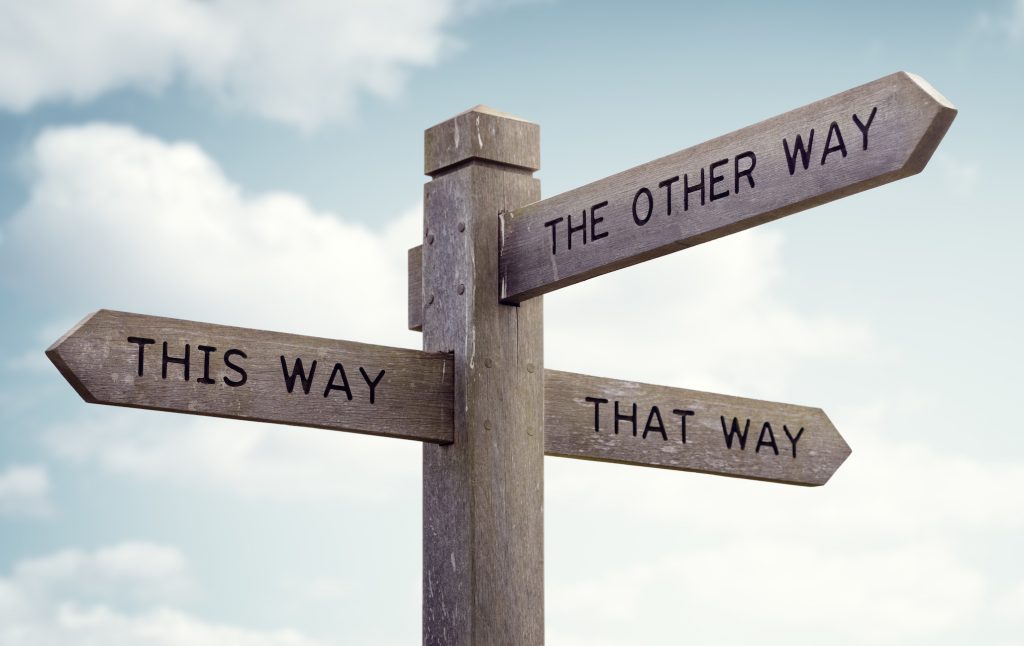
Pinker calls this practice signposting – using clue words to help readers navigate what you’ve written. Here are some words and phrases you can use: but, for example, therefore, in addition, furthermore, on the other hand, however, and nevertheless.

Pinker’s point is an important one. We can’t see our readers, so it’s easy to forget about them. When we’re writing, we’re focused on what we’re doing – selecting words, choosing ideas, finding examples, organizing sentences and paragraphs. I call that writing a first draft.

The problem is that many writers stop with that first draft: “I’m finished!” I used to work in a college learning lab. Again and again I saw students print an assignment and hurry over to the tutoring desk. They skipped the important second step: Sitting down to reread their work and look for ways to make it better.

If you think about “signposting,” you’re more likely to insert transition words that will help readers find their way.

Notice that the sentence below has no signpost. Are the psychologists giving good advice? There’s no way to tell:

Many psychologists tell their clients that they are choosing to be depressed, anxious, angry, or sad.

This version of the same information has a clear signpost: the writer disagrees with what the psychologists are doing.

Telling clients that they are choosing to be depressed, anxious, angry, or sad – as many psychologists do – isn’t helpful.Crossroad signpost saying this way, that way, the other way

Share

Beware of Also

You won’t hear it from anyone else, so maybe it’s just one of my idiosyncrasies. But I think also is a dangerous word for writers.

Writing should build to a climax. “Also” sounds like an afterthought. Nothing weakens a piece more than an “also” idea in the last paragraph. There’s a “by the way” feel just when the piece should be driving to a strong finish.

Instead of “also,” try to work your idea into the paragraph – or use a strong transition like “worst of all,” “best of all,” or “most important.”

We had a wonderful time touring the Louvre and the Eiffel Tower. We also visited Jim Morrison’s grave at the Père Lachaise Cemetery.  WEAK

We had a wonderful time visiting the Louvre, the Eiffel Tower, and Jim Morrison’s grave at the Père Lachaise Cemetery.  STRONG

This version builds to a climax:

We had a wonderful time visiting the Louvre and the Eiffel Tower. But what I remember best was Jim Morrison’s grave at the Père Lachaise Cemetery.  CLIMAX

I try to apply the same principle to conversations and emails. It’s deflating to call someone and say “Congratulations on your award! By the way, can I borrow your punch bowl for a party I’m throwing this weekend?”

Eiffel Tower At Night Paris France

Share

Is It Passive Voice?

Carolyn Hax’s April 24 advice column featured a woman who was planning a destination wedding. Some members of her family weren’t able to travel, and the bride-to-be was anticipating problems about her wedding plans: “There will be an irreparable rift.”

Carolyn responded with “Only if you decide to create one, so stop hiding behind the passive voice.”

I don’t have any advice of my own for the bride, but I want to make a grammatical point. “There will be” isn’t really passive voice. I’d call it impersonal. The bride-to-be is taking the human factor out of a situation that is very much about people, their values, and their feelings.

As far as I can tell, grammar doesn’t help here. “There is” doesn’t seem to fall into the category of impersonal verbs (such as “It’s raining”). Grammarians put “There is” into the expletive category.

(I’m going to take a brief detour into my longstanding gripe about formal grammar: It doesn’t help. There! Done!)

My point today is that I agree with Carolyn Hax. Language can be used to clarify and connect – or to manipulate and conceal. Choose your words carefully!

Chalkboard with a "Stay Active" message

Share

Hyphens Part 2

This is a follow-up to my previous post about hyphens. Today I’m going to teach you a hyphen rule that used to scare me. When I finally calmed down, I discovered it’s not hard at all.

I’m also going to explain why hyphens tend to disappear – and why I think that’s good news. And – as a bonus – I’m going to update you about some changes in hyphen usage.

1. Let’s start with the hyphen rule. I’m going to use open door as an example:

The thief entered through the open door.

No hyphen. But if you put a noun after open door, you need a hyphen:

I’m grateful that my supervisor has an open-door policy.

My husband delights in finding hyphen mistakes when I type his columns. But he’s not nearly so happy when I point out that the alleged mistake was actually correct.

Here’s a typical conversation:

Charlie: I found a typing mistake. You didn’t put hyphens in the flowers are red and white. But in the next paragraph you have red-and-white flowers.

Me: The second time, red-and-white is followed by a noun: red-and-white flowers.

Charlie: (grinds his teeth).

2. Hyphens tend to disappear over time.

If you enjoy reading vintage novels, you’ll often see to-night, week-end, and other ordinary words with what seem to be unnecessary hyphens. There’s a common-sense feeling among English speakers that if you know the word, why the heck should you bother with the hyphen? Begone! (I suspect that some people also share my feeling that hyphens are ugly.)

3. And that brings us to the 2019 American Copy Editors Society Conference. You can read Mary Norris’ terrific article about it here: Dropped Hyphens, Split Infinitives, and Other Thrilling Developments from the 2019 American Copy Editors Society Conference 

The Associated Press has made some changes in their policies about hyphens. Because many newspapers and magazines use AP Style, there will be far-reaching impact. Here are two of them:

  • Hyphens will be dropped in racial and ethnic identifiers: now it’s African American, Swedish American.
    Henry Fuhrmann, formerly the copy chief of the L.A. 
    Times, wrote, “Those hyphens serve to divide even as they are meant to connect. Their use in racial and ethnic identifiers can connote an otherness, a sense that people of color are somehow not full citizens or fully American.”
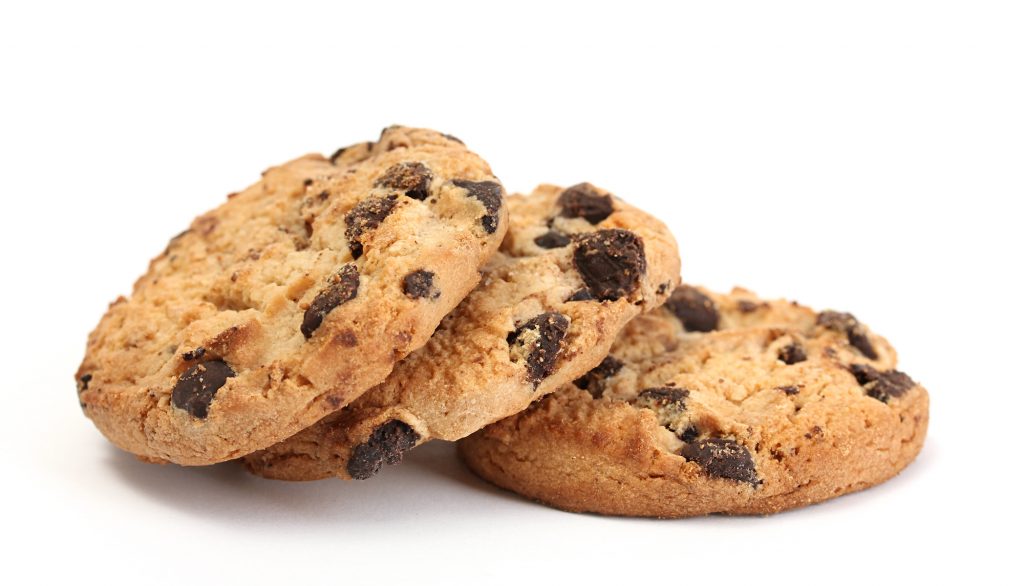
  • Hyphens will be dropped from compounds like  “third-grade teacher” and “chocolate-chip cookie.” Mary Norris explained, “Because there is no danger in mistaking which two words go together (it’s not ‘gradeteacher’ or ‘chipcookie’), the extra mark is unnecessary.”

Chocolate chip cookies

Share

Hyphens Part I

Hyphens are the reason I almost didn’t become an editor. 

The problem was that hyphens seemed too confusing. I was sure I’d get yelled at for inserting a hyphen that turned out to be unnecessary. Or that I’d omit a hyphen that needed to be there.

The solution – of course – was to learn how to use hyphens. And that will be our topic in this post and another one later this week.

But first I have to tell you about a time when those fears came true. I was getting daily phone calls and office visits from colleagues complaining angrily about a hyphen I’d decided was unnecessary. (I hope your life is as interesting as mine sometimes is!)

I was a member of an editing team at the college where I used to teach. One of my responsibilities was to revise the college mission, which included our quest to become a world-class college.

Or were we trying to be a world class college?

I decided against the hyphen, for two reasons. The college had been using that mission statement for several years without the hyphen. More important, I think hyphens are ugly.

But here’s the thing. Neither of those reasons had anything to do with grammar. Luckily I had an ace in my pocket, ready to pull out when the complaints started coming. I had Googled “world class style sheet” and “world-class style sheet” to see if any other institutions had decided against the hyphen.

And here’s what I discovered: Yale University doesn’t use the hyphen either.

A couple of weeks ago I told the story to my writing group, and my friend Jane Brumbaugh came up with an explanation that I wish I’d thought of myself: Using  world class (rather than world-class) gives each word power that the hyphenated version does not. World and class each become powerful words.

I’m going to return to hyphens later this week. Right now I want to applaud Jane’s explanation. I think she’s hit on something hugely important.

When you want to be emphatic, your sentence needs to slow down. That means you’re careful not to clump words together. Consider omitting the hyphen (if you can get away with it).

And don’t pile too much information into a sentence. Compare these two versions:

Ben raced into the kitchen, shouting “I won the blue ribbon!”

Ben raced into the kitchen. “I won the blue ribbon!” he shouted.  BETTER

We’ll return to hyphens soon!

The words "world class"

Share

Don’t Overuse “And”

What constitutes good writing? Sometimes the answer depends on how professional you are. Take a look at this sentence:

We’ve had a lot of rain, and we were thrilled when the sun finally came out.

Both the grammar and usage are correct. But I would still recommend a change.

Here’s why: pros try not to join sentences with and. Your writing will have more sophistication if you define the relationship between the two sentences. My version sets up a before-and-after relationship between the two ideas:

We were thrilled when the sun finally came out after all that rain. BETTER

When I edit a piece of written, I always look at each and to see if the sentence could be improved. Here’s another example:

It rained for two days, and our street was flooded.

There’s a cause-and-effect relationship here. Here’s my version:

Because it rained for two days, our street was flooded.  BETTER

The sun shining in the sky

Share