For and Against Brevity

Here’s some standard writing advice: “Keep it simple.” “Brevity is the soul of wit.” 

Elegant, isn’t it?

But that advice could also be dangerous. The truth is that simplicity and brevity aren’t appropriate for every situation.

 Imagine that you have to disappoint a customer, a child, or a friend. You need to stretch out the explanation to reassure your listener that you really did consider the request and really wanted to fulfill it – but circumstances (or policies, or economics, or something else) got in the way.

Life isn’t always simple. I once had a professor who liked to remind us that complex ideas require sophisticated vocabulary and elaborate sentences. He was right on target.

While sorting through some old magazines, I came across a 2003 news report about the Columbia shuttle disaster. Part of the problem, according to NASA, was the agency’s reliance on…PowerPoint.

Hmmm. Think about it for a moment.

A good PowerPoint slide can have only a small amount of information. Often it will display just a short list of three or four bullet points. A good PowerPoint presentation is easy to follow!

But what if you’re talking about a complicated subject – and all you have to work with is a short list of ideas? Bang, bang, bang – here they come, one right after another. There’s no opportunity for sophisticated cause-and-effect reasoning or back-and-forth debate.

If you want a complex argument to unfold for your audience, I think you should consider another format.

Let me give you an everyday situation that might call for extra time and more explanation. Imagine someone who’s getting panicky as Valentine’s Day approaches. The romance is over, and clearly it’s time for a breakup.

My advice would be not to rely on a brief statement that you want to break up. You’d better be prepared to list some specifics – and you need complex sentence patterns. Trust me: it’s going to be a while before you’re through!

broken
Share

It’s or Its?

Many writers struggle with it’s and its. Here’s how I keep them straight: the apostrophe is like a little “i.” So it’s means it is.

Let’s apply this to a sentence. Is it’s correct?

Puerto Rico is reconsidering it’s status.

[Hmm. “Puerto Rico is reconsidering it is status.” Nope. Got to fix that!]

You need the word its (no apostrophe).

Puerto Rico is reconsidering its status. CORRECT

But that doesn’t make sense! How can you have a possessive word without an apostrophe?

Answer: Lots of possessive words don’t have apostrophes. Do you put an apostrophe in his? (Please tell me you don’t!) 

None of the possessive pronouns get apostrophes: hers, ours, yours, theirs, its. Just think about his, and you’ll be right every time.

Puerto Rico is reconsidering his status. CORRECT

Puerto Rico is reconsidering its status. CORRECT

Try these sentences:

The dog is playing with his ball.
The dog is playing with its ball.
The company doubled his profits.
The company doubled its profits.

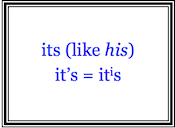
So here’s a handy way to get it’s/its right every time:

It’s = it is

Its = possessive (like his)

One more question: When do you put an apostrophe behind its? Answer: NEVER.

Its’ = WRONG

Maybe you can indulge me for just a moment longer. What do you do when you’re working on an important writing task and you suddenly realize you’re not sure what to do with its: Apostrophe? No apostrophe? And if you put it in, where does it go?

Here’s first aid for its (and many other puzzling words):

  • Use your spellchecker. It may not completely solve the problem, but at least it will stop you from putting the apostrophe at the end of its.
  • Take a moment to verify the spelling. Go to www.Dictionary.com, or look up the word in the dictionary.
  • Call the library! Reference librarians are paid to answer these questions.

Explaining the difference between its and it's

Share

Five Writing Rules

Today I’m offering you a grab-bag of writing rules for every situation.

 1. Break up long paragraphs. Ideally each paragraph should explore a different idea. But there’s nothing to stop you from simply breaking a paragraph in half if it’s starting to get long. Readers prefer shorter paragraphs and are more likely to read them all the way through.

 2. In dialogue, keep identifying the person who’s speaking. It’s frustrating to read a whole page of dialogue, lose track of who’s speaking, and have to waste time backtracking. Since you’re the author, of course you know who said what. But does your reader?

 3. Don’t overuse would. Reserve it for talking about a wish, a repeated action, or something unreal. When you’re talking about the past, use normal past-tense forms of verbs: walked, sang, drank (not would walk, would sing, would drink).

 4. Be careful with he, she, him, and her when you’re writing about two or more people of the same sex. “Betty was expecting a phone call from Anne to talk about her tax return” is confusing: Whose tax return?

 5. Keep the subject and verb together, especially when a sentence is long. Don’t ask your readers (who probably have many demands on their time) to read a sentence two or three times in order to figure it out. Many times the solution is to rewrite it as two sentences:

The reason for my poor grade in Algebra 1 last semester – when I finally had a chance to talk to Professor Brown about it – turned out to be a clerical mistake.  CONFUSING

I finally had a chance to talk to Professor Brown about my poor grade in Algebra 1 last semester. It turned out to be a clerical mistake.  BETTER

Share

I Don’t Respect the Word “Respective”

I hate the words “respective” and “respectively.” They are, I insist, unnecessary, clumsy, and clankingly old-fashioned words.

I’m going to begin today’s post by conceding that it’s possible to use respectively effectively. Here’s an example from an item about a Stravinsky festival in the May 3, 2010 New Yorker:

This week’s performances of “Oedipus Rex” and “The Soldier’s Tale” are narrated by Jeremy Irons and Alex Baldwin, respectively.  CORRECT

“Respective” and “respectively” are useful sorting words. That sentence in The New Yorker helps us figure out what’s going on: Jeremy Irons will narrate “Oedipus Rex,” and Alec Baldwin will narrate “The Soldier’s Tale.”

But few writers seem to use these words so precisely and elegantly. I keep coming across sentences in which respective adds nothing at all (except, perhaps, a flavor of bygone pomposity). Here are three examples:

1.  The bride and groom, followed by their respective parents, led the guests into the reception hall.

I would delete “respective.” It’s obvious that the bride and groom were followed by their own parents.

2.  After saying good-bye to their respective friends, Mary and Jo put their suitcases into the car and drove off to college.

I would delete “respective.” It’s obvious that Mary and Jo said good-bye to their own friends.

The candidates set aside their respective views and sat down to hammer out a bipartisan plan.

I would change “respective views” to “differences.”

Professional writers strive to make every word matter. Let’s make a resolution to follow their example!

Sign with word unnecessary turned into necessary

Share

‘Whom’ and ‘Whomever’

Recently I wrote a couple of posts about the Apostrophe Protection Society. I’m thinking of starting my own organization, tentatively called the “Down with Whom and Whomever Club.” Our charter will state two foundational principles:

  • Whom and whomever don’t add anything useful to a sentence
  • If you come across whom or whomever in a sentence, they’re probably wrong – even if the author is a professional writer

Here’s an example from my files. This is from an article about a teacher who was stealing from students’ lockers:

The student placed his black Samsung slider cell phone in an empty locker inside the boys’ locker room to catch whomever might be stealing the money.

It should have read “whoever might be stealing the money.” Here’s how you figure it out: “he was stealing the money” – “whoever might be stealing the money. When in doubt, substitute he for who and him for whom. It sounds like “Tea for Two,” doesn’t it?

He for who
And him for whom

Give the book to whoever wants it.  CORRECT  (“he wants it” – “who wants it”)

Give the book to whomever you like.  CORRECT  (“you like him” – “you like whomever”)

You can feel that m (him, whom) in your mouth. But why are we fussing with this? Just use who and whoever. So simple!

whom

                                      Whooom?

Share

Learning Something New about Little Women

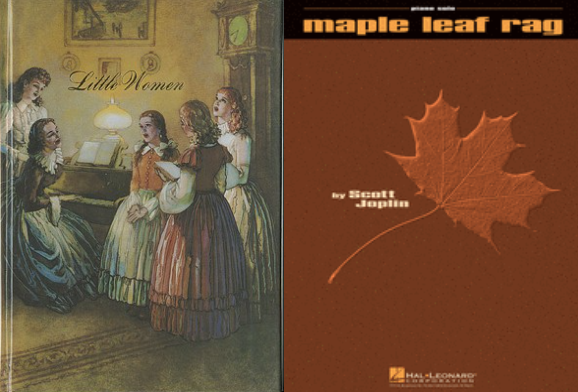
I don’t remember the first time I read Little Women. It’s a book I know so well that I’m using it to learn Spanish. I’m up to page 56 in Mujercitas (a Spanish translation of Alcott’s classic novel). I’ve read every biography of Alcott I could get my hands on, and I just ordered a new one. (If you’re going to read just one, I recommend Louisa May Alcott by Harriet Reisen –https://www.amazon.com/dp/0312658877/ref=cm_sw_r_tw_dp_U_x_ik6iEb0G6WPEB.)

Of course I watched Greta Gerwig’s new filmed version! And I was excited to learn something new about Alcott – or at least something that had never hit me before. Alcott insisted on keeping the copyright to Little Women – and it made her wealthy. Way to go, Louisa!

* * * * * *

Can you name another famous American who made history – and a fortune – by holding on to a copyright? It was Scott Joplin, an African-American composer (and son of a former slave) who was lucky enough to have the Maple Leaf Rag published by a businessman of incomparable integrity: John Stark.

Instead of buying the rights outright – common practice when dealing with a black composer – Stark paid Joplin a penny for each copy sold. That doesn’t sound like much – but it allowed Joplin to retire.

Every writer should have a basic understanding of how copyrights work! Click here to learn more.

The covers of Little Women and the Maple Leaf Rag

Share

Thumb Rule

It’s time to talk about…thumbs!

I hear endless questions about whether it should be “him and me” or “him and I” – or is “he and I” better?

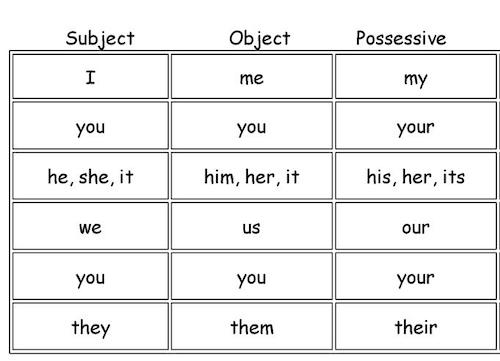
English teachers like to show you a handy little pronoun chart that will supposedly solve everything:

Pronoun chart

Easy as pie, isn’t it? Just stop yourself in mid-sentence, visualize the chart, and decide which case ending you need.

Hah. If I did that every time I started to talk, I’d never say anything.

So let’s do it the easy way: by using the Thumb Rule. You just use your thumb to make the sentence shorter. You’ll instantly hear the correct pronoun. No need for grammar gobbledygook!

  1. Every Saturday afternoon, Jamie and I/me go to the mall. (Use your thumb to cover up “Jamie and”)
    Every Saturday afternoon, I go to the mall.  CORRECT
    Every Saturday afternoon, Jamie and I go to the mall.  CORRECT
  2. Sometimes Mrs. Brown asks Clara and I/me to help with the bulletin boards.  (Use your thumb to cover up “Clara and”)
    Sometimes Mrs. Brown asks me to help with the bulletin boards.  CORRECT
    Sometimes Mrs. Brown asks Clara and me to help with the bulletin boards.  CORRECT

If you can figure out the correct pronoun for the short sentence, you automatically know the correct pronoun for the longer sentence! It never changes.

Click here to watch a short video (it’s free!) about the Thumb Rule.

a thumb

Share

Parallel Construction – or Not

Is it still a rule if professional writers ignore it? Today we’re going to talk about parallel construction. In theory, sentences have to be parallel, so that all parts of the sentence match. Here’s an example: “Jenny served pink cupcakes, raspberry tea, and strawberry scones.” Everything matches the beginning of the sentence: things that Jenny served.

But sometimes the third item in a sentence doesn’t match the first two. Here’s an example:

For two hours we packed boxes, scrubbed floors, and Dennis fixed a squeaky door.  NOT PARALLEL

The items don’t match the beginning of the sentence! The first two are things we did, but the third is what Dennis did. To fix it, I would break it into two sentences:

For two hours we packed boxes and scrubbed floors. Meanwhile Dennis fixed a squeaky door.  BETTER

* * * * * *

So far, so good. If you aspire to be a professional writer, your sentences should be parallel. But here comes a moment of truth: this parallelism principle is ignored so often – even by the pros – that you could argue there’s no point in bothering with it.

Here are three recent examples. I will leave it up to you whether you want to be fussy about parallelism (as I expect to be till my dying day) or take a more relaxed approach. If you decide in favor of parallelism, you can get some good practice figuring out what’s wrong with these sentences!

  1. From “Like a Virgo” in the New York Times 9/1/19: “The sign is known for clear communication, a command of language, and is sometimes described as a staid librarian.”
  2. From Gene Weingarten’s “Below the Beltway” column in the Washington Post 11/11/19: “Andrew Jackson had fought in more than 100 duels, killed a man over a gambling debt, and as president, he placed a 1,4000-pound block of cheese in the White House lobby, just for the hell of it.”
  3. Another one from the New York Times 11/1/19: “Uber Fights to Get Edge Back as Shares Suffer.” “In recent emails to employees, he has said Uber’s teams are ‘too big,’ are producing ‘mediocre results’ and that the company ‘needs to get its edge back.'”

Here are my revisions:

  1. “The sign is known for clear communication and a command of language; it’s sometimes described as a staid librarian.”
  2. “Andrew Jackson had fought in more than 100 duels and killed a man over a gambling debt. As president, he placed a 1,4000-pound block of cheese in the White House lobby, just for the hell of it.”
  3. “In recent emails to employees, he has said Uber’s teams are ‘too big’ and are producing ‘mediocre results.’ He said that the company ‘needs to get its edge back.'”

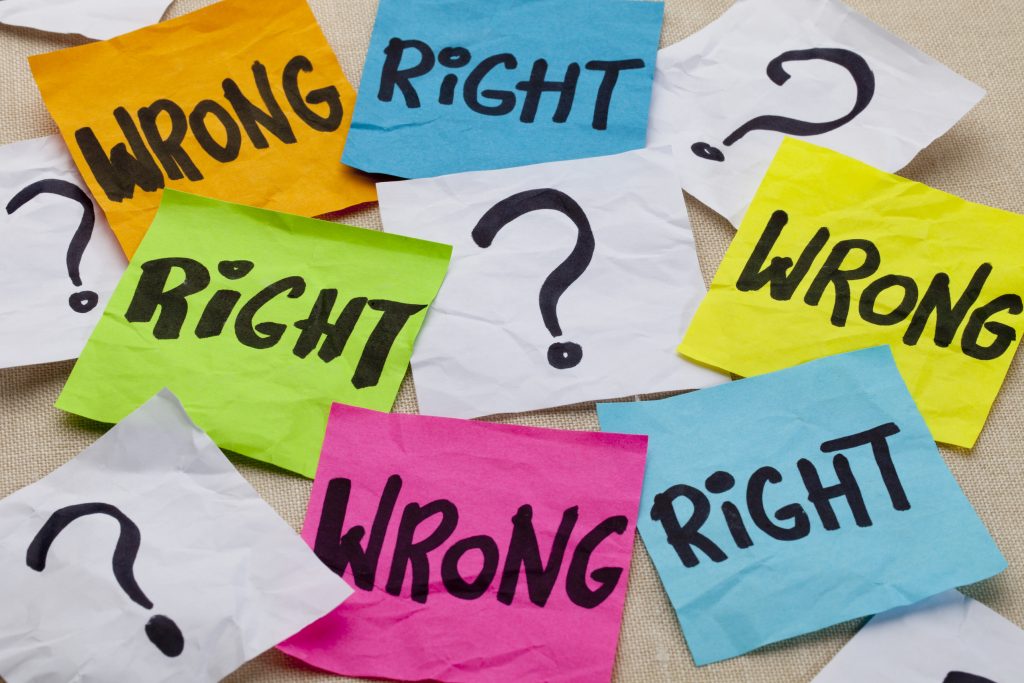
sticky notes that say "right" or "wrong"

Share

Make Every Word Matter!

Some time ago, a friend who teaches fiction writing showed me some samples of her students’ work. Here’s an excerpt:

Joe heard a strange noise outside, whereupon he furtively pulled back the curtain a bit to look. Because it was dark, he couldn’t see anything. A few minutes later he heard the noise again.

And here’s the revision her group came up with:

Three soft taps – and then silence. Joe twitched the curtain and peered outside, but nothing was moving in the darkness. He heard three more taps.

I think the revision is much better! It moves – and one big reason is that the transitions are gone (whereupon, because, a few minutes later).

Often those transitions are useful. But if a story is marching along, you may be able to omit them. In today’s excerpt, your readers will instantly know why Joe twitched the curtain and why he didn’t see anything.

Our brains process language very rapidly. Avoid empty words that clog sentences. Make every word count!

Share

Getting Unstuck

When I checked my emails recently, I was very pleased to find an invitation to write for a brand-new criminal justice magazine. The target audience is police administrators and academy instructors – one of the target audiences for my book about writing police reports.

I immediately went to work on my first article for the magazine. I wrote drafts in my head while driving back and forth to dance lessons. I scribbled outlines and introductory paragraphs. I read some notes and research I’d stashed away.

Nothing clicked. Rats! I had many good ideas, but they didn’t flow. I couldn’t find a way to organize them in a logical progression.

Suddenly I had an idea. Instead of trying to write the article, I wrote an encouraging letter to myself describing (in glowing terms) the kind of article I wanted to write:

Notes for an article that was giving me trouble

Now I had something concrete to work with. I started drafting the article right away, and finished it the next morning.

The next day the editor sent me an acceptance letter and – as a bonus – a .pdf of the finished article to show me how it would look in the magazine. What a happy ending!

A light bulb symbolizes new ideas

Share