A Bad Example – and a Good One

Today’s topic is the good, the bad, and the ugly.

Let’s start with bad and ugly. I just saw an ad that proclaims, “This is why we science.” (Click here to view it: https://www.youtube.com/watch?v=2fq6hpigoTc.) The ad is touting Bayer’s Complete Insect Killer, which contains imidacloprid (an insecticide that has been associated with the deaths of many bees). 

Science isn’t a verb. It’s a noun (a thing). You can’t say that you’re planning to “science” tomorrow – no matter what the Bayer company thinks. (And I wish they’d stop endangering our bees!)

On to the good. I just read a marvelous sentence in a New York Times article about presidential candidate Michael Bloomberg’s problems with debate prep: “He is prone more often to groaners than zingers.”

Great writing!

I will admit that the sentence doesn’t meet all the requirements for formal writing. Groaners (“corny jokes”) and zingers (“witty remarks that sting”) aren’t Standard English words. But the sentence is fun to read, and – to my mind – that’s a big plus.

Compare this sentence: “He is prone to use overdone jokes in a misguided attempt to win his audience, and he doesn’t often surprise opponents with his wit.”

Which version would make you want to keep reading? I hope you answered that question the way I did – and you’ve learned something important about good writing. It’s not enough to know where to put the commas and how to stack up your ideas. You have to make readers want to read what you’ve written.

                  Michael Bloomberg

Share

The Problem with “Impacted”

I just came across this sentence in a news article: “Recent polls impacted her decision to support the president.”

Writing that sentence would be grounds for divorce in our house. Charlie and I have pledged never to put -ed on “impact” unless we’re referring to a tooth.

I hate impacted. Why not say affected, which sounds much more normal? (Actually there’s a good reason not to write “affected” either, but I’ll get to that later.)

A Detective Enters the Scene

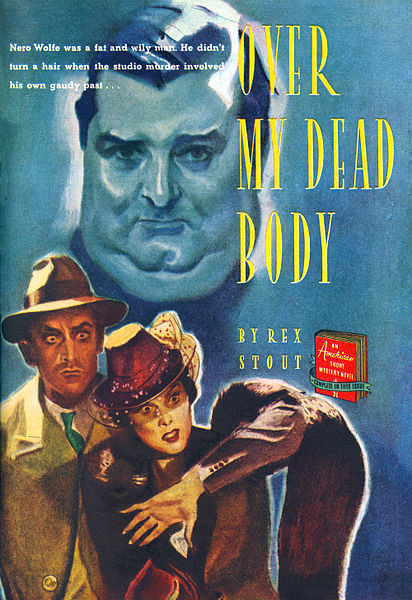
There’s a delightful moment in one of Rex Stout’s Nero Wolfe detective stories when Wolfe silently adds $100 to a bill because the client used the word “contact” as a verb. I’m not that picky (to tell you the truth, I use contact as a verb myself), but I applaud Wolfe’s (and Stout’s) passion for language.

As I said, impacted is grounds for divorce in our household. I always get rid of it when I’m editing, and of course I don’t use it myself (why wreck a perfectly good marriage?). Many people agree with me. In 2015, the American Heritage Dictionary noted that 78% of its prestigious Usage Panel voted it down. 

In case you’re wondering, almost all the members of the Usage Panel now accept contact as a verb – but it took a while to get there. Time marches on, and so does language.

It’s very likely that 50 or 100 years from now, all the setting-my-teeth-on-edge things I hate in the English language will probably become standard. Everyone will put the -ed on “impact” and write “all right” as one word, as the British do. (Recently a former student sent me an email with all right written as one word, testimony to my lack of success as an English professor.)

Rex Stout and Nero Wolfe lost the battle against contact as a verb, and I know that my campaigns against impacted and alright are hopeless causes.

Losing the Battle

I’ve already lost the battle against affected (in the sense of “changed” or – grrrrrrr – “impacted”). Hear me out, though. I think there’s an important point to be made.

Language is supposed to be powerful. Affected is a meaningless word. Let’s go back to my earlier sentence: “Recent polls impacted her decision to support the president.” Did the polls increase her support – or weaken it? The sentence doesn’t make that clear. That’s bad writing.

I always used to circle affected on students’ papers and ask them to substitute a more specific word. What they all did, of course, was to go to an online thesaurus and come back with “altered” or “changed.” Sigh.

I like to think that I’ve impacted the students who’ve attended my classes, but evidence suggests otherwise. (Is that the rustle of divorce papers I’m hearing?)

Front cover of a Nero Wolfe myser

Share

The Singular “They”

In a moment I’m going to make two confessions. First, some background: I used to co-sponsor a club that elected new officers every year. In February, members received a nomination form in the mail, along with a set of instructions. A few years ago I revised the instructions.

But (confession #1) I deliberately ignored a grammatical rule in my revision. Can you find the mistake?

If you want to nominate someone for an office, make sure to get their consent. They need to print and sign their name in the spaces below.

What I did was to ignore (gasp!) the rule that pronouns have to be consistent. Someone is singular. They and their are plural. You can’t mix them.

Here’s the grammatical version of the sentence:

If you want to nominate someone for an office, make sure to get his or her consent. He or she needs to print and sign his or her name in the spaces below.

Gack. I refuse to write anything that clumsy.

I hope you agree with me that the pronouns-must-be-consistent rule is…stupid. But (here comes confession #2) I taught that nonsensical rule for years, and I included it in both the college textbooks I wrote. (I omitted it from my latest book.)

Perhaps you’re surprised by all this. After all, English teachers are supposed to stick to the rules of English…aren’t they?

Yes, of course. But which rules?

If you’ve been taught (as I was) that Moses came down from Mount Sinai with a complete set of grammar rules, you might be surprised to learn that the his or her rule is relatively new. It was the brainchild of an 18th-century lawyer who had no English language credentials.

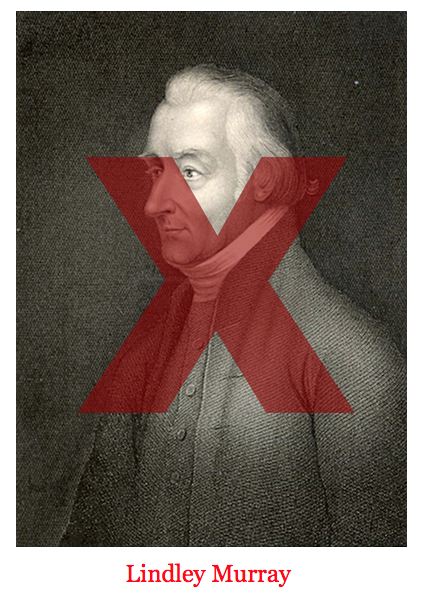
Lindley Murray, the bestselling author of English Grammar, soon became the supreme authority on language for millions of people. Yep – he made up his own rule!

Before Murray came along, the singular “they” was standard English. It has been traced all the way back to the 14th century. Many respected writers – such as Shakespeare, Caxton, and Austen – used the singular they. Nobody wasted a second worrying about it.

That’s one reason why so many people continue to use it, even after the rule changed. How do you get rid of a usage with such a long history? (Incidentally, that’s why we continue to hear ain’t so often: it was a respectable word for hundreds of years before the rule changed. It ain’t going nowhere.) 

Back to Lindley Murray. His solution was to use his instead of they. The switch to his or her didn’t happen until the 1960s, when feminists started calling attention to sexism in language.

I’m a feminist myself, and I was glad to see the ubiquitous he go. But his or her always drove me crazy, and I used all kinds of dodges to avoid it. You can see why if you read this grammatically perfect but absurd sentence:

Every student must be diligent about his or her documentation when he or she is researching his or her senior writing project.

That’s just the way you and your friends talk, right?

The truth is that even self-proclaimed experts use the singular “they,” often without realizing it. (“If someone needs a ticket, they should come to the office.”)

Mary Norris, former copyeditor for the New Yorker magazine and a wonderful writer, insists that the singular they is “just wrong” in her bestselling book, Between You and Me: Confessions of a Comma Queen. But she uses it herself in her book: “Nobody wanted to think they were not essential.”

And I was startled to find this sentence on p. xxiii of Lynn Truss’s Eats, Shoots, and Leaves (a cranky bestseller about English that I really disliked):

I tend to feel that if a person genuinely wants to know how to spell Connecticut, you see, they will make efforts to look it up.

Back to that nomination letter I talked about at the beginning of this post. A few years ago I said “Enough!” and switched to the singular they. It hasn’t always been easy for me. When I submitted that nomination letter, I was afraid someone was going to insist that I change “their name” to “his or her name.”

Happily, though, nobody made a peep, and I got away with it.

A victory for sensible English!
Share

Murder

My friend Cindy Horvath sent me an example of strong writing from a favorite novelist of hers – Irish author Tana French. The speaker is Stephen Moran,  a detective in The Secret Space who’s assigned to cold cases but wants to be on the murder squad:

Murder is the thoroughbred stable. Murder is a shine and a dazzle, a smooth ripple like honed muscle, take your breath away. Murder is a brand on your arm, like an elite army unit’s, like a gladiator’s saying for all your life: One of us. The finest.

I want Murder.

Although Moran is a fictional character, he sounds alive. The sentence is rough (an English teacher would be whipping out that red pencil). But that rough quality – words tumbling out too quickly for Moran to control them – makes him sound real.

I urge you to aim for that quality in all your writing. If you’re working on an academic task, you’re not going to go for the rough-and-tumble feeling in Moran’s thirst for murder. But you can still have a voice, and you can still make your sentences move.

A novel by Tana French

Share

Enuf Is Enuf

Some of us have been waiting a long time for spelling reform…and we’re still waiting. We’ve won a few victories – “catalog” instead of “catalogue,” for example. But many thorny spelling issues remain.

Ten years ago the American Literacy Council and London-based Spelling Society staged a protest at the Scripps National Spelling Bee in Washington D.C.  “Enuf is enuf” was their motto: “Enough is too much.”

The standardized spelling we use today is a relatively recent development. In Shakespeare’s day, nobody worried much about spelling. Shakespeare, in fact, used several spellings of his own name.

In the 18th century, however, writers began to use uniform spelling, and calls for reform began to appear almost immediately. Famous advocates of spelling reform included Noah Webster, who convinced Americans to drop the “u” in honour and colour, and George Bernard Shaw, who left money for spelling reform in his will.

I’m all for spelling reform (I’m a Shaw scholar, after all). But there are two reasons why I think the spelling reform movement is futile.

First, the reformers haven’t had much effect so far (even Noah Webster accomplished very little).

Second (and this is much more important), the English language has a long history of simplifying itself, without the help of any organized movement. I expect spelling reform will take the same course, for reasons I’ll explain in a moment.

People who speak and write English have always adopted shortcuts. The conjugations and declensions that characterized Old English have largely disappeared. With the exception of words like “men,” “women,” “children,” and a few others, we almost universally use “s” for plural nouns. We no longer have masculine, feminine, and neuter nouns. (Did you know that “wife” was a neuter word in Old English?)

We get a little fancier with verbs, which usually have two endings (“s” and “ed”). But that’s about it. If you’ve ever studied a foreign language, you quickly saw that English has a much simpler system for its verbs and nouns.

The rate of change dramatically slowed down when the printing press was invented, and electronic communication has slowed the pace even more. Experts say that we will not see the kinds of changes that used to be so common in English. (For example, the “Our Father” of the Lord’s Prayer used to be written “Faeder Ure.”)

But I think spelling reform is coming, and I can sum up my argument in one word: texting. The simplified spellings that the American Literacy Council yearned for are already standard for texters. What’s more, they’re rapidly moving into formal English. I often had to remind students that “you” has three letters, not just one (u) – and that “love” has four letters, not just three (luv).

The young people who spend so much time texting are the future of our language. They’ll be the ones to decide whether it’s really necessary to spell “enough” with all those unnecessary and confusing letters.

Nobody can predict exactly what course the future will take. My bets, however, are on the texters. I think it will happen soon enuf, whether we like it or not.

                                                             Courtesy of Adobe

Share

A French Pedophile in the News

Gabriel Matzneff, 83, is an award-winning French writer who has many influential friends and admirers. He’s also a pedophile who has published books describing his sexual crimes against children. For many years, Matzneff’s popularity and connections protected him for the police.

But last year one of his victims published a book describing Matzneff’s criminal behavior, and he has been charged with pedophilia.

The New York Times sent a reporter to track down Matzneff, who had retreated to the Italian Riviera to avoid the firestorm brewing around him. The Times has a well-deserved reputation for excellent writing. I often pause in the middle of an article to admire a sentence that is dancing on the page.

But ghastly writing sometimes slips through as well. The interview with Matzneff is lively and informative, but I also came across this:

And Christian Giudicelli, a writer who traveled with Matzneff to the Philippines and to whom Matzneff had entrusted incriminating photos and letters of the 14-year-old Springora, helped secure his friend the prestigious Renaudot prize, after studiously confiding Matzneff’s cancer diagnosis to his fellow jurors.

That’s 44 words – too much for most sentences. And that’s just one of the problems.  Twenty-three words separate the subject and verb – “Christian Giudicelli…helped secure.” And look at all the information crammed into this sentence!

  • Christian Giudicelli was a writer
  • he and Matzneff traveled to the Philippines
  • Matzneff had incriminating photos and letters of the 14-year-old Springora
  • he entrusted them to Giudicelli
  • Giudicelli helped his friend obtain the prestigious Renaudot prize
  • Matzneff had cancer
  • Giudicelli  told his fellow jurors about the diagnosis

Whew. And then there’s this awkward wording: “after studiously confiding Matzneff’s cancer diagnosis to his fellow jurors.” How do you “confide a diagnosis?” I confide in people. I don’t confide information.

And if you’re going to grant that it’s possible to confide a diagnosis, how do you do that studiously?

There’s also an indefinite pronoun reference in that wording – “after studiously confiding Matzneff’s cancer diagnosis to his fellow jurors.” There are two males in the sentence – Giudicelli and Matzneff. Whose “fellow jurors” were they?

Sentences should be short, crisp, and readable.  Don’t ask readers to stumble through a long sentence – and don’t use awkward wording to make it sound fancy.

Gabriel Matzneff in 1983

                           Gabriel Matzneff in 1983
                 Photo provided by  Florence Kirastinnicos

Share

Happy Valentine’s Day!

In honor of Valentine’s Day, we’re going to talk about…kissing! Take a look at these sentences:

I kissed only her.

Only I kissed her.

I only kissed her.

Each sentence has the same four words. But when you move only around, the entire meaning changes. (Isn’t English amazing?) Good writers are careful when they use only in a sentence.

I hope you’ll take this post to ♥!

Share

Make Your Sentences Sound Natural

Today’s post is about a sentence I saw in an advertisement recently. Which is correct: is or are?

A delicious chicken dish as well as meatless options is/are available from the rooftop restaurant.

If you think “as well as” is just like and (as I do!) this version is correct:

A delicious chicken dish as well as meatless options are available from the restaurant.

But you could also decide to change your voice in the middle of the sentence. In that case, is would be correct. (Note that you’ll need a pair of commas.)

A delicious chicken dish, as well as meatless options, is available from the restaurant.

But why not make the sentence simpler – and better? “Are available” is static. Let’s make the sentence more lively (and eliminate the confusion about is/are while we’re at it):

The restaurant offers both a delicious chicken dish and meatless options.  BETTER

A vegetarian meal

Share

FAQ’s about Writing

Do you have questions about writing? Here are some answers!

Can I start a sentence with but?

Yes. The oft-heard rule against it is an urban legend. I would bet serious money that you can’t name a single famous writer in English who doesn’t start sentences with but. Read more here.

Can you settle – once and for all – the controversy about the Oxford comma? (That’s the optional last comma in a list: “We brought wine, sandwiches, and cookies for the picnic.”)

Gladly. That’s another urban legend. There is no controversy. Newspapers never use the Oxford comma; book publishers insist on it.
If your company has a policy about that comma, you should follow their preference. If you’re writing for yourself, the decision about using (or not using) the Oxford comma is up to you.

Will texting be the death of English?

No. The only way to kill a language is to stop using it in your everyday life. Languages always have many variations – and people have always had fun with them.
The version of English you use with close friends is probably different from the version you use with your boss. Linguistics experts call those shifts “code switching.”
Texting is another form of “code switching,” and it doesn’t hurt English at all. (I’m assuming that you remember to make the necessary switch when you’re writing a report at work!)

When should you use a semicolon?

When you want to show off. You can live your entire life without ever using a semicolon. It’s always correct to end a sentence with a period. But if you want to impress your readers, it’s easy to change a period to a semicolon and lower-case the next letter:

You can live your entire life without ever using a semicolon; it’s always correct to end a sentence with a period.  CORRECT

Is there another way to use a semicolon?

Yes – but most people never have to bother with it. You use a semicolon with lists when an item has a comma. Learn more here

We invited Pamela, a youth minister; Karen, a kindergarten teacher; and Jerry, a social worker.  CORRECT

Share

For and Against Brevity

Here’s some standard writing advice: “Keep it simple.” “Brevity is the soul of wit.” 

Elegant, isn’t it?

But that advice could also be dangerous. The truth is that simplicity and brevity aren’t appropriate for every situation.

 Imagine that you have to disappoint a customer, a child, or a friend. You need to stretch out the explanation to reassure your listener that you really did consider the request and really wanted to fulfill it – but circumstances (or policies, or economics, or something else) got in the way.

Life isn’t always simple. I once had a professor who liked to remind us that complex ideas require sophisticated vocabulary and elaborate sentences. He was right on target.

While sorting through some old magazines, I came across a 2003 news report about the Columbia shuttle disaster. Part of the problem, according to NASA, was the agency’s reliance on…PowerPoint.

Hmmm. Think about it for a moment.

A good PowerPoint slide can have only a small amount of information. Often it will display just a short list of three or four bullet points. A good PowerPoint presentation is easy to follow!

But what if you’re talking about a complicated subject – and all you have to work with is a short list of ideas? Bang, bang, bang – here they come, one right after another. There’s no opportunity for sophisticated cause-and-effect reasoning or back-and-forth debate.

If you want a complex argument to unfold for your audience, I think you should consider another format.

Let me give you an everyday situation that might call for extra time and more explanation. Imagine someone who’s getting panicky as Valentine’s Day approaches. The romance is over, and clearly it’s time for a breakup.

My advice would be not to rely on a brief statement that you want to break up. You’d better be prepared to list some specifics – and you need complex sentence patterns. Trust me: it’s going to be a while before you’re through!

broken
Share