Two Problems in One Sentence

Before I talk about today’s topic, I’m going to gripe for a moment. I just picked up this morning’s paper. The front page featured an excellent article about – sadly – the large number of coronavirus patients in local nursing homes.

What set me off, though, was the picture that was featured with the article. It showed the door of a nursing home with a paper notice:

Please be advised that we have a coronavirus case in this building.

BAD writing. “Please be advised” is old-fashioned and unnecessary. If you’re a professional who prides yourself on staying up-to-date in your field, your writing should be up-to-date as well.

Here’s my version:

We have a coronavirus patient.

Clear – efficient – professional.

And now we can turn to that problem sentence I was planning to talk about.

*  *  *  *  *

A sentence in the April 1 New York Times has not one but two problems! One is a grammar mistake, and the other is…just bad writing:

After hearing President Trump say, without scientific evidence, that the antimalarial drug chloroquine could be a “game changer” in the fight against Covid-19, an Arizona man died and his wife was left in critical condition after they swallowed a form of the chemical used to clean fish tanks called chloroquine phosphate.

The grammar mistake is a misplaced modifier (in ordinary English, a description in the wrong place). See if you can figure out what’s wrong:

…a form of the chemical used to clean fish tanks called chloroquine phosphate.

The sentence seems to be saying that the fish tanks are called chloroquine phosphate. Nope! Here’s better wording:

…chloroquine phosphate, a form of the chemical used to clean fish tanks.  BETTER

How did a writer for the New York Times – for heaven’s sake – make such a clumsy mistake? I don’t have a definitive answer, of course. But I suspect that this writer has a habit of writing long sentences, and that opens the door to mistakes.

This sentence is 51 words – far too long, and that’s problem #2.

The sentence is telling a story. Let it unfold, step-by-step. There’s no reason to cram the whole story into one sentence. Here’s my version:

An Arizona couple heard President Trump recommend chloroquine phosphate, an antimalarial drug, for Covid-19 – even though it hasn’t been tested. Chloroquine phosphate is a form of a chemical used to clean fish tanks. The couple dosed themselves with the fish tank version. The results were devastating: the man died, and his wife is seriously ill.

A fish tank

Share

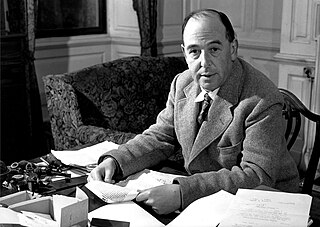
Writing Advice from C.S. Lewis

I spent my college years thinking about Hamlet, thinking about Richard Burton, listening to the Beatles, and standing in line for tickets to the Royal Ballet.

There were hours and days spent hanging out with my friends – wonderful women (the college wasn’t co-ed back then) who patiently put up with my manias (and loved the Royal Ballet and the Beatles as much as I did).

Somehow I earned a degree, so I must have squeezed in some college work along the way. But my mind and heart were elsewhere. 

Obsessing about Hamlet meant that I eventually stumbled across a magnificent essay by C.S. Lewis, the British novelist, theologian, and literary critic: The Prince or the Poem? I remember reading it – my head reeling – and feeling the book slip out of my fingers and drop to the floor.

(A side note: Lewis belonged to the Church of England, and my college was Roman Catholic. Lewis’s very orthodox theological writings were listed on the Index Librorum Prohibitorum (The Index of Prohibited Books). To their credit, the college library owned all of them, but they had to be kept in a locked bookcase. I found them in my hometown library and read them anyway.)

I’ve read just about everything Lewis ever wrote.

C.S. Lewis and James Hillman (I discovered him twenty years later) are the two men who – more than anyone else – shaped my thinking. (I’ve read just about everything Hillman ever wrote too.)

There are probably long neural highways in my brain with signposts on them like LEWIS I-42 North and HILLMAN K-16 East. For better or worse, I wouldn’t be the person I am without them – and, of course, Burton. ♥

But today’s topic is writing. I just came across a wonderful little online article about Lewis: “Five Powerful Writing Tips from C. S. Lewis” by Nicole J. Bianchi. Click here: https://link.medium.com/FtpgAappw5

Here’s my favorite tip:

5. Don’t use words too big for the subject. Don’t say “infinitely” when you mean “very”; otherwise you’ll have no word left when you want to talk about something really infinite.

I only wish I could write as well as Lewis did.

Share

Hopefully This Is Correct

There’s a dubious rule in English that you’re not supposed to use an adverb (usually a word ending in –ly) to set up the attitude or meaning of a sentence. Here’s an example of what you supposedly shouldn’t do:

Hopefully, tomorrow’s weather will be perfect for our picnic.

Tomorrow’s weather can’t do anything hopefully, and that makes the sentence wrong. So say the grammarians.

But James Harbeck (a linguistics expert I like very much) convincingly argues against this nonsense in his Sesquiotica blog: https://sesquiotic.com/2014/09/09/seriously-whats-the-problem-with-sentence-adverbs/

His blog offers three examples of sentences that break the rule about adverbs – without a single peep of protest from the grammarians:

Seriously, it will be very amusing.

Frankly, you’re being evasive.

Clearly, someone has muddied the water.

This tempest-in-a-grammatical teapot reminds me of the people who say that you can’t end a sentence with a preposition. Five minutes later they’re happily talking about putting their shoes on, turning the TV off, inviting the neighbors over, and letting the dog out.

And then there are avid readers who think you can’t start a sentence with but, even though every book they’ve ever read has sentences starting with but on almost every page.

Years ago I heard an authority on English say that our language doesn’t have any grammar. I wondered then (and still do) what he meant and whether he was right. I still haven’t come up with satisfactory answers.

But (ha!) what I have decided is that grammar is always secondary. Experts study the language, watch what it does, and then extrapolate grammar rules. So far, so good.

But there are always a couple of experts who want to flip this sensible system around. They insist on making the rules first and then forcing the language to fit – even if it’s a tight squeeze.

Not every self-proclaimed expert knows what they’re talking about. Beware! Watch what the language does, not what someone thinks it should do.

awkward fit

Share

Sheltering in Place

I used to dance five days a week. The number is down to zero. The Shaw conference in Spain has been postponed. The dance cruise to Norway was cancelled. I didn’t get to see my Shaw friends at a drama conference in Orlando last week – it too was cancelled.

No walking to Egg Haven for breakfast with Charlie. And – worst of all – no hanging out with our friends at the donut shop every afternoon.

But there’s a silver lining. I am working on a book about Shaw. No distractions! Gobs of free time! I’m thinking about dedicating the book to the coronavirus.

The book – alas – is a mess. Last year I had a lot of fun writing the first chapter. I was really happy with it – but I haven’t been able to write the second chapter. I have a computer folder full of chapters that broke down on page three or four.

When the COVID-19 advice to stay home came along, I made a vow. I’m going to write my book! I sat down every day to write – and couldn’t get past page two of the second chapter. Page two! Am I losing my touch?

Last Tuesday night, as I was falling asleep, I finally came up with the answer. I hate to admit it, but it’s something I’ve known for at least 20 years: Figure out what your keyword is, and use it to write a thesis statement.

The next morning I ran to my computer, typed my thesis statement, and started developing it. I wrote three pages, and they have held up! Since then I’ve been chugging along, and the chapter is almost finished.

Writing is…weird. This book has been fighting me tooth and nail, and the sensible thing would be to quit. But – damn it – it’s so much fun! There’s a whole merry-go-round of ideas swirling around in my head, if I could only get them to stop spinning and line up nicely.

Will there be a Chapter Three? Will I remember to look for a keyword and use it to write a thesis statement? Will I ever get this @#$%! book finished? Stay tuned!

Merry-go-round Horses

Share

Will English Survive?

Is the English language in trouble? A recent article in Harper’s Magazine (“Semantic Drift,” August 4, 2019) answers that question with a strong yes.

Author Lionel Shriver is a successful novelist who cares passionately about English. She lists a number of alarming trends, including grammar problems, punctuation mistakes, and careless word choices. English is on life support, and she wants us to fight back.

I’m confident about the future of our language, and I think Shriver is wrong. I recently published my response to her article in an online magazine – The Writer’s Guild. Click the link to read it.

A man who's drowning

Share

Engineers with Feathers

I just read a surprising article about – of all things – birds’ nests. In “The Marvel in a Bird’s Nest,” Norman Roberts describes recent studies that explore the reasons why nests are so strong and durable. It turns out that birds are marvelous engineers!

The real surprise, though, was this sentence, describing how manmade “nests” were subjected to tests in an plexiglass cylinder: “Then the experimenters shmushed the sticks some more, with additional cycles.”

Good for the New York Times! It’s a New York paper, so why not include some authentic New York words once in a while?

But is shmushed a word? Yes. If a group of sounds has a consistent meaning, it’s a word. If you make up a word right now, and give it a meaning, it instantly becomes a word.

But it won’t be a standard word until it starts showing up in formal writing – articles in the New York Times, for example.

Maybe shmushed is on its way! Plenty of New Yorkers already use it.

Photo by By JJ Harrison (https://www.jjharrison.com.au/)

Share

Noah Webster

If you’re an American, you probably know that “Webster’s” is a synonym for “dictionary.” The first important American dictionary was published in 1828 by Noah Webster, an avid student of language. His name is still used by some publishers today even though their dictionaries have no connection to Noah Webster.

But Webster is more interesting than I expected! I was surprised to learn that Webster was a friend of Alexander Hamilton (the subject of the popular Broadway play Hamilton).  In 1793, Hamilton and and other Federalists persuaded Webster to start a  journal – The American Minerva – in New York City. (My source is Rosemarie Ostler’s marvelous book Founding Grammars: How Early America’s War over Words Shaped Today’s Language.)

Of course I knew that Webster persuaded Americans to drop the “u” in colour, honour, and flavour. (Thank you, Noah!). What I didn’t know is that he was a grammar reformer as well – or at least he tried to reform our grammar.

Webster’s reform project is just a footnote in the history of the English language – but I think it’s worth noting. For many years I believed that English was as strong as an iron-clad ship. The rules are the rules, and no one dared to challenge them.

The truth is that many people – including Webster – have tried to tinker with our grammar. Some (Lindley Murray, for example) were successful. But most – including Noah Webster – failed in their attempts to change the rules of English.

Here’s the story, according to Rosemarie Ostler (page 65):

He insists that when you refers to only one person, the following verb should be was. Referring to the trend toward replacing thee and thou with you, he argues, “If a word, once exclusively plural, becomes by universal use the sign of individuality, it must take its place singular number.” Webster backs up his argument with example from print sources, including contemporary court transcripts—”Was you there when the gun was fired?”

In Webster’s opinion, it’s only a matter of time before this use becomes completely acceptable. He says, “The compilers of grammar condemn the use of was with you—but in vain. The practice is universal, except among men who learn the language by books.”

Webster was wrong about you was. It was fairly common in his day, but became increasingly unacceptable as time went on. Standard grammar books continued to reject it, with Webster’s other pet usages.  

As I said, this is just a footnote in the history of English. But I think it matters. How often do you hear someone say “You was”? I hear it all the time. (I once had a former student excitedly greet me with “You was my English teacher!”)

Webster heard “you was” so often that he thought the rule should be changed – and he had a point. “Was” is the correct verb when you’re talking about a single person or thing – “Mr. Paulson was my English teacher.” Our you were rule is an anomaly.

But I think there’s an important takeaway from all this. Everyone knows how hard it is to break a habit. You was (and other usages that have been around for hundreds of years) are here to stay, whether we like them or not.

There’s no need to panic when someone says ain’t or uses the singular they. The sky isn’t falling. The language isn’t dying. It ain’t going nowhere.

Dictionary with an magnifying glass on top

Share

More Writing Rules

Last month I wrote a post about five useful writing rules. I received a lot of positive feedback, so here are five more! I hope you’ll find them useful.

  1.  Don’t apologize for an opinion. Many writers overuse “in my opinion,” “I think,” and “I feel.” You’re allowed to have opinions! Just say what you think: “We should approve Carole’s plan at the next meeting.” “Professor Brown gave a terrific lecture yesterday.” “The proposal for the new road is a mistake.”
  2. Explain abbreviations the first time. Yesterday I had to track down INRA (which turned out to be an agricultural research organization in France) for something my husband was writing. It should have been spelled out in the article he was reading.
  3. Get rid of empty and unnecessary words. I personally feel is the same as I feel. A personal friend is the same as a friend. Three different times is the same as three times. Seven individual members are seven members.
    Very, rather, and respective take up space while adding nothing to your meaning. Etc. is another bit of writing clutter that tells your readers nothing. Use “as the rest” instead. Or – better yet – finish the list.
  4. In general, don’t use more than three commas in a sentence (unless you’re making a list). That fourth comma should warn you that your sentence might be too complicated. Your readers may be having a hard time deciphering your meaning.
  5. Impress with your ideas, not big words and fancy syntax. Pomposity never fooled anyone.

Know the Rules

Share

The End of World War II

Last weekend our local newspaper included a special supplement marking the 75th anniversary of the end of World War II. I started reading and couldn’t stop: the writing is that good. Here’s an excerpt from the beginning of one article – “The Siege of Berlin”

The dawning of the year 1945 saw Hitler’s Third Reich tottering and ready to fall….But as anyone who has ever swung an axe on a big tree can tell you, you just have to keep hacking away….And even the strongest lumberjack finds out that it almost always takes longer than he thought it would. That is a good way to think about the situation the Allies faced in 1945.

The next paragraph promised that the article would cover “a sustained series of Allied blows that chopped down the Germany arm and killed it.” That prepares you to read the rest of the article: you know what’s coming. [English teachers would probably call it a thesis statement.]

This is great writing. The word choices are strong and vigorous: tottering, swung, hacking, chopped, killed. Sentences are clear and straightforward, and readability scores range from the fifth to the eighth grade.

Most important, there’s solid content here. Even though I’ve been interested in World War II for many years (and spent some time at the Normandy invasion beaches), a lot of the information was new and intriguing.

To my astonishment, the writing in every article in the supplement is just as good.

Rob Citino – author of “The Siege of Berlin” is from the National WWII Museum in New Orleans, and so are the other writers. (I’m wondering: do you have to pass a writing test to work there?)

Share

The Grammar Quiz

This morning I (ahem!) scored 100% on an online grammar test. But hold your bravos! I had some quarrels with the test. Some of the questions had two correct answers, some weren’t about grammar at all, and some weren’t worth asking.

For example, you were supposed to know the difference between may and might. I happen to know that may is present tense and might is past. But who cares? I use may and might interchangeably, and you have my permission to do the same.

Here’s a question that had me guessing. Is this sentence right? “This dress would fit if I lost weight.” I think you can stick “had” (one of the choices) in there without changing the meaning. In other words, both answers are right: “This dress would fit if I had lost weight.”

Another question dealt with a severe storm that had affected a region. I would have scratched that question on the grounds that affect is almost always a useless word.

I hear it all the time: Severe storms affect regions. Smoking affects your health. Studying hard  affects your grades. No, they don’t!

Severe storms devastate regions. Smoking harms your health. Studying hard improves your grades. Good writers never settle for a weak word. They immediately start casting around for a strong one.

There were several questions about whom. It’s a pronoun that’s disappearing from the language, for two excellent reasons: few people can use it confidently, and it doesn’t add anything useful to a sentence. Begone!

And there was one additional question that shouldn’t have been there because even the experts can’t agree on the answer.

Funny thing – an hour ago I came across a similar sentence while I was reading the New York Times. Guess what? The Times got it wrong (at least that’s what I say). If the Times can’t get it right, nobody can.

I’ll talk about this thorny grammatical issue in my next post – and I’ll also explain the difference between grammar and usage.

Share