Category Archives: Writing Skills

Having Fun with Jerome Kern

I’ve finished the paper I was writing about Bernard Shaw’s play Major Barbara. The next step will be submitting it to an editorial committee for possible publication.

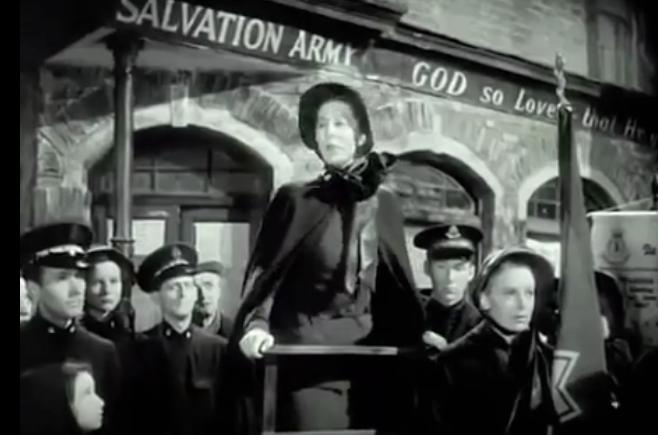
I’ll be especially interested in the committee’s reaction to something unconventional I tried with this paper. Here’s some background: Major Barbara is an officer in the Salvation Army. Her father and her fiancé have just met, and they quickly hit it off. When Barbara experiences a spiritual crisis in the middle of the play, the two men go off together, leaving a weeping Barbara behind. Here’s the subheading I chose for this part of the play: “A Fine Bromance.”

Oops! “Bromance” (defined as a close but nonsexual relationship between two men) is a nonstandard word. When my paper is reviewed for publication, the powers-that-be may change “bromance” to something more conventional. I will, of course, accept their decision.

So why did I decide to try using “bromance”? Wouldn’t it have been better to just behave myself?

Maybe…maybe not. Your point of view depends on your philosophy about writing. Mine has taken a sharp swerve to the left in recent years. I used to believe that writing was a serious – even solemn – intellectual undertaking. But there’s another point of view that I think was best expressed by poet Robert Frost in a Paris Review article:

What do I want to communicate but what a hell of a good time I had writing it? The whole thing is performance and prowess and feats of association. Why don’t critics talk about those things—what a feat it was to turn that that way, and what a feat it was to remember that, to be reminded of that by this? Why don’t they talk about that? Scoring. You’ve got to score.

In recent years I’ve often found myself thinking about scoring when I write. It feels great to come up with a phrase or allusion that will surprise and delight my readers. (My husband sometimes interrupts a hockey game to ask what I’m chuckling about.)

I think “a fine bromance” – despite the nonstandard word – perfectly describes the relationship between the two men in Major Barbara’s life. It’s also a nod to the Jerome Kern song “A Fine Romance” from the 1936 Astaire and Rogers film Swing Time.

Having fun with your writing is tricky. Most of the time you can’t suddenly introduce a zinger into a serious writing task. (As I said, I won’t be at all surprised if the review committee nixes “bromance” when my paper is reviewed.)

But there’s a flip side. Writers should be taking delight in their work. We should be thrilled with a well-developed point, a smooth bit of phrasing, a clever transition. Our writing classes might be much more enjoyable – and the results might be better – if we encouraged students to celebrate their successes.

Do you celebrate? I don’t mean just having a glass of wine when you get something published. I mean standing up to cheer when you’ve pulled off an elegant sentence or a powerful paragraph.

Every writer needs a writing group – or at least an upbeat friend who’s willing to read what you’ve written. The first priority for that cheering section should be finding something to praise. Of course you want feedback about details that need changing. But the celebration should come first.

If you’re not having fun writing, why do it?

 

Share

Bryce Harper

Yesterday I did some griping about the apostrophes in The Washington Post. Today – in fairness – I’m going to compliment the newspaper for its careful handling of quotation marks.

Let’s look at a sentence from a recent article about Bryce Harper, a right fielder for the Washington Nationals who’s a force to be reckoned with in baseball.

Here’s the sentence that impressed me:

“There were certain times when I hit a ball to the track last year, and I think back and I’m like, ‘That should have been like three rows deep,’ ” Harper said.

Wow.

Did you notice that there’s a quotation inside Harper’s quotation? (Think of those Russian nesting dolls – it will help.) Harper quoted himself saying, “That should have been like three rows deep.” So we have a quotation nested inside another quotation.

When you’re quoting someone’s exact words, you use double quotation marks, “like this.” If there’s another quotation inside – what Harper did – you use single quotation marks, ‘like this.’ (The British call them “inverted commas.”)

Here’s Harper’s statement again. Take a look at the quotation marks to see how they’re done. (Did you notice that the comma is placed inside the quotation marks? Thank you, Washington Post!)

“There were certain times when I hit a ball to the track last year, and I think back and I’m like, ‘That should have been like three rows deep,’ ” Harper said.

You can learn more about quotation marks here. (It’s easy! Please, please – if you’re an American writing for other Americans, the commas and periods always go inside the quotation marks. No exceptions. None.)

                  Bryce Harper


Share

Apostrophes, Please!

I have three reasons for loving The Washington Post:

  1.  In 1889 the newspaper commissioned John Philip Sousa to write the “Washington Post March.”
  2. Carolyn Hax writes the advice column.
  3. I can read articles online free, thanks to a complimentary subscription from my local newspaper.

But The Washington Post also drives me crazy. Would someone please, please teach them how to do apostrophes? And while you’re at it, would you teach teachers how to teach them?

Here’s how apostrophes are usually taught: “Before the s if it’s singular, after the s if it’s plural – and don’t forget about special plurals and proper names ending in s, which are before the s.” Which, of course, almost everyone promptly forgets.

Here’s how apostrophes are properly taught: “Spell the word or name. Find the last letter. Put the apostrophe after that last letter. Add an s if you need it.”

Let’s look at two recent examples from The Washington Post.

Yesterday’s edition discusses the belief that the government should be in charge of virtually everything in peoples’ lives.

OK, here we go. What’s the last letter of people? E. Put the apostrophe after the E: people’s. (It’s different if you’re an anthropologist, but let’s not go there today.)  

Now let’s go back a week to an article about Melania Trump: The first lady will focus on womens’ difficulties, President Trump says.

Let’s spell women. It ends with N, right? So here’s how you do it: women’s.

Not difficult, folks!


Share

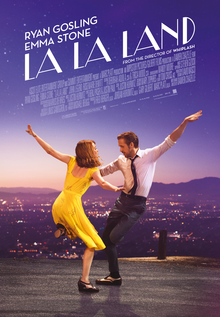
La La Land

Of course I went to see La La Land! (I’m a ballroom dancer, remember.) And of course I loved it.

(I should probably explain that it’s a movie that features singing and dancing in the manner of the great Hollywood musicals of old.)

But I found La La Land confusing – and there’s a lesson here for writers.

The movie opens, in Hollywood fashion, with a huge production number featuring singers, dancers, and cars on a busy California freeway. Soon after that there’s another huge production number with a crowd singing and dancing around a pool.

I settled back and waited for the next thrilling production number. And it never came. The movie morphed into an intimate love story between two people who did, of course, dance (this was still a Hollywood musical). But there were no more hordes of performers filling the huge movie screen.

There’s a writing rule (often broken, admittedly – I’ll get to that in a moment) that says you have to stick to what you promise to do in the beginning of your piece.

If your story starts with lightness and whimsy, you can’t suddenly turn it into a tragedy. If you’re using Standard English, you can’t switch to slang in the middle of your piece. And if you’re doing an old-style Hollywood musical, you have to keep the big production numbers coming. You can’t forget about them after the first 15 minutes of the movie.

Back to writing: in the same vein, your characters have to behave consistently. On page 150 you can’t suddenly reveal a serious character flaw in the saintly nun you introduced to your readers on page 1.

Exceptions are – of course – frequent. Satires play all kinds of guessing games with readers and moviegoers: part of the fun is trying to figure what’s really going on. All of Shakespeare’s tragedies have comic characters. Bright and optimistic musical comedies (Camelot and The King and I, for example) often have poignant endings. Many stories and plays feature surprises.

So why are they allowed to bend – or break – the rule? The answer is that the creators knew exactly what they were doing – and how to do it. What you won’t find in Shakespeare (or the great musicals, or novels, or plays) are characters who suddenly change their speaking habits or personality traits – or a structure that seems to forget what it set out to do.

Consistency matters. It’s a good principle to bear in mind in your writing – whether it’s a poem, memoir, short story, or personal essay. Decide what you’re going to do – and stick to it.


Share

Get It Right!

If you read this blog regularly, you already know how much I enjoyed the movie Hidden Figures. It’s the true story of three African-American women who quietly made a huge contribution to the success of the US space program. The topic is math, but there’s a lesson for writers as well.

If you’ve seen the movie, you remember the tense preparations for John Glenn’s trip into space – the first time an American was scheduled to orbit the Earth. It was all about math. The numbers had to line up perfectly. Could he trust NASA’s calculations?

What Glenn did was to ask for Katherine G. Johnson to check the figures. He had total faith in her math ability. If she said it was ok, he would go up.

She said it was ok, and John Glenn indeed orbited the Earth in Friendship 7 – and made it back to Earth safely.

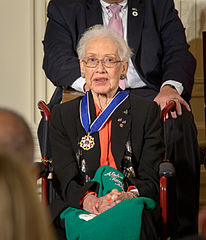
Last year, at long last, Katherine Johnson received the Presidential Medal of Freedom.

But what’s the connection to writing? Here it is: If you’re a serious writer, you want that same reputation for accuracy and correctness. That means fact checking (I use Google a lot), relentless proofreading, and double-checking even the pickiest details about usage.

Let me give you an example from today’s post: Is it Katherine Johnson – or Catherine, Kathryn, or Katharine? Do you think it matters? I do – and yes, I double-checked the spelling of her name.

If you want a reputation as a consummate professional, there’s hard work involved.

It’s a reputation worth striving for. Here’s how I look at it: Before I decide to trust what you’re telling me, I look at the whole package. If you still haven’t figured out how to use apostrophes and quotation marks, I’m going to wonder what else has slipped past you.

Worth thinking about!

                Katherine G. Johnson

Share

They Can’t Take “That” Away from Me

Today my friend Jenna sent me a link to a terrific article about sensible word choices: Click here. The article features a useful list of words that are often unnecessary and tend to add clutter to sentences: just, often, then, that, and others.

I wouldn’t try to eliminate the words that author Julia McCoy is targeting (and I don’t think McCoy would take that route either). The key is to double-check to see if they’re really necessary when they show up in something you’ve written.

I see that I used one of them just a moment ago: that. Please, please don’t take that away from me! It’s a useful word. But McCoy is right: Often that – and the other words she discusses – are unnecessary.

(There you go: I used the word just not once but twice in this post! And I used often…sigh.)

The article is a great tool for encouraging writers to look more closely at their word choices. Highly recommended!


Share

“It” Rears Its Ugly Head

Here’s the first sentence from a recent “Budget Travel” newspaper column by Arthur Frommer. See if you notice anything. (Hint: There’s no usage error.)

Following its victory with the U.S. Department of Transportation (where it won the right to use an Irish subsidiary to operate cheap flights between Europe and the United States),

If I had been the editor, I would have asked Frommer to rewrite the sentence. Here’s why: Readers don’t find out what it is until the 30th word in the sentence. That’s confusing. Readers need to know right away what you’re writing about.

Frommer’s grammatical-but-not-very-good sentence illustrates a point I harp about all the time: Many English teachers mistakenly believe that if everybody would just learn how to diagram sentences and identify parts of speech, writing problems would disappear.

Alas, it’s not that simple. Writers need to learn how to change places with their readers to see a sentence or paragraph from the reader’s point of view. That’s not an easy skill to learn.

Here’s Frommer’s complete sentence, followed by a suggested revision:

Following its victory with the U.S. Department of Transportation (where it won the right to use an Irish subsidiary to operate cheap flights between Europe and the United States), Norwegian Air has unleashed a torrent of headline-grabbing announcements.

The travel industry has been seeing a torrent of headline-grabbing announcements from Norwegian Air, which has just won an important victory with the U.S. Department of Transportation: the right to use an Irish subsidiary to operate cheap flights between Europe and the United States.

I hope you’ll indulge me while I make two more points:

  1.  I was able to explain what I didn’t like about Frommer’s sentence without using the grammatical term antecedent. You can talk intelligently about writing without resorting to jargon.
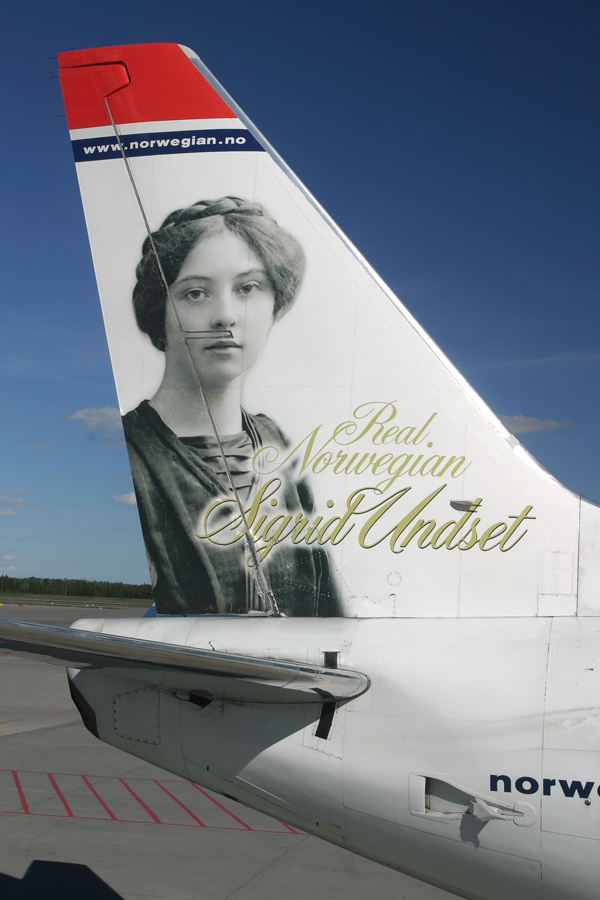
  2. Every Norwegian Air plane features a picture of a famous Norwegian. I’m a very happy person right now!

          One of My Favorite Authors


Share

Writing about Major Barbara

I am – heaven help me – writing an academic paper about Shaw’s Major Barbara. My original plan was to put a PowerPoint together (much easier – fun, actually). But the paper (as often happens) had other ideas.

Wednesday morning  I woke up at 3 AM and spent an hour trying to link a series of ideas together. That’s when I knew that it was time to put everything else in my life on hold and get this thing done. (Well, I did take a dance lesson yesterday, and Charlie and I are cleaning up some hedges at the condo where we live. But everything else in my life is just sitting here.)

My brain is too scrambled to write a coherent post today. Instead I’m going to jot down some thoughts about this project.

  • I wish I’d kept a journal while I was writing my paper about Pygmalion last year. When I think about the ideas for this year’s paper, I keep imagining a big, sticky ball of dough. Everything is connected to everything else. How am I going to link the ideas into a logical sequence? Was the process this messy last time? Have I lost my touch? Is this normal? Am I normal?
  • There’s always a moment when I know that a project is going to work. (I wish those moments would come sooner in the writing process – sigh.)
  • I always listen to music when I write. (Abba was my constant companion when I was writing my book about Pygmalion.) I’ve been listening to the traditional Christmas station on Pandora.
  • Despite what the experts tell you, the most important requirement for a successful writing task isn’t a thesis. What you absolutely have to have is an exciting idea. If you have something to work with, you can always come up with a thesis. But if you’re bored by your topic, there’s no point in even trying to write about it.
  • It takes a certain amount of faith and courage to push a project along and believe that everything is going to fit together in the end.
  • Part of the excitement is watching the connections fire off. No – let me revise that. The real reason I write is that it’s so much fun to watch the fireworks.


Share

Christmas Eve Minus 1

I’ve become used to the shocked expressions on the faces of friends who stop by our condo in December. Welcome to wall-to-wall Christmas! Last week a neighbor asked how many grandchildren we have. She was clearly puzzled when I told her there weren’t any. All that Christmas stuff for just two adults?

Yes.

And there’s also non-stop Christmas music, courtesy of Pandora, which has a wonderful (and free!) traditional Christmas music station.

Here’s one reason why it’s wonderful: There’s plenty of holiday music by Perry Como. I loved him as a child – always watched his show with my mother – and he was like a member of the family because our piano usually displayed sheet music with his face on the cover.

One of the biggest thrills of my life was attending one of his Christmas concerts – his last, sadly. Perry Como was one of those people who should have lived forever.

But I’m taking too long to get to my point, which is that an incident at that concert is relevant to writers. And I have to apologize (in advance) for yet another detour.

Barbra Streisand reluctantly gave up performing live after she forgot the lyrics to a song at one of her concerts. Hold that thought.

So there’s Perry Como in Tampa, Florida, getting ready to sing his heart out to his rapturous fans (including me). But first he explained what all those pieces of paper were in front of him. “I forget the lyrics sometimes,” he said. So he had brought printed copies of everything he was going to sing that night – even familiar songs like “Silent Night” and “Jingle Bells.”

Let me tell you another story about Perry Como. Some years before that concert I saw him on TV doing a guest appearance at a Memorial Day show. He sang one of my absolutely favorite songs: “No Other Love.” Of course I know it well.

But wait! He sang two lines that I didn’t know.

When he finished, he told the host that he’d forgotten two of the lines – so, on the spot, he’d made up two different ones. Incredibly, they fit the music perfectly – they even rhymed.

Here’s my point (at last!). Perry Como did not let a problem stop him. Clearly he could not get away with making up new lyrics to “Silent Night” if he had a memory lapse onstage. So he used a resource – pieces of paper.

Back to Barbra Streisand. She didn’t have to give up performing. Opera stars have prompters. Teleprompters are available. Or she could have taken the low-tech route, as Perry Como did.

I know so many people who would love to write. Yes, they have an idea for a book, and they know that self-publishing is inexpensive and easy, but…

…and out come the excuses.

Sorry, my friend. There are no excuses. Identify the obstacles, gather your resources, and get going!

                                 Perry Como

Share

Dancing with the Stars

Everyone I meet soon finds out that I’m an avid ballroom dancer. Often the conversation turns to the TV show Dancing with the Stars with a question like this: “Did you see the episode when…”

I always answer yes before the sentence gets halfway there. I have never missed an episode. I vote for my favorite dancers. I copy the steps and pretend I’m on the show.

So I was delighted when a good friend (who’s also a ballroom dancer) gave me an early  Christmas gift with a DWTS theme: a copy of Derek Hough’s book Taking the Lead: Lessons from a Life in Motion. (Derek is a regular dancer on the show and a six-time winner.)

Although Derek is only 31, the book is packed with wisdom and experience. I tore through it last weekend and plan to read it again.

If I can claim some tiny trait that I share with Derek, it’s this: I constantly see connections between dance and many other aspects of life…

…including writing. Here’s something from the book that sent chills up my spine – advice from a successful songwriter who said, “When you write new songs, write for the trash can.” Derek paraphrased that advice this way: “Challenge yourself to think of five terrible, awful, oh-my-gosh-this-stinks ideas.”

Amen, brother – amen.

According to Derek, that advice works every time to get his creativity muscles warmed up and working. Every writer should do the same.

(I can’t resist taking a detour into similar advice from hockey superstar Wayne Gretzky: “You miss 100% of the shots you don’t take.”)

In other words: Get going.

You, reading this and dreaming of becoming a writer: Get out a piece of paper (or open up a blank document on your computer screen) and start writing. Anything.

(Of course it’s also ok to read something that inspires you, like Derek’s book!)


Share