Category Archives: Writing Skills

Adverbs: Good Guys or Bad Guys?

We were talking about adverbs (words that usually end with -ly) at a recent Write Like a Pro meeting. I was telling the group to avoid the all-too-common practice of adding adverbs to dialogue, like this:

“Aunt Mary is coming today,” Gail said happily.

“But she’s staying only two days,” Don said sadly.

And then group member Jane Brumbaugh reminded us about “Tom Swifties” – punning sentences that combine humorous adverbs and verbs:

“That’s the last time I’ll stick my arm into a lion’s mouth,” the lion-tamer said off-handedly.

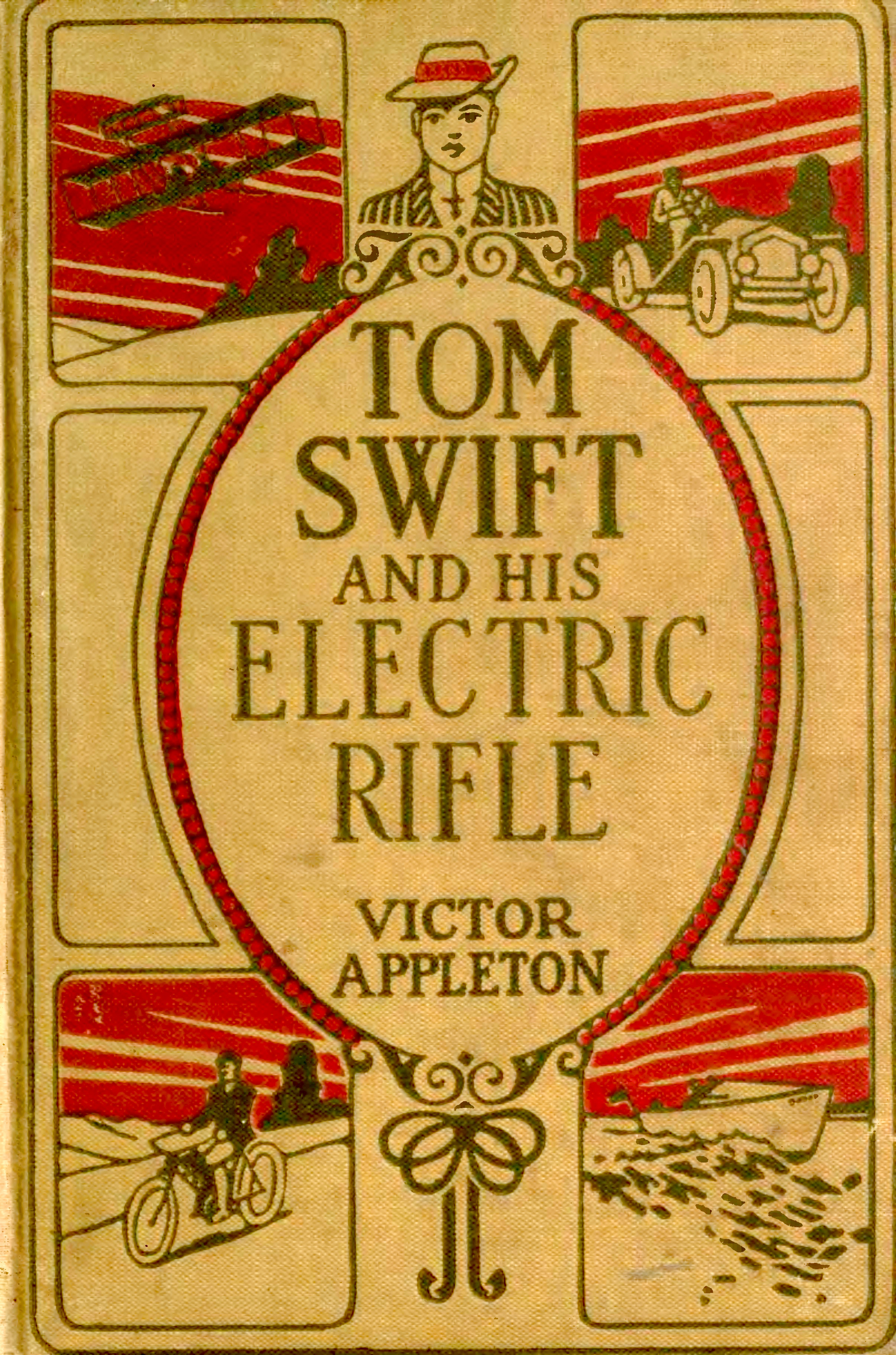
The name comes from the Tom Swift series of novels for boys dating back to 1910. They were published by the Stratemeyer syndicate that also published the Bobbsey Twins books I loved as a child. The Tom Swift books were famous for a stylistic tic that involved adding an adverb to almost every verb, like this:

“Oh, I’m not a professor,” he said quickly.

OK, let’s get serious (sort of). Adverbs are wonderful words…when they’re used sparingly. If you reread the “Gail” and “Don” sentences at the beginning of this post, you’ll see how flat and monotonous adverbs can be.

“Aunt Mary is coming today,” Gail said happily.

“But she’s staying only two days,” Don said sadly.

Here are my revisions (and I invite you to see if you can top them – have fun!).

Jane grinned. “Aunt Mary is coming today.”  BETTER

Don’s smile lasted only a few seconds. “But she’s staying only two days,” he added.  BETTER

Let’s try a love scene. Can you improve this sentence by replacing lovingly with better wording?

“I’ve been waiting for this moment a long time,” Paul said lovingly.

Here’s my version:

Paul squeezed her hand. “I’ve been waiting for this moment a long time.”  BETTER

Books about writing often warn against overusing adverbs in dialogue. Elmore Leonard’s book 10 Rules of Writing has a stern warning about adverbs: 

Rule 4.  Never use an adverb to modify the verb “said.”

Most of Leonard’s rules are more useful for fiction than for the kinds of writing I do/ But I really like Rule 4 (above) and this one:

Rule 3.  Never use a verb other than “said” to carry dialogue.

Here’s an example of what can happen when you break Rule 3:

“We just struck oil!” Tom gushed. .

Before I go – Jane Brumbaugh just emailed me this jewel:

 “I like my cheese shredded,” said Tom gratefully.

Who says learning about writing can’t be fun?

Tom Swift

Share

How Harry Potter Changed the Publishing Industry

Courtesy of the Huffington Post, I just came across this marvelous article about everybody’s favorite wizard: How Harry Potter Saved Young Adult Fiction. Any writer who dreams of publishing (you?) needs to read it.

Heck – you should read it even if you’re not thinking about publishing. The article is fun (who isn’t interested in the amazing story of J.K. Rowling’s blockbusters?). And you’ll get an education about aspects of the publishing business that most people don’t think about.

For example: how important is it to be original? Not important at all – and (when you come right down to it) downright impossible. “No one is totally original,” said a bookshop owner quoted in the article. “Everyone builds on everyone else’s stories.”

Although it feels like the Harry Potter books are a brand-new type of literature, Rowling was building on familiar genres: books about boarding schools, nasty step-parents, difficult teachers, kids-who-don’t-fit-in, and much more. Everything that seems to make the Harry Potter books so new and special had already been done – and done well – many times before (even wizarding schools!).

Nobody really knows what made the Harry Potter books such a spectacular success. When you think about it – that’s good news. It gives you and me permission to give a new twist to familiar themes and plots. Go for it!

Another useful point is that the Harry Potter books taught the publishing world an important lesson. Before Harry came along, publishers avoided fantasy books for young people, believing they just wouldn’t sell. (The first Harry Potter book was rejected 12 times before it found a publisher.) Since then there’s been a revival of fantasy, with older series (including my favorites, the Narnia books by C.S. Lewis) selling well and being adapted for stage, screen, and TV.

And that leads to another important point: The readers who bought the Harry Potter books went on to buy other fantasy books as well. Everyone made money.

So – thank you, J.K. Rowling and Harry Potter!

Harry Potter

Share

Writing Secrets from Natalie Goldberg

Last month I talked about writing instructor Natalie Goldberg (most famous for her classic book Writing Down the Bones: Freeing the Writer Within). Something I’d heard her say on an audiotape about writing has stuck in my mind for many years.

This week I’ve been thinking Goldberg again because of a recent book of hers: The True Secret of Writing: Connecting Life with Language. The book recreates the popular writing retreats that she conducts several times a year: a week of silence, reflection, writing, and sharing. It’s a provocative book that’s different from anything else you’ll read about writing.

Today I want to talk about one chapter – “What Is Practice?” – that stunned me. Your library probably has a copy of Goldberg’s book, and it’s worth a trip there to borrow it and read this one chapter.

“Practice”- in Goldberg’s book – means a) choosing an activity that you think will benefit you and b) making a commitment to doing it regularly. Sounds like old-fashioned discipline, doesn’t it? But wait (as they say on late-night TV) – there’s more!

If you’re a regular visitor to my blog, you know that I like to watch people think. I’m especially intrigued when someone takes an idea deeper or farther than I would ever go myself. Here’s a paragraph from that “Practice” chapter that rocked me:

…this continual practice expresses your true determination, signals to your unconscious, to your deep resistance, that you mean business. (And then your resistance roars louder and you roar back.) Over time, this practice kicks in that strong motor, that deep impersonal life force within you. It reinforces and supports your yes to life for no reason – not because you were good or bad or worthy or kind or successful, but because, like a blade of grass or thunder or a cloud, you are alive.

Here’s what jumped out at me (and what I haven’t been able to stop thinking about): “this continual practice…signals to your unconscious, to your deep resistance, that you mean business.”

Everybody knows what discipline is all about. We think of it as a tedious but necessary element in the quest for success. Goldberg’s take on discipline – what she calls “practice” –  is totally different. What counts for her is sending a powerful message to the hidden parts of ourselves.

I’m right there with her – and I think it’s a concept that’s bigger than just committing to a regular practice.

I think Goldberg is saying that we are much more complex and interesting than we realize. Powerful forces swirl through our lives, knocking us about like a tossing ship – and often we know nothing about them. We are full of mysteries that talk to us through dreams, hunches, and passions. We feel those vibrations but don’t completely understand them.

Here’s what I find so exciting: Goldberg’s reminder that it’s a two-way conversation. We, in turn, can talk to our mysteries through our actions. One of the most powerful ways to send a message to our unconscious is by making a commitment and following through. (I know I’m wandering away from writing! Trust me – we’ll find our way back.)

How many people do you know who don’t seem connected in any way to their inner mysteries ? I would bet there are many. They may have a loving relationship with another person and be terrific parents, solid citizens, and hard workers. Bravo!

But do they have something more in their lives that drives them in another direction, away from everyday living? Do they invest time or money (or both) in something that’s important only to them?

For many people, the answer is no.

“Practice,” for Goldberg, means carving out a space in your life – 25 or 30 minutes, four or five days a week – for something that matters only to you. She promises dramatic changes in your life, and I think she’s right.

It’s not just that your biceps will be stronger or your piano playing will improve. The shape of your entire life is going to change, and here’s why: you’re sending a strong message to the hidden parts of yourself, and they will respond by supporting you in ways that will endlessly surprise and delight you.

There’s one more thing, and then we’ll go straight back to writing. Practice (at least for Goldberg) has surprisingly little to do with improvement or success. It’s a process of getting to know yourself. You become intimately familiar with your favorite excuses and escapes. You learn how to pull yourself out of a funk. You hear – really hear – the ways you both sabotage and encourage yourself.

And now we’re ready to talk about writing. What makes writers different and special? We are aware. We make unlikely connections, dig deeper, ask questions, blow through falsehoods and manipulation. Something small that another person might not even notice becomes the foundation for a story or essay. 

So how do we build that awareness? Endless ways – I’m sure I don’t know half of them. I like what Goldberg says about practice, and it seems to me that my dance lessons and practice at home fit into that category. But there are many other ways to get there.

What I’m really encouraging you to do today is to think about how to start a conversation with your unconscious. That’s a flat, lifeless word (it starts with “un,” after all!) that does nothing for me. So…think about the people who live inside of you. To get you started, I’m going to mention a few of mine:

  • a 15-year-old who loved a novel about medieval Norway
  • a lovesick college sophomore who couldn’t stop thinking about Richard Burton
  • a middle-aged graduate student who was flabbergasted when she first read Shaw’s Quintesssence of Ibsenism
  • a woman on Social Security who – despite creaking joints and undependable knees – does plies and tendus in a ballet class twice a week
  • a woman fiercely swaying her hips to a sultry rumba
  • an eight-year-old who loved cats, turtles, and dollhouses

Who lives on inside you?

   Natalie Goldberg
Share

Question or Statement?

Here’s a mistake I’m seeing more often: unnecessary question marks. For example:

I asked the manager why the restaurant didn’t offer meatless entrees?  WRONG

That’s a statement, not a question.

Now try this one. Does it need a question mark?

I asked a question.

Obviously it’s a statement. If you read it aloud, you won’t hear your voice go up. What about this?

I asked why the bill was so high.

When you think about it for a moment, it’s just like the previous example – a statement. No question mark.

Read them together, and you’ll hear it:

I asked a question.

I asked why the bill was so high.

For comparison, here’s a true question:

Why is the bill so high?  CORRECT

Let’s try a few more:

I asked Joe to pick me up at 7:30.

I wondered whether he would be on time.

I questioned whether he was trustworthy.

Those are all statements that should end with periods. How did you do?

Now try these (remember, reading them aloud will help):

Will you pick me up at 7:30

Is Joe going to be on time

Is he trustworthy

Those are all questions that should end with question marks.

Will you pick me up at 7:30?  CORRECT

Is Joe going to be on time?  CORRECT

Is he trustworthy?  CORRECT

Share

Avoiding Common Mistakes

Many writers worry too much about grammar. Don’t take that the wrong way! I’m not saying that mistakes don’t count. I am saying that many writing problems fall into other categories. In fact you might not even hear about them in school.

Here’s a list of some of those problems. If you read through this list and start thinking “Guilty as charged!” – it’s time to get to work!

  • pompous writing

Some writers try to dress up their work with empty words. They write individual members instead of just membersrespective teams instead of just teamsfor the purpose of instead of just for  – you get the idea! Don’t fall into that trap.

  • inconsistent lists

There are two ways to do serial commas in a list: cake, pie, and ice cream or cake, pie and ice cream.

Usually the choice is up to you. But you can’t switch back and forth! If you want to omit the comma before and, go right ahead. But that means you can’t slip it in again two pages later.

  • long paragraphs

They discourage readers, and you should avoid them. Here’s a useful trick: Just break the paragraph in half. Nobody – not even the world’s sharpest editor – is going to notice.

  • inserting a comma after but

Don’t do it!

  • trying to create dramatic pauses in a piece you’re writing

Some writers sprinkle unnecessary commas into everything they write, hoping to create dramatic pauses. It doesn’t work. Spoken words don’t transfer well into writing. Avoid those commas!


Share

Happy Independence Day!

We’re going to celebrate July 4 with a post about independent clauses.

This jargonish term (sigh) is beloved of English teachers. We (well, not me!) prattle endlessly about independent and dependent clauses and never notice that most students don’t have the faintest idea what’s going on.

Here’s an experiment I’ve always wanted to try (but never had the guts to actually carry out): distribute strips of paper to an entire class and ask them to write an independent clause and a dependent clause.

My hunch is that most students couldn’t do it.

So: let’s get real. I always use the terms sentence and extra idea.

A sentence usually begins with a person, place, or thing. An extra idea…doesn’t.

(How hard is that?)

Jane paints.  SENTENCE

Jane paints exquisite pictures of gardens in Savannah.  SENTENCE

Paints exquisite pictures of gardens in Savannah.  EXTRA IDEA

Which include exquisite pictures of gardens in Savannah.  EXTRA IDEA

Although she paints exquisite pictures of gardens in Savannah.  EXTRA IDEA

What’s next? I would wager that you’ve already figured it out. If you have an extra idea, fix it. You can add a person-place-or-thing to the beginning, like this:

Paints exquisite pictures of gardens in Savannah.  EXTRA IDEA

Jane paints exquisite pictures of gardens in Savannah. CORRECT

Or you can add the extra idea to the beginning or end of a real sentence:

Although she paints exquisite pictures of gardens in Savannah, Jane is experimenting with abstract themes this year. CORRECT

Jane does beautiful paintings, which include exquisite pictures of gardens in Savannah. CORRECT

Start looking for examples of sentences and extra ideas in conversations, books, newspapers, and TV shows. Soon you’ll have the concepts down (they’re easy!). Once you’ve accomplished that, you can easily spot – and fix – most fragments and run-ons.

Happy Independence Day!

fireworks

Share

Watch Me Edit Three Sentences

Pick, pick, pick. I’m always going back over my sentences to make them just a tiny bit better. (At least I hope I’m making them better!) You could almost say I’m addicted to editing.

One of my unfulfilled yearnings for this blog has been to talk about what writers really do – the infinitesimal changes we make in our work – what we look for and how we think.

So why not just do that?

Two reasons. First, it’s hard to make editing sound interesting to readers. Second, many of those decisions happen in such a flash that I can’t grab them long enough to write about them.

But today something magical happened while I was reading a short story in the latest New Yorker. The story – called The Piano Teacher’s Pupil” –  was written by William Trevor. The New Yorker publishes the best fiction in the world, and its editing is absolutely world class.

Nevertheless, I came across not one but three sentences that cried out for editing. I was able to watch myself fix them – and now you can get an up-close-and-personal look at my editing process.

Maybe you’ll agree with my improvements – or maybe you’ll think the original sentences were fine before I started messing with them. No matter. Either way, you’ll be getting in touch with your own sense of what constitutes an effective sentence. That awareness is as valuable to a writer as a mechanic’s ability to diagnose a problem just by listening to what happens when you turn the ignition key in your car.

  1.  His dark hair, not cut too short, was in a fringe.
    I had so many problems with this sentence that I hardly know where to begin. “His dark hair was…” is too static for me. Another problem for me is that nothing in the story suggests that the pupil was badly cared for – so why say that his hair wasn’t too short? Another problem is that “was in a fringe” is a weak way to end a sentence. 
    My version: “He carelessly brushed back his fringed dark hair as he took his place on the piano bench.”
    I like my version better because it lets us see the boy doing something. (I made it up, by the way – the story doesn’t mention brushing back his hair or sitting down on the piano bench.) 
  2. Daffodils in vases were on the sofa table and on the corner shelf near the door.
    Another static sentence. Please, somebody – do something! The piano teacher could glance at the daffodils, or admire them, or ignore them. Or the daffodils themselves could do something, like filling a vase.
    My version: Daffodils filled a pair of tall, slender vases on the sofa table and on the corner shelf near the door.
  3. She would say nothing to the mother if the mother telephoned to ask how the boy was getting on.
    Why repeat “the mother”?
    My version: She would say nothing if the mother telephoned to ask how the boy was getting on.

daffodils

(Are you wondering if I did any “picking” at today’s post? The answer – I’m sighing – is yes. The Revisions feature on my software says I’ve done 20 sets of edits.)

Some questions for you:

  • What do you think of my rewrites?
  • Could you come up with something better (If your answer is “yes,” good for you!)
  • Do you ever read a sentence and itch to rewrite it?
  • Do you pick, pick, pick at your own sentences?

Just asking!

Share

The Importance of Variety

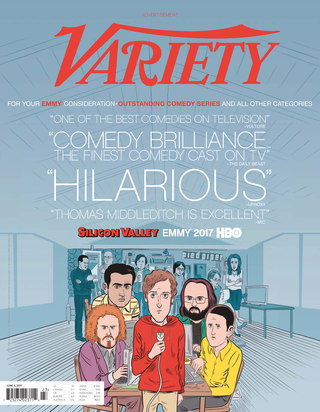
An old joke in the entertainment industry goes like this: “Variety is the spice of life –  and the bible of show business.” (I used to subscribe to Variety back when I was fascinated by Broadway shows.)

OK, it’s not hilarious…but it’s a good lead-in to what I want to talk about today: the need for variety in your writing.

I had my first encounter with this principle when I was still in elementary school. I loved to read (still do!), and I was happy to read just about anything. The Bobbsey Twins books were a great favorite.  I loved The Five Little Peppers and How They Grew. There was a wonderful series of biographies for children that was fun to read. I devoured the books about the Happy Hollisters and Honey Bunch. If it was a book, I loved it. (One of the few books I couldn’t get through was – oddly – Winnie the Pooh. I still have never read it.)

My favorite of all was the classic Heidi by Johanna Spyri. And so I was delighted one afternoon when I came across another book by Spyri: Cornelli. (It’s still in print, and you can also read it online free.) Of course I read Cornelli straight through with the speed of a lightning bolt.

Here’s a summary: A motherless little girl is living a very happy life under the care of a loving man. (In Cornelli’s case, it’s her widowed father.) But then everything changes, and she’s very unhappy.

If you read and loved Heidi as a child, you already know what I’m going to say: Cornelli is Heidi all over again. Spyri wrote the same book twice.

It was the first time I’d read a book with a critical eye. Maybe you could say that the door of childhood was beginning to close for me. I remember wondering if Spyri had experienced such a terrible loss in her childhood that she couldn’t think about anything else, ever.

Johanna Spyri was kind of a one-hit-wonder in children’s literature. Although she continued to write books for kids, none of them ever caught fire the way Heidi did. Perhaps the reason was that she got herself stuck on that one theme – a kind of Garden-of-Eden loss of wonder and beauty. (Of course I’ve never read any of her other books, so I don’t know if that’s true.)

It’s easy to slide into the habit of writing the same thing again and again in different ways. You don’t notice that you’re stuck in one idea, so you think every story (or blog post or article or whatever) is different. But it’s not.

Case in point: John Rosemond’s “Parenting with Love and Leadership” columns. Rosemond is a family psychologist who advocates a common-sense approach to parenting. He believes that parents today are too involved with their children’s lives. They need to back off and let kids grapple on their own with the everyday challenges of school, play, and family life.

That’s sound advice. (I know several wonderful parents who swear by Rosemond – they say he gives them courage.) But – damn it! – he writes the same column every blessed week.

Our local newspaper dropped Rosemond’s column several years ago (perhaps because he keeps saying the same thing over and over and over and over?). Last week I went online to see if I’d missed anything since his column disappeared from our paper. Nope. It’s like he didn’t even stop to take a breath.

Rosemond seems to be a smart and likable guy. I’m sure he’s wonderful with the families that he counsels, and he has a vast storehouse of experience and knowledge that he could bring to his column. I’m just as sure that Johanna Spyri had a treasury of wonderful childhood memories. The problem is with their writing: they both found one thing that worked – and worked well! – and they stayed there.

Don’t let that happen to your writing! Remember, variety is the spice of life and….

Share

All about Personal Essays

A recent New Yorker article announced that “The Personal Essay Boom Is Over.” Magazines aren’t publishing as many personal essays as they used to. Jia Tolentino – author of the piece – offered several reasons why. Many of the essays published during the boom were too personal. Sometimes the accounts were horrifically painful. And some topics were too big for the scope of a personal essay – a problem that Tolentino thinks became particularly troublesome during the last Presidential election.

I read Tolentino’s article with alarm – until I got to the end. I think personal essays are wonderful, and I wish more writers would experiment with them. They’re especially popular with the writing group I facilitate. In fact they’re some of the finest pieces I’ve read over the years that we’ve been meeting and critiquing one another’s work.

So I was relieved when Tolentino ended her article by saying that personal essays are “a valuable on-ramp” for writers – and that she enjoys “watching people try to figure out if they had something to say.” 

I read Tolentino’s article on the train to Savannah. (I had plenty of time to read and think during the eight-hour trip from Central Florida!) My brain kept circling back to a pair of personal essays I’d read in Woman’s Day long ago.  What was that all about? I finally decided that those essays hold an important clue to that “Do I have something to say?” question.

In 1971, Woman’s Day asked two readers to write about shopping for food for their families.  One woman spent lavishly, believing that mealtimes should be about pleasure. The other woman – wife of a minister – focused on economy.

Both women wrote about shopping, cooking, and the everyday issues that come up when you’re cooking for a family. Mrs. Extravagant had picky children and a fussy husband whose definition of “vegetable” was limited to potatoes and green beans. Mrs. Thrifty had three children who’d been taught to eat what was on their plates and a husband who valued economy as much as she did.

Sounds dull.

But what shone through those essays were the personalities and lifestyles of the two women and their families. There were quirks. Despite her “money-is-no-object” philosophy, Mrs. Extravagant had to buy margarine because her husband and children didn’t like butter. Mrs. Thrifty’s kids wanted to be like their friends, so she had to buy snacks for their school lunches.

Mrs. Extravagant wrote about following in the footsteps of her mother, who once wore out a stove because she enjoyed cooking so much. Mrs. Thrifty learned authentic Chinese cooking from her mother-in-law, who had lived in China when she was a missionary. Mrs. Extravagant served liver once a year when her husband was away on business. Mrs. Thrifty never served it (“I flunked,” she confessed.)

*  *  *  *  * 

During that long train ride, I thought about Charlie and me and our love of trains. OK, we’re not very interesting people. Still, you could have learned a lot about us if you’d sat in a nearby seat in that train car. We boarded the train with a framed picture we’d bought in Savannah (a picture of a bluegill that Charlie spotted in an antique store.) We kept checking the time to find out when the dining car opened for lunch. Charlie helped another passenger put her suitcase on the luggage rack.

We did a lot of reading. We did a lot of talking. After lunch we both took cups of coffee back to our seats. Charlie went online several times to look for updates about the Las Vegas hockey expansion draft. Neither of us did any texting, and we didn’t make a single phone call.

Nothing exciting there! But those details about this-is-who-we-are and this-is-how-we-live are the raw materials for personal essays.

*  *  *  *  * 

Now I want to go back to Jia Tolentino’s comment about “watching people try to figure out if they had something to say.” I think Mrs. Extravagant and Mrs. Thrifty are two women who figured it out. It’s not just that they spent a lot of time thinking about feeding their families. They were also able to dig into their values, habits, and challenges; organize them; and write them up in readable personal essays. Mrs. Extravagant sometimes had the voice and style of a stand-up comedian! I’d love to know what her life was like after she published in Woman’s Day. Mrs. Thrifty’s writing is less polished, but she seemed more honest and real.

What’s important to you? Do you ever watch yourself living your life? Do you enjoy digging into your values, habits, and challenges? You might find yourself writing a personal essay that readers will remember years later.

It sounds like an experiment worth trying.

Share

Savannah

Charlie and I are back in Savannah! We always ask for the same room in the same bed-and-breakfast. We always eat at Clary’s. We always take the Dolphin Magic boat ride. We’ve never lived here, but these trips to Savannah always feel like a homecoming.

Even the train rides here and back are fun. On one recent trip we decided to fly home rather than board a train at the ungodly hour of 6:40 AM. The trek through Atlanta Airport to our connecting flight turned out to be an ordeal, and we both decided that maybe getting up early wasn’t so bad after all. So on this trip we’ll be having breakfast on the train – maybe lunch too.

I find it odd that I – a big-city girl at heart – love this small Southern city so much. I can imagine myself living here, walking through Forsyth Park every morning, strolling down to the Riverfront to watch the container ships cruising back and forth, and then stopping at Leopold’s afterwards for ice cream. I wonder if the people who really do live in Savannah know how lucky they are.

* * * * * *

Writers need to be experts at switching identities. The mature me can look at Savannah with wise eyes and appreciate its history and charm – and my inner Peter Pan can have a wonderful time watching the container ships traveling back and forth along the Savannah River.

It was a delightful surprise to find out that my 84-year-old ballet teacher loves Savannah as much as I do. We were chatting and comparing notes, and I expected her to say something about Savannah’s beautiful parks and fascinating history.

“I like to watch the container ships,” was her comment. Seems she’s been able to keep in touch with her inner Peter Pan too. Good for her – and  good for us.

(Incidentally, she’s a terrific writer.)

Forsyth Park Savannah Georgia

Share