Category Archives: Writing Process

Mystify and Simplify

Toni Morrison

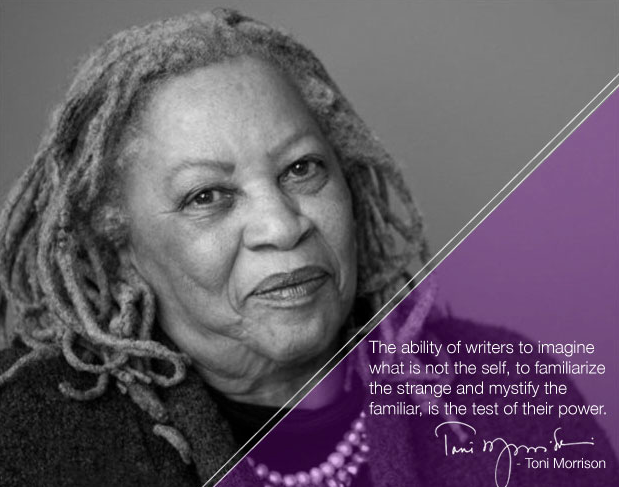
I love this quotation from Toni Morrison: “The ability of writers to imagine what is not the self, to familiarize the strange and mystify the familiar, is the test of their power.”

Unpacking what she’s saying would take a long time, and even then I don’t think I’d get all of it. But that’s not the point, is it? I mean she’s already said what she wanted to communicate. Why is a restatement necessary?

What really excites me about her statement is that it breaks away from so much of what we think is true about writing: Write what you know. Write from your gut. Be true to yourself.

Nope. According to Morrison, writing isn’t about you (or me) at all. It’s about power – using words to transform reality into something new and unexpected. “Familiarize the strange” – make me feel connected to something outside the realm of my experience. “Mystify the  familiar” – show me that what I’m seeing (or what I think I’m seeing) is only part of the picture.

My favorite nonfiction book, The Little Princesses, falls into the “familiarize the strange” category. I’m never – alas – going to be on intimate terms with royalty. But I can slip into their world and look around – thanks to this reminiscence by the governess who taught Princess Elizabeth (now Queen Elizabeth II) as a child.

“Mystify the familiar” is the category for the piles and piles of books I’ve read about language and psychology. Nothing is more ordinary than the everyday words we use and the habits that shape our daily lives. But when someone with a brain like James Hillman’s or Jacques Derrida’s gets to work, nothing ever looks the same again.

What an exciting way to think about writing!

Share

The Finish Line

If you look up “writing process” in a writing textbook, you’ll find a tidy, linear explanation of how writers get their ideas on paper and polish them to be read by other people.

What those books tell you…isn’t true. (You can trust me on this. I’ve written two of those textbooks myself: Sentence Power – Holt, Rinehart & Winston – and Introduction to College Writing – Pearson.)

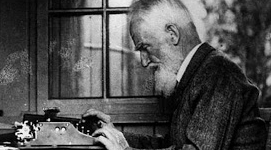
If you’ve read my previous posts about the Shaw and Education chapter I’ve been writing, you know that my own writing process is neither tidy nor linear.

It doesn’t have to be! The only thing that matters is coming up with a finished product you’re proud of. It doesn’t matter how you get there.

My favorite part of the writing process is the last step. Textbooks say that this is the proofreading step – making small editing changes in punctuation, spelling, and sentence structure.

I don’t work that way. For one thing, I edit as I go. Usage mistakes drive me crazy, and I find that rewording a sentence often affects the next sentence, and then I have to rewrite the following paragraph….It’s a lot easier just to get my sentences right during the early stages.

What I do last is work in additional material that I discovered after I completed my early drafts. It is an insane way to work. It is also fun, sort of like putting a puzzle together. While I was finishing up my Shaw and Education chapter, I pulled out some notes I’d made several months ago. Because I had a strict word limit (3,000 words), I’d had to leave out many marvelous ideas, examples, and quotations.

Nevertheless – and cheerfully ignoring the fact that I’d already hit my word limit – I read through several scribbled pages of notes to see if anything jumped out at me. And something did. In his essay “The Religion of the Pianoforte” (strange title!) Shaw had written, “It is feeling that sets a man thinking, and not thinking that sets a man feeling.”

Central to Shaw. It needed to be there, even if it wasn’t strictly about education. Fiddle, fiddle. Find some unnecessary words to cut.

Success! Quotation in, word limit honored.

I’m finished.

And it was fun, just as I’d thought it would be.

Open Notebook


Share

George Bernard Shaw and Education

A while ago, a friend invited several Shaw scholars – including me – to help him with a book he was putting together for a university press. Friday afternoon I went to the college library and picked up a book I needed to complete one last task for my contribution, a chapter about Bernard Shaw and education.

Of course I’m not really finished, even though I’ve already asked another Shaw scholar to critique my work. (He loved it!) I keep tinkering with what I’ve written, making tiny changes to sentences that have already been rewritten over and over.

It’s like something I’ve been told by friends who are famous for their culinary skills: When they sit down to eat a meal they’ve cooked for a dinner party, every bite is disappointing – even though their guests are raving about the food. I suspect it’s an unavoidable part of the creative process: The finished product never comes up to the glittering standard you were aiming for.

Still, it was fun to push my chapter over the finish line, and I’m happy with what I’ve done. I went into a drawer and pulled out notes I’d made along the way (some on the backs of baggage forms I’d picked up in an Amtrak station while we waited for a delayed train) to see if I’d missed anything important.

Happily, I hadn’t – but I came across a few quotations that were just too good to leave out, and that meant cutting elsewhere so that I could stick to my 3,000 word limit. That final stage in the writing process was fun, easy, and tidy.

But calling it a “writing process” sounds more formal and serious than it really is. I had gotten off to a messy and disorganized start (as I always do) a year ago by listing everything that absolutely, positively had to go into the chapter:

  • a famous quotation that infuriates teachers (“He who can, does; he who cannot, teaches”)
  • Shaw’s unhappy memories of his own schooldays
  • a governess who taught him how to read
  • his astoundingly successful program to educate himself

I also knew I’d be talking about Pygmalion (which later became My Fair Lady) – a play in which a half-educated flower girl learns how to speak and act like a lady.

And that was it. Do you see anything profound there? Or anything that a 21st-century educator would find interesting or inspiring? Or anything that could be expanded into 3,000 words?

I didn’t either.

The next thing I did was to purchase a 1958 book called Shaw on Education. It’s a well-researched and thoughtful book – but it’s also hopelessly out of date. I started reading and found the first two chapters astonishing. The British education system from Shaw’s time was totally different from what we have in the US today. I read those two chapters at least a dozen times because they provided such a good explanation of Shaw’s educational philosophy.

At that point a month had gone by, and I had no clue about how to put my chapter together. Shaw died in 1950. How was I going to make him relevant to today’s readers?

More in my next post!

Bernard Shaw

Share

Watch Me Think

I’ve always been fascinated by other people’s thinking processes – especially when their brains can do things that mine can’t.

Perhaps that’s where a lot of my fascination with dance and psychology comes from: How do dancers think about movement and music? What do psychologists think about as they encounter people doing both odd and ordinary things?

I’m hoping you’re equally interested in how writers think. Yesterday, while I was typing a column for my husband (he’s the garden writer for our newspaper), I found myself thinking about three of his sentences. We decided to leave two of them alone, and we changed the third one.

1.  What most folks think of as civilization began when humans learned how to grow food, an accomplishment that freed them from a nomadic hunting-and-gathering lifestyle.

There’s a problem with the word accomplishment. What exactly was the accomplishment? Learning how to grow food. But the sentence never says that. There’s a rule in English that requires an appositive (accomplishment) to refer to a noun.

We violated that rule in that sentence (“when humans learned how to grow food” is an adverbial clause, not a noun). And we both decided that it was perfectly clear, few people would notice it, and we weren’t going to change it.

Full disclosure: If it had been one of my articles, we would have rewritten the whole sentence. I always visualize my readers as brilliant grammarians who are going to catch every picky mistake.

2.  On a much smaller scale, however, is a simple method home gardeners can use to save seeds of many herbs and annual plants, as well as vegetables such as cilantro and arugula.

My husband (he’s a good grammarian too) asked if we should insert “of” in front of vegetables. Technically the answer is yes, but I nixed the suggestion. He agreed (with some relief). I hate “of” and “that of” constructions and never use them. No, not even in my own stuff.

3.  Begin the process by cutting off mature seed heads and shaking them in small paper (not plastic) bags.

I am one of few people who make a distinction between “in” and “into.” I think it’s an important point, and in this sentence I think it’s downright vital. There’s a big difference between shaking the seed heads “in a bag” (put the seed head inside) and “into a bag” (hold the seed head above the bag so that you can catch the seeds).

I questioned my husband about which one he meant, and we changed the sentence so that readers will know that they’re supposed to shake the seed heads “into a bag.”

I hope you enjoyed visiting my brain!

Thinker

Share

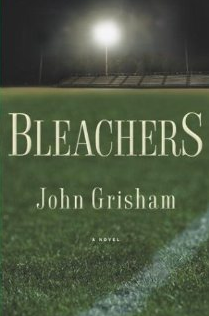
Bleachers by John Grisham

I’m always telling members of my writers’ groups to spend some time reading a novel by John Grisham. Any novel. Don’t think about his craftsmanship (which is considerable) – at least not right away. Just watch yourself reading, and notice how you feel.

You can’t stop.

That’s how you want your writers to feel. I always describe it as feeling like you’re riding a horse that’s decided to take charge of where you’re going and how you’ll get there.

A few months ago the writing group at the prison where I volunteer got together to get a gift for me – a copy of a Grisham book I’d mentioned wanting to read: Bleachers, the story of a successful high school football coach. As the book opens, Coach Rake is dying, and football players from years past have gathered to say good-bye and honor his memory.

It’s a tremendous book even if (like me) you don’t know a whole lot about football and might not understand some of the plays and strategies that move the story along.

And move it does, as Grisham’s books always do, and I tried to figure out why. It was tough to stop to step away from the story to analyze what Grisham was doing – he’s that good. But I managed to catch my breath long enough to notice that he holds back some important information in order to keep you interested.

In Bleachers, there are two unknowns that get you hooked right away. First, why was Coach Rake – legendary for his football successes – fired?

Second, what really happened during that championship game when the Rake and the assistant coaches simply disappeared, leaving the players to make all the calls themselves?

 I don’t know how Grisham does it – whether he’s so good that he just knows how to keep the story moving, or whether he consciously plans it that way. I know that Emma Donoghue, author of Room (one of the best novels I’ve ever read) plans her books that way.

In a 2011 Writer’s Digest interview, she discussed how she outlines her work:

…it’s more like planning a military campaign or something. It’s quite exciting, because what you’re trying to do is to keep up the reader’s energy at every point. You’re looking for those spots where things would sag or get lost or come off the rails. You’re trying to keep up the momentum.

A fascinating business, writing – always trying to figure out what the best writers do, and how they do it.

Bleachers

Share

A New Year’s Proclamation

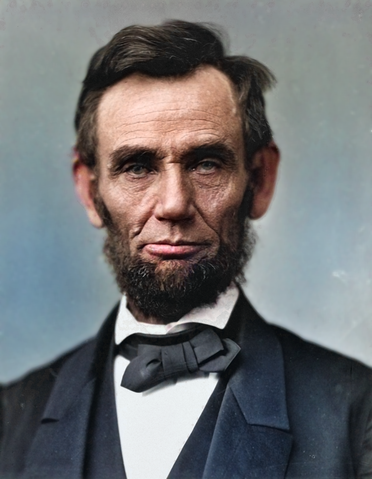
Smithsonian Magazine has just published a fascinating article about Abraham Lincoln’s Emancipation Proclamation, which was issued on New Year’s Day, 1863, and freed the slaves in states that had seceded from the US.

It’s a fascinating look into the mind of Abraham Lincoln, surely one of the greatest presidential writers. And here’s what’s so interesting: This historic document is…dull.

Harold Holzer discussed Lincoln’s “leaden language” in his book Emancipating Lincoln: The Proclamation in Text, Context, and Memory. Holder says he found only one memorable line in the entire document:

“I do order and declare that all persons held as slaves within said designated States, and parts of States, are, and henceforward shall be free….”

The Smithsonian Magazine article caught my eye for two reasons. I’ve been interested in the Emancipation Proclamation for a long time – in fact I wrote a research paper about it when I was a freshman in college.

I’m also interested in the writing processes used by famous people. Lincoln must have known that he was writing one of the most important proclamations in American history. Why would he want to be remembered for a boring piece of writing?

To put it more simply: Why didn’t he work harder to make it better?

The surprising answer is that Lincoln did work harder to make it better, according to Holzer. Why was the result such a dry document? Holzer believes Lincoln was perfecting the legal tone.

When I wrote my long-ago research paper, I discovered that the Emancipation Proclamation was a political document, not a humanitarian one. Lincoln’s decision to free the slaves in the seceded states was purely symbolic, since none of those slaveholders considered themselves under federal rule.

The Emancipation Proclamation (which did go into effect after the Civil War) strengthened Lincoln’s stature with the slavery-hating North and with America’s important ally, Queen Victoria of England, who also hated slavery. And it encouraged borderline states to stay loyal to the Union, since the Emancipation didn’t free their slaves.

According to Holzer, the legalistic tone of the Emancipation Proclamation had two purposes: Heading off a legal challenge, and preventing a revolt from the pro-slavery forces in the United States.

Now let’s shift our vision to New Year’s Day 2013. Very likely you’ve resolved to work on your writing skills this year. What can you learn from Lincoln and his famous Proclamation?

My answer: Successful writers think first about their purpose and their audience. Lincoln made word choices that strengthened his political position. Extravagant praise for freedom and justice would have outraged his enemies – the people who wanted to keep slavery in place.

There are writing “experts” out there who would urge you to start at the beginning and work your way through parts of speech, sentence diagramming, and other grammatical issues. Don’t believe them.

Yes, you need to know Standard English usage. But what’s most important is to know how to select the words and ideas that will convey your message to your audience. Stay focused on those goals, and you’ll make rapid progress.

Best wishes for a great writing year!

Follow @JeanReynolds

Share

Finding Writing Topics in Unexpected Places

It’s the cement block that all writers carry on our backs: Finding writing topics. Recently that cement block has become even heavier, as you’ve probably discovered if you have a Twitter account, a blog or two, and a couple of editors who keep asking for articles.

Like many writers, I find Twitter especially challenging. Yes, it’s a marvelous tool for attracting potential readers, and it’s fun to use – I soon lost my fears about the dreaded 140-character limit.

But what am I going to Tweet about? This morning I ate breakfast, watered a couple of plants, and made plans to go out for pizza with my husband. If I find those tidbits of information boring, what are my readers going to think?

Even worse, my specialty – writing, grammar, and usage – does not lend itself to infinite variety. How many times can I write charmingly about, say, an indefinite pronoun reference? Once, if I’m lucky.

When I asked a technology-savvy friend for advice about posting on Twitter, he counseled me to simply keep reading Tweets from other users. Inspiration will come, he assured me. And he was right.

It finally dawned on me that there’s a marvelous tool right over my desk that can help me find topics to Tweet and blog about: My calendar. Still another great tool is delivered to my doorstep every day: The newspaper. And the radio in my car is another wonderful resource.

Let me begin with the calendar, a treasure trove of ideas for Tweets and blogs. One afternoon I sat down at my desk with a writing pad and calendar, looking at each month for events that might have a writing tie-in. It didn’t take long to find more than a dozen of them.

Of course there’s National Grammar Day (March 4). But what about the rest of the year? Well, I can Tweet about the apostrophe in New Year’s Day. When Easter rolls around, I’m planning to Tweet about jellybeans (one word or two?) and marshmallow Peeps (why the capital “P”?). You get the idea.

Let’s turn to the newspaper. Alas, there isn’t a single Republican Presidential candidate with a name ending in “s” (why did Mitch Daniels have to opt out of the primaries this year?). But a recent Blondie comic strip about the “Ditherses” (Julius Dithers is Dagwood’s boss) led to a post about plurals and apostrophes in family names.

A newspaper story quoted someone using the words preselect and preprune – inspiration for a blog about the overuse of pre. I’m enjoying this year’s presidential race because it’s providing a steady supply of gaffes and questionable grammatical constructions for Tweets and blog posts.

But what if you aren’t a grammarian? The answer is that you’ll probably find it even easier to unearth topics. For example, I have a website about police report writing. New Year’s Eve provides an opportunity to write about drunk driving. Breaking news stories can often be tied to report writing. Recently the White House instructed the Department of Justice to adopt a new definition of rape.

Gardening, parenting, teaching, sports, cooking…they all vary with the seasons, and they all show up in the news from time to time. I have a friend who writes adventure stories about terrorism – he can find plenty of material for Tweets and blog posts in the daily news. Another friend who recently wrote a juvenile novel about bullying has discovered an endless stream of news stories about the problem.

Still doubtful? You’re not the only one – but I’ll bet I can convince you. Just yesterday a friend who’s a physician’s assistant tried to convince me that medicine doesn’t vary with the calendar. Really? What about flu season, swimmer’s ear, hay fever, sunburn, icy sidewalks, and New Year’s resolutions to get healthier?

Here’s a starter list of resources you can browse for writing topics. What others can you think of?

  • a calendar that lists holidays and other special days
  • the daily comics in your newspaper
  • the in-house newsletter at your job
  • a stroll through a hardware store
  • a stroll through a grocery store
  • a stroll through a big box store, like Wal-Mart or Target

And here are some news sources with excellent websites you can visit for inspiration: the New York Times, the Los Angeles Times, the Christian Science Monitor, the Washington Post, and National Public Radio.

This approach to finding writing topics works far better for me than traditional advice about “discovery exercises” – brainstorming, mind-mapping, the 5 W’s (Who, What, When, Where, Why), and so on. Having taught college writing for 30 years and authored two writing textbooks, I’m an expert on all of these methods. And I’m here to tell you that they are…limited. And frustrating.

The problem? When you do a discovery exercise, you’re looking at a blank sheet of paper or an empty computer screen. The only input is what’s already in your brain. That’s great if ideas are flying so quickly that your pencil can’t write them down fast enough. The reality, though, is that the reason you sat down to do a discovery exercise in the first place is that you’re stuck for ideas.

Why not just open up a newspaper, flip the pages in a calendar, or visit a website that features commentaries on current events? I guarantee that in just a few minutes you’ll be running to your keyboard with at least three great ideas. And you’ll have fun doing it – a sure sign that you’re on your way to a successful writing experience.
 

Share

Transition Words

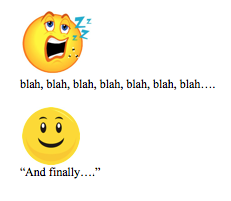
My students often wonder why I forbid them to use the word “finally” in their writing. They think it’s a fine way to transition to the last supporting idea in an essay. (I don’t let them use the word “last” either.)

 The illustration below shows why finally (and its friend last) are poor choices for transition words. Imagine that you’ve been sitting through a long speech, class, or sermon. You hear the speaker begin a sentence with “finally.” What is your immediate reaction? Hooray! It’s almost over!

Professional writers never use finally to introduce a point, for a very good reason: Finally evokes that “It’s over!” reaction. You want your readers to focus on the point you’re making. The pros save their best example or supporting idea for the end, and they introduce it with a phrase like most important, best of all, worst of all…you get the idea.

Why not start writing like a professional now?


Share

In Praise of Wordiness

Earlier this week I warned you about unnecessary and repetitious words (whispered softly, ran quickly, a smile on his face). You don’t want empty spaces in your writing. Stimulate your readers and pique their interest by making every word interesting.

But sometimes longer is better: Wordiness can be an effective choice. Good writers know that there’s no such thing as a one-size-fits-all rule for every writing situation.

More-is-better is a useful principle when:

  • You’re trying to create a mood or an atmosphere
  • You’re giving unwelcome news (for example, saying “no” to a customer’s or employee’s request)
  • You’re explaining something complex
  • You’re emphasizing a point that readers might miss

Here’s one example of useful redundancy: The close of a paragraph. Let’s say you’ve just described the warmth and love you experienced in your grandmother’s kitchen as a child. You’ve said it all: The cinnamon in the air, the purring of her cat, the teakettle whistling on her stove, the songs she used to hum when she was making her famous chicken and dumplings. What’s left to say? Nothing – but if you’re an exceptional writer, you’ll wrap up the paragraph with one more sentence. Here are three possibilities:

  • I was happy there.
  • I wish I could go back.
  • Nothing was ever the same after she died.

There’s a grace and ease about a few extra words in just the right place. Don’t be afraid to take a little longer to say exactly what you want your readers to know. The results will be worth the effort.

(Did you notice that last sentence? Not really necessary, but it added a little finesse to what I’d written. At least I hope it did.)

Share

Climax and Closure in Writing

A few days ago I offered advice about beginnings (the first part of a sentence, paragraph, essay, report, or research paper). Today we’re going to focus on endings, and I’m going to show you two strategies that pros use to add polish to their writing. (You’ll be surprised how easy these strategies are – and how well they work!)

Here are two words you need to know to end sentences, paragraphs, and writing tasks effectively: climax and closure. And here are some tips for using climax and closure in writing:

1. If you’re listing several things in a sentence, save the best for last.

We offered our guests fresh fruit, imported cheese, and homemade chocolate ice cream. [Climax]

2.  When you’re writing a paragraph, save the best example for last – or end with a closure sentence that wraps up your paragraph and gives it a completed feel (like a bow on a package). Or do both!

I still remember my excitement as the guests arrived for my birthday party. Friends from my third-grade class came in party dresses with fancy sashes and velvet collars. Aunt Jane and Uncle Stan brought the birthday cake, an amazing confection with a fancy little doll on top. Best of all was Grandma, full of hugs and kisses for the birthday girl. [Climax] I felt like a movie star. [Closure]

Never use finally, last, in conclusion, or last but not least. These expressions tell your reader that nothing new and important is coming. (Last but not least is especially insidious: How would you like to be introduced at a meeting as “not the least of our staff”?) Save your most important supporting idea or example for last, and use a transition that signals its importance: Best of all, most of all, worst of all, most important.

When you come to the end of your paper, restate your main point and finish without raising any new issues. A good concluding strategy is to make some connection between your main point and the future. For example, an essay about a childhood birthday party could end like this:

Although I’m grown-up now, I still feel a little of the same magic every year when my birthday rolls around again.  [Restated main point]

Notice that you should restate your main point. This will be the second time you’ve presented your thesis.

NEVER wait until the end of a writing task to make your main point. Your thesis belongs near the beginning so that readers are clear about what you’re saying and where you’re taking them.

Thinking about endings (and beginnings, as I suggested earlier) makes your writing more polished and professional. As a writing teacher, I was always impressed when my students produced well-crafted sentences and paragraphs.

Want to learn more? Watch a short (and free) presentation about climax and closure by clicking here: Write Like a Pro

A climax or closure sentence is like a bow on a package - something extra that makes your writing more special!

A climax or closure sentence is like a bow on a package – an extra touch that makes your writing special!

Share