A Rotator Cuff Injury

In a moment we’re going to talk about a sentence from a  recent New York Times article about rotator cuff injuries. First, though, I hope you’ll indulge me while I tell my own rotator cuff story.

A rotator cuff is an anatomical structure that’s part of your shoulder. Injuries are common – baseball players frequently suffer them, for example.

A while back I had my own rotator cuff injury. Luckily it healed quickly, and I’ve had no more problems with it.

Here’s how it happened. One Saturday morning some neighbors were having a garage sale. I plunked down 50¢ for an ancient carpet sweeper. “Tank” describes it very well: big, heavy, and formidable. Charlie said it looked like something Abbott and Costello would have been selling door-to-door.

It didn’t use electricity, of course. You pushed it around the room, and that’s how I hurt my shoulder. I’ve never seen anything pick up dust and dirt the way that carpet sweeper did.

Alas, it did a number on my right shoulder. When the soreness started to interfere with my ballroom dancing, I made an appointment with a sports doctor. “So,” he said, after looking at my X-ray, “have you been playing baseball?”

“No,” I said – and I told him about the carpet sweeper. “Mm-hmm,” he said, as if he’d had many patients come in with carpet-sweeper injuries.

Now we can talk about writing. Here’s a sentence from a health expert I’ve liked for many years: Jane E. Brody. Her writing is warm and down-to-earth, and she chooses the kinds of health issues many of us have to deal with. Here’s a sentence from a recent article about aging (she’s 80):

With the Covid-19 lockdown preventing my daily swim, I’d already done months of enforced rest and learned to avoid painful movements and am now doing exercises to strengthen the torn muscles in my rotator cuff.

If I’d been her editor, I would  have asked her to revise it. There’s a simple but essential rule that points to a solution: one idea per sentence. When you stuff everything into one sentence, it moves too quickly. The ideas don’t get the attention and emphasis that each one deserves.

Here’s my revision:

With the Covid-19 lockdown preventing my daily swim, I’d already done months of enforced rest. At my doctor’s urging, I learned to avoid painful movements. Recently I’ve been doing exercises to strengthen the torn muscles in my rotator cuff.

It reads better when you break it into three sentences, doesn’t it?
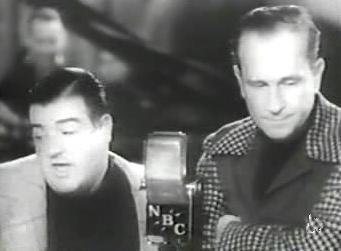
Abbott and Costello Wiki Commons

Abbott and Costello

Share

Lookin’ Good!

“Overcorrecting” is a useful term if you want to be a professional writer. It’s possible to try so hard to be correct that you make a mistake instead.

Here’s an example of overcorrecting that I hear all the time: “Donna invited Harry and I for dinner.”

Nope! Think: Donna invited me for dinner. The sentence doesn’t change if you make it longer:

Donna invited Harry and me for dinner.  CORRECT

(Did you notice that you don’t need a ton of grammar to get this right? Just make the sentence shorter. Works every time!)

Today I’m going to talk about another example of overcorrecting. Recently someone online insisted that “You look well” is more professional than “You look good.”

No, it isn’t. In fact it’s wrong (unless you’re talking to someone who’s recovering from an illness).

Well sounds fancy because it’s an adverb. Good sounds…ordinary.

But you can’t throw adverbs around willy-nilly just because you want to sound posh. That’s why “You look well” is wrong.

The good news is that you already know this – even if you don’t give a damn about gobbledygook like adverbs and adjectives.

Doubt me? Read these sentences:

Jane, you look happily today!

I felt sadly when I heard that the Browns are moving.

Your plans for your trip to San Francisco sound wonderfully.

They sound silly, don’t they? “I feel,” “You look,” and “That sounds” require adjectives. Happily, sadly, wonderfully (and well) are adverbs. (If you don’t want to go there, just think about using simple words, and you’ll be fine.)

These sentences are correct:

Jane, you look happy today!

I felt sad when I heard that the Browns are moving.

Your plans for your trip to San Francisco sound wonderful.

And – of course – “You look good!” (But if someone has been sick recently, it’s fine to say “You look well.”)

Share

Learning from the Amish

Today’s post is about the Amish – a Christian religious group that strives to separate itself from mainstream society. The Amish dress in black and don’t use cars or electrical appliances. Many Amish families still own family farms.

Amish communities are popular vacation spots for American tourists. Amish bicycles and horse-driven buggies are a welcome escape from the stress and materialism that dominate our American lifestyles.

I just wrote that paragraph myself. And here’s what I want to say about it: it’s boring.

Americans are materialistic. The Amish aren’t. You knew that already! There was no point in even saying that.

I would define good writing as telling your readers something they didn’t know – finding a different angle, for example. Today I have an example for you. It’s from a 2020 Washington Post article, and here’s a paragraph that impressed me:

An Amish family wanted to run propane gas pipes for lights to every room of their home instead of running them only to the kitchen and living room. (The Amish choose not to tap the electrical grid.) Church members discussed how the change would affect the family. If the family members could separate into bedrooms to read at night, instead of gathering in the living room, would their ties fray? Of course they would.

The Amish said no to the additional gas lights – but not because they’re against materialism. That’s a big, empty, meaningless word. What the Amish worry about are the ways that modern devices can weaken family ties, friendships, and communities.

Here’s another example. An Amish farmer wanted to buy a machine that could bale hay. The Amish use modern machinery all the time. The hay baler would save a lot of time and energy. That’s a no-brainer, right?

But the community leaders talked it over and – again – said no. If farm labor became easier, Amish farmers wouldn’t have to depend on each other as much. That would weaken community ties.

Feeling guilty about materialism is (in my opinion, anyway) – stupid. Of course we’re materialists. We have to eat, we need comfortable places to live, and cell phones can be lifesaving in emergencies. (Many Amish families have cell phones.) We need material things – lots of them.

The real question is whether our material things are contributing to the kind of life we want to lead – a point the article drives home perfectly. That’s good writing, in my opinion!

Always – always – strive to make a point your readers aren’t expecting – and tell a story or two if you can. (If you’re looking for the secrets of good writing, I’ve just given you two of them!)

An Amish buggy

Share

Semicolons!

If you love semicolons as much as I do, you’ll enjoy reading “Has Modern Life Killed the Semicolon?”

You might enjoy the article even if you hate semicolons! It’s not really about killing them. The article is a survey about the way attitudes have changed about the semicolon over the years. (For example, Kurt Vonnegut thought semicolons were useless. All they did was prove you’d been to college!)

I’m going to jump in with some thoughts of my own about this quirky punctuation mark.

1.  Semicolons are easy to use. Just change a period to a semicolon and lower-case the next word – unless it needs a capital letter.

We just got back from a trip to Lowe’s. My husband and I are going to paint the guest room this weekend.
We just got back from a trip to Lowe’s; my husband and I are going to paint the guest room this weekend.

I just had an excited phone call from Linda. Harvard accepted her college application.
I just had an excited phone call from Linda; Harvard accepted her college application.

2. Kurt Vonnegut is right about semicolons – they do show that you’ve been to college. That’s a  good reason for using them! What’s wrong with showing off a little?

3.  Michael Kinsley argues that semicolons are often abused. He says they can “imply a relationship between two statements without having to make clear what that relationship is.” I don’t see that as a problem. Our brains can supply the missing connection.

4. You should use semicolons sparingly. If you’re writing something short, one or two semicolons should be the limit. On a longer piece, one or two per page are enough.

5. You never have to use a semicolon. (Well, semicolons are necessary if you’re writing a particularly fancy kind of list. That hardly ever comes up. I use that list rule only two or three times a year – and I’m a professional writer.)

6. English teachers love to make semicolons difficult. Here’s a typical explanation:

Use a semicolon to join two related independent clauses in place of a comma and a coordinating conjunction (and, but, or, nor, for, so, yet). Make sure when you use the semicolon that the connection between the two independent clauses is clear without the coordinating conjunction.

Gak. Ignore that nonsense! Try my way. It always works – and it saves brainpower for other, more important writing tasks.

Share

A Clumsy Sentence

For several years I’ve been studying Welsh on Duolingo, hoping I’ll be able to speak Welsh when I travel to Wales on a future trip.

So I enjoyed reading a New York Times article suggesting that Stonehenge (a prehistoric site I’ve visited) may have been erected in Wales and then moved to England.

Most of the article was engaging and well written. But one sentence was awkward and confusing: “The entrance to both circles were aligned toward the midsummer solstice sunrise.”

The person who wrote that sentence seems to have been confused about an important subject-verb agreement rule. I’m going to review the rule for you, and then I’ll point out a recent wrinkle.

Let’s take a simple sentence:

Misuse of prescription drugs often is/are dangerous.

What’s dangerous – the prescription drugs, or the misuse of them? Obviously the problem is misuse. (Antibiotics save lives!) So: misuse is.

Misuse of prescription drugs often is dangerous.  CORRECT

English teachers sometimes say that you need to be aware of the loud and soft parts of sentences. I think that’s a great way to explain why you need to think about misuse is in our example.

But – as I said – there’s a wrinkle: the rule is disappearing. Even the meticulously edited New Yorker magazine sometimes publishes sentences like this one:

A group of German tourists are camping here for three nights.

It should be a group is. But nowadays you don’t have to make a fuss about it.

On the other hand, let’s not abandon common sense! The journalist who wrote our Stonehenge sentence ended up writing grammatical nonsense (the circle are). Here’s my version:

The entrances to both circles were aligned toward the midsummer solstice sunrise.  CORRECT

Not difficult!


Share

“In a Persian Market”

In 1920 British composer Albert Ketèlbey (1875-1959) composed a wonderful piece of music that’s probably familiar to you: “In a Persian Market.” (You can listen to it here: https://youtu.be/pY9rHa75UHs.)

Charlie and I always enjoy the classical music channel provided by our cable TV company. We also get a kick out of seeing pictures of the composers and reading tidbits about their lives.

But sometimes the writing isn’t very good. Here’s what we read on our TV screen while we were listening to “In a Persian Market” today:

Ketèlbey received a scholarship to Trinity College, where he attended.

That is a weak sentence. It sputters to the end – exactly what you don’t want a sentence to do.

How do you fix it? I have two pieces of advice for you:

  1. Don’t try tweaking a bad sentence. That never helps.
  2. Start over with a new sentence.

Here’s my revision:

Ketèlbey attended Trinity College as a scholarship student.  BETTER

Problem solved!

Sheet music for Ketelby's "In a Persian Market"

Share

Is Grammar Useful?

Recently a frustrated English teacher posted this question online: What’s the difference between a direct and an indirect object?

I know the answer, of course – and I was tempted to explain the difference. But then I decided it would be better to ask a question of my own: Who cares?

Grammar gobbledygook (like “direct” and “indirect object”) is a leftover from a long-ago time when Latin was considered the perfect language. English teachers back then figured that if you learned the fine points of Latin grammar, you would be able to write as brilliantly as Cicero, Herodotus, and Virgil did.

What happened instead was that confused students memorized heaps of language concepts that had nothing whatsoever to do with English.

Take a look at these sentence pairs:

I gave him a dog.

I gave a dog a bone.

Now look at these sentence pairs (in Latin):

Canem ei dedi. (I gave him a dog.)

Cani os dedi. (I gave a dog a bone.)

The word dog is different in both Latin sentences: canem (direct object) and cani (indirect object). But in English, a dog is always…a dog.

If you’re not learning Latin, why do you need Latin grammar? I say you don’t.

But I have English teacher friends who sincerely believe that students should know these terms. I’ve gently asked them to explain why they matter. The response from them is always bewildered silence. They had teachers who thought grammar was really important, and they’re determined to keep that tradition alive.

That’s not a good enough answer.

Please, please – spend your time learning the skills that will help you write better. If you’re not sure where to start, go to your library and find a good book about writing – something with advice you can use right away.

Or (another suggestion) read up on something that interests you. That’s a great way to improve your vocabulary and sharpen your sentence skills. (Just make sure it’s not a book about grammar!)

Share

“Preterite”?

I spend a lot of time reading and answering questions about writing online. A while ago someone asked whether this sentence was correct: “I am writing to notify you that we decided not to renew our lease.”

Share

What I Learned This Year

Charlie and I are vaccinated, and we rarely wear masks any more (though we still carry them with us). I’m hoping that the frequent-hand-washing habit we developed this year will stay with us.

We know a number of people who had COVID, and I’m happy to report that all of them pulled through.

When the sheltering-in-place orders were first announced in 2020, I made two important decisions. The first was to do everything I could to avoid getting infected with COVID.

The second was to make some serious progress on the Shaw book I was writing. I set a goal of two completed chapters.

It’s now more than a year since everything shut down. (Who knew it would be that long?) The Shaw book is…finished! (Ta-da!) A publisher is looking at it right now.

Over the next few weeks I’ll be writing about some of the lessons I learned while writing the book. Or – in some cases – relearned.

Here’s the most important one: I need to acknowledge my limitations.

I consider myself an excellent time manager. (In fact I’ve written a book about my quirky time-management system: Five Minutes a Day.) The first chapter is about the Hercules myth (also called the “All-or-Nothing-Myth”). It’s the fallacy that we can – and should – be able to get everything done.

Before the pandemic, I’d spent months and months writing a book about Bernard Shaw in my spare time. All I had to show for all that time and effort was one completed chapter and lots of abandoned attempts at other chapters.

It looked as if I’d never finish it. In fact it looked as if I’d never finish Chapter Two.

Hunkering down for the pandemic (no socializing, no dancing, no traveling, minimal housework) gave me the time and space to think deeply about the book I was writing

A year has gone by, and I’ve written a book I’m proud of. Ironically, however, I’m also somewhat more humble than I was a year ago. I discovered (for the umpteenth time!) that I’m not Superwoman.

I’m not the kind of person who can wrestle difficult content into a book while keeping a spotless house, dancing at every opportunity, and whizzing around with my friends.

One Thing at a Time. If you’re facing a difficult challenge, it’s a good rule to follow!

Superman comic book cover

Share

Appositives

My friend Mike Goronsky sent me an intriguing Boston Globe article about appositives – The Pause That Annoys: When a Comma Makes Life Needlessly Hard by Jan Freeman. 

Here are three examples (the appositives are in bold):

The berries, which were moldy, went straight into the compost.
My older sister, Betty, taught me the alphabet.
My sister Enid lets me hold her doll.

An appositive is an explanation or a description. Sometimes it’s set off in a pair of commas. but sometimes it’s not. How do you know when to use the commas?

There are two ways to do it. Both are correct. The first way is to learn a lot of grammar gobbledygook about restrictive and nonrestrictive clauses.

The second way is for someone (me) to remind you that you already know all about appositives – you’ve been using them all your life. You speak English, remember? So you read the sentence aloud and listen to your voice. If it goes down and back up, use the commas.

My friend Jean knows a lot about English.

My friend Jean who knows a lot about English is writing a book.

Did you read them aloud? (Don’t cheat!) If you did, you know that the first sentence doesn’t need commas. The second one does.

My friend Jean knows a lot about English.

My friend Jean, who knows a lot about English, is writing a book.

Start listening to conversations (including yours). You’ll hear this down-and-up pattern all the time. Everyone knows how to do it!

Now I’m going to give you permission to stop reading this post. The Boston Globe article raises an interesting point that I want to talk about. But it’s not a big issue, and you’re welcome to skip this discussion.

* * * * *

Still with me? Good! English is a versatile language that can do amazing things. Take a look at these sentences:

My cousin Jill works in a shop.
My cousin, Bill, works in a hotel.

The first sentence says that you have at least two cousins. The second sentence says that you have only one cousin. There’s no need to say: “I have only one cousin. His name is Bill, and he works in a hotel.” Our amazing language conveys all of that information in just seven words.

Let’s try another pair:

Jane’s cat Geraldine was named for Flip Wilson.
Jane’s dog, Woofer, likes to bark at squirrels.

How many pets does Jane have? One dog, and at least two cats. The brains of native speakers do this all the time, automatically. Nobody taught it to us. We listened and learned.

The Boston Globe article goes on to make an interesting point: sometimes this gets to be a pain. I often travel with my sister. Do you always have to know whether I have one or two sisters? No. Maybe it doesn’t matter. But the language insists that we include that information.

Jan Freeman says that these commas are “a recent fetish,” and she suggests that sometimes we shouldn’t worry about them.

She gives a useful example. John McPhee was writing a book about fishing. He told a story about a man who went fishing with his daughter. Her name was Margaret. So:

Penn’s daughter Margaret fished in the Delaware.

But now there’s a problem. That sentence makes it seem like Penn had several daughters. What if Margaret was the only girl? You’d have to write the sentence like this:

Penn’s daughter, Margaret, fished in the Delaware.

John McPhee had to spend several hours trying to find out whether there was one daughter – or several. He finally discovered that Margaret indeed had a sister, so version #1 was correct. But is this nitpicking necessary?

I say that we should use our common sense. Sometimes when I talk about those trips with my sister, I don’t have to indicate that there’s another sister! But if I talk about a family get-together, of course it’s relevant that there are three of us.

Share