Writing about Laura Dekker: Even Pros Make Mistakes

I just finished reading about a teenager who’s the youngest person to sail solo around the world. It’s a remarkable story and – if you read it in today’s newspaper, as I did – an instructive one for those of us who get our kicks at a writing desk rather than a sailboat.

Point #1: Teenagers should not follow Laura Dekker’s example – missing school to take a risky lone voyage around the world.

Point #2: The Associated Press feature about Laura Dekker would have benefited from an editor’s sharp eyes.

Take a look at the first paragraph:

Laura Dekker set a steady foot aboard a dock in St. Maarten on Saturday, ending a yearlong voyage aboard a sailboat named “Guppy” that apparently made her the youngest person ever to sail alone around the globe, though her trip was interrupted at several points.

TMI, as young people today are fond of saying: Too Much Information.

  • Laura Dekker ended a yearlong voyage around the world on Saturday
  • she landed in St. Maarten
  • she sailed alone
  • her sailboat was named The Guppy
  • her trip was interrupted several times
  • she’s probably the youngest person to make the journey solo

My husband, who shares my TMI complaint, suggested a better opening sentence for the story:

Right now most 16-year-old girls are probably thinking about their next text message. 

That’s a succinct attention-getter that prepares you for a story about an unusual 16-year-old girl.

And that brings me to my second suggestion: The AP story takes 242 words (in a 653-word article) to get around to telling you how old Laura Dekker is. That information should have appeared in the first paragraph: After all, Laura’s age (16) is the reason her accomplishment is newsworthy.

There’s a lesson here for all of us: Even topnotch writers like Judy Fitzpatrick, the reporter who wrote this story, can benefit from having another reader take a look at what we’ve written.

Share

Parallelism, Anyone?

I taught parallelism (parallel construction in sentences) to college freshmen for many years. I don’t recall ever having a student who couldn’t figure out how to write parallel sentences.

So I continue to wonder why so many professional writers produce sentences that aren’t parallel. Here’s one I came across just this morning:

She was a talented graphic designer, a great writer, and was the president of a student club.  INCORRECT

Perhaps the pros had English teachers who decided to skip the chapter on parallelism. Or writers today just don’t want to bother. Or they’ve forgotten how to do parallelism.

Let’s remedy that. One of the best ways to fix one of these offending sentences is to imagine it as a little poem:

She was

a talented graphic designer

a great writer, and

was the president of a student club.

You can easily see that item #3 doesn’t match #1 (a talented graphic designer) and #2 (a great writer).

That’s generally true, by the way. Ninety-nine percent of the time, item #3 is the problem in a non-parallel sentence.

So let’s fix it:

She was

a talented graphic designer

a great writer, and

the president of a student club.

Easy, isn’t it? Here’s our new sentence:

She was a talented graphic designer, a great writer, and the president of a student club.  CORRECT


Share

Tips for Writing Dialogue

Dialogue – back-and-forth conversation between two or more people – is a vital component of most novels and short stories. You might also use dialogue in a nonfiction report, article, or book. Every writer should know how to write effective dialogue.

Here are some practical tips:

1.  Know your purpose:

  • background information
  • setting a mood
  • creating conflict between characters
  • advancing the plot
  • making your story sound real

2.  Make your dialogue easy to follow.

A full page of back-and-forth conversation may cause readers to forget who’s speaking. Attributions (“said Joe”) can help, or you can insert the name of the character being addressed (“Look, Joe, that’s never going to work”).

Another good strategy is to break up the dialogue (“Joe looked down at the floor”) and then start it up again.

3.  If other characters are present, find a way to work them into the dialogue.

Imagine that Joe and Mary have been arguing while Penny, their four-year-old, looks on in silence. Suddenly Penny jumps into the argument. Some of your readers are going to be puzzled – they forgot Penny was there.

Avoid confusion by breaking up the argument to remind readers that Penny is there. Penny could cry, gasp, argue back, climb onto Joe’s lap – anything to keep her in the scene and in view of your readers.

The golden rule of dialogue is to keep it natural – difficult to do because real-world conversation sounds awful if you write it down word-for-word.

Here are a few tips:

  • Use informal style (“don’t” instead of “do not,” “but” instead of “however”)
  • If you’re using dialogue to provide background, don’t overload your sentences with information (“I’m calling Jo, the baby-sitter we liked so much last month, so that we can celebrate our tenth anniversary, which many people thought would never happen because you and I are so different in temperament and upbringing”)
  • Use simple sentence style. An occasional colon, embedded clause, or list can work fine in dialogue. But if you overuse any of these, your dialogue will start to sound stilted and unbelievable.

Here’s some nuts-and-bolts information about punctuating dialogue:

  • In American punctuation, commas and periods belong inside quotation marks (there are no exceptions, at least in the US)
  • Start a new paragraph for each speaker
  • Thoughts belong in italics, with no quotation marks
  • If someone speaks for several paragraphs, use quotation marks at the beginning of each paragraph. Save the closed quotation marks for when that speaker stops talking

And here’s the best advice of all: Read, read, read. See how skillful authors write and punctuate dialogue. You’ll learn a lot.


Share

Blowout!

Yesterday’s football shocker, when the New England Patriots held Tim Tebow to only 10 points, started me thinking about the word “blowout” – a favorite word in our household.

If you’re a fervent Honeymooners fan, you know that the Kramdens and the Nortons used to celebrate special occasions with a blowout at a favorite Chinese restaurant. To this day, if my husband unexpectedly finds a ten-dollar bill in a pants pocket, he’ll wave it at me and shout “Blowout! Blowout!”

I started thinking about the word blowout when I logged on to Facebook early this morning. Friends had already lined up to comment on the demise of Tebowmania (another great word).

I’m not taking sides on this (although I have a sister who lives in Massachusetts – you can draw your own conclusions).

What I want to talk about for a moment is the word blowout itself. Yes, it’s in the dictionary – but (at least until recently) referring just to blown tires and mining. Only recently did the American Heritage Dictionary add the definitions referring to a feast or a sports fiasco.

The ultimate authority, of course, is the Oxford English Dictionary. Thanks to the Internet, we can now see words under consideration for future editions. The definitions of blowout that we’re talking about are on that draft list. Blowout in the sense of a feast goes back to 1823. The failure usage first appeared in print in 1923.

No one knows when blowout was first used for a pizza outing, but I can confidently predict that you’ll hear it in our house tomorrow: Plans for our weekly trip to Pizza Town are already in place. Knowing the quality of the food there, I can tell you that our trip will definitely not be a fiasco.

As for Tim Tebow and the Broncos, there’s always next year.


Share

Superman Teaches Comma Rule 3

Non-restrictive clauses are hard to teach! But they got much easier when I let Superman take over the job.

No kidding. All I did was play the introduction from the wonderful old Superman show (the black-and-white series from the 1950s, starring George Reeves).

Notice how the announcer’s voice drops after who (“and who, disguised as Clark Kent…”) and rises again after newspaper (“great metropolitan newspaper”).

Click here to listen!

It’s like clothespins, I would tell my students. One comma takes your voice down, and another comma brings it back up again. (The grammatical term is an “interrupter.”)

Want another example? Try this famous line from Mission Impossible (but be sure to read it aloud – you’ll hear the commas):

Your mission, should you choose to accept it, is to intercept the enemy plane.

Mission accomplished!

You can download by clicking the link.

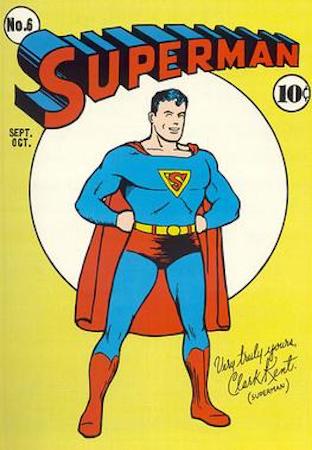
Superman comic book cover

Artwork Courtesy of Joe Shuster

Share

Pre- is Often an Unnecessary Prefix

Please understand me. I think a prefix is a fine and useful thing – in its place. Unfortunately pre– is often not fine and not useful.

Here’s a sentence from today’s New York Times that caused my blood pressure to go up. Erin McKean, founder of Wordnik, an alternative online dictionary, was explaining how her team prepares citations to go online. “We don’t pre-select and pre-prune,” she said.

Under Erin’s leadership, Wordnik is doing a fine thing: Everyone can benefit from unmediated access to the way words are being used today. But what’s the difference between “selecting” and “pre-selecting”? “Pruning” and “pre-pruning”?

The pre– prefix shows up (usually unnecessarily) all the time. I prepaid for my vacation. I preregistered for a conference. I prearranged for a ride to the airport.

During political discussions about insurance, we keep hearing about coverage of pre-existing conditions. Really? What’s the difference between an existing condition and a pre-existing condition?

Does pre– add anything useful in those three sentences? No.

Down with it. I’m pre-deciding not to use pre– this way in 2012.


Share

What’s a Troop?

Now that the US is withdrawing its military forces from Iraq, we’re hearing a lot about “troops” returning home. Has anyone besides me noticed that “troops” is being used in a new way, as a synonym for “soldier”?

For example, here’s an excerpt from the December 15 New York Times:

Although Thursday’s ceremony represented the official end of the war, the military still has two bases in Iraq and roughly 4,000 troops, including several hundred who attended the ceremony. At the height of the war in 2007, there were 505 bases and more than 170,000 troops.

Every dictionary I’ve checked, including the venerable Oxford English Dictionary and the brand-new 5th edition of the American Heritage Dictionary, sticks to old definitions of “troop” as a military group or a Girl Scout or Boy Scout unit.

Lexicographers (the people who edit and update dictionaries) constantly scan books, magazines, and newspapers to ferret out new uses for old words. No one, however, seems to have commented on this usage of “troop.”

Which doesn’t mean it’s wrong. Dictionaries, by their very nature, always lag behind current usage. Changes in our language don’t go into dictionaries until they’ve been around for a while.

My hunch is that this use of “troop” will be around as long as countries keep sending soldiers into combat – a practice that, alas, shows no signs of ending.

Share

Offensive or OK?

Language – more specifically, the question of what constitutes offensive language – has made the news recently, not once but twice.

On December 9, the New York Times reported that the American Heritage Dictionary decided to label “anchor baby” an offensive term. 

(An anchor baby is a child born to an undocumented immigrant who hopes to use the baby to obtain citizenship. )

The second story came out of the 11th Circuit Court of Alabama. On December 16 its Court of Appeals reversed its own ruling from September 2010 that “boy” was not an offensive term. This time the judges awarded about $365,000 in damages to black employee John Hithon, who complained that his white supervisor used the term “boy” to refer to black employees.

How much attention should we pay to political correctness? Answers to that question vary. What about the term “class warfare,” for example? Some advocacy groups find “class warfare” a useful way to describe attacks on legislation that favors one group over another. Others oppose the term, asking why it’s ok to show political favoritism but not to talk about it.

Bottom line: Language is not something to be taken for granted – and (as the Alabama court demonstrated) language issues are not to be taken lightly. We all need to keep updating both our speech habits and our views about our fascinating and evolving language.

Share

Christmas Quiz

Here’s a different kind of Christmas quiz: Usage questions with a holiday theme. Correct the errors in the sentences below. (Some items don’t have errors.) Scroll down for the answers, and have fun!

Part I  Usage Errors

1.  Last night I ran out of scotch tape while I was wrapping some gifts.

2.  Two Christmas’ ago, each of the children received a new bicycle.

3.  We’re invited to the Smith’s annual Christmas Eve party.

4.  Aunt Carol gave us a beautiful pointsetta again this year.

5. Because some of our friends don’t celebrate Christmas, I always choose cards with a “Seasons Greetings” message.

Part II  Excerpts from Christmas Songs

6.  “God rest ye, merry gentlemen, let nothing you dismay”

7.  “Rudolph the red nosed reindeer had a very shiny nose”

8.  “Hark, the herald angles sing, glory to the new-born King”

9.  “The stars in the heavens looked down where he lay”

10.  “It’s beginning to look alot like Christmas, everywhere you go”

ANSWERS

1.  Last night I ran out of Scotch tape while I was wrapping some gifts.  (Brand names are always capitalized)

2.  Two Christmases ago, each of the children received a new bicycle.  (To form the plural of a word ending in “s,” add “es”)

3.  We’re invited to the Smiths’ annual Christmas Eve party.  (“Party of the Smiths”: Put the apostrophe after the final “s”)

4.  Aunt Carol gave us a beautiful poinsettia again this year.  (Be careful not to misspell poinsettia)

5. Because some of our friends don’t celebrate Christmas, I always choose cards with a “Season’s Greetings” message.  (“Greetings of the Season”: Put the apostrophe after the “n.”)

Part II  Excerpts from Christmas Songs

6.  “God rest ye merry, gentlemen, let nothing you dismay”  (It’s not a song about “merry gentlemen”: In this old song, the lyrics hope the men will “rest merry.”)

7.  “Rudolph the red-nosed reindeer had a very shiny nose”  (Use a hyphen. He’s not a red reindeer or a nosed reindeer.)

8.  “Hark, the herald angels sing, glory to the new-born King”  (Angels, not angles.)

9.  “The stars in the heavens looked down where he lay”  (Correct! The past tense of lie is lay.)

10.  “It’s beginning to look a lot like Christmas, everywhere you go”  (A lot is always two words: No exceptions.)

How did you do?

Share

Is It OK to Repeat a Word?

 It’s December, and I’m again displaying a beloved Christmas card my younger sister sent me back in 1986. It features the opening lines from Louisa May Alcott’s classic Little Women:

"Christmas won't be Christmas without any presents," grumbled Jo, lying on the rug.

“Christmas won’t be Christmas without any presents,” grumbled Jo, lying on the rug.

And I noticed something odd: The word “Christmas” appears twice in the first sentence: “Christmas won’t be Christmas without any presents….” (The same thing happens in the third sentence, when Amy says “girls” twice.)

Wait a minute! Is it ok to repeat a word?

Yes.

Despite what you may have heard in an English class, it’s perfectly ok to repeat words. Good writers do it all the time. If the repetition works, go for it.

How do you know whether it’s working? Set aside what you’ve written for a while and then read it again. If it sounds good, you’re ok. Better yet, ask a friend or family member to read it. Don’t ask whether the repeated word is ok. Just ask for a general reaction.

I hope you’ll be getting lots of presents this year!


Share