Watch Me Think

I’ve always been fascinated by other people’s thinking processes – especially when their brains can do things that mine can’t.

Perhaps that’s where a lot of my fascination with dance and psychology comes from: How do dancers think about movement and music? What do psychologists think about as they encounter people doing both odd and ordinary things?

I’m hoping you’re equally interested in how writers think. Yesterday, while I was typing a column for my husband (he’s the garden writer for our newspaper), I found myself thinking about three of his sentences. We decided to leave two of them alone, and we changed the third one.

1.  What most folks think of as civilization began when humans learned how to grow food, an accomplishment that freed them from a nomadic hunting-and-gathering lifestyle.

There’s a problem with the word accomplishment. What exactly was the accomplishment? Learning how to grow food. But the sentence never says that. There’s a rule in English that requires an appositive (accomplishment) to refer to a noun.

We violated that rule in that sentence (“when humans learned how to grow food” is an adverbial clause, not a noun). And we both decided that it was perfectly clear, few people would notice it, and we weren’t going to change it.

Full disclosure: If it had been one of my articles, we would have rewritten the whole sentence. I always visualize my readers as brilliant grammarians who are going to catch every picky mistake.

2.  On a much smaller scale, however, is a simple method home gardeners can use to save seeds of many herbs and annual plants, as well as vegetables such as cilantro and arugula.

My husband (he’s a good grammarian too) asked if we should insert “of” in front of vegetables. Technically the answer is yes, but I nixed the suggestion. He agreed (with some relief). I hate “of” and “that of” constructions and never use them. No, not even in my own stuff.

3.  Begin the process by cutting off mature seed heads and shaking them in small paper (not plastic) bags.

I am one of few people who make a distinction between “in” and “into.” I think it’s an important point, and in this sentence I think it’s downright vital. There’s a big difference between shaking the seed heads “in a bag” (put the seed head inside) and “into a bag” (hold the seed head above the bag so that you can catch the seeds).

I questioned my husband about which one he meant, and we changed the sentence so that readers will know that they’re supposed to shake the seed heads “into a bag.”

I hope you enjoyed visiting my brain!

Thinker

Share

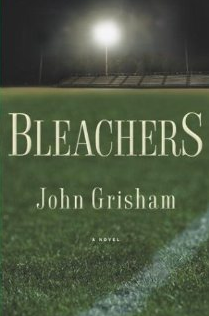
Bleachers by John Grisham

I’m always telling members of my writers’ groups to spend some time reading a novel by John Grisham. Any novel. Don’t think about his craftsmanship (which is considerable) – at least not right away. Just watch yourself reading, and notice how you feel.

You can’t stop.

That’s how you want your writers to feel. I always describe it as feeling like you’re riding a horse that’s decided to take charge of where you’re going and how you’ll get there.

A few months ago the writing group at the prison where I volunteer got together to get a gift for me – a copy of a Grisham book I’d mentioned wanting to read: Bleachers, the story of a successful high school football coach. As the book opens, Coach Rake is dying, and football players from years past have gathered to say good-bye and honor his memory.

It’s a tremendous book even if (like me) you don’t know a whole lot about football and might not understand some of the plays and strategies that move the story along.

And move it does, as Grisham’s books always do, and I tried to figure out why. It was tough to stop to step away from the story to analyze what Grisham was doing – he’s that good. But I managed to catch my breath long enough to notice that he holds back some important information in order to keep you interested.

In Bleachers, there are two unknowns that get you hooked right away. First, why was Coach Rake – legendary for his football successes – fired?

Second, what really happened during that championship game when the Rake and the assistant coaches simply disappeared, leaving the players to make all the calls themselves?

 I don’t know how Grisham does it – whether he’s so good that he just knows how to keep the story moving, or whether he consciously plans it that way. I know that Emma Donoghue, author of Room (one of the best novels I’ve ever read) plans her books that way.

In a 2011 Writer’s Digest interview, she discussed how she outlines her work:

…it’s more like planning a military campaign or something. It’s quite exciting, because what you’re trying to do is to keep up the reader’s energy at every point. You’re looking for those spots where things would sag or get lost or come off the rails. You’re trying to keep up the momentum.

A fascinating business, writing – always trying to figure out what the best writers do, and how they do it.

Bleachers

Share

Is It Creative Writing?

I facilitate a writing group that’s a delightful mix of fiction writers, memoirists, poets, and nonfiction writers. I suppose you could say that some members of the group are creative writers, and some aren’t. Because I rarely attempt to write fiction, I had some anxiety about facilitating a group like this one. Did I have any information worth sharing?

Turns out I didn’t need to worry. The group has plenty of information to offer – much of the time I just do the grunt work of preparing the copies and sending out reminder emails.

Lately, though, a deeper truth has been emerging: We’re all creative writers. Postmodernists say that we all bring a personal slant and a creative touch to everything we write.

I’m starting to notice how much I personalize the law enforcement articles I write for a website aimed at police officers. Much of what I do is research and reporting, but I try not to stop there. Lately I’ve been noticing how much fun I have writing these articles. (Not a bad thing!)

I’m always looking for a different approach (often a broader one). Can I combine two ideas? Can I make a personal connection? Can I make a literary or historical reference?

That personal viewpoint isn’t discussed very much in conventional writing courses, but it should be.

Share

National Grammar Day


Happy National Grammar Day! (And please don’t go overboard celebrating!)

In honor of the day, here’s a short quiz for you to try. Scroll down for the answers.

Instructions: Mark each sentence with a √ (for correct) or an X (for incorrect).

Part I

1.  Whom did Sarah say was going to give the keynote address?

2.  Peter graduated, got a job, and he’s on a fast track to a promotion.

3.  The Human Resources office asked Linda and I to review their application form.

4.  When peoples’ wishes are ignored, political unrest is likely.

Part II

5.  If your credit card was refused, you didn’t receive the tickets you wanted.

6.  Grace is one of those teachers who make a huge difference in students’ lives.

7.  Several students earned 100s on this morning’s test.

8.  We need fresh tomatoes, green peppers and carrots for tonight’s salad.

ANSWERS AND CORRECTIONS

X 1.  Who did Sarah say was going to give the keynote address? (Think: He was going to give the keynote address = Who was going to give the keynote address? Click here to learn more.)

X2.  Peter graduated, got a job, and is on a fast track to a promotion. (Not parallel)

X3.  The Human Resources office asked Linda and me to review their application form. (Thumb rule)

X4.  When people’s wishes are ignored, political unrest is likely. (Of the people = people’s)

Part II

These are all trick questions! Experts disagree about the correct answers for all four of these, so you’re free to take your pick.

5.  If your credit card was refused, you didn’t receive the tickets you wanted. (Some experts use the subjunctive here: “were refused”)

6.  Grace is one of those teachers who make a huge difference in students’ lives. (Some experts think it should be “Grace…makes”; others – me, for instance – think it should be “teachers…make”)

7.  Several students earned 100s on this morning’s test. (In the past an apostrophe was required in 100’s, but that practice is changing)

8.  We need fresh tomatoes, green peppers and carrots for tonight’s salad. (This is an “Oxford comma” sentence. Journalists don’t use an apostrophe after “green peppers,” but in other situations you’re perfectly free to use it)

How did you do?

Frustrated Student Writing


Share

A New Year’s Proclamation

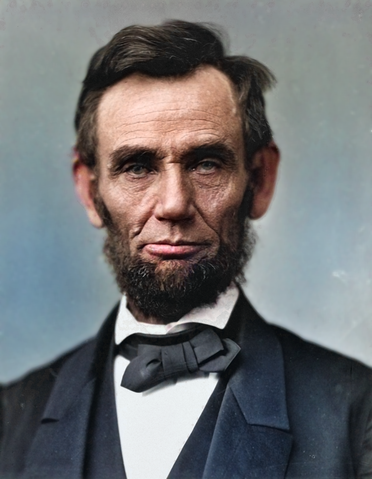
Smithsonian Magazine has just published a fascinating article about Abraham Lincoln’s Emancipation Proclamation, which was issued on New Year’s Day, 1863, and freed the slaves in states that had seceded from the US.

It’s a fascinating look into the mind of Abraham Lincoln, surely one of the greatest presidential writers. And here’s what’s so interesting: This historic document is…dull.

Harold Holzer discussed Lincoln’s “leaden language” in his book Emancipating Lincoln: The Proclamation in Text, Context, and Memory. Holder says he found only one memorable line in the entire document:

“I do order and declare that all persons held as slaves within said designated States, and parts of States, are, and henceforward shall be free….”

The Smithsonian Magazine article caught my eye for two reasons. I’ve been interested in the Emancipation Proclamation for a long time – in fact I wrote a research paper about it when I was a freshman in college.

I’m also interested in the writing processes used by famous people. Lincoln must have known that he was writing one of the most important proclamations in American history. Why would he want to be remembered for a boring piece of writing?

To put it more simply: Why didn’t he work harder to make it better?

The surprising answer is that Lincoln did work harder to make it better, according to Holzer. Why was the result such a dry document? Holzer believes Lincoln was perfecting the legal tone.

When I wrote my long-ago research paper, I discovered that the Emancipation Proclamation was a political document, not a humanitarian one. Lincoln’s decision to free the slaves in the seceded states was purely symbolic, since none of those slaveholders considered themselves under federal rule.

The Emancipation Proclamation (which did go into effect after the Civil War) strengthened Lincoln’s stature with the slavery-hating North and with America’s important ally, Queen Victoria of England, who also hated slavery. And it encouraged borderline states to stay loyal to the Union, since the Emancipation didn’t free their slaves.

According to Holzer, the legalistic tone of the Emancipation Proclamation had two purposes: Heading off a legal challenge, and preventing a revolt from the pro-slavery forces in the United States.

Now let’s shift our vision to New Year’s Day 2013. Very likely you’ve resolved to work on your writing skills this year. What can you learn from Lincoln and his famous Proclamation?

My answer: Successful writers think first about their purpose and their audience. Lincoln made word choices that strengthened his political position. Extravagant praise for freedom and justice would have outraged his enemies – the people who wanted to keep slavery in place.

There are writing “experts” out there who would urge you to start at the beginning and work your way through parts of speech, sentence diagramming, and other grammatical issues. Don’t believe them.

Yes, you need to know Standard English usage. But what’s most important is to know how to select the words and ideas that will convey your message to your audience. Stay focused on those goals, and you’ll make rapid progress.

Best wishes for a great writing year!
Follow @JeanReynolds
Share

Possessive with a Gerund

Source: arcamax.com via Jean on Pinterest


Look at the second panel. The ant should have said, “The fate of the universe may depend on YOUR getting me….”

This construction is called a possessive with a gerund. (Your is the possessive, and getting is the gerund  – a noun with an -ing ending.) It’s an obscure point but one that’s nice to know! Click here to learn more about it.

Share