Don’t Be Boring!

I enjoy reading rules about writing. Even when I disagree with them (something that happens often), reading and thinking about rules always awakens new ideas and unexpected possibilities.

I just came across a rule I really like: If it’s boring to you, it’s boring to your reader.

Amen, brother. Amen!

One of my personal Rules for Living – and one that spills over into my Rules for Writing – is “Never tell people something they’ve heard before.” Alas, it’s a rule that I violate frequently. But still it has saved me (and, more important, my friends and family) from many trips down the Highway of Boredom. Here’s a list of strategies I’ve found helpful:

1.  Check in with my stomach. I know that sounds strange, but it works great. If my stomach is humming, I can be confident that I haven’t lapsed into boredom. If my stomach feels dead, it’s time to  find a different topic or another approach – or simply shut up.

2.  Don’t try to impress people. Surefire pathway to boredom.

3.  Tell a story (preferably one with a surprise – or one that pokes fun at me).

4.  Go somewhere unexpected. I used to teach nontraditional college students who hadn’t acquired the habits needed for academic success. Lecturing them about responsibility/hard work/success and so on was both a waste of time and a serious violation of my sacred “Never tell them what they’ve heard before” rule.

What to do? I used to show my classes a clip from Mona Lisa Smile. Julia Roberts is an art history professor who’s teaching her first class in a topnotch college for women. She discovers that her students have already read the entire textbook and supplementary materials.

It’s wonderful to watch her try to cope gracefully with the situation – the students have outstripped her expectations, making her feel irrelevant and diminished. But the scene also makes a point that the movie producers probably didn’t intend: A real education requires preparation and effort.

That’s my list, and all that remains is a question (an honest one, because I have another rule about never asking a question if I already know the answer): Did I bore you?

Woman Yawning

Share

Mystify and Simplify

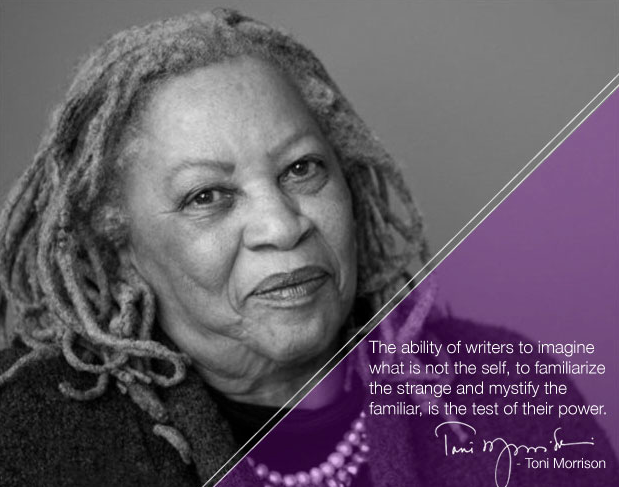
Toni Morrison

I love this quotation from Toni Morrison: “The ability of writers to imagine what is not the self, to familiarize the strange and mystify the familiar, is the test of their power.”

Unpacking what she’s saying would take a long time, and even then I don’t think I’d get all of it. But that’s not the point, is it? I mean she’s already said what she wanted to communicate. Why is a restatement necessary?

What really excites me about her statement is that it breaks away from so much of what we think is true about writing: Write what you know. Write from your gut. Be true to yourself.

Nope. According to Morrison, writing isn’t about you (or me) at all. It’s about power – using words to transform reality into something new and unexpected. “Familiarize the strange” – make me feel connected to something outside the realm of my experience. “Mystify the  familiar” – show me that what I’m seeing (or what I think I’m seeing) is only part of the picture.

My favorite nonfiction book, The Little Princesses, falls into the “familiarize the strange” category. I’m never – alas – going to be on intimate terms with royalty. But I can slip into their world and look around – thanks to this reminiscence by the governess who taught Princess Elizabeth (now Queen Elizabeth II) as a child.

“Mystify the familiar” is the category for the piles and piles of books I’ve read about language and psychology. Nothing is more ordinary than the everyday words we use and the habits that shape our daily lives. But when someone with a brain like James Hillman’s or Jacques Derrida’s gets to work, nothing ever looks the same again.

What an exciting way to think about writing!

Share

The Finish Line

If you look up “writing process” in a writing textbook, you’ll find a tidy, linear explanation of how writers get their ideas on paper and polish them to be read by other people.

What those books tell you…isn’t true. (You can trust me on this. I’ve written two of those textbooks myself: Sentence Power – Holt, Rinehart & Winston – and Introduction to College Writing – Pearson.)

If you’ve read my previous posts about the Shaw and Education chapter I’ve been writing, you know that my own writing process is neither tidy nor linear.

It doesn’t have to be! The only thing that matters is coming up with a finished product you’re proud of. It doesn’t matter how you get there.

My favorite part of the writing process is the last step. Textbooks say that this is the proofreading step – making small editing changes in punctuation, spelling, and sentence structure.

I don’t work that way. For one thing, I edit as I go. Usage mistakes drive me crazy, and I find that rewording a sentence often affects the next sentence, and then I have to rewrite the following paragraph….It’s a lot easier just to get my sentences right during the early stages.

What I do last is work in additional material that I discovered after I completed my early drafts. It is an insane way to work. It is also fun, sort of like putting a puzzle together. While I was finishing up my Shaw and Education chapter, I pulled out some notes I’d made several months ago. Because I had a strict word limit (3,000 words), I’d had to leave out many marvelous ideas, examples, and quotations.

Nevertheless – and cheerfully ignoring the fact that I’d already hit my word limit – I read through several scribbled pages of notes to see if anything jumped out at me. And something did. In his essay “The Religion of the Pianoforte” (strange title!) Shaw had written, “It is feeling that sets a man thinking, and not thinking that sets a man feeling.”

Central to Shaw. It needed to be there, even if it wasn’t strictly about education. Fiddle, fiddle. Find some unnecessary words to cut.

Success! Quotation in, word limit honored.

I’m finished.

And it was fun, just as I’d thought it would be.

Open Notebook


Share

George Bernard Shaw and Education

A while ago, a friend invited several Shaw scholars – including me – to help him with a book he was putting together for a university press. Friday afternoon I went to the college library and picked up a book I needed to complete one last task for my contribution, a chapter about Bernard Shaw and education.

Of course I’m not really finished, even though I’ve already asked another Shaw scholar to critique my work. (He loved it!) I keep tinkering with what I’ve written, making tiny changes to sentences that have already been rewritten over and over.

It’s like something I’ve been told by friends who are famous for their culinary skills: When they sit down to eat a meal they’ve cooked for a dinner party, every bite is disappointing – even though their guests are raving about the food. I suspect it’s an unavoidable part of the creative process: The finished product never comes up to the glittering standard you were aiming for.

Still, it was fun to push my chapter over the finish line, and I’m happy with what I’ve done. I went into a drawer and pulled out notes I’d made along the way (some on the backs of baggage forms I’d picked up in an Amtrak station while we waited for a delayed train) to see if I’d missed anything important.

Happily, I hadn’t – but I came across a few quotations that were just too good to leave out, and that meant cutting elsewhere so that I could stick to my 3,000 word limit. That final stage in the writing process was fun, easy, and tidy.

But calling it a “writing process” sounds more formal and serious than it really is. I had gotten off to a messy and disorganized start (as I always do) a year ago by listing everything that absolutely, positively had to go into the chapter:

  • a famous quotation that infuriates teachers (“He who can, does; he who cannot, teaches”)
  • Shaw’s unhappy memories of his own schooldays
  • a governess who taught him how to read
  • his astoundingly successful program to educate himself

I also knew I’d be talking about Pygmalion (which later became My Fair Lady) – a play in which a half-educated flower girl learns how to speak and act like a lady.

And that was it. Do you see anything profound there? Or anything that a 21st-century educator would find interesting or inspiring? Or anything that could be expanded into 3,000 words?

I didn’t either.

The next thing I did was to purchase a 1958 book called Shaw on Education. It’s a well-researched and thoughtful book – but it’s also hopelessly out of date. I started reading and found the first two chapters astonishing. The British education system from Shaw’s time was totally different from what we have in the US today. I read those two chapters at least a dozen times because they provided such a good explanation of Shaw’s educational philosophy.

At that point a month had gone by, and I had no clue about how to put my chapter together. Shaw died in 1950. How was I going to make him relevant to today’s readers?

More in my next post!

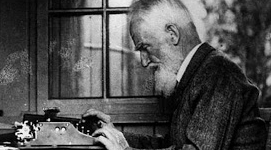
Bernard Shaw

Share

Good Prose by Tracy Kidder and Richard Todd

I just finished reading Good Prose: The Art of Nonfiction, a new book about writing by Tracy Kidder and Richard Todd. You need to read this book! Although the topic is nonfiction, fiction writers will find many useful ideas here too.

But today I’m not going to talk about all the great stuff in this book. What I’m going to recount instead is an “aha!” moment I had while I was reading it.

I dislike formal grammar. I think it’s a waste of time and – worse – it discourages people who, with a little effort, could easily sharpen their writing skills.

Something I came across in Good Prose reinforced that long-standing belief. Reminiscing about an editor who impressed him, Richard Todd wrote:

His comments often concerned subtle grammatical violations, and after noting one, such as “a possessive can’t be an antecedent,” he might add, “See Fowler.”

(I should explain that “Fowler” is shorthand for H. W. Fowler’s classic book Modern English Usage. I am a longtime fan. Big time.)

So what was the “aha!” moment? Here it is: I didn’t have the faintest idea what Todd was talking about. And I was aghast. A grammar rule I didn’t know? How did it get past me?

It took a couple of minutes for me to calm down and figure out what “a possessive can’t be an antecedent” might mean. And then I realized that it’s a rule I DO know. In fact I had a clash with my husband over this very construction just a week ago. (You’ll be happy to know that I won the argument. Well, I’m happy that I won it.)

Take a look at this sentence. There’s a mistake in it. Can you figure out what it is?

After buying a pair of tickets for a hit Broadway show, Jane’s preparations for the New York trip were complete.

It’s a dangling modifier! “Jane’s preparations” didn’t buy the tickets – Jane did.

Still confused? (My husband was. It’s a hard concept to explain.) When you read the corrected version of the sentence, the problem becomes clear:

After she bought a pair of tickets for a hit Broadway show, Jane’s preparations for the New York trip were complete.  CORRECT

I’m sure there are great minds who immediately translate “possessives” and “antecedents” into simple concepts. Unfortunately my mind doesn’t work that way. And my bet is that many people are saddled with my kind of brain. (My sympathies go out to all of you!)

So let’s ditch the fancy grammar terminology, ok?

Share

A Dangling Modifier

The New Yorker is a magazine that takes pride in its copyediting. They do an excellent job – but mistakes still creep in now and then.

And that’s what happened in a recent article about a veteran who suffers from PTSD: “In the Crossfire.” Read the sentence below to see if you can figure out what’s wrong and – more important – how to fix it:

There was the time in Ramadi that he shot two insurgents who were riding tandem on a moped with a single bullet.

Here’s the problem: The sentence sounds as if the two insurgents were riding with a bullet. The phrase “with a single bullet” needs to be placed next to “he shot.”

This mistake is called a dangling modifier. (It’s called “dangling” because a phrase is hanging in the wrong place; “modifier” because we’re talking about a description – with a single bullet.)

Let’s fix it:

 There was the time in Ramadi that he used a single bullet to shoot two insurgents who were riding tandem on a moped.  CORRECT

 Problem solved!

Bullet


Share

Clarity

During lunch with friends the other day, a retired English teacher sitting next to me bemoaned the disappearance of traditional classroom practices like diagramming sentences and labeling parts of speech.

I hope my grimace wasn’t too obvious. Folks: Those practices won’t help you become a better writer.

You need to learn usage (not grammar) – for example, how to use everyday words like I and me correctly (something many people don’t know how to do.)

And you need to know how to communicate your ideas to readers and listeners.

Here’s an example of what I’m talking about. I subscribe to an online church newsletter that I really enjoy reading – often I learn something new about theology, church history, or another topic that intrigues me.

The latest newsletter featured this sentence. It’s perfectly grammatical, but it took me several readings to figure out what it meant. The topic was the features of a new sound system installed in the church.

Another change: unless the celebrant is not the preacher, no pulpit mic will be needed. CONFUSING

Too many negatives. I would have made this two sentences (the cure for almost any writing problem, by the way!).

Another change: no pulpit mic will be needed. The only exception is when the celebrant isn’t preaching the sermon.  BETTER

Or you could make both sentences positive. You might find the version below a little too folksy, but I like it:

Another change: no pulpit mic will be needed. The only exception is when someone else is preaching the sermon.  BETTER

The advocates of old-time-grammar frustrate me because they’re putting huge obstacles in the way of anyone who wants to write better. Common sense and a good ear will take you a long way!

preach

Share

Watch a Writer Think

More accurately, you can watch two writers think: My husband and me.

I always type the gardening columns he writes for our newspaper. Yesterday he dictated this sentence:

Eggfruit trees flower spring and summer and bear fruit in autumn and winter.

Yes, there really is a plant called eggfruit! But our concern is with the wording of that sentence. It’s grammatically correct – but readers are likely to be confused by the “spring and summer and bear fruit” wording.

I suggested this revision:

Eggfruit trees flower spring and summer, bearing fruit in autumn and winter.

That version is also grammatically correct, but it sounds awkward – at least it did when we reread it.

What to do? Think, writers, think!

And we did. We zeroed in on the original problem – that repeated and. If we could just get a comma in there – that would help.

Wait a minute! There’s a rule that you should use a comma when you join two sentences with and. Yes! Fist pump!

Here are our two sentences, elegantly joined with a comma + and:

Eggfruit trees flower spring and summer, and they bear fruit in autumn and winter.

Problem solved: An easy-to-read sentence that says exactly what he wanted to say. To learn more about this comma rule, click here and read about Comma Rule 2.

Thinker

Share

The Cicadas Are Coming!

My husband just rushed into our home office with today’s newspaper in his hand. “Did you see this?” he demanded, pointing angrily at a picture on page 2 of the main section.

I leaned over to see what he was so excited about. A brood of cicadas is about to overrun areas on the East Coast of the US. Not an earth-shaking news story, in my opinion. I asked him to explain what had upset him so much about the cicadas.

“Not the cicadas, silly,” he said. “The caption!”

Oh. I understood right away. The article features a photo of a researcher holding a cicada and this impossibly complicated caption:

Gary Hevel, a research collaborator with the Dept. of Entomology at the National Museum of Natural History, holds up a preserved cicada, a brood of which are expected to emerge this spring in the Washington area, at the Smithsonian Institution’s Museum Support Center in Camp Springs, Md. on Tuesday, April 23, 2013.

Fifty-two words, a host of facts (who Hevel is and where he works, what he’s doing, the significance of the cicada, where the picture was taken and when), all in one complicated sentence.

Instantly the voice of one of my graduate-school professors began to boom in my head: “One idea per sentence,” he would plead. “One idea.”

Yes. The caption that offended my husband (and me!) would be much better if it were broken into three shorter sentences:

Gary Hevel, a research collaborator with the Dept. of Entomology at the National Museum of Natural History, holds up a preserved cicada. A brood of cicadas is expected to emerge this spring in the Washington area. The picture was taken at the Smithsonian Institution’s Museum Support Center in Camp Springs, Md. on Tuesday, April 23, 2013.

You should know, incidentally, that the original sentence is NOT a run-on. A grammarian would call it a…long sentence. A run-on is a pair of sentences run together that need to be separated with a period, like this one:

Gary Hevel is holding up a preserved cicada, this picture was taken in Camp Springs, Md.   RUNON

Here’s one way to correct the run-on:

Gary Hevel is holding up a preserved cicada. This picture was taken in Camp Springs, Md.  CORRECT

(BTW,  I corrected the subject-verb agreement error when I did my revision: A brood of cicadas IS expected to emerge this spring….)

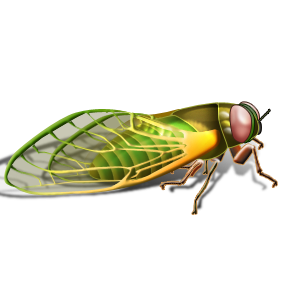
Cicada

Share

A Natural Woman

Carole King, one of the most accomplished pop songwriters of our time, has just published a wonderful new autobiography called A Natural Woman. It’s been a long time since I’ve read a book I enjoyed so much. King is very likable, she’s worked with some amazing people, and – my favorite feature of the book – she goes into some detail about how she creates her songs.

A Natural Woman is remarkable for another reason: The editing is meticulous. Comprise is used correctly every time. (It means “include,” not “composed of.”) All the pronouns are correct.

There was just one irritant that somehow escaped the editor: The constant use of respective, a meaningless word that’s distracting and almost always unnecessary. King refers to respective ideas, respective families…respective this and respective that. NO! Stop it!

Here’s just one annoying example. King went to a party with (I am dying of envy) Paul and Linda McCartney. Paul entertainingly reprised a recent appearance on Late Night with David Letterman, “playing the respective roles of David Letterman and Paul Shaffer.” Huh?

If you think a reader is going to be confused, use “own”:

We brought our respective ideas to the session.  NO

We brought our own ideas to the session.  YES

But it’s still a wonderful book.

A Natural Woman

Share