Bryce Harper

Yesterday I did some griping about the apostrophes in The Washington Post. Today – in fairness – I’m going to compliment the newspaper for its careful handling of quotation marks.

Let’s look at a sentence from a recent article about Bryce Harper, a right fielder for the Washington Nationals who’s a force to be reckoned with in baseball.

Here’s the sentence that impressed me:

“There were certain times when I hit a ball to the track last year, and I think back and I’m like, ‘That should have been like three rows deep,’ ” Harper said.

Wow.

Did you notice that there’s a quotation inside Harper’s quotation? (Think of those Russian nesting dolls – it will help.) Harper quoted himself saying, “That should have been like three rows deep.” So we have a quotation nested inside another quotation.

When you’re quoting someone’s exact words, you use double quotation marks, “like this.” If there’s another quotation inside – what Harper did – you use single quotation marks, ‘like this.’ (The British call them “inverted commas.”)

Here’s Harper’s statement again. Take a look at the quotation marks to see how they’re done. (Did you notice that the comma is placed inside the quotation marks? Thank you, Washington Post!)

“There were certain times when I hit a ball to the track last year, and I think back and I’m like, ‘That should have been like three rows deep,’ ” Harper said.

You can learn more about quotation marks here. (It’s easy! Please, please – if you’re an American writing for other Americans, the commas and periods always go inside the quotation marks. No exceptions. None.)

                  Bryce Harper


Share

Apostrophes, Please!

I have three reasons for loving The Washington Post:

  1.  In 1889 the newspaper commissioned John Philip Sousa to write the “Washington Post March.”
  2. Carolyn Hax writes the advice column.
  3. I can read articles online free, thanks to a complimentary subscription from my local newspaper.

But The Washington Post also drives me crazy. Would someone please, please teach them how to do apostrophes? And while you’re at it, would you teach teachers how to teach them?

Here’s how apostrophes are usually taught: “Before the s if it’s singular, after the s if it’s plural – and don’t forget about special plurals and proper names ending in s, which are before the s.” Which, of course, almost everyone promptly forgets.

Here’s how apostrophes are properly taught: “Spell the word or name. Find the last letter. Put the apostrophe after that last letter. Add an s if you need it.”

Let’s look at two recent examples from The Washington Post.

Yesterday’s edition discusses the belief that the government should be in charge of virtually everything in peoples’ lives.

OK, here we go. What’s the last letter of people? E. Put the apostrophe after the E: people’s. (It’s different if you’re an anthropologist, but let’s not go there today.)  

Now let’s go back a week to an article about Melania Trump: The first lady will focus on womens’ difficulties, President Trump says.

Let’s spell women. It ends with N, right? So here’s how you do it: women’s.

Not difficult, folks!


Share

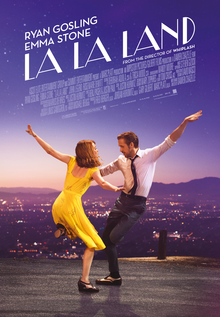
La La Land

Of course I went to see La La Land! (I’m a ballroom dancer, remember.) And of course I loved it.

(I should probably explain that it’s a movie that features singing and dancing in the manner of the great Hollywood musicals of old.)

But I found La La Land confusing – and there’s a lesson here for writers.

The movie opens, in Hollywood fashion, with a huge production number featuring singers, dancers, and cars on a busy California freeway. Soon after that there’s another huge production number with a crowd singing and dancing around a pool.

I settled back and waited for the next thrilling production number. And it never came. The movie morphed into an intimate love story between two people who did, of course, dance (this was still a Hollywood musical). But there were no more hordes of performers filling the huge movie screen.

There’s a writing rule (often broken, admittedly – I’ll get to that in a moment) that says you have to stick to what you promise to do in the beginning of your piece.

If your story starts with lightness and whimsy, you can’t suddenly turn it into a tragedy. If you’re using Standard English, you can’t switch to slang in the middle of your piece. And if you’re doing an old-style Hollywood musical, you have to keep the big production numbers coming. You can’t forget about them after the first 15 minutes of the movie.

Back to writing: in the same vein, your characters have to behave consistently. On page 150 you can’t suddenly reveal a serious character flaw in the saintly nun you introduced to your readers on page 1.

Exceptions are – of course – frequent. Satires play all kinds of guessing games with readers and moviegoers: part of the fun is trying to figure what’s really going on. All of Shakespeare’s tragedies have comic characters. Bright and optimistic musical comedies (Camelot and The King and I, for example) often have poignant endings. Many stories and plays feature surprises.

So why are they allowed to bend – or break – the rule? The answer is that the creators knew exactly what they were doing – and how to do it. What you won’t find in Shakespeare (or the great musicals, or novels, or plays) are characters who suddenly change their speaking habits or personality traits – or a structure that seems to forget what it set out to do.

Consistency matters. It’s a good principle to bear in mind in your writing – whether it’s a poem, memoir, short story, or personal essay. Decide what you’re going to do – and stick to it.


Share

Get It Right!

If you read this blog regularly, you already know how much I enjoyed the movie Hidden Figures. It’s the true story of three African-American women who quietly made a huge contribution to the success of the US space program. The topic is math, but there’s a lesson for writers as well.

If you’ve seen the movie, you remember the tense preparations for John Glenn’s trip into space – the first time an American was scheduled to orbit the Earth. It was all about math. The numbers had to line up perfectly. Could he trust NASA’s calculations?

What Glenn did was to ask for Katherine G. Johnson to check the figures. He had total faith in her math ability. If she said it was ok, he would go up.

She said it was ok, and John Glenn indeed orbited the Earth in Friendship 7 – and made it back to Earth safely.

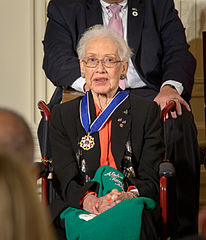
Last year, at long last, Katherine Johnson received the Presidential Medal of Freedom.

But what’s the connection to writing? Here it is: If you’re a serious writer, you want that same reputation for accuracy and correctness. That means fact checking (I use Google a lot), relentless proofreading, and double-checking even the pickiest details about usage.

Let me give you an example from today’s post: Is it Katherine Johnson – or Catherine, Kathryn, or Katharine? Do you think it matters? I do – and yes, I double-checked the spelling of her name.

If you want a reputation as a consummate professional, there’s hard work involved.

It’s a reputation worth striving for. Here’s how I look at it: Before I decide to trust what you’re telling me, I look at the whole package. If you still haven’t figured out how to use apostrophes and quotation marks, I’m going to wonder what else has slipped past you.

Worth thinking about!

                Katherine G. Johnson

Share

They Can’t Take “That” Away from Me

Today my friend Jenna sent me a link to a terrific article about sensible word choices: Click here. The article features a useful list of words that are often unnecessary and tend to add clutter to sentences: just, often, then, that, and others.

I wouldn’t try to eliminate the words that author Julia McCoy is targeting (and I don’t think McCoy would take that route either). The key is to double-check to see if they’re really necessary when they show up in something you’ve written.

I see that I used one of them just a moment ago: that. Please, please don’t take that away from me! It’s a useful word. But McCoy is right: Often that – and the other words she discusses – are unnecessary.

(There you go: I used the word just not once but twice in this post! And I used often…sigh.)

The article is a great tool for encouraging writers to look more closely at their word choices. Highly recommended!


Share

Hidden Figures

Here’s an important question for anyone who wants to be a writer: What strategies do you use to impress your readers?

Far too many writers come up with the wrong answer: “Big words and complicated sentences.” If you use that strategy, many of your readers are going to have a hard time reading what you’ve written. They may even give up after a few minutes.

Here’s the correct answer: Impress readers with your insights, experiences, and knowledge. Break through the cliches and limited thinking we’re exposed to again and again. Surprise your readers – broaden their thinking – take them somewhere they didn’t expect to go. 

I found myself thinking about all of this two weeks ago when I saw the movie Hidden Figures. (It’s terrific. Go!)

Hidden Figures is the true story of three gifted African-American women who made a huge contribution to the success of the American space program – but experienced discrimination because of their race. One of these women – Katherine G. Johnson – was a brilliant mathematician and the only person who could solve a problem that threatened the success of an important space mission.

Her mathematical genius first showed up when she started first grade. Back then, educational opportunities for African-American girls in the Deep South were limited. Katherine had an opportunity to attend a school that taught advanced mathematics. Her parents had to decide whether to keep her in the local school or enroll her in the alternative school.

In other words: Choose a normal childhood for her – or set her on a path that would make her different.

They chose the school – and Katherine went on to save a space mission.

Here’s what’s interesting. Before Hidden Figures started rolling, I saw a preview of another recent movie called Gifted. A seven-year-old girl, Mary, is a mathematical prodigy. Her family has an opportunity to enroll her in a school for the gifted. A fierce battle ensues. Grandma wants custody of Mary so that her granddaughter’s genius can be nurtured. Mary’s guardian, Frank, wants her to have a normal childhood. Mary’s dead mother, he says, “wanted Mary to be a kid. She wanted her to have friends and be happy.”

That’s an example of either-or thinking. You can be gifted, or you can be happy.  (Another name for this fallacy is “false choice.”)

Good writers need to be able to recognize this kind of cliched thinking (you can have friends, or you can be a genius) and break through it. Wouldn’t it be interesting to watch a movie about a little girl who’s a math prodigy – and still has friends and fun?

Come to think of it, one of my all-time favorite movies is Searching for Bobby Fisher,  a true story about a little boy who’s a chess genius. (Yes, he has friends and fun.)

When you watch Hidden Figures, you’re struck by how much the three NASA women are enjoying life, despite their hard work and the indignities they experience because of their skin color. They giggle, dance, and fall in love. Prodigies are still human, folks.

If you’re a person who longs to write, you need to focus your energies on having something interesting to say. Make it a habit to spend time every day thinking, observing, asking questions, and growing.

I wonder how many people in the audience at Hidden Figures caught the irony that afternoon. If Katherine G. Johnson’s parents had bought into the “I want her to have friends and be happy” fallacy, John Glenn might not have gone into space.

What are you writing about? Are your ideas fresh and stimulating? Do you ruthlessly delete ideas that seem tired or familiar? If the answer is “no,” you have work to do!

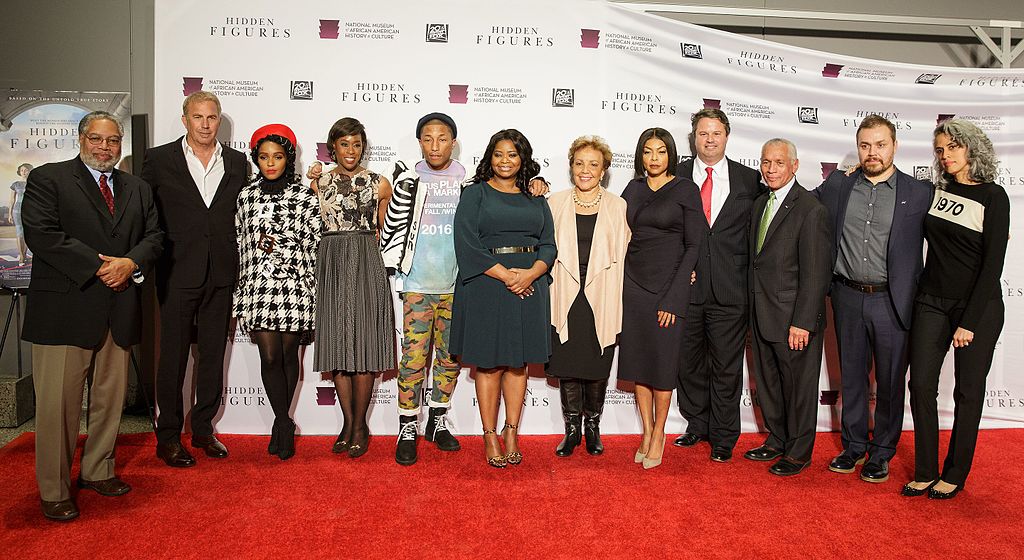
                     The Cast of “Hidden Figures”


Share

“It” Rears Its Ugly Head

Here’s the first sentence from a recent “Budget Travel” newspaper column by Arthur Frommer. See if you notice anything. (Hint: There’s no usage error.)

Following its victory with the U.S. Department of Transportation (where it won the right to use an Irish subsidiary to operate cheap flights between Europe and the United States),

If I had been the editor, I would have asked Frommer to rewrite the sentence. Here’s why: Readers don’t find out what it is until the 30th word in the sentence. That’s confusing. Readers need to know right away what you’re writing about.

Frommer’s grammatical-but-not-very-good sentence illustrates a point I harp about all the time: Many English teachers mistakenly believe that if everybody would just learn how to diagram sentences and identify parts of speech, writing problems would disappear.

Alas, it’s not that simple. Writers need to learn how to change places with their readers to see a sentence or paragraph from the reader’s point of view. That’s not an easy skill to learn.

Here’s Frommer’s complete sentence, followed by a suggested revision:

Following its victory with the U.S. Department of Transportation (where it won the right to use an Irish subsidiary to operate cheap flights between Europe and the United States), Norwegian Air has unleashed a torrent of headline-grabbing announcements.

The travel industry has been seeing a torrent of headline-grabbing announcements from Norwegian Air, which has just won an important victory with the U.S. Department of Transportation: the right to use an Irish subsidiary to operate cheap flights between Europe and the United States.

I hope you’ll indulge me while I make two more points:

  1.  I was able to explain what I didn’t like about Frommer’s sentence without using the grammatical term antecedent. You can talk intelligently about writing without resorting to jargon.
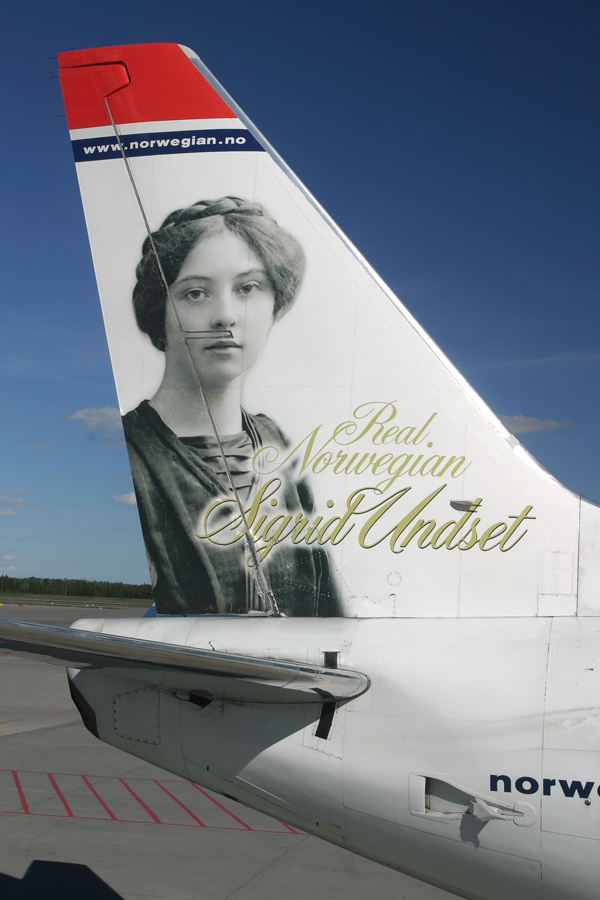
  2. Every Norwegian Air plane features a picture of a famous Norwegian. I’m a very happy person right now!

          One of My Favorite Authors


Share

More about Self-Publishing

I’m a big fan of self-publishing. So today I want to add a few thoughts to my previous post about an article that condemns self-publishing and the people who do it: Self-Publishing: An Insult to the Written Word.

The writer, Laurie Gough, makes two serious errors. First, she believes that commercial publishing is a process that ensures quality, while self-publishing does not.

I can speak from experience here because I’ve published books both ways, and I’m also an avid reader. Most commercial books no longer go through a quality-control process. Editors – the unsung heroes who turn imperfect manuscripts into excellent books – are disappearing. Fast. If you do get to work with a professional editor, it will frequently be for one chapter only. (Want an example? Read my comments about a memoir written by Dylan Thomas’s daughter.) Simon & Schuster still hooks up its writers with superb editors – but it is an exceptional company.

Gough’s second error is believing that you can’t be a writer unless you’re a very special person. In fact Gough is offended by people who self-publish instead of taking the commercial route. That’s insulting.

I’ve read some marvelous self-published books – and it’s very likely that you have too. The best career guide I’ve ever read is What Color Is Your Parachute? It’s a self-published book that keeps selling in updated editions year after year.

Some self-published books are later acquired by commercial publishers. That happens much more often than you might think. (It happened to my own book Police Talk, which was picked up by Pearson in 2001).

I’ll give Gough credit for some good points. Here’s one: “Good writers only become good because they’ve undertaken an apprenticeship.” She’s right – but there are many ways to complete that apprenticeship besides working with a commercial publisher (who probably won’t want to spend its limited resources on a new author like you). A writing group can help you. You can hire your own editor. You can learn your craft by writing for magazines and newspapers. You can read, read, read, and then read some more.

I know many people who’ve been writing since childhood (something I’ve done myself). Doesn’t that constitute an apprenticeship?

Here’s an anecdote from Laurie Gough that shocked me:

Did you ever hear what Margaret Atwood said at a party to a brain surgeon? When the brain surgeon found out what she did for a living, he said, “Oh, you’re a writer! When I retire I’m going to write a book.” Margaret Atwood said, “Great! When I retire I’m going to be a brain surgeon!”

Gough then goes on to denigrate people who “dash off a ‘book’ in a few months.”

Laurie, I’m going to set you straight about a couple of things. First, not all self-published books are “dashed off.” I spent years (that’s not a typo) writing my reflective book Gretel’s Story, and I’ve received some wonderful feedback about it. (Yes, it’s a self-published book.)

And here’s something else I want to say to you, Laurie. You’re a…snob. That’s not very nice, and it pains me to say it, but it’s true.

Many people (perhaps most people) have something in their hearts and souls that is worth committing to paper, even though it may reach only a small audience. I’ve already talked about my never-to-be-fulfilled yearning to read about my Grandmother Knapp’s childhood and early years in the US after she left Finland.

Think of a child’s thrill on Christmas morning when he unwraps a book that contains the poems or stories he has shyly been sharing with you for the last two years. Or the smile on a little girl’s face when she reads a picture book you’ve written with her as the central character.

Do you think those children will carry those memories with them for life? And that perhaps their future children will one day enjoy reading those books?

Perhaps you’re wondering whether a self-published book can ever match the quality of a commercial book. The answer is yes – if you know what to do. You can find some tips in a post I wrote about a biography of Norwegian writer Sigrid Undset. The book was wonderful – and would have been even better if the author had followed a few simple tips.

Enough ranting. Please, please write your book. Self-publishing is inexpensive and accessible to everyone.

You’ll get a huge feeling of accomplishment when you hold your book in your hands for the first time. And oh, the places you’ll go if it catches on with a wider audience! (Yes, some self-published books do.)

(You can find free advice about self-publishing by clicking here.)


Share

Should You Self-Publish?

On May 12, 1937, King George VI and his wife, Queen Elizabeth, were crowned in Westminster Abbey. Their eleven-year-old daughter, Princess Elizabeth, attended the ceremony and later wrote about the experience in a small notebook.

Her account begins when she awoke on “a cold, misty morning” and went down the passage in Buckingham Palace to the bathroom – and ran into her swimming instructor, Miss Dailey, who was one of the guests at the ceremony. After the ceremony, the Princess tied a blue ribbon around the notebook and presented it to her parents as a gift. It went on display years later when the United Kingdom celebrated the anniversary of the coronation.

And that is why you should self-publish. You’re never going to be as famous as the British royal family (and I doubt that you’d want to be). But your life has momentous events as well, and a written account – even an imperfect one – will very likely be treasured by friends and family members in years to come.

What wouldn’t I give for an account of my grandmother’s trip from Finland to Ellis Island? To read about how she fell in love with my grandfather? And what it was like to rear children on limited money in a country that was new to her?

I remember, in my teens, prowling in our attic and finding a notebook that recorded the minutes of a club my mother and her friends had started as children. I was fascinated. That woman I knew so well downstairs washing the dishes – she was once a child. She had friends. They had fun – and it was all so vivid and alive. (Sadly, that notebook has vanished.)

I wish I still had the stories I wrote when I was in sixth grade. They were based on Christmas celebrations around the world, and I’d love to know what kind of writer I was back then.

If you have some basic word-processing skills (or can lean on a friend who does), you can publish an impressive paperback, complete with pictures, for less than five dollars, including postage. (That’s not a typo.) Imagine writing a story for – or about – a family member and presenting it as a birthday or Christmas gift. Imagine…you can probably think of countless possibilities that wouldn’t occur to me.

___________________________

But what if you’re not writing a personal book for family and friends? Is anyone going to pay money for a book you self-published?

The answer is a cautious yes.

In 2011 I self-published Criminal Justice Report Writing. After a slow start, I began seeing reviews on Amazon.com. Gradually the book began to sell. Academies adopted it for their students. (One huge advantage is that my book is much cheaper than the competing books from big publishers. I don’t have the enormous overhead that corporate publishers have to deal with.) There are now 46 reviews on Amazon, and sales are steady and growing all over the world.

Even better, that book has led to a number of well-paying consultant jobs.

A year ago I self-published another book called What Your English Teacher Didn’t Tell You. It too is attracting a following. This time I’m more knowledgeable about how the process works, and I’m thrilled with what I’ve accomplished.

___________________________

I’m telling you all of this because I just read a @#$%! article that derides self-published books. The author, Laurie Gough, has a limited understanding of how commercial publishers operate nowadays, and her ideas about writing are just as limited. I’ll have more to say in my next post.

For the record, I’ve published six books with commercial publishers. I evaluate book submissions for a university press, and I’m a member of the editorial board for a scholarly journal. I know what I’m talking about.

(If you’re thinking about self-publishing, I have some free advice for you! Click here.)

Share

Writing about Major Barbara

I am – heaven help me – writing an academic paper about Shaw’s Major Barbara. My original plan was to put a PowerPoint together (much easier – fun, actually). But the paper (as often happens) had other ideas.

Wednesday morning  I woke up at 3 AM and spent an hour trying to link a series of ideas together. That’s when I knew that it was time to put everything else in my life on hold and get this thing done. (Well, I did take a dance lesson yesterday, and Charlie and I are cleaning up some hedges at the condo where we live. But everything else in my life is just sitting here.)

My brain is too scrambled to write a coherent post today. Instead I’m going to jot down some thoughts about this project.

  • I wish I’d kept a journal while I was writing my paper about Pygmalion last year. When I think about the ideas for this year’s paper, I keep imagining a big, sticky ball of dough. Everything is connected to everything else. How am I going to link the ideas into a logical sequence? Was the process this messy last time? Have I lost my touch? Is this normal? Am I normal?
  • There’s always a moment when I know that a project is going to work. (I wish those moments would come sooner in the writing process – sigh.)
  • I always listen to music when I write. (Abba was my constant companion when I was writing my book about Pygmalion.) I’ve been listening to the traditional Christmas station on Pandora.
  • Despite what the experts tell you, the most important requirement for a successful writing task isn’t a thesis. What you absolutely have to have is an exciting idea. If you have something to work with, you can always come up with a thesis. But if you’re bored by your topic, there’s no point in even trying to write about it.
  • It takes a certain amount of faith and courage to push a project along and believe that everything is going to fit together in the end.
  • Part of the excitement is watching the connections fire off. No – let me revise that. The real reason I write is that it’s so much fun to watch the fireworks.


Share