Confusing Words

Here comes another round of words that that can trip you up.

  • Discomfit originally meant “defeat,” but nowadays it often means “to make someone feel uncomfortable or embarrassed.” You can see why: discomfit looks very much like discomfort. But some authorities still insist that “defeat” is the only correct meaning. Rather than get mixed up in this argument, I would avoid discomfit altogether.
  • I have a friend who often uses equanimity to mean “equality.” But the correct meaning is “calmness”: “She held on to her equanimity throughout Jim’s tirade.”
  • Fulsome sounds like it should mean “extravagant,” but the dictionary meaning is “insincere.”
  • Disinterested does not mean uninterested – but many people use them interchangeably. When that happens, we lose a useful word from our language. Interest can mean “invested in” or “involved in”: “Joe owns an interest in a new start-up.” So disinterested means “not involved” or “impartial.” If you took someone to court, you’d want a disinterested person to hear your case.
  • Luxuriant means lush, thick, or profuse. A head of hair can be luxuriant. If you’re staying in a first-class hotel, you’re in luxurious surroundings – a different word.
  • Noisome sounds like a word you’d use to describe a rowdy party. But the actual meaning is “having a bad smell,” and it can also mean “unpleasant.”

noisome means "bad smell"


Share

How to Win Readers & Influence People

Today I’m going to offer you some unconventional advice. If you want to be a better writer, you should read Dale Carnegie’s classic book How to Win Friends & Influence People.

It’s one of only two self-help books I know of that have such wide application that you can read them again and again  – and still learn something new. (The other book is Stephen Covey’s Seven Habits of Highly Effective People.)

I discovered Carnegie’s book decades ago and have reread it many times. It was a godsend for me (an introvert who has had to work hard on developing social skills). More important, Carnegie’s skills and principles apply to a multitude of life situations, including writing (which I’ll get to in a moment).

First I want to tell you a non-writing story. Years ago, a neighbor was doing some yard work that undermined the fence between his property and ours. Charlie and I politely pointed out the problem. Our neighbor grumpily told us the fence was no concern of his. Charlie and I dejectedly went back into our house.

But then I remembered a story from Dale Carnegie’s book. A businessman ordered lumber for an important project. But because he didn’t understand how lumber is graded and priced, he botched the order – and then got angry at the salesman (who had tried in vain to switch him to a better grade of lumber).

The salesman’s solution was to politely invite the customer to watch while a shipment of lumber was unloaded. As they stood there, the salesman started making a few quiet observations about the pieces of lumber that were coming off the truck. This went on for more than an hour. And then – miraculously – the customer apologized and changed his order.

Back to our fence: I went to the neighbor’s house and  asked if we could walk around his back yard together. He agreed, and off we went. I made small talk and never brought up the problem with the fence. After our walk, I thanked him and went home.

About fifteen minutes later, I looked out our kitchen window – and there was our neighbor, hard at work reinforcing the weakened fence. Problem solved. (Charlie was impressed!) Thank you, Dale Carnegie.

 *  *  *  *  *  *

Back to writing. Lately I’ve been busy with several editing jobs…and I’ve found they share the same problem: a lack of consideration for the reader. The authors go on and on about what they think and what they consider important. Their readers are forgotten.

For example, a friend was writing a book about keeping tropical fish. (He gave me permission to share this story.) His chapter about buying a fish tank began with a long and lively discourse about how aquariums were made when he was a boy – and then went on to discuss what’s different today.

Only then did he get around to answering the question foremost in his reader’s mind: What should I be thinking about when I go to a store to buy a fish tank? That information should have been presented at the beginning of the chapter, not the end.

But putting yourself into your reader’s shoes doesn’t come naturally to most of us. Instead we want to start with our own experiences, memories, and thoughts. The result is an article or book that dawdles and wanders before it finally starts addressing the reader’s concerns.

Of course it’s human nature to do this…especially since many school assignments don’t require a thoughtful analysis of the person who’s going to read your piece. 

What’s great about Dale Carnegie is that he constantly encourages you to adopt the other person’s viewpoint – and that’s one of the most important principles in writing.

Please: Download his book (or borrow it from your library) – and start applying his ideas to your writing! (And they just might come in handy in other situations as well – another reason to read his book.)

Here’s one tip to get you started: If you’re writing an informative piece, use the word you frequently. Ironically, this is a practice that many schools discourage. Here’s a reminder to keep repeating: Toto, we’re not in school anymore!
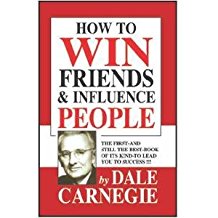
Front cover How to Win Friends and Influence People

Share

Jean Cleans out a Folder

I have a folder where I jot down ideas, tips, likes, and dislikes related to writing. The folder is starting to fill up! So here’s a random sampling:

  • The word sank is disappearing. I hear many people using sunk as the past tense of sink: “In the last minute of the game, Greg sunk the ball.” (Dictionaries accept sunk as the past tense, but sank is preferred.)
  • My friend Margaret Swanson commented that many people use “would have” where “had” would be preferable: “I wish he would have told me the tickets were so expensive before I agreed to go.” (I’m wondering if that usage sometimes finds its way into my own speech! It’s common in New York. Margaret is right: it’s not a good choice for professionals.)
  • Margaret asked me what I thought of using any more to mean nowadays or lately, as in “Everyone is doing that any more.” Good question! I suspect that it’s a regionalism. A high school friend who grew up in Pennsylvania often used it. I’m wondering if it appears in other regions as well.
  • In a recent post I mentioned that I always check Fowler’s Modern English Usage for answers to my usage questions.
  • Speaking of Fowler – last month I used his Modern English Usage to settle an argument about “the number” (which takes a singular verb) and “a number” (which takes a plural verb). Guess what – variety works the same way! I came across this sentence in a New Yorker article called The Secrets of Sleep“Once we’ve finally nodded off, a variety of things occur.” I looked it up, and the New Yorker is right (as usual): “a variety” takes a plural verb; “the variety” takes a singular verb.
  • Lists can be confusing. In the following sentence, someone might think you’re talking about spinach dressing, broccoli dressing, and cornbread dressing: Side dishes include spinach, broccoli, and cornbread dressing. To avoid confusion, I’d put “cornbread dressing” first, like this: Side dishes include cornbread dressing, spinach, and broccoli.


Share

“The Ink Stains That Have Dried upon Some Line”

This is the last of three posts about deconstruction. (Click here to go back to the first post.) We’ve been looking at a picture (below) of my parents at a Roman Catholic dinner honoring couples who had been married for 50 years.

In my last post I’d asked you to listen to John Hartford sing “Gentle on My Mind” and look for a reference to writing. (I hope you listened to it and melted the way I always do! Incidentally, I once heard Hartford – who composed the song and wrote the lyrics – perform it in person.)

OK, back to work. Here are the lines from the song that I’m going to talk about today:

And it’s knowin’ I’m not shackled
By forgotten words and bonds
And the ink stains that have dried upon some line

Written vows – according to Hartford’s song – are dry and lifeless. They hark back to a feeling in the past that was once alive and vibrant but may have faded with the passage of time. Hartford’s song is about the difference between marriage vows – “forgotten words and bonds” – and real  love, which has no need for promises and obligations.

What Hartford has tapped into here is a bias against writing that goes back to Plato and has found its way into every aspect of our Western culture. According to Jacques Derrida, we tend to dismiss writing as a stale and lifeless imitation of what’s real and alive: the warm breath of natural speech.

One of Derrida’s goals as a philosopher was to challenge Plato’s value system. Sometimes what’s unnatural and artificial is more expressive of who we really are than what’s natural, inborn, and spontaneous.

I’m thinking of myself after 25 years of ballroom lessons. I can feel and respond to a piece of music in ways that the untrained, “natural” Jean couldn’t have attempted. So who’s the real me? A postmodernist might say that all my “unnatural” training has uncovered parts of me that otherwise would have stayed hidden.

And what about those “ink stains that have dried upon some line”? I’m as much of a romantic as anyone else, and I love the idea of being swept away in a passionate swoon.

But I also have enough life experience to know that keeping a promise – even when it was made long ago, and things aren’t going well, and you really don’t feel like it today – has deep and lasting value. (But don’t think for a minute that my common-sense attitude towards life and love keeps me from appreciating Hartford’s song!)

If you’d like to learn more about these natural vs artificial and writing vs speech issues, I’ve published an article arguing that Bernard Shaw anticipated Derrida’s critique of Platonism in – of all things – Pygmalion (AKA My Fair Lady). You can read my article here. (If you’re thinking that Shaw was on the side of Derrida and the postmoderns – that’s what I think too. It doesn’t seem to have mattered that Derrida wasn’t even born when Shaw wrote Pygmalion!)

 *  *  *  *  *

If you’ve stayed with me this far, you might be thinking that I’ve loaded an awful lot of really heavy stuff into this simple picture of my parents. That’s right – and that’s my point.

In the end, writing is all about thinking. Because we want more, more, more out of life, we seek out writers who can add depth and breadth to our everyday experiences.

In the first of these three posts about the anniversary dinner, I talked about my mother in a personal way. Was there anything else to say about this picture?

My answer to that question is yes. I think we can “deconstruct” the picture – take apart its apparently simple and straightforward message to find unintended meanings underneath. Here’s my list:

  • Because the Catholic Church is so large, it sometimes loses touch with the individuality and diversity of its members
  • The Catholic bias against sex can complicate its support for marriage
  • No matter how hard an institution tries to send a simple, unified message, other truths will find a way to be heard

Do you have a picture you can “deconstruct”? Are there any accidental details that challenge the intended message? Or is there a “before” or “after” story that adds complexity to the picture?

My Mother and Father with the Bishop

  My Parents and the Bishop

Share

Deconstructing a Picture of My Parents

In my last post I asked you to “deconstruct” a picture of my parents (below). The event was a dinner hosted by the Roman Catholic Church to honor couples who had been married for 50 years.

Following in the footsteps of French philosopher Jacques Derrida, I suggested that you look for accidental details that might put the picture into a broader context. I also encouraged you to think about what was going on before and after the picture was taken.

Here’s my list:

  • Before the picture was taken, my parents stood in line with other couples as they waited to be photographed.
  • My parents are wearing name tags.
  • Because the Roman Catholic church requires its clergy to be celibate, the bishop has never been married.
  • My parents and the bishop are holding a scroll of paper that records the wedding vows they renewed at the dinner.

* * * * *

Now I’m going to ask a very Derridean question: did that moment with my parents and the bishop actually happen? Critics of postmodernism (I’m thinking of Steven Pinker) love to make fun of Derrida and his followers for their denial of obvious realities.

So let me reassure you: The photo is real. (I’m not a nut, even though I’m a postmodern thinker!) Of course that dinner happened, and that moment with the bishop, and the picture.

But there’s also a sense in which the photo is not real. All photos are edited. The photographer makes decisions about what to include, what to exclude, and what to emphasize. So that photo is both real and a misrepresentation of that moment.

For example – think about how different the picture would look if the photographer had stepped back a few paces before he clicked the camera. We would see right away that there was no intimate connection between the bishop and my parents: they were one of many couples at that dinner.

The name tags my parents are wearing drive home the point. Who wears name tags to a get-together with a special friend?

But the dinner really did honor the sacrament of marriage, right? Umm…sort of. The Catholic Church considers celibacy a higher state than matrimony. So smack in the middle of the picture, where you can’t miss him, is a man who’s considered holier than my parents because he never married.

So…I would say that the picture did and didn’t happen. The bishop was delighted to meet a couple who were celebrating their 50th anniversary – but not enough to spend time with them or even learn their names. There were just too many people at that dinner! The immense size of Catholicism inevitably gives rise to impersonal policies and practices that may not work for some of its members.

And then there’s that ambivalence about marriage, which the Church honors on the one hand but also considers an obstacle to a fully lived spiritual life. It’s good to marry but even better to avoid sex altogether.

*  *  *  *  *  *

There’s something else noteworthy in that picture (and this is very Derridean) – that scroll of paper. I’m going to ask you to listen to a familiar (and wonderful) song: “Gentle on My Mind.” Look for what the song says about writing. (It’s there!)

There will be more about all of this in my next (and final) post about this picture. (Meanwhile, please listen to “Gentle on My Mind” even if you’re not interested in deconstruction. It’s great poetry and one of the best songs ever. Your day will be better!)

One more thing: you may be wondering why anyone would even bother with these ideas. I can give you two reasons. First, postmodern thinking is all around us – and has been for a long time. (Bernard Shaw was thinking about these ideas in 1914, when he wrote Pygmalion.) Second, this kind of “deconstruction” – digging beneath surface appearances for deeper meanings – is an excellent critical thinking tool.

My Mother and Father with the Bishop

                     My Parents with the Bishop


Share

A Picture of My Parents

Today I’m going to challenge you to “deconstruct” a picture of my parents (below). The event was a dinner hosted by the Catholic diocese on Long Island (where my parents lived) to honor couples who had been married for 50 years.

That dinner – part of the Church’s ongoing struggle against the secular trends of casual sex and easy divorce – had an additional, unexpected effect. My mother was a lifelong Lutheran; my father was Roman Catholic. When they married, Catholicism took a dim view of what were then called “mixed marriages.” My parents weren’t even allowed to have a church ceremony – they were married in the priests’ residence. My mother always felt hurt and demeaned by the Church’s attitude towards her.

The anniversary dinner astounded her. She felt honored by the photograph with the bishop (below) – but what really astounded her was having the priests in the diocese serve the dinners and fill the coffee cups For the first time in 50 years, my mother felt recognized and respected by the Church. It was the healing experience she’d been waiting for.

 *  *  *  *  *  *

Now let’s start our deconstruction project. I’ve already given you an up-close-and-personal look at that anniversary dinner. Now I want you to figure out what this picture says about the Roman Catholic Church (and possibly about similar institutions). To do this, I invite you to think about these two questions:

  • What details in the picture (below) reveal the challenges that Roman Catholicism is facing?
  • What contradictions do you see? (I hope you’re already latching on to something important about deconstruction: it’s a form of critical thinking, and not just the word game that some critics take it to be.)

Here’s a hint to get you started. Imagine that you’re watching the photographer snap the picture of my parents. What happened before the click of the camera – and after?

Go ahead and make your list. You can compare it to mine in my next post, two days from now.

My Mother and Father with the Bishop

                                                                My Parents with the Bishop

Share

When an English Usage Rule Doesn’t Work

Here’s a problematic sentence that my friend Gustavo A. Rodríguez sent me:

This year performances have been intermittent because of the weather.

It’s an interesting sentence because it obeys the rules of English usage – but it doesn’t work! Our brains want to change “this year” to “this year’s.”

Gustavo’s solution (which was right on!) was to put a comma after “this year”:

This year, performances have been intermittent because of the weather.

Gustavo’s sentence triggered some thoughts of my own:

1. Many English teachers wrongly believe that writing problems could be eliminated if everybody would just buckle down and learn the rules of English usage. The reality is that many perfectly grammatical sentences just don’t work.

2.  My own rule of thumb for introductory phrases (like “this year”) is to count the syllables. Five or more syllables: use a comma. Fewer than five: no comma. But in this sentence I’d insert the comma even though “this year” is only two syllables. The sentence is easier to read that way.

3.  Our brains know more about language than we think they do. Our brains form expectations while we’re reading or listening.  It’s like there’s a hidden language-processing machine inside our heads.

4.  In my writing classes, I used to type sentences from student essays (with no names, of course) onto a handout and put students into groups to evaluate them – and revise them when necessary. When we came together as a large group to talk about the sentences, I tried to stay out of the discussion as much as possible. Learning by talking – and grappling with real-world writing – are great ways to improve writing skills.

5.  Often there are several solutions to a problem. Many editors counsel writers to consider replacing forms of the verb to be (is, are, was, were, will be, have been, etc.) with active verbs. I think that’s good advice (though you shouldn’t follow it slavishly!). So here’s another way to revise today’s sentence:

This year the festival canceled many performances because of bad weather.

6.  And I have another suggestion. Some writers have an almost superstitious fear of passive-voice constructions, but I think passive voice would work well in today’s sentence.

This year many performances were canceled because of bad weather.

Share

Editing Software

How strong are your writing skills? Are you a good speller? Do you feel confident about spotting and correcting usage errors? Do you have a knack for finding and fixing awkward sentences and tangled syntax?

If the answer to any of those questions is “no,” you might want to think about signing up for editing software. Some services are free, while others charge a subscription fee.

My friend Chuck Warren sent me an article that lists 11 editing tools and describes how they work: Instantly Improve Your Writing with These 11 Editing Tools.” I recommend reading the article and thinking about using one of these editing tools to look for errors in your written work.

Computer software tools can’t think like humans, of course! For example, most editing tools can’t spot a word that’s spelled correctly but used incorrectly (your/you’re, its/it’s). And sometimes they’re not as smart as we are! The grammar checker on my computer sometimes nags me to fix a sentence that I know is perfectly ok.

Still – spellcheckers, grammar checkers, and other editing tools are a great boon to writers. (The tools on my home computer have saved me from many embarrassing errors!)

editing


Share

Learn More about Publishing

For years I’ve been encouraging authors to explore the free resources at www.Smashwords.com. I learned how to format an ebook, and I’ve picked up many useful tips about marketing. Most important, I sell books there. (I’m not a paid endorser, by the way.)

Smashwords is offering a new service (free, of course) that’s a real boon to writers: podcasts you can listen to just about anywhere. There are also transcripts for people like me who prefer reading over listening.

Mark Coker (the host) is a pro, and the podcasts include research that will help you succeed as a published writer. (I was surprised when I read his research about pricing a book, for example.)

Go to https://www.smashwords.com/podcast, or click on the image below.

Share

Happy Halloween!

Or should it be Happy Hallowe’en?

Here comes a confession: I spell it both ways. (Spooky!) Of course I know that professional writers are supposed to be consistent. I don’t care.

I also know that my hero Bernard Shaw hated apostrophes and dropped them whenever he could get away with it. I can confidently state that he would never have written our October 31 holiday as Hallowe’en. I still don’t care.

Clearly an explanation is in order. (Trick or treat!) I use the apostrophe in my personal writing – this blog, for example. Letters. Emails. But I omit the apostrophe whenever I’m writing for publication. For example, my husband writes a Hallowe’en column for the newspaper every October. I’m the one who types that column – sans the apostrophe.

So what’s the difference? Publishers have style sheets that dictate writing practices. As a professional writer, I respect those rules.

In fact I think dropping the apostrophe in Hallowe’en is generally a good idea. Let’s make spelling as easy as possible!

But I also love the way that English tries to hold onto its history as long as possible. Our language is full of silent letters and other quirks that remind us of a word’s origin or point to a long-forgotten pronunciation.

Knight used to be pronounced in all of its consonant glory (plus there used to be an “e” at the end – and that was pronounced too). Debt has a silent “b” that was added during a time in British history when people believed that Latin was the perfect language. “Debt” in Latin had a “b” (debitum), so it was added to the English spelling as a silent letter.

And then there’s Hallowe’en, one of my favorite holidays. (I always wore a costume when I was teaching, even when I worked in the prison system.)

For many years the Christian church observed November 1 as the feast of All Hallows. (Today it’s called “All Saints Day.”) You’ll recognize hallow as the word for “holy” in the Lord’s Prayer: “Hallowed be thy name.” So “All Hallows” was a day to honor all the holy people who had gone to their eternal reward.

But wait – there’s more! The Christian church often observes the day before a holy day in some special way. It’s called the “eve,” or “evening,” or “even” (giving us New Year’s Eve and Christmas Eve).

The Eve of All Hallows – Hallow even, or Hallowe’en – was a night when all the spirits of the dead were thought to walk the earth – evil ones as well as the good. If you were a teenager who loved mischief, Hallowe’en was an opportunity to knock over your neighbor’s outhouse or throw paint at someone’s front door. Nobody was going to blame you for what happened: it was the evil spirits!

Have a wicked Hallowe’en. (Or Halloween.)

Halloween pumpkin

Share