Jean Cleans out a Folder

My folder of odds and ends about writing has started to fill up! Here’s a sampling.

1.  I copied three clumsy sentences from Quora (a question-and-answer website):

–  How can we remediate misinformation?

Remediate (“fix” or “correct”) is jargon. But that’s not the only problem.

This is a meaningless question. You and I are powerless over most misinformation. It’s true that sometimes we can write letters to the newspaper, email the author, or call the radio or TV station. But often there’s nothing we can do. How can anyone possibly write a useful answer to this question?

–  Who has the provision of academic freedom?

“The provision of” doesn’t add anything useful. Here’s better wording: “Who has academic freedom?” Answer: most college and university professors.

–  What subjects do I need to study to become a doctor in high school?

“Doctor in high school” is clearly a dangling modifier. Here’s better wording: What subjects do I need to study in high school to become a doctor?

2.  Here’s a sentence from a recent Carolyn Hax advice column:

“I have a friend whose daughter is struggling with depression and has been hospitalized twice in as many months.”

I would change it to “twice in two months.” You may have been told (wrongly) that it’s wrong to repeat a word or use two similar words (twice/two). That’s nonsense! Professional writers repeat words all the time. What you should avoid is repeating conspicuous words: stupendous, horrific, eternal, romantic.

Everyday words are almost invisible. Don’t worry about using them again and again. If you’re writing a piece about a train ride, guess which word you’re going to use again and again? Train! But don’t say – more than once – that the ride was amazing, adventurous, or delightful.

3.  Emma Donoghue’s Room is one of the best novels I’ve ever read. Here’s a paragraph that offers some good advice about planning a writing task:

“It’s more like planning a military campaign or something. It’s quite exciting, because what you’re trying to do is to keep up the reader’s energy at every point. You’re looking for those spots where things would sag or get lost or come off the rails. You’re trying to keep up the momentum.”

a manila folder with a paper clip

Share

Precut, Precooked, and Pre-existing

Today I’m posting some thoughts that my friend Kelly Pomeroy wrote in response to a post I did last week. I was griping about the terms precut, precooked, and pre-existing – I think the “pre” is unnecessary. You can read Kelly’s response below – and you should.

There are two things I like about her response. Kelly brought up points I hadn’t thought of – about psychology, for example. More important, she shows you how pros think and talk about language.

In school, there’s often so much to cover that teachers have to settle for a cut-and-dried, right-or-wrong approach. Pros know that there may be many layers of meaning and many angles to consider.

Here’s Kelly’s response:

Well, marketing deals with psychology rather than logic. The term “cut meat” is as chopped as the meat. It’s terse. It’s unfriendly. It’s followed by another monosyllabic word. It doesn’t flow. It highlights the violence of the word “cut.”

The term “precut” meat is softer, friendlier, more euphonious. It emphasizes the fact that much of the work – the bloodiest part of the work – is already done before you even buy the product. It also implies that the cutting was intentional, not the result of an accident. It was done out of concern for the buyer.

“Cooked” to describe a meal isn’t as stark as “cut,” because has two syllables. And cooking has positive associations that cutting doesn’t. So the “pre” may be less important in this case than with the “cut” example; but the pattern has been set. And the emphasis provided by “pre” gets extra mileage because of all the effort it takes to prepare a whole meal.

I think my argument is strongest in the medical example. If you’re being treated for cancer, it’s an existing condition (unless you’re being treated by a snake oil salesman). But it seems likely that the staff’s very consequential concern, under Trumpcare, was whether it existed when you signed up for the insurance.

Share

Is “Pre” Necessary?

Now that there’s been a shift in power in Congress, we can expect a lot of debate about the Affordable Care Act (popularly known as “Obamacare”). It’s going to be a difficult time for me because there’s going to be a lot of talk about pre-existing conditions.

Gack. Can anyone tell me the difference between an “existing” condition and a “pre-existing condition”?

Recently I came across a newspaper article about “premade” lunches that parents can purchase for their children to take to school. What, pray tell, is the difference between a “made” lunch and a “premade” lunch?

What about “prearrange,” “preplan,” and “preregister”?

Sometimes “pre” is useful (“prepay” and “preorder” emphasize that you’re shelling out your money ahead of time). And not all repetition is bad. Because the human brain is easily distracted, it’s sometimes helpful to say things more than once: “I will not – repeat not – vote for this bill.”

But do we really need words like “precooked,” “prepackaged,” and “precut”?

question marks on each side of a cube

Share

I.A. Richards and 100 Important Words

I.A. Richards is a familiar name from my college years. He was an important critic in the heyday of the New Criticism (which has long since stopped being “new” but is still a useful approach to literature).

My friend Jane McGinnis sent me an intriguing article that included Richards’ 100 Words Most Important in English. You can read the article here: https://www.thoughtco.com/important-words-in-english-1692687

Although Richards predated postmodernism, his list includes four words important to postmodern thought: copy, name, natural,  and use.

One omission from the list surprised me: imagination. Every moment of our lives is an imagining. There are no neutral events – there’s a sense in which we are always dreaming. Richards seems not to have read Carl Jung or James Hillman – but that’s not a complaint. Nobody can read everything!

What I’m hoping you’ll do is come up with your own list. (It doesn’t have to be 100 words!) Can you see something in a word that others can’t?

I’m thinking of Hillman, of course (imagine, soul, destiny, childhood) – and Derrida (write, copy, natural). Heck – I could include John Lennon with imagine. And I will.

And then there’s Paul Tillich. How many minds did he open when he wrote so powerfully about the words salvation, sin, and grace?

What words have special meanings to you?

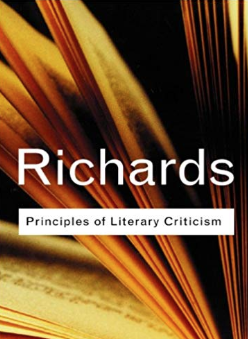
The front cover of Principles of Literary Criticism by I A Richards

Share

Writing about a Picture II

In my last post, I talked about a picture as a stimulus for writing. My friend Janis Koike sent me this wonderful piece about a special picture – several pictures, actually. This is a fine example of what you can do with a picture. (Have you tried it yourself yet?)

Mollie

Mollie was spoken of rarely, and with reverence. As children, we were in awe of her framed black-and-white portrait which stood on a coffee table in our first Kansas City home. Mollie was elegant and beautiful in a white wedding suit, her hand carefully placed in her lap to show off her sparkling diamond. Mollie was my maternal grandmother.

I never met Mollie. I never referred to her as Grandma; she was much too young and beautiful for that. And she was dead. She died when my mother was just nine. The tragedy was multiple: Mollie was pregnant.

A collision with the coffee table or a wanton ball sent the photograph flying one time too many, and my mother retired Mollie’s picture to a closet without comment or anger or visible disappointment. 

Gramps and his wife Mollie were both born and raised in Chicago. They married in 1920. Gramps was a violinist and traveled with the big bands in the 20’s, 30’s, and early 40’s. When WWII ended and the big band era came to a close, he returned to Chicago and got a job selling neon signs to downtown businesses.

And he also remarried. Aunt Frieda, a long-time family friend, happily assumed the role of grandmother. Their visits to my home in Kansas City were the highlight of every summer. One week of non-stop fun. Following her divorce from the infamous “Mr. Feldman,” Frieda had taken a job as a buyer of women’s clothing at Marshall Fields. She changed her name to Frieda Fields, a name which danced to her personality. Her stories of work and friends kept me and my sisters in stitches for years.

But Mollie was always there in the background – quiet, sedate, perfect, and dead. I couldn’t fathom losing my mother as a child . . . or ever.

It was only after my own mother died, not so many years ago, that I went through some old albums and found pictures of Mollie, a young, healthy woman in lovely dresses, high heeled shoes, and stylish hats. My own mother stood beside her, a happy seven or eight year old with a round, smiling face and long brown hair. On the back of each photo were notes in Mollie’s handwriting. My favorite: “My girl. Ain’t she the cutest!”

And that is when I saw (and heard) Mollie, for the first time, as a real person.

empty picture frame

Share

Avoid Confusing Your Readers

Here’s a problem my husband spotted in a gardening column he was writing for our newspaper. Florida is a great place for gardeners because you can have flowers all year-round. Charlie recommended three winter annuals: Shasta daisy, snapdragon, and petunia.

Then he realized a novice gardener might think he meant Shasta daisy, Shasta snapdragon, and Shasta petunia. So he rewrote the sentence with Shasta daisy at the back: snapdragon, petunia, and Shasta daisy. Problem solved.

(If you’re a knowledgeable gardener, you might not see the problem. So let me give you a similar sentence: Chocolate milk, ice cream, and candy. This sentence could be read two ways: chocolate milk, chocolate ice cream, and chocolate candy – OR only the milk has chocolate flavoring.)

Charlie’s thinking process makes an important point. Many people overestimate the importance of formal grammar. They assume that if you know the parts of speech and can diagram sentences, you’ll be a good writer.

But formal grammar wouldn’t have helped my husband with that sentence. He needed to read the sentence while pretending to be a reader who knows nothing about gardening.

It’s not easy to set aside everything you know and read a sentence from another point of view. That kind of thinking requires an almost Zen-like emptiness of mind.

Schools don’t generally teach student writers to think that way, but they should. It’s a good habit to develop, and now – at the beginning of a new year – might be a good time to resolve to do it!

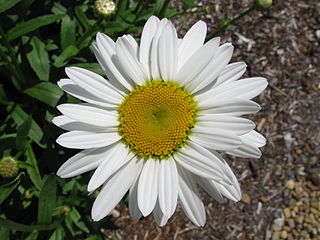
a Shasta daisy

Share

Writing about a Picture

When I was teaching college English, a favorite writing assignment was writing about a picture. Students could use any picture they wanted – even one they wished for but didn’t have.

Most of the papers were astonishingly good. It’s something I wish I’d learned much earlier: A lot of what we label “poor writing” isn’t caused by weak skills. The real problem is a dull topic.

*  *  *  *  *

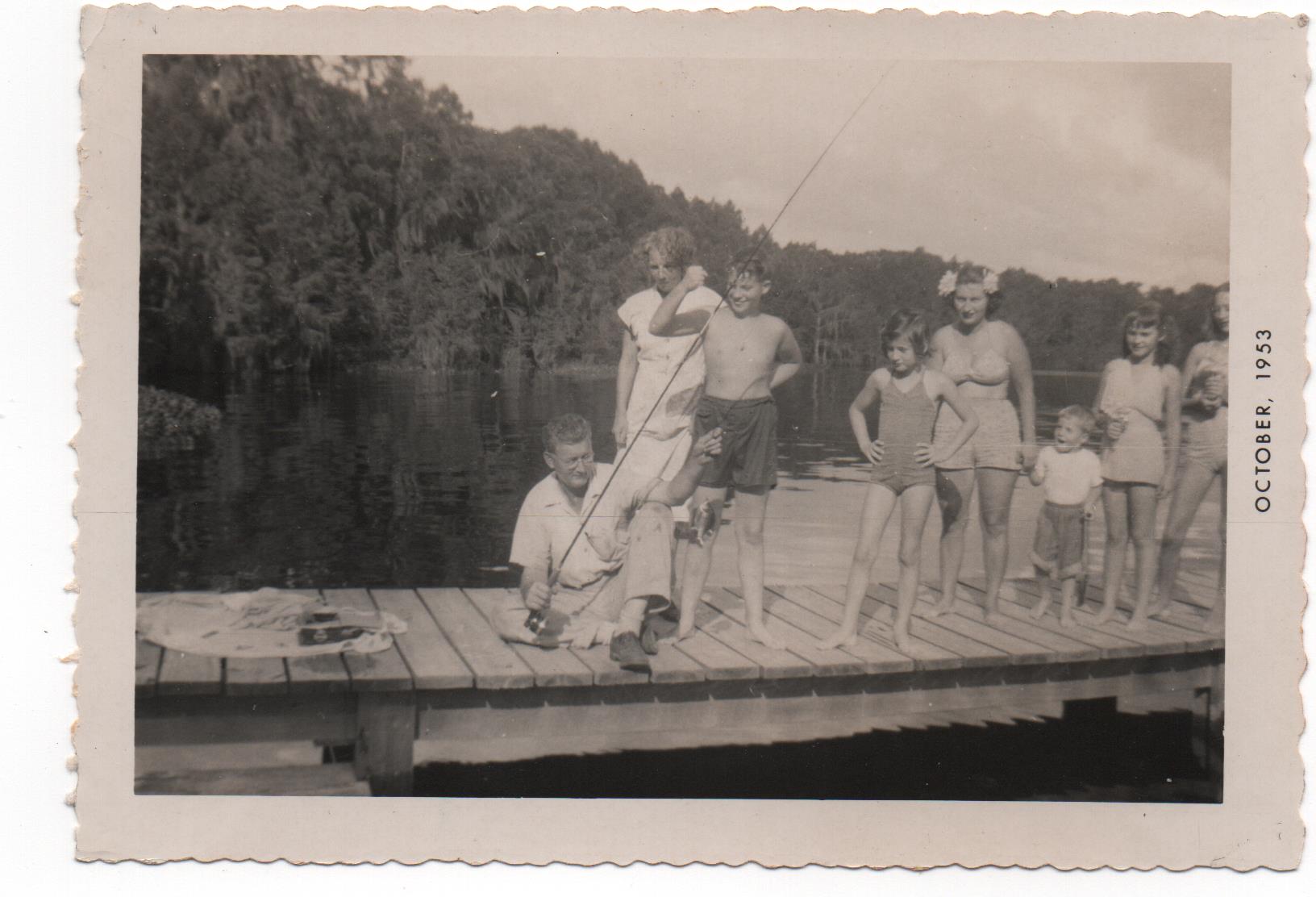
One of my end-of-the-year projects has been scanning and organizing old photos. Here’s one of my favorites – a picture of my husband when he was four years old:

Cousins lined up on a dock for a snapshot

I didn’t know Charlie (my husband) until we met in our twenties. But I know the rapturous little boy in the picture very well. Everyone else is seeing an ordinary little fish on a line – not even worth keeping. But to four-year-old Charlie, it’s a magical moment.

He still loves fish – any type of aquatic life, in fact. It doesn’t have to be exotic or impressive. On a trip to the Everglades years ago, we had to stop at every puddle so that he could check it for crayfish.

If you have a free evening, consider spending it with some old photo albums. Can you find a picture that makes you say, “Yes – that’s mom” (or dad, or Uncle Stan, or your best friend)? Do you have a picture that reveals something essential and important about you?

Let’s take it a step further. Can you think of an anecdote that perfectly sums up someone you know – or can tell us who you are?

I remember a date with Charlie shortly after we started going together. We were walking home from a restaurant in New York. A man in shabby clothing staggered past us, obviously drunk. Charlie left me standing there, put his arm on the man’s shoulder, and gently guided him across the street until the man pointed to a doorway and went inside.

That’s Charlie, and that heart of his is one reason I married him.

Do you collect stories? Is your writing crammed with them? They add interest to everything you write. More important, they bring your writing to life.

It’s not January 1 yet, but here’s a New Year’s resolution for you: Promise yourself that you will become a collector and a connoisseur of stories. You’ll be amazed at the difference they make in your writing – and your readers will be just as impressed.

Share

God Rest You Merry, Gentlemen

Christmas is less than a week away! Today we’re going to look at some language issues hidden within a traditional Christmas carol:

The first two lines of the traditional Christmas carol "God Rest You Merry, Gentlemen"

This is one of our oldest carols, dating back to at least the 16th century. Take a close look at the first line. That comma looks wrong, doesn’t it? It seems like it should be “God Rest You, Merry Gentlemen.” In fact that’s how it’s punctuated in A Christmas Carol, the classic novel by Charles Dickens.

But the research indicates that this is the correct punctuation. Back then, rest could mean “keep.” So the first line is saying, “God keep you merry, gentlemen.”

In the second line, we seem to be seeing a mistake in word order. It should be “Let Nothing Dismay You.” There are two possible explanations for the wording. The anonymous person who wrote this Christmas carol might have been having a poetic moment. Or perhaps this type of word order was a common usage in the 16th century, when this carol was first composed.

Of course I don’t know which explanation is correct. But I can point out that this kind of transposition – “Let nothing you dismay” – was common in Elizabethan times. In Act IV, Scene 5 of Hamlet, Ophelia says, “Say you? Nay, pray you mark.” (If that seems nonsensical to you, it’s deliberate – Ophelia has gone mad from grief when she says this.)

 *  *  *  *  *  *  * 

Everyone who’s sat through a Shakespearean play – or sung “God Rest You Merry, Gentlemen” – knows that language changes over time. Nobody can stop that process – not even those of us who adored our high-school English teachers and think their rules and principles should live on forever.

“God Rest You Merry, Gentlemen” is particularly interesting because it includes two kinds of changes. The evolution from “God rest you” to “God keep you” is a usage change. It has nothing to do with the deep structure of the English language. The meanings of words change all the time.

If you’re old enough to have watched All in the Family when it was a brand-new situation comedy, you witnessed one of those changes. Before Edith Bunker came along, the dictionary meaning of dingbat was “a printer’s ornament.” Now it means “a silly person.”

Deeper structures of language – what we call grammar – change very slowly. (Here’s an example: whom is disappearing.) The meanings of some of the words have changed over the centuries, but Shakespeare constructed his sentences pretty much the way we still do today: subject + verb + object.

And that’s why “Let Nothing You Dismay” in our Christmas carol is so interesting. It’s a true grammatical change. No matter how sophisticated a writer you are, you’ll probably never write a sentence like “Make sure the dress you fits.” That kind of construction has disappeared from English – probably forever.

You might be wondering why anyone would bother making a distinction between usage and grammar. Here’s why it matters: I’ve met many people who think that grammar is an essential subject for writers. They spend hours – days – months – years – memorizing grammar terminology and learning how to diagram sentences.

But English grammar is largely based on word order. If you grew up speaking English, you learned most of the grammar you need to know by the time you started kindergarten. Grammar theory isn’t going to help you write better.

Usage, on the other hand, is both important and difficult to master. Even if you’ve been speaking English all your life, your usage information might need an update or a refresher. (Almost all of my “Instant Quizzes” deal with usage issues.)

I hope you’ll have a wonderful Christmas! Enjoy this beautiful season, and let nothing you dismay.

Share

A Government Shutdown?

Today’s post is going to be sort of a roller-coaster ride. I’m going to be talking about a comma, but that’s not my real purpose. I hope you’ll hang in!

Compare these sentences. (It will probably help to read them aloud.)

We’re looking forward to seeing our cousins who live in California.

We’re looking forward to seeing our cousins, who live in California.

In the first version, we have many cousins, but only some of them live in California.

In the second version, all our cousins live in California. A tiny comma changes the meaning of the sentence!

*   *   *   *  *  *  *  *  *  *  *  

A topic in the news right now is a possible government shutdown. Some politicians are using the shutdown idea to push Congress into funding a massive wall along our southern border.

While the politicians are arguing, we’re going to look at a sentence in a recent Associated Press article about the proposed shutdown: 

Ryan likely lacks sufficient votes from Republicans who will lose their majority at the end of the month.

*   *   *   *  *  *  *  *  *  *  *  

When I read this sentence in our newspaper last week, I immediately went to my husband with a question. (He’s more savvy about politics than I am.) Which Republicans are losing their majority, and what does that mean?

He gave me a blank look and reminded me that the entire House is turning Democratic next month. Republican Senators and Representatives can lose seats, but they don’t lose “their majority.” Only the entire party can do that.

So I showed him the sentence:

Ryan likely lacks sufficient votes from Republicans who will lose their majority at the end of the month.

We finally realized that a missing comma was causing the confusion. The journalist was trying to say that the whole Republican party will be losing their majority:

Ryan likely lacks sufficient votes from Republicans, who will lose their majority at the end of the month.

The sentence would have been perfectly clear if it had included that comma.

*   *   *   *  *  *  *  *  *  *  *  

At this point you’re probably expecting a lecture on commas. Amazing, isn’t it – a tiny punctuation mark can change the whole meaning of a sentence!

True. But that’s not the point I want to make today. Instead I want you to think about why the person who wrote this article made that error. Remember – I was so confused that I stopped reading and went to look for my husband and an explanation. Not a good thing!

Of course I can’t definitively say what went wrong. But I’m going to propose that it was a simple human error. We all make them!

My goal today is to challenge the widespread belief that punctuation (or spelling, or sentence diagramming, or any other language practice you want to name) is the only thing separating us from hopelessly muddled thinking. Yikes! It’s the end of the world!

No, it isn’t. The person who wrote that sentence knew exactly what he was thinking and what he wanted to say. He just didn’t get there.

To put it another way: There was nothing wrong with his thinking. There was something wrong with his sentence.

*   *   *   *  *  *  *  *  *  *  *  

I’m rattling on about all of this for a reason. I know many people who want to write but are afraid to try. There’s a widespread feeling that if you don’t have a deep and mystical understanding of language, you shouldn’t even try to be a writer.

You don’t know how to punctuate? Shame, shame, shame! Your thinking is sloppy, you have nothing worthwhile to say, and you’d better find something else to do with your spare time.

To which I say: Nonsense. Yes, you need to know . But you can learn (or hire an editor!). The important thing is to trust your brain, your experience, and your yearning to express yourself through words. There’s nothing wrong with you. The problem is mechanics, and it’s fixable, my friend!

Government is Closed

Share