Category Archives: Writing Skills

Sometimes I’m Inconsistent!

Yes, sometimes I make rules for myself – and then happily break them! More about that in a moment.

Let’s talk about Latin first. I wasn’t a serious student in high school, and I don’t remember much from my four years of Latin. (Before you judge me, let me ask how interested you would be in Caesar’s Gallic Wars if you were fifteen years old!)

One thing did stay with me, however: the non solum…sed etiam pattern in Latin. It translates into “not only…but also.” Here’s an example:

Jane non solum studet difficile sed etiam iocum esse cum.

Jane not only studies hard but also is fun to be with.

Although my husband (who never studied Latin) sometimes uses this pattern, I dislike it. I would probably go wild with this sentence I just gave you and and come up with something like this:

You might expect a serious student to be a serious person as well. But Jane makes straight A’s–and she’s fun to be with.

I just searched my new book about Bernard Shaw. I used “not only” a mere three times in the book – and always without the “but also.”

Here’s one of those sentences. (It’s about Freddy Eynsford-Hill and Eliza Doolittle in Pygmalion/My Fair Lady.)

Not only does he talk with one of his social inferiors: he marries her–and then goes on to do something else that’s equally unthinkable: he becomes one of those “inferiors” himself–a shopkeeper.

Recently I was discussing all of this with a writer friend – who promptly pointed out that this is a mouthful of a sentence. I’m the one who’s always railing against cramming too much into a sentence – and look at what I’ve done! (Even worse, there are two colons.)

Damn it – I like this sentence. I think it has a lot of energy. The language is actually very simple: all but four words have only one or two syllables. (I just received the page proofs for this book, and I’m happy to report that the copyeditor didn’t touch this sentence.)

Writing rules (even the ones I make up myself) have limited usefulness. You have to go with what works. (Did you notice that my sentence about Jane ended with a preposition? Was that a problem for you? Did you care?)

If I were writing for a more general readership, there’s a simple fix for that fancy sentence about Freddy and Eliza: make it two sentences.

Not only does he talk with one of his social inferiors: he marries her. And then he goes on to do something else that’s equally unthinkable: he becomes one of those “inferiors” himself–a shopkeeper.

It’s okay to have fun and feel free with language!

A man is tearing up a page of rules


Share

If and When You Read This

A recent article in the New York Times explored reasons why fewer New Yorkers are riding the subways:

In a fall survey, 90 percent of New York subway riders who had not yet returned to the trains said that their concern about crime and harassment was a major factor in when and if they would return.

I’m a former New Yorker who rode the subways for years. They provide a vital service for the city, and I hope they will soon come roaring back.

Meanwhile, though, I have a complaint about the Times: “if and when” is redundant. It’s a cliche that professional writers should avoid.

If those former subway riders indeed come back, there’s going to be a when eventually. We’ll see a statement like this in the Times: “Ridership was up 10% in May.” When did the riders come back? In May.

Here’s a better version of that sentence:

In a fall survey, 90 percent of New York subway riders who had not yet returned to the trains said that their concern about crime and harassment was a major factor in deciding whether they would return.

(I could also have used “if they would return.” In this sentence, whether is a little more professional. There’s nothing wrong with showing off my language skills, is there?)

The interior of a New York subway car

Share

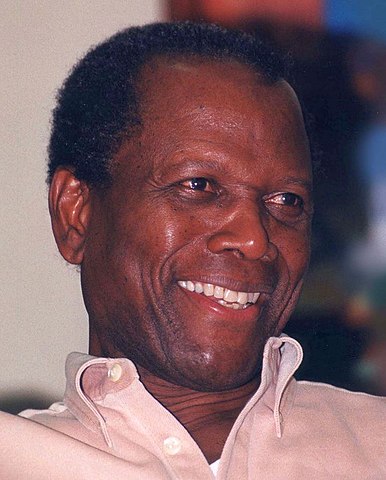
Sidney Poitier

Several people have been asking questions about obtaining permission to reprint. Instead of taking you through the steps, I’m going to tell you a true story about a particularly thorny permissions problem I ran into myself.

Sidney Poitier – the superb actor who died last week – is the hero of this story.

Some years ago I wrote a study skills textbook for college students. Early in the writing process I spent several Saturday mornings in the biography section of local library, scanning the early chapters to look for true stories from famous people about their early learning experiences.

I struck gold with actor Sidney Poitier’s memoir This Life. (Later he wrote another one.) Poitier described arriving in New York City from the Bahamas as an ambitious 17-year-old with little education and limited funds. He supported himself washing dishes and dreamed of becoming an actor – but he couldn’t read well enough to get through an audition.

A Jewish waiter saw Poitier struggling to read a newspaper and offered to help. Years later, Poitier vividly remembered those reading lessons. One especially helpful skill was learning how to figure out the meaning of a word from the context. It was an impressive story, well told, and I gladly paid the Alfred A. Knopf publishing company $100 for permission to copy Poitier’s story in my chapter on reading.

Happily, my study skills book eventually went into a second edition. But not so happily, I had to redo all the permissions, and the Poitier selection became a problem. Knopf no longer owned the rights – they had been transferred to Poitier’s law firm.

In those pre-Internet days, it was no small feat to learn who Poitier’s lawyers were – and that was only the beginning of my struggles. The permissions fee was too small for the firm to be concerned about. I called multiple times, explaining that my book was about to go into production and I desperately need that permission form. Each time they promised to take care of it – and promptly forgot.

One morning I went through my spiel for about the twentieth time (it seemed that someone different answered the phone whenever I called). I was put on hold. After several minutes, someone came on the line and asked what I wanted.

I was getting fed up with telling my story over and over – but common sense won the day, and I politely explained what I wanted.

“Can you tell me more?” the voice asked. And suddenly it dawned on me that I was talking to Poitier himself. The attorney’s office had patched my call through to his home phone.

I explained how impressed I’d been with his story about the dishwasher and newspaper lessons. Poitier gave me his fax number and asked me to send the chapter to him so he could see what I’d be doing with his story.

Three days later I opened my mailbox and found the signed permission form there. He was the only author who didn’t ask for a permissions fee.

A great and generous man.

(Because I’ve been hearing so many questions about modes of development, I’m adding a postscript. If I’d described the permission steps in a general way, this would have been a process article. Today I’ve told you a story that happened once, so it’s a narrative.)

Sidney Poitier

Share

Fire Them!

Someone just posted a question online about the “lexical meaning of hate speech.”

What – I want to know – is the difference between meaning and lexical meaning?

Good writing never sounds pompous. Develop the habit of writing straightforward sentences. Treat unnecessary words like unnecessary employees: get rid of them.

Share

A Composer Named Scarlatti

If you enjoy classical music, you’ve probably heard of Domenico Scarlatti (1685-1757). He’s most famous for his harpsichord music.

Here’s a snippet of information that was just posted on our TV’s classical music station:

Scarlatti married his wife, Maria Caterina Gentili, at the age of 43.

It’s a sentence that needs improvement!

The first problem is this unnecessary sentence: Scarlatti married his wife….

If you were a man in the 1700s, who – pray – would you marry besides a wife? And there’s another problem: who was 43? The sentence has an indefinite pronoun reference…meaning (in plain English) that either Domenico or Maria could have been 43.

With a little effort, you can come up with a better sentence:

Scarlatti married Maria Caterina Gentili when he was 43.  BETTER

OR:

When Scarlatti was 43, he married Maria Caterina Gentili.  BETTER

keyboard of old harpsichord with brown wooden keys

Share

Fixing a Static Sentence

Last week Charlie and I put our heads together to improve a sentence in one of his drafts. He was writing about protecting landscape plants from cold damage:

What the frost blanket, old bed sheet, or cardboard box accomplishes is to slow down the passage of heat stored in the ground and to hold it around the plant.

The word is tells you that this is a static sentence. Nothing is moving or changing. The frost blanket (or old bed sheet or cardboard box) exists, and that’s all.

Is (and are, was, were, and will be) are useful words, of course. Every writer (including me!) uses them all the time. But professional writers always take a moment to see if a more interesting word is called for.

In today’s sentence, we got rid of is altogether. Here’s the revised sentence:

The frost blanket, old bed sheet, or cardboard box slows down the passage of heat stored in the ground, holding it around the plant.  BETTER

It’s a more active sentence now. And the revision is six words shorter – another step towards greater readability.

A commercial frost blanket protects a plant against freeze damage.

An old bed sheet protects a tender plant from freeze damage.

Share

A Sputtering Sentence

Charlie and I often listen to classical music free, courtesy of our cable TV subscription. We especially enjoy the biographical snippets posted on the screen while the music is playing.

Sometimes, though, the writing falls short. I used to have an English teacher who kept urging us to “End strong!” when we were writing. I thought of him when I read this sentence about Chopin. Instead of “ending strong,” it sputters to the finish line:

When Frédéric Chopin was seven years old, he wrote the Polonaise in G Minor, which was printed.  WEAK

I think my former English teacher would be pleased with my rewrite:

The Polonaise in G Minor was published when Frédéric Chopin was only seven years old.  BETTER

But now we have another problem: my sentence is written in passive voice. Isn’t that bad writing?

The answer is…not always. Sometimes passive voice can solve a writing problem. Today’s sentence needs more emphasis. Using passive voice (“was published”) puts the Polonaise in G Minor at the beginning of the sentence. The result is a  sentence that starts strong and stays strong. 

Photo by Leo Reynolds

Share

Hyphens. Adverbs. Yikes!

My friend Mike Goronsky came up with a clever way to make sure you’re using hyphens correctly in compound expressions.

It’s an obscure rule but a useful one. Often we need a hyphen with a two-word description:

He had a deadly-looking weapon.  CORRECT

But did you notice that “often”? Sometimes you don’t need a hyphen:

a badly written bill  CORRECT

How do you tell the difference? The answer is that adverbs don’t get hyphens.

But what if you’re a little uncertain about adverbs? English teachers always tell you to look for -ly words (sadly, merrily). There’s a catch, though. Some -ly words aren’t adverbs – ugly and costly, for example. How can you tell? Mike has come to the rescue!

Try this exercise he created – removing the second word. It makes everything crystal-clear:

a highly regarded study
Remove the second word “regarded.”
Now you have a “highly study.” Doesn’t make sense.
It’s an adverb! No hyphen.

the dimly lit study
Remove the second word “lit.”
Now you have “the dimly study.” No good.
It’s an adverb! No hyphen.

the barely worn dress
Remove the second word “worn.”
Now you have “the barely dress.” Ugh!
It’s an adverb! No hyphen.

BUT…

early-morning flight
Remove the second word “morning.”
You’re left with “early flight.” Makes total sense.
It’s an adjective! Add the hyphen in “early-morning flight.”

friendly-looking dog
Remove the second word “looking.”
Now you have “friendly dog.” Yay! Makes sense.
It’s an adjective! Add the hyphen in “friendly-looking dog.”

a family-friendly location
Remove the second word “friendly.”
You’re left with “a family location.” It’s an adjective! APPLAUSE! Add a hyphen!

Nobody could ever get this wrong using this trick! 😉😉

a magician with a wand and a top hat
Share

I Won’t Do It!

Last week I started reading a New York Times article about the CDC process for approving Covid booster shots. But I stopped reading when I read this sentence:

Even though Slavitt and Walensky were speaking on a public podcast, their tone at times resembled that of a private conversation between colleagues.

No, no, no! I refuse to use “that of.” It’s clumsy and adds nothing to a sentence.

Grammarians will undoubtedly argue with me. You need “that of” to make the sentence logical. Otherwise you’re comparing a tone to a conversation – apples and oranges, so to speak. 

I disagree: “that of” is overkill and unnecessary. No reader is  going to be confused if you omit “that of.” Here’s a useful rule for you: Readability is always more important than grammar. 

Here’s my version:

Even though Slavitt and Walensky were speaking on a public podcast, it sounded like a private conversation between colleagues.

Woman who's crazy, angry, and berserk

Share

An Unnecessary Word

Problems at Facebook have been front-page news this week! Concerns about Facebook are nothing new.  A 2020 New Yorker article explored the role that Facebook played in electing President Trump in 2016.

Here’s an excerpt from the article. Can you spot an unnecessary word?

Giles and Parscale owned two of the more ambitious Web-design businesses in town, and the merger allowed them to focus on their respective strengths: Giles made everything look good, and Parscale made everything work on the back end.

The offending word is – of course – respective. It adds nothing to most sentences. Even worse, respective makes your writing pompous and old-fashioned. Most of the time you should fight the urge to add respective to something you’ve written.

Facebook logo

Image provided by Julien Eichinger – stock.adobe.com
Share