Category Archives: Writing Process

Writing about Major Barbara

A couple of days ago a friend emailed a complaint about my blog. “It’s called Write with Jean,” she said, “but we don’t ever get to see you writing.”

Fair enough.

Her timing was perfect because I’ve just started to work on a presentation for a Shaw conference a year from now. Or – more accurately – I’ve restarted. One morning during last fall’s dance cruise I wrote the first page of my presentation. I was delighted to get a head start on the project – and then I lost the page. Sigh.

Clearly I wouldn’t recommend my slapdash working methods to anyone, but they work for me. Advice books about writing always say you should start  by freewriting or talking into a voice recorder. You need physical movement – tapping a keyboard or working your vocal chords – to get the ideas flowing. They’re absolutely right.

I, however, am doing much of my planning driving back and forth to dance lessons. It’s an inefficient system at best: Ideas come and go as I navigate traffic, run errands, and stop to pump gas. But I don’t have time this month to sit down and do any formal planning.

An advantage is that I’m finding this system more relaxing than sitting in front of a computer – and the ideas really have started coming. Yesterday I finally came up with my thesis. (I know, I know – that’s supposed to be your starting point. My brain doesn’t work that way, alas.) I almost pulled off the road to call my husband with the news, but I know what he would say: “Forget about Shaw and concentrate on your driving.” Party pooper!

Of course every academic project relies on preliminary research. I’m already familiar with Major Barbara – the Shaw play I’ll be writing about – so there’s been plenty to think about between stop signs, left turns, and trips to the ATM.

My writing methods rely on something that’s harder to put into words: A strong feeling about some of the lines in the play. I know that they’re going to be important to my presentation, even though I have no idea why I chose them or what I’ll be saying about them. I suspect that many writers have similar instincts. Maybe it’s an innate part of who we are – like musicians born with perfect pitch or chefs who always know which flavors will meld into an irresistible dish.

The presentation for next July is going to be fun to work on. Unlike some recent projects I’ve done, I’ve chosen the topic myself and can do anything I want with it.

Yes, it’s flattering to be asked to review a book or write a chapter for a collection that a friend is editing. And it’s nice to be offered a paying job (I just finished a technical writing project for an educational company). But the real fun lies in discovering an idea, digging into it, putting it together, and then turning it loose to see how others react.

A friend suggested that I download a free trial of Scrivener, a software package that organizes outlines, research, and ideas so that everything is stored in one place. I think it will prove to be a godsend. I’m still learning how it works – more about that in a future post.

There’s a special feature of this presentation that I’m excited about: I’ll be doing a PowerPoint rather than a strictly academic paper. I don’t know if that sounds like fun to you, but I am positively kicking up my heels at the prospect. I’ll be able to joke with the audience, use graphics, and bypass some of the clumsy infrastructure required for academic publishing.

Funny thing, though. Last year I started working on a PowerPoint about Pygmalion for a Shaw conference in New York. I was reveling in my freedom – and then the project took a strange detour. I left the unfinished PowerPoint on my computer desktop and spent several months writing the whole thing up as an academic paper. (I’m proud to say that it’s going to be published in a few months.) After I was satisfied that every jot and tittle was in its proper place, I went back and finished my PowerPoint.

Maybe there’s so much academia wired into me after all these years that I can’t work any other way.

Meanwhile, Major Barbara awaits. Stay tuned for more progress reports!major-barbara-jxhpvwun.bub

Share

Thinking and Writing

If you had taken a writing course with me back when I was teaching at a community college, your first assignment would have been to write a story about someone you knew. 

There were two conditions: The story had to have taken place within a short time span (30 minutes max), and it had to illustrate a quality – good or bad – about the person at the center of the story.

I always introduced the assignment with a favorite story about my husband. Back when we were dating, Charlie took me to a restaurant in New York City. After the meal we started strolling back to my apartment – and then Charlie suddenly walked over to a homeless man who was staggering down the sidewalk. He put his arm around the man and they walked off together, leaving me standing there.

Five minutes later Charlie was back (relief!). “I hope you didn’t mind,” he said. “I saw that the man had been drinking and didn’t know where he was. I was afraid he’d get hit by a car. He said he lived on the next block, so I walked him to his door.”

I always asked students what quality they thought the story illustrated. After some discussion they would usually come up with several good ones, such as “compassion” or “caring.” Then it was time for them to choose a story of their own, write it down, share it with their peer group, and hand it in to me.

Over the years I read many marvelous stories about students’ friends, ministers, teachers, parents, and grandparents. But I also read papers from students who couldn’t grasp what the assignment was all about. Some students would record their mothers’ entire life story. Others would write about someone they barely knew.

I remember a student who wrote about a camping trip organized by her father, who had divorced her mother a decade earlier. Her story vividly portrayed her brother and sister, but Dad was a shadowy figure who did very little but put up the tent and build the campfire.

When I asked what quality she was writing about, she couldn’t answer. “To tell you the truth,” she finally said, “I never got to know him. He had been gone for a long time, and the camping trip was supposed to be a new beginning. But things never quite worked out.”

Looking back, I suspect she (and the peer group she worked with) learned more from that unsuccessful writing task than any other assignment that semester. (She eventually earned an A in the course.)

That simple assignment, she learned, wasn’t so simple after all. Students used to tell me that this “tell a story that illustrates a quality” was much harder than they expected. It’s easy to list a series of facts about a grandparent or youth minister. It’s much harder to focus on a single quality and then find a story to match.

I started thinking about all of this yesterday when my friend Gustavo A. Rodríguez Martin sent me a link to a writing booklet called Writing: A Teaching Guide published by the New York City Board of Education. As part of a summer writing project, students were asked to interview one another, choose interesting stories, and write them down. The instruction booklet is engaging and well written, and I was hugely impressed by the whole project.

The booklet was published in 1989. If someone wanted to do this project today, I’d suggest publishing the stories through an on-demand service so that students could have a book that puts themselves and their writing front and center – for a cost of less than five dollars per student.

Back to teaching writing. Here’s what I learned over many years of teaching (and doing my own writing): It’s all about thinking, selecting your material, and working it.  The secret ingredient in a successful writing task is usually the stories (another reason I always started the semester with the “story about someone you know” assignment).

I’m going to add one more thing: Writing is (or should be) about pleasure. Yes, writing can feel like drudgery. It can be tiring, confusing – even exasperating. But it should also be fun and exhilarating: “Look what I’ve done!” “Where did that wonderful detail come from?” There should be a real and lasting sense of accomplishment. Alas (and I’m as guilty of this as anyone), so often the only feedback students get is a grade and a list of corrections.

After some years of teaching, I made some changes in the way I responded to student writing. On the day an assignment was done, I sat down with each group and read each student’s paper.  My goal was to simply honor what was written. Although it was a simple procedure that didn’t take long, it transformed the energy in my classroom and had a powerful effect on those student writers.

The booklet I mentioned a moment ago – Writing: A Teaching Guide – got it exactly right. Here’s the statement of purpose for the biography assignment:  “Our goal was to plan a series of thematic units that would encourage meaningful language use in an enjoyable and serious atmosphere.” I couldn’t have said it better.

Conversation Wikipedia ok


Share

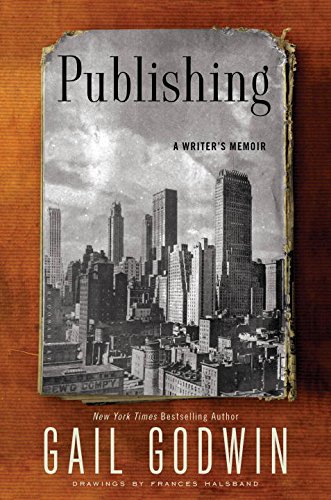
Publishing: A Writer’s Memoir by Gail Godwin

I’ve just finished reading Publishing, Gail Godwin’s memoir about her career as a novelist, and I found it…disappointing. A comment from one of the Amazon reviewers sums up the book very well: “random” and “disconnected.”

Here’s an example: Early in the book Godwin mentioned her marriage to an engineer from England. He was never mentioned again. There was a single sentence about a second, short-lived and “peculiar” marriage. Later in the book she suddenly mentioned her longtime partner “Robert.” I flipped back through the pages to see who “Robert” was and when he’d been introduced. Nothing.

I’m not suggesting that Godwin should have written more about the marriages – the book is about her writing career, not her personal life. But if a writer is going to include personal information, it needs to be coherent.

Here’s another example: Godwin took a writing class with – hold on to your hat – Kurt Vonnegut. He was both helpful and nice, I’m happy to say. I enjoyed reading what Vonnegut had to say to Godwin during their conferences. But her book says nothing about what he talked about in his lectures. Those are jewels that beginning writers would love to read.

And I would love to have heard more about the partnership with her editors. For example, it would be fascinating to read a passage from a novel that benefited from editing. What did the editor say, how did Godwin react, and how did it all work out? What are the similarities and differences between editors she worked with?

If I’d had a chance to review Publishing before it went into print, I’d have asked Godwin to go back and fill in more about what happened while she was writing those novels. And I’m realizing that I need to do more of that kind of writing myself. What goes on inside our heads while we’re writing? How does it feel? How do we dig ourselves out when we get stuck?

There’s so much we can teach one another if we’re willing to  invest the time and be honest about the process.

51o4spW0pCL 2

Share

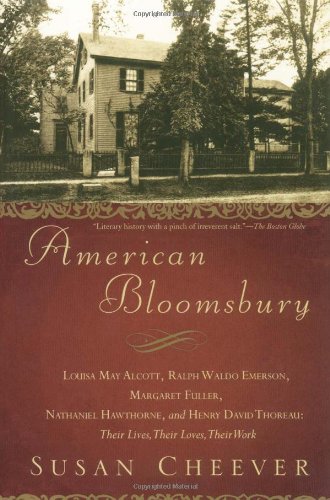
American Bloomsbury

One of the most profound observations about writing I’ve ever read came from Ann Berthoff. She’s the author of a number of intriguing books about composition theory, including The Making of Meaning.

I love that title. Astonishing, isn’t it: Just two words sum up the most important principle behind effective writing.

“Making meaning” came to mind this week while I was reading a book I absolutely adore – Susan Cheever’s American Bloomsbury. It’s a book I did not expect to enjoy. It’s about the Transcendentalists (doesn’t that sound dull already?). A point in the book’s favor is that Louisa May Alcott (who’s long fascinated me) is prominently featured – but I’ve read all her major biographies, so there didn’t seem to be much point in reading this book.

Despite my wariness, I was hooked before I got to page 1. Here are two sentences from the Preface:

“I remembered F. O. Matthiessen’s bold statement that all of American literature had been written between 1850 and 1855. What I hadn’t realized is that most of it was written in the same cluster of three houses.”

I’ve been to Concord, Massachusetts (the setting for the book), and I already knew that Hawthorne, Emerson, Thoreau, and Alcott had moved around in that neighborhood. But I’d never thought about American literature in terms of those three houses.

And that’s what “making meaning” is all about: tying things together and making them significant. It doesn’t even matter that I disagree with Matthiessen about “all of American literature” (what about Huckleberry Finn and The Great Gatsby?).

What’s wonderful is that Susan Cheever gave me something interesting to think about. Even better, she fulfilled her purpose in a wonderfully readable book. I finished it today, and I’m feeling kind of lonely. I began to see some familiar writers in a new way, and I find that I’m missing them.

You can’t ask for much more from a book, in my opinion.

American Bloomsbury

Share

Structure, Style, and a Warning about the Word “He”

I’ve been going through some old copies of the New York Times Book Review. A librarian friend saves them for me, and I go through the pile slowly, as a treat and reward for plugging away at my current writing projects.

Sometimes the gap between publication and reading leads to surprises. I just read a review of a biography of comedian Bill Cosby that doesn’t mention any of the sex scandals that have been filling newspaper pages in recent weeks.

But Cosby is not my subject today. I want to talk about a column called “Can Writing Be Taught?” that appeared in the August 24 issue of the Book Review. Author Zoe Heller described her frustration when she tried to help her daughter with a school writing assignment. Here were the instructions her daughter was given:

In the first sentence, state your general theme; in the second sentence, state your thesis; in the third sentence, provide a road map of how you will advance your thesis….

“No one,” Zeller complained, “has ever talked to her intelligently about structure or style.” Amen. And I would add that the instructions provide no encouragement to engage the reader or provide background.

Templates and formulas often get a bad rap, but they’re immensely useful. I just evaluated a scholarly submission that would have been much better (publishable, in fact) if the author had used a formula: Get your reader’s attention, provide background, state your thesis, start each paragraph with a topic sentence that supports the thesis, develop the topic sentence into a paragraph, and build to a climax whenever you can.

But Zeller has a point. The formula or template must be taught in the larger context of talking “intelligently about structure or style.”

That scholarly submission would also have benefited from careful proofreading. (It’s mind-boggling: Someone submitted a scholarly article to an academic publisher without proofreading it. How? Why?)

One of the problems (among many) that I marked was with the word he. He (in case anyone asks you) is one of the most dangerous words in the English language. I’m not going to quote from the paper, but I saw a similar problem a few minutes ago in a literature newsletter:

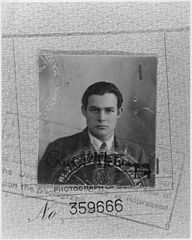
Ezra Pound was among Hemingway’s friends when, in his early twenties, he arrived in Paris in the early 20s (that’s his passport photo).

192px-Ernest_Hemingway_passport_photo_40-1548M 2

So here’s a question for you: Whose passport photo – Ezra Pound’s or Ernest Hemingway’s? You can’t tell. (I finally Googled the picture and found out that it’s from Hemingway’s passport.) So here’s a rule: NEVER use he or him when there are two males in a sentence. Repeat the name if you have to, or revise the sentence in another way to eliminate any confusion.

Here’s how I would have written the sentence:

Ezra Pound was among Hemingway’s friends when, in his early twenties, Hemingway arrived in Paris in the early 20s (that’s his passport photo).  BETTER

Careful attention to these details is the mark of an excellent writer. That – and intelligent guidelines about “structure or style” – should be emphasized in every writing program.


Share

Still Reading

Last night I read one of the best novels I’ve come across in a long time: Big Little Lies by Liane Moriarty. I was up until 1:30 this morning finishing it.

Big Little Lies is an unusual murder mystery because you don’t find out who the victim was until close to the end of the novel. But that’s not why I enjoyed the book so much. What was really special is that I was so interested in the characters that I really didn’t care about waiting for the murder to happen – in fact it would have been a terrific book without the underlying mystery.

But there’s a flaw in the book, and it’s the kind of problem I often discuss with my writing group. The book starts off strong with a warning that something dire has happened. And then the pace slows to a crawl as several mommies head to kindergarten orientation with their offspring. One mommy falls and injures her ankle. The accident sets up an important relationship between several important women in the novel – but it is slow and dull.

I would have stopped reading except that a friend recommended the book and told me not to be put off by the slow start. She was right. But a good editor should have intervened before the book was published and figured out a way to keep the book moving.

I’ve also been reading Between You & Me: Confessions of a Comma Queen by Mary Norris. She is one of the most entertaining writers I’ve ever read. Her descriptions of working in the dairy industry are delightful. And she’s a Honeymooners fan!

But she also exemplifies an approach to writing that I dislike: Abstract theory and confusing terminology. For example, her explanation of restrictive and non-restrictive clauses assumes that you’ve never spoken English. She wants you to work your way through a lot of tedious reasoning to discover where the commas go.

None of that torture is necessary. We all learned about restrictive and non-restrictive clauses in childhood by imitating the speech patterns of adults. All that an English teacher has to say is this: “Read your sentences aloud. When you change your voice, use a pair of commas.” I used to bring a clip of the opening of the old Adventures of Superman show (with George Reeves) to teach the commas to my classes, and my students never had trouble with them after that.

Here’s an example of what I’m talking about. Read these two sentences aloud. Where do you change your voice?

The personnel director asked me for a list of officers who will retire next year.

Your mission should you choose to accept it is to unravel the enemy plot to take over the airport.

The answer is that you wouldn’t change your voice at all in the first sentence, which doesn’t require any commas. The second sentence does require a pair of commas, like this:

Your mission, should you choose to accept it, is to unravel the enemy plot to take over the airport.  CORRECT

But Norris’s book is still a delight to read, and I’ve learned a lot. The section on hyphens alone is worth reading and rereading. (Hyphens used to intimidate me, and I’m still a little scared of them.)

But my real point today isn’t about how to write a novel or insert commas and hyphens. It’s about reading. Spending hours and hours with a pile of good books can feel decadent because a) it’s so enjoyable and b) there are usually so many other tasks waiting to be done.

It’s important to pause now and then to remind ourselves that reading is the royal road to writing. When we can read thoughtfully, notice the author’s strategies, and evaluate them, we’re creating circuits in our brain that will be ready to help us with our own writing tasks.

Mission Impossible


Share

Surprise Me!

For the past two weeks I’ve had much more free time than usual. My Pilates trainer is on vacation with his family, the ballet school is closed for the summer…so I’ve been reading.

And – inevitably – I’ve been thinking about writing.

One of the books I read was a disappointment: Effective Time Management In a Day For Dummies by Dirk Zeller. I’m revising my own book about time management, so I was looking forward to picking up some new ideas. But the book is boring – or at least started that way.

After a few chapters, the book became livelier, and I finally realized what the initial problem was: Zeller had been writing in an textbook style. When he started talking personally about his struggles with time management, the book became more enjoyable and believable.

Of course stories (good ones) always help a book along, but I suddenly realized that there was something else involved: There was a surprise – the time management guru is one of us, engaged in his own struggle to get things done.

That revelation started me thinking. Surprise isn’t a word you’re going to hear often in a writing class – but you should.

The point really hit home a couple of days later when I picked up a book I liked much better. It’s called More than Happy: The Wisdom of Amish Parenting by Serena B. Miller. After I’d finished reading it, I checked to see who the publisher was. No surprise there: Simon & Schuster. It’s nice to know that there’s still at least one publisher who pays for editors and insists on quality.

And that surprise factor was there again. What, you ask, could possibly be surprising about Amish parenting? A number of things! I learned that Amish children receive only one gift at Christmas. Amish parents use rewards liberally to encourage good behavior. One Amish family owns a battery-operated DVD player so that the children can watch Little House on the Prairie and The Waltons. Amish children are allowed to bring toys to church services.

Most of the book consists of stories, all well told, all illustrating a point. Many illuminate not only the character of the Amish families, but also…the author’s character.

My favorite story concerned a noodle casserole. It’s a dish that Serena Miller, the author, liked to cook. She was surprised to learn that her Amish friend had never heard of it. So Miller decided to cook it for the woman’s family. Word about the special dinner spread through the Amish community, and the author discovered to her horror that at least 20 people were coming (with little advance notice) to try the dish.

And there was another complication: Several children were sent to the kitchen to help, including a five-year-old. Miller did not relish having to supervise a small child while she was frantically trying to stretch her recipe.

And then she discovered that the little girl could break eggs, roll out dough, and cut noodles with the best of them.

Here’s the clincher: Miller did something she had often done for her own children: Bestowed a compliment. “What a good little helper you are!” she exclaimed.

The five-year-old ignored the comment – and Miller realized with embarrassment how condescending she must have sounded. The Amish, she realized, respect children and take them seriously.

It was very different from what I expected to read about Amish child-rearing practices (Set limits! Teach values! Hand down traditions!).

It’s a great book. And the takeaway is…Don’t tell your readers what they expect to hear. And whenever possible, resist the temptation to pontificate an all-knowing voice dripping with wisdom.

In short, surprise them.

surprise ok

Share

Joyce Carol Oates

I just finished reading A Widow’s Story: A Memoir by Joyce Carol Oates, one of America’s most talented and versatile writers. A Widow’s Story, describing the death of her husband in 2008 and the severe depression that followed, is very different from her previous books (she’s most famous for her fiction) – intimate and painfully honest.

Oates’s sadness over the loss of Ray, her husband, takes over her life. She is so depressed that everyday tasks are are overwhelming. A Widow’s Story plunges you into the grief and despair she is experiencing, and it also says a lot about this gifted couple and their relationship.

The Smiths’ marriage (she uses “Oates” only for her writing career) was both loving and quirky. Her husband never read her published writings! (Few of her students at Princeton had read her work either. I’m flabbergasted.)

Nor did she ever read a novel that Ray had started before he met her and never finished. Late in the book she finally began reading it, and she imagined what she would have said to Ray if she’d had the opportunity. The manuscript gave her insight into pieces of him she had ever known – his imagination and his past, for example.

What fascinates me is that the professional-writer part of her brain kicked in at the same time. Of one episode in the novel that’s clearly related to his past, she says that it couldn’t have been published: “Not that it’s too raw or unintegrated with the plot – revising and recasting could have remedied this – but rather, the material is just too personal.”

How extraordinary! Here’s a woman who’s almost paralyzed with grief, encountering her lost husband on a new level – and her writer’s brain instantly switches into analytic mode, with thoughts about “revising” and “recasting.”

Writing well requires a different kind of thinking, and that means learning to write isn’t just about acquiring skills and techniques. You need a new kind of brain, and that requires willingness to endure a confusing period when things just aren’t going to make sense.

The bad news is that it’s hard to learn how to write well. The good news is that even when you think all is lost – as Oates did – the ability to write stays with you. Oates was so grief-stricken that she couldn’t open mail or listen to phone messages from friends who were worried about her. But nothing could stop her from thinking like a writer.

Joyce Carol Oates

                Joyce Carol Oates

Share

Getting It Right

I can’t stop thinking about an article I read online yesterday. It’s about resumes – not a stimulating topic. I was going to skip it, and then I decided to read it anyway. I occasionally conduct workshops about resumes, and I’m always looking for fresh material.

And then I got excited about what I was reading The writer says that she automatically stops reading resumes that have faults like these: capitalizing random words, punctuating bullet points inconsistently, ignoring parallel structure, and switching tenses unnecessarily. Bravo!

And yet I find myself wondering if she’s wrong in her breezy dismissal of the offending resumes. Even many professional writers don’t get parallel structure right, for heaven’s sake. If we denied jobs to everyone who committed the sins she mentioned, hardly anyone would be employed. I used to know a Harvard graduate who was a professional writer – a wonderful one – even though he never learned how to use a semicolon. (He had a secretary who was a punctuation whiz.)

On the other hand – none of the sins listed in the resume article are difficult to eradicate. Why do intelligent people keep committing them – and on  resumes, of all things?  Those documents are the first step towards a job.

Yesterday I also read – enraptured – a New Yorker article about copyediting – meticulous copyediting. The feeling I had while I was reading must be akin to what mountain climbers experience when they reach a high altitude and someone hooks them up to an oxygen mask: Suddenly I feel alive again.

I think that “alive” feeling I had is the key to something terribly important that has nothing to do with the usual things that people say about English usage (“Good writing showcases your professionalism,” “Proper usage makes your writing easier to understand,” etc.)

Those things are true. But I think something else is going on here. I think you can classify people into two categories – those who have a passion for life, and those who have settled into “This is what life has dealt me, and I’m learning to accept it.” I also think the categories are fluid – I’ve spent time in both of them.

And I’m thinking about people who hire me as an editor and keep sending me work with the same mistakes. I would place them in Category 2, and I’d never hire them for a job.

Recently someone resent me a piece I’d corrected six months ago, with all her original mistakes still there. I know someone else who keeps ignoring my pleas to put some warmth into his professional correspondence, for heaven’s sake. (Incredibly, he works in one of the caring professions.)

What kind of person sends out a resume with with inconsistent punctuation and messy sentences – a Category 1 or a Category 2?

checkmark

Share

Is Writer’s Block Real?

Writer’s block – the inability to push ahead on a writing project – is a common complaint in a writer’s group I facilitate. It’s also a phenomenon I know very well from firsthand experience.

It’s also something I’ve decided doesn’t really exist.

I think “writer’s block” is a catchall name (and not a useful one) for a broad spectrum of writing problems. Over the years I’ve discovered that if I can come up with a more specific description for what the block feels like, I can usually devise a cure that will help me finish the task and meet my deadline.

So here’s a list of reasons why I sometimes come down with a condition I’m going to call “avoiding-writing-itis”:

1.  I don’t have anything interesting to say about the topic.

2.  I don’t have anything interesting to say about the topic.

3.  I don’t have anything interesting to say about the topic.

4.  I don’t have anything interesting to say about the topic.

OK, I think I’ve made my point.

Sitting down to write when I have nothing to say is like sending an engraved invitation to the Writing Block gods. Freeze my brain! Put the whammy on my computer keyboard! I’m doomed to spend a miserable hour, or afternoon, or week staring at the computer screen and typing drivel that I’ll delete the next morning.

A few moments ago I assured you that the remedy for “avoiding-writing-itis” (or “writer’s block” or whatever you want to call it) will automatically appear once you identify what’s really going on. Here are some tricks for finding content that have worked for me:

1.  Read up on the topic, or read something that will serve as a model for my writing task. I don’t worry if I seem to be spending an inordinate amount of time leafing through essays and articles: Reading is the golden road to becoming a better writer. All good writers are avid readers.

2.  Write badly. I often play a little game with myself called “I’m not really going to write today.” I buy big packages of legal pads and fat rollerball pens expressly for that purpose. And I always save the rambling thoughts that I come up with – often I find solid gold there later on.

3.  Refuse to be sidetracked. When I was writing my doctoral dissertation, I did not do housework for a year. (Luckily my husband was as eager as I was for me to finish the damn thing and did not complain – not even once.) I remember typing the last sentence on the last page and then getting up to look for a spray bottle of 409 so that I could – at long last – clean the countertops.

4.  Transform yourself into an interesting person. Watch other people – and yourself – for unexpected reactions to ordinary ideas and events. Do you ever puzzle about things that other people seem to take for granted? Do you know any out-of-the-box thinkers you could learn from and imitate? Originality is the biggest enemy of avoiding-writing-itis because an unusual take on an ordinary subject automatically gives you something interesting to say.

By now you’re probably wondering what triggered today’s blog – or perhaps you’ve already figured it out: I am having the schizophrenic experience of wanting to finish a current writing project because I’m having so much fun with it – and dragging my feet (well, my fingers) over a couple of other projects that I really, really don’t want to tackle.

It’s always the same. Sigh. (The project that’s so much fun was a finger-dragger for a long time too.)

What’s the solution? Read, read, and read some more – get out a pad of paper and a fat pen and start freewriting – reread my notes to see if I can find an unusual angle.

Most important: Don’t even think about grabbing a broom or dustcloth until I can start to feel the writing energy bubbling inside me.   

Cement Block ok

Share