Category Archives: Sense and Nonsense

A New Word

It’s time to replace my Scrabble Players Official Dictionary: The 4th edition has just been published (The third edition was released in 1995.)

This new edition is raising eyebrows because it includes some slang, including a word that’s new to me: innit.

In case you’re wondering (I was!), innit can roughly be translated as “isn’t it?” It’s classified as an “invariant tag” – an unchanging phrase that can be added to the end of a sentence. Popular invariant tags in English include “you know?” and “okay?” They’re generally considered nonstandard, meaning they shouldn’t be used in formal writing.

Here’s an example of how you might use innit: We should make reservations soon, innit?

Iit’s not an expression I plan to start using.

But the BBC, no less, is warning sticklers like me not to be so hoity-toity. Here’s what one of their language experts said about innit:

Although its use varies between different groups of speakers, each individual will have their own grammatical rules on when ‘innit’ can and can’t be used.

Several things caught my eye when I read their statement. “Different groups of speakers” is, to my mind, a copout. If you’re the kind of person who visits the BBC website, you want to fit in with educated people who speak a certain kind of English with prescribed rules and practices. Innit is not going to show up in your conversation unless you’re joking around.

Another point the BBC made later on was, however, useful: “Invariant tags are common in other languages: Spanish has ¿verdad? and ¿no?, German has nicht war? and the non-standard oder? and French has n’est-ce pas?”

It’s a good reminder for people who insist, against all evidence, that language is supposed to be logical. Name a grammatical rule, and you’ll probably find that at least one language routinely breaks it, even in formal writing. (The double negative is a good example: It’s perfectly acceptable in educated Spanish.)

One more detail in the BBC statement caught my eye: The pronoun agreement error: “each individual…their”. (It’s supposed to be “each individual…his or her.”)

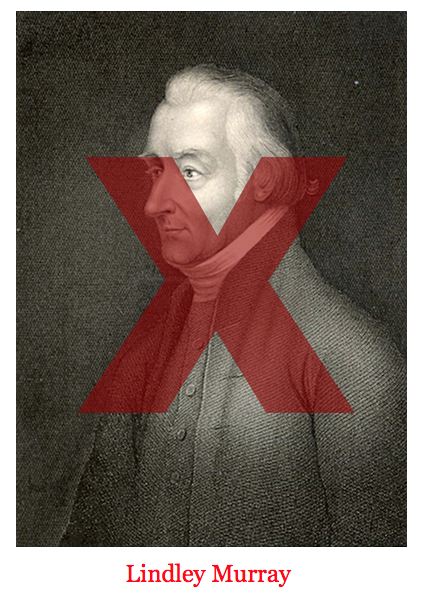
Frankly, I’m relieved. I hate “his or her,” and I often curse Lindley Murray, the man who saddled us with this rule, or at least got the ball rolling. Feminists made a bad situation worse by adding “or her” to that irritating “each individual…his.”

An annoying situation, innit?

Share

Why We Need Copyeditors

I’m the copyeditor for an employee newsletter at a place where I used to work full-time. I’m an excellent choice for that job (if I may say so) because, in addition to my editorial skills, I know many of the people there. That means it’s easy for me to catch a misspelled name or an incorrect job title.

Other parts of the job are not so easy. For example, the last newsletter mentioned that someone on the staff had just won third place in a powerlifting competition. I happen to be married to someone who used to be a powerlifter, so I know that it’s a specialized form of weightlifting. Google to the rescue – I was able to track down the event and confirm that it was a weightlifting (not powerlifting) competition.

Another problem is that my eyes and brain often do an “I know that already” leap over something that I should check for accuracy. When I see the name Katherine, for example, I assume it’s spelled correctly. But wait a minute! Many women (Katharine Hepburn, Katharine Graham, Katharine Ross) spell it with an a, not an e, in the middle.

Good editing requires much more than a knowledge of English usage. Sometimes you need psychology: A sentence that’s grammatically correct may still hit someone the wrong way. Knowledge of history and politics is occasionally required. For example, people who lived in the British Isles used to be called subjects; nowadays they are citizens.

If you’re a serious writer, try to cultivate friends with a wide background in a variety of subjects, and ask them to read your stuff before you send it to a publisher. Copyeditors perform a great service for writers, but you don’t always have to pay a professional to get good advice. Sometimes that extra pair of eyes belonging to a friend or family member can make all the difference.


Share

Breaking the Rules of Writing

Most of us grew up believing two things about language: 1.  It has rules and 2.  If you learn them, you’ll become a good writer.

At best that’s a half-truth.

Language is a social invention, not a scientific one. When you try to cram language into a systematic structure, you run into all kinds of difficulties. (Our wretched everyone = his or her rule is the result of one man’s attempt to do just that: Before Lindley Murray invented and marketed a rule about pronoun agreement, no one – not even good writers – bothered with it.)

Part of the problem is that some of the rules of writing we all learned simply don’t exist: No good writers obey them, and you won’t find them in any writing instruction books, no matter how hard you try. Want an example? Try finding the “Don’t start a sentence with but” rule in an English textbook. There’s no such thing.

I started thinking about this rules-that-don’t work phenomenon when a member of my writing group, Jane Brumbaugh, brought in an essay she’d written about helping to start a local library. When I read her opening sentence, my heart leaped with joy:

There was no library in Lake Alfred in 1961.

Simple enough. So why do I love that sentence, and…getting back to today’s topic…what rule does it break?

There’s a rule (Ha! I just broke it myself!) that you shouldn’t start a sentence with there is or there are because those are empty words. Instead you should start with something livelier.

But Jane’s wonderful sentence wouldn’t work if you wrote it differently. (I tried and gave up.)

Here’s what I love about what she wrote (besides the nice rhythm you feel when you read it): It sums up the rest of her essay. As soon as she tells you there was no library, you know that you’ll be getting the story of how the library was created. Not bad for a nine-word sentence.

Let’s try two more rules-that-don’t-always-work:

1.  The plural of fish is fish; the plural of deer is deer.

Not always. If you have several species of fish (or deer) (or some other animal), add an -s or -es for the plural.

For example, my husband and I have a fish tank that houses a zebra danio and three blind cave fish. They are fishes.

2.  Skip the “of” phrase when you’re choosing your verb.

Not always. Yes, that rule works fine with sentences like this one:

One of the women is writing a letter to President Obama. CORRECT

But the rule doesn’t work with a sentence like this one:

Margaret is one of the women who are writing a letter to President Obama. CORRECT

Here’s why: The sentence quickly stops being about Margaret and, instead, is about all the women writing the letters. (For an explanation, click here and read Rule 6.)

One more point: Usage rules won’t make you a great writer. You can always hire an editor to fix your pronouns and verbs. What makes a great writer is having something worth saying and the ability to get it across to your readers. What you say is far more important, at least in the beginning stages of writing, than how you say it.

Share

Which Is Correct: Like or As?

Which is correct: like or as?

Last week, for a change, it was grammarians rather than Republicans who were attacking President Obama. In a Labor Day speech in Milwaukee, Obama complained that his critics “talk about me like a dog.”

What Obama should have said, claimed grammarians, was “They talk about me as if I were a dog.” Or, more precisely, some grammarians made that claim. Others were just fine with the President’s off-the-cuff remarks.

Who’s right?

Sorting out this little tempest-in-a-Tea-Party (sorry – I couldn’t resist!) will take some doing.

Let’s start with the word like. Some grammarians permit only very restricted use of like, preferring as most of the time. This is the group that led the charge.

Others, more liberal, note that like has long been used in place of as by some very good writers. The Associated Press Stylebook, which sets the standard for many prestigious newspapers, belongs to this group. They accept like in place of as if one condition is met: The like construction contains only a noun and its modifiers. Here’s what I mean:

John looks like a man I used to know. ACCEPTABLE

John looks like a winner. ACCEPTABLE

John looks like he could use a day off.  WRONG

(It should be “John looks as if he could use a day off.”)

It looks like – sorry, as if – “Talk about me like a dog” would be ok by Associated Press standards.

But there’s another problem: The meaning is ambiguous. What does “talk about me like a dog” mean? I’m seeing two possibilities. “They talk about me as a dog would.” Nope – that’s nonsensical. Or (more likely) “They talk about about me as if I were a dog” (the alternative I suggested earlier).

The real question here is whether you fall into the “Language is just communication” camp or the “Language should be logical” camp.

More and more, as I get older, I find myself pitching my tent in the first camp. If you insist that language should always be logical, you’re forced to twist sentences into all kinds of ghastly contortions that don’t help the meaning one bit.

Take a look at this sentence, for example:

Linda explained how her proposal differed from her competitor.

Strictly speaking, it’s an illogical sentence. You can’t compare a proposal to a group of competitors. You would compare Linda’s proposal to her competitor’s proposal.

So you would end up with alternatives that are logical but awkward, like this:

Linda explained how her proposal differed from her competitor’s proposal. (repetitious)

Linda explained how her proposal differed from that of her competitor. (I hate “that of”)

What to do? I dunno. I’d probably cross out the sentence and start over:

Linda explained what made her proposal different.

Clear enough, isn’t it? Do you really have to use “that of” to explain what Linda was talking about?

Or I might just ignore the grammarians, throw caution to the winds, and use the original sentence: Linda explained how her proposal differed from her competitor. Heck, most people wouldn’t notice the alleged grammar problem anyway.

Back to President Obama. If he was indeed speaking off-the-cuff, a fancy grammatical structure would be out of place in his remarks. I’m perfectly okay with “like a dog.”

One final note: Some researchers looked up the “like a dog” construction and found out it had been used earlier by both Jimi Hendrix and Muhammad Ali. That puts the President in pretty good company, in my book.

Today’s Quiz  ANSWER

The sentence is incorrect. “Past” refers to completed time. The word needed in this sentence is passed. The -ed ending means that the action is over.

Here’s the corrected sentence:

I waited impatiently as the basket of hot rolls was passed around the table. CORRECT

Please note: Passed (what a quarterback did or what you did when you took your algebra test) is different from pasted (similar to glued). My students confuse these two words all the time – make sure you don’t.

Share

Pronoun Agreement, Anyone?

No, I’m not going to teach you how to do pronoun agreement today. Instead I want to talk about a problem caused by one of those #${%&! people who want to fix our language.

(If you want a refresher about the rule I’m going to talk about, click here to read a short explanation of Pronoun Rule 1.)

I used to have a blog where I reflected on all kinds of things. In one entry I focused on Jungian author and analyst Marion Woodman. Here’s what I wrote:

Marion Woodman tells the story of a “shadow party” she held as part of a women’s retreat. Everyone at the retreat was invited to dress up as someone she secretly longed to be – in Jungian terms, a “shadow” figure.

Do you see the problem with the second sentence? It’s grammatically correct (“everyone” is singular, so I continued the sentence with “someone she secretly longed to be”).

But someone reading quickly (OK, I’ll confess – I’m a longtime member of that group) might think I meant that the partygoers dressed up as someone Marion Woodman wanted to be. After all, I wrote she rather than they.

So here are my choices: Be ungrammatical (“someone they secretly longed to be”) OR confusing (“someone she secretly longed to be”). I chose Door #2 grammatical but confusing. Readers will figure out what I meant – no big deal.

But I’m annoyed about being forced to make that choice. Why can’t English be readable and grammatical at the same time? The answer is that various people have messed with our language over the centuries, and sometimes they create problems instead of solving them.

The ridiculous pronoun agreement rule (“everyone” = he or she) was invented by Lindley Murray, a self-proclaimed grammar expert back in the 18th century who took it upon himself to make English more logical. And so we are stuck with a clumsy “he or she” structure instead of using “they,” which was considered perfectly correct until Murray came along.

Time to calm down. I’m going to go back to the blog and revise the sentence to eliminate the problem. Here’s how:

Marion Woodman tells the story of a “shadow party” she held as part of a women’s retreat. Participants were invited to dress up as someone they secretly longed to be – in Jungian terms, a “shadow” figure.

Did you notice that a new problem has emerged? Participants is plural, but someone and a “shadow” figure are singular. Strangely, there’s no rule in the English language for this kind of thing. You just close your eyes and jump in, hoping it will be OK.

I wonder how much time I’ve wasted over the years trying to fix problems like these that shouldn’t have been problems in the first place. Anyone out there want to be a professional writer?

Share

Possessive with a Gerund

We always read the Crankshaft comic strip in our daily paper. Today, though, I read it twice. I had to go back because I realized, to my surprise, that today’s strip included a possessive with a gerund – a grammatical construction known only to editors and English teachers. More accurately, some editors and English teachers.

Here’s the sentence that startled me:

I wouldn’t worry about Pickles being out all night, Dad.

Turns out I was wrong. The sentence looked like a possessive-with-a-gerund because Pickles, the cat (not to be confused with the Pickles comic strip, also a favorite), ends with an “s.” The apostrophe was missing, however. (If it had been there, I would probably have fainted. As I said, few people know about this grammatical construction.)

What on earth am I talking about?

A gerund is a verb that’s been turned into a noun by adding an -ing ending. “Walk” is a noun. “Walking” is a gerund.

Here’s the sentence again, correctly punctuated:

I wouldn’t worry about Pickles’ being out all night, Dad.  POSSESSIVE WITH A GERUND

In other words, the sentence is talking about the “being of Pickles.” Let’s try a few more of these:

We were excited about John’s being chosen for the All-Star Team. (the “being chosen of John”)

The news of Harriet’s getting elected surprised us. (the “getting elected of Harriet”)

Most people would simply say “John” or “Harriet,” without the apostrophe + s ending.

Why even bother with such an obscure grammatical construction? Instead of answering that question, I’m going to tell a true story.

One day I was part of a small group of people who toured an experimental farm. Our guide was M., a bilingual woman who had long been an activist and advocate for the local Hispanic community. She was plain-spoken, down-to-earth, and aghast when she learned that I was an English professor. She’d never attended college.

At the end of the day, when we said our good-byes, she apologized for the broken English that she had inflicted upon me all day.

I shook my head. “Your down-to-earth image is an act,” I told her. “I happen to know that you were educated in a private school.”

Her eyes blazed. “Who told you that? I never tell anyone that,” she declared.

“You did,” I replied.

I could see her searching her memory to see how she had revealed her secret to a stranger she’d met only a few hours earlier.

“It’s your sentence structure,” I said. “You put possessives with the gerund in your sentences. I was startled when I heard you do that the first time, and I thought it might have been an accident. But you’ve been doing it all day.”

And so the story came out. Her family had been large and poor. But a man at their church had noticed M’s vibrancy and intelligence when she was still a little girl, and he paid for her to attend a Catholic boarding school. The nuns had corrected her grammar morning, noon, and night. Thirty years later she was still using the grammar they’d taught her.

Her shoulders were a little straighter as she waved good-bye and walked to her car.

My shoulders were a little straighter too. The Grammar Expert had shown her stuff once again!

Ed Crankshaft and his cat, Pickles

Ed Crankshaft and  Pickles


Share

Incentivize

Two days ago our newspaper ran a story about an exciting new business that’s coming to our area. A local business owner was quoted saying that the news had “incentivized” her to make some changes she’d been putting off.

Sigh.

The word “motivated” would have worked quite nicely. “Incentivized” is business jargon – ordinary speech dressed up to sound more impressive. It happens a lot. I’ve been hearing “monetized” more frequently, and once in a while “Mirandize” shows up in the newspaper, meaning to read a suspect his or her rights.

How much better off we’d all be if we stuck to clear, simple everyday words!

Share

Everybody, Let’s Grok

  I couldn’t resist playing around with the lyrics from “Jailhouse Rock”:

Let’s grok. Everybody, let’s grok.

If you’ve ever been a hippie or a flower child, you’ve probably read Stranger in a Strange Land, and you know that “grok” is a word invented by author Robert Heinlein that means “to understand  intuitively” and “to communicate sympathetically.” Heinlein was born 103 years ago today.

“Grok” has such a 60-ish feel that you would expect it to be almost completely forgotten today. Surprise – it’s listed in the American Heritage Dictionary and (bigger surprise) the Oxford English Dictionary. Somehow “grok” caught on, and it’s especially popular with computer users.

I don’t know how Heinlein felt about his word coinage, but he should have been proud. Anybody can create a new word, and most of us have done it. Your family probably has invented some silly, playful words that no one outside your special circle knows. But inventing a word that people actually want to use is another matter.

Anthony Robbins, author of Awaken the Giant Within, tried it with CANI, an acronym he invented that means “continuous and never-ending improvement.” He even trademarked the word. But you won’t find it at www.Dictionary.com, and a Google search produced only a couple of hits. But type in kaizen, the Japanese word that inspired Robbins, and you’ll get some 20 million hits.

Space considerations influence decisions about what goes into the dictionary and what doesn’t make it there. Dictionary makers haven’t yet cottoned on to the fact that the Internet offers unlimited space, allowing every conceivable word to be posted.

Here’s my nomination for a word that’s been dropped from most dictionaries but deserves to go back: peabody. It was a popular American dance in the early 1900s, and some people (I’m one) continue to dance it. It was the favorite dance of the Great One, Jackie Gleason. You’ll find Britannica and Wikipedia entries for peabody, but it’s not listed at www.Dictionary.com.

Does anyone want to guess how long new words like “staycation” (an at-home vacation) and “locavore” (a person who prefers locally grown foods) will be with us? I hear them often and would guess that they’ll stick around – but maybe not. Here’s a new word I came across this morning and really like: “post-Potter,” referring to the time since the first Harry Potter book was published.

Words come and go. More accurately, some words never get there, and some never go away.

Most important, words are fun. Try browsing words and their definitions, as I’ve been doing this morning, and you may find that an hour has slipped away without your even noticing it. Quite a testimony to the fascination of our wonderful language.

Share