Apostrophes with Possessive Pronouns?

OK, I was wrong. But I’m not the only one: Many other authorities on English grammar made the same mistake I did.

Here’s what happened. I’m the sponsor and resident grammar authority for a writing club. At today’s meeting, member Richard Ricketts asked me a provocative question: Do possessive pronouns ever have apostrophes?

My immediate answer was no. His doesn’t have an apostrophe, and neither do any of the other possessive pronouns: hers, yours, ours, theirs, whose, its (it’s with an apostrophe means it is).

He nodded – and then he asked me about one. Suppose you wrote a sentence like “One’s handkerchief should always be clean.” Apostrophe or not?

I gulped. We checked the dictionary. Sure enough, one is classified as a pronoun in that sentence (it can also be a noun and an adjective, depending on how it’s used). And yes, the possessive form gets an apostrophe: one’s.

Score one for Richard Ricketts. And deduct a point from anyone who thinks that learning complicated grammatical classifications makes writing easy. Richard’s question underscores what I’ve been saying for years: Learning all that theory just muddies the waters.

Today’s Quiz  ANSWER

The sentence is correct. You feel bad (not badly) when something happens that you regret. (“Feel badly” means your sense of touch isn’t working.)

A technical explanation is that “feel” is a linking verb that takes an adjective.

Here’s the correct sentence again:

I felt bad because I forgot Susan’s birthday. CORRECT

Share

Beware the Writing Process!

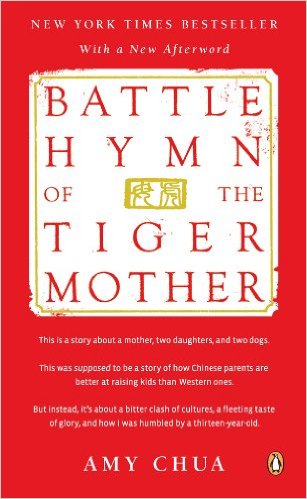
Two days ago, in a blog about Battle Hymn of the Tiger Mother, I suggested that writing a book about rearing her daughters caused author Amy Chua to change her mind about parenting. As a result of Chua’s writing process, her book takes off in one direction but lands in another.

Today I’m going to give you another example of the same principle: A true story about an Army sergeant who changed his thinking and behavior after being interviewed on the radio.

In December 2006, National Public Radio broadcast a lengthy report about the way some soldiers diagnosed with post-traumatic stress syndrome (PTSD) are mistreated.

Reporter David Zwerdling had asked retired Army sergeant Nathan Towsley how soldiers diagnosed with PTSD were treated in his unit. Towlsey freely admitted to harassing them: He had no sympathy for men who couldn’t handle the stress of combat. “I don’t like people who are weak-minded,” he said, adding that he’d never be caught going to a therapist.

Several weeks later, though, Towsley said that the interview had prompted him to start thinking more deeply about PTSD. Towsley decided that the syndrome is real, and – amazingly – decided to get counseling for himself. You can read and listen to the story here.

Be careful the next time you decide to talk or write about a belief or opinion you hold dear. In the process of trying to change your listeners, you may end up changing yourself.

Share

“Tiger Mom” Amy Chua Writes a Book

Yale professor Amy Chua, mother of two daughters, has written a book called Battle Hymn of the Tiger Mother to explain:

  • why American parents should adopt the practices Amy’s mother used
  • why American parents don’t really have to be that strict
  • why she’s glad she was unrelentingly strict with her own two high-performing daughters
  • why she has mixed feelings about what she did – and, BTW, she wasn’t always strict

Take your pick.

The book is garnering tons of publicity (and presumably tons of cash), and I’m not going to be the one to say it should have been revised before publication.

Except that I am going to say that. Amy Chua’s editor missed the boat on this one.

You can watch a video in which Amy Chua refutes criticisms that she was too harsh with her daughters.  Chua tells talk-show host Joy Behar that the book is a memoir, not a parenting treatise; Chua is recounting her mother’s childrearing practices, not her own; she didn’t really do all that stuff to her own daughters, and she doesn’t really believe in strict childrearing. The last third of the book, Chua says, is a reflection on what she did right and where she now thinks she went overboard.

“You should write another book” is Behar’s response.

Amen to that.

Let’s take a closer look at what Chua wrote and where I think she missed the boat.

Here’s an excerpt from Battle Hymn of the Tiger Mother:

Here are some things my daughters, Sophia and Louisa, were never allowed to do:

  • attend a sleepover
  • have a playdate
  • be in a school play
  • complain about not being in a school play
  • watch TV or play computer games
  • choose their own extracurricular activities
  • get any grade less than an A
  • not be the No. 1 student in every subject except gym and drama
  • play any instrument other than the piano or violin
  • not play the piano or violin

And here’s how she explains her philosophy:

Despite our squeamishness about cultural stereotypes, there are tons of studies out there showing marked and quantifiable differences between Chinese and Westerners when it comes to parenting. In one study of 50 Western American mothers and 48 Chinese immigrant mothers, almost 70% of the Western mothers said either that “stressing academic success is not good for children” or that “parents need to foster the idea that learning is fun.” By contrast, roughly 0% of the Chinese mothers felt the same way. Instead, the vast majority of the Chinese mothers said that they believe their children can be “the best” students, that “academic achievement reflects successful parenting,” and that if children did not excel at school then there was “a problem” and parents “were not doing their job.” Other studies indicate that compared to Western parents, Chinese parents spend approximately 10 times as long every day drilling academic activities with their children. By contrast, Western kids are more likely to participate in sports teams.

Chua told Behar that all of this was actually written “tongue-in-cheek,” that those prohibitions were her mother’s, not hers, and that she didn’t actually restrict her daughters this much.

Hmm. Does that long paragraph with the statistics sound “tongue-in-cheek” to you? Does that list or prohibitions (notice the “never”) have any qualifiers (“my mother’s rules, not mine”)?

Here’s what I think really happened when Chua was writing her book (and why I’m blogging about all of this today: It happens to all of us when we write or speak):

The words and ideas got away from her. Amy Chua started writing a book about what’s wrong with American parenting and what’s right with traditional Chinese practices. But as the words and ideas began to flow, her thinking started to change. And so the message at the end of the book turned out to be a total reverse of what she started out to say in the beginning.

Time to revise, Amy.

Take it as a maxim (and I’m talking to all of us, not just Amy Chua): Anything you write is going to fight you. You want to go in this direction, but the words take you there instead – to somewhere totally unexpected. It’s sort of like getting on a horse with a mind of its own. (Postmodernists have a lot to say about this process.)

And that’s why writing is both so difficult and so exciting: Once you start the process, you never know where you’ll end up.

Bottom line: Always leave enough time to revise what you’ve written. Don’t trust that first draft!

513dH3tBPGL._SX305_BO1,204,203,200_
Share

For I and My Gal: Avoiding Pronoun Errors

Yes, I’m exaggerating. But the pronoun errors I keep running into are almost as ridiculous as singing “For I and my gal” instead of “For me and my gal” in the famous song.

I just edited an article that referred to “dragging the chairs outside for he and Larry.” For he?

But I hear similar errors all the time, often from people with graduate degrees: “for she,” “to he,” “with she and he.”

Folks, it’s “for her,” “to him,” “with him and her.” Please.

And when the weather gets better, we’ll be “dragging the chairs outside for him and Larry.”

(For a review of pronoun rules, click here.)

Share

More about Emphasis

And there’s a bonus today: You’ll learn a cool way to use a colon.

Yesterday I noted that you can emphasize a fact or idea by putting it at the beginning of a sentence.

Today we’re going to look at another emphasis strategy: Put your fact or idea at the end of the sentence.

I just did it. In fact I’ve done it twice already (see also the first sentence).

This is a twofer because you’re also learning an easy to use a colon.

Here’s how to do it: Write a dramatic sentence. At the end, use a colon instead of a period. Finish with your dramatic ending.

The final gift stunned me: Two plane tickets to New York.

The vet had great news for us: Buffy’s tumor was benign.

Mr. Walker asked me if the report was finished: Oops.

You’ll notice that I use a capital letter after a colon. This one is a judgment call. Some authorities prefer a capital letter, while others like lower case.

Have fun with colons!

Today’s Quiz  ANSWER

The sentence is incorrect. This is a Comma Rule 3 sentence, and it needs two commas, not one.

Here’s the correct sentence:

I asked Jimmy, who had just returned from Afghanistan, to tell us about conditions there. CORRECT

Share

Emphasis

Today’s topic is emphasis. When you’re talking, you can use your voice, eyes, face, and hands to emphasize particular points. Writers do the same thing, but in different ways.

Here’s an example. A few months ago I edited a press release about a local mathematics team. The original press release started something like this (I’m making up the details):

The Central Florida Collegiate Mathematics Tournament was held on November 13 and 14 in Smithville. The Sabal Palm College Mathematics Team won first place and took home a trophy and a $500 prize.

Here’s how I revised it:

The Sabal College Mathematics Team won first prize in The Central Florida Collegiate Mathematics Tournament, held on November 13 and 14 in Smithville.

I made the story more emphatic by putting the most important information first in the story: Our team won first prize.

Sentences often contain multiple pieces of information. It’s a good idea to decide what you want to emphasize and put that first. Take a look at these examples:

Under the leadership of coach Joan Paine, the Sabal College Mathematics Team recently won first prize in The Central Florida Collegiate Mathematics Tournament. [emphasis on the coach]

In a challenging math tournament, the Sabal College Mathematics Team recently won a trophy and a $500 prize.  [emphasis on the tournament]

Sabal College is proudly displaying a beautiful trophy won by its mathematics team at a recent tournament. [emphasis on the college]

Coming soon: More ways to emphasize important facts and ideas.

Share

One or Two Spaces after a Period?

Which is correct: One or two spaces after a period?

I encountered this question for the first time one summer back in the 1960s when I took a high-school typing course. Those were the days: In addition to typing “the quick brown fox jumps over the lazy dogs” innumerable times, I learned about carbon paper, typewriter ribbons, Ko-Rec-Type (a coated strip used to correct errors) and…typing two spaces after a period.

Times have changed, folks. We no longer use carbon paper, typewriter ribbons, and Ko-Rec-Type, and we no longer space twice after a period. One space will do.

Typewriters, though wonderful, had limitations. One was a problem called monospacing. Typewriters were designed so that every letter occupied the same amount of space. The “two spaces after a period” practice helped make typewritten pages look more even and consistent.

Many of us think of computers as glorified typewriters, but that isn’t really true. Computers are typography machines, far more sophisticated than the typewriter I pounded on in high school.

Typographers work with letters of different sizes when they set type for publication. (Compare a capital M to a capital I.) Spacing twice after a period ruins the even and consistent look that typographers aim for.

Why is this such a big deal? Truth to tell, it isn’t always a problem. You can type emails with two spaces after each period, and many readers won’t notice. But if you’re typing for publication, or typing something that will be printed in another form (such as a brochure, bookmark, book, magazine article, booklet, newsletter…you get the idea), that extra space after each sentence will have to be removed. The person assigned to do that job is not going to be happy with you.

Every week I type two newspaper columns for my husband, and I often write for publication myself. It makes simple good sense to adopt the “one space after a period” rule for everything I write. No confusion. No problems. And no one has to clean up after me.

(You can read an excellent explanation about this “one space” rule by Farhad Manjoo, technology columnist for the online magazine Slate. For more information about formatting for publication, click here.)

Share

Apostrophes with Family Names

Apostrophes with family names often cause confusion. Luckily I can suggest a simple way to get these apostrophes right. Or a few simple ways.

They all work 100% of the time – take your pick. Just make sure you have an “of” idea: The house of the Parkers = the Parkers’ house. The terrier of the Parkers = the Parkers’ terrier.

Don’t use an apostrophe if there’s no “of” idea: The Parkers sent me a birthday card. No of!

  • My favorite way to place the apostrophe correctly is to simply spell the name. You wouldn’t say “the Parker,” would you? It’s “the Parkers.” The last letter is “s,” and the apostrophe always goes after the last letter. So it’s Parkers’ house (house of the Parkers).
  • Another way is to turn every apostrophe construction into an “of” idea. So let’s say you’ve written the Parkers new terrier, and you’re wondering where the heck the apostrophe goes. Make it an “of” idea: new terrier of the Parkers. Aha! Put the apostrophe after the last letter (the “s,” in this case): the Parkers’ new terrier.
  • There’s still another way, probably the most elegant of them all. Any family name with “the” in front is going to end in “s,” so that’s where the apostrophe will always go: the Browns’ terrier, the Smiths’ porch, the Johnsons’ SUV, the Rodriguezes’ party, the Chans’ flat-screen TV.
    It’s impossible to put “the” in front of a family name without putting an “s” at the end. Try it!
  • One more thing: Omit the apostrophe when there’s no “of” idea: The Browns bought a time share. The Smiths are on vacation. The Johnsons are having their house painted. The Rodriguezes have company. The Chans are moving.


(You can watch a PowerPoint about apostrophes by clicking here. )

Family Flickr Wikipedia ok

Share

It Occurred to Me

The Avon cosmetics company used to offer a cologne called Occur! I never tried it, so I don’t know if it had a pleasant fragrance. I can tell you, though, that the name was awful. (Not surprisingly, Avon no longer sells Occur! although you can still buy it through eBay.)

Occur is a weak word. I can’t imagine anyone putting an exclamation mark after occur. I would have called the fragrance Happen!

Well, no, I wouldn’t. What I really would have done was hire a consultant to come up with something better. Neither occur nor happen suggest that this cologne is the gateway to a romantic adventure.

Suggestion: Don’t use “occurred” when you’re writing about something dramatic or important.

Words carry not only denotations (dictionary meanings) and connotations (subtle shades of meaning) but feelings. I once had a friend who loved the word penultimate, which sounds like an emphatic form of ultimate. But that’s not the meaning. (Penultimate actually means “the next-to-the-last item in a list.” Isn’t language wonderful?)

I always get confused when I come across the word nonplussed. I either have to stop and look it up or sit there and try to remember what it means. (“Perplexed” or “confused,” in case you’re wondering too.) Why is that non there? I always figure that other people are as confused as I am, so it’s a word I never use.

Here’s my point: Choose words for their feelings as well as their meanings. If the meaning is right but the feeling is wrong, choose another word.

Share

Huckleberry Finn Revisited

Mark Twain’s Adventures of Huckleberry Finn is gradually disappearing from classrooms, largely because schools do not want to deal with the offensive “n” word that appears 219 times in the novel.

According to Publisher’s Weekly, a new edition minus the “n” word  is going to be published next month by NewSouth Books. The editor, noted Twain scholar  Alan Gribben, explained, “For a single word to form a barrier, it seems such an unnecessary state of affairs.” In the new edition, the “n” word will be replaced with “slave.”

Good idea or bad idea? I like to think of myself as a literary purist, and I’ve actually taught Huckleberry Finn several times, to classes that were a mixture of races, with no difficulty. And yet I think the new edition is a good idea.

Twain’s original book is complex, funny, profound, and controversial – when you get past the “n” word controversy. And that’s the problem: How do you get there? Discussion about Twain’s book too often comes down to a debate about that one offensive word. Everything else that happens to Huck and Jim gets lost.

But what about violating Twain’s text? English majors (me, for example) used to be encouraged to project their thinking back through time to read a book in its original context. If you were reading Hamlet, you tried to think like an Elizabethan. If you were reading Fitzgerald, you tried to put yourself back into the Roaring 20s.

To read The Adventures of Huckleberry Finn, you were supposed to travel back to the 19th century, when the “n” word didn’t carry the historical weight it has now.

Fast-forward to our postmodern era. Scholars today argue (and I agree) that this historical approach is wrong on two counts. First, we can’t really go back. For better or worse, our thinking is shaped by the times we live in. We’re kidding ourselves if we think we can reshape our brains at will.

Second, forcing ourselves to abandon our identities and current social context causes books to lose their relevance. Why, after all, do we continue to read classic books like Huck Finn? If they’re worth reading at all (and I think they are), it’s because there’s still something there for our 21st-century brains to grapple with.

I haven’t seen the new edition of Huck Finn, so I can’t predict how readers will be affected. I suspect, though, that we may be in for a surprise. Maybe the book has a far broader scope than we originally thought. Maybe racial issues are only one of Twain’s themes.

Maybe, in reinventing Twain’s masterpiece, we’ll discover something brand-new about the author, the characters, our shameful racial history, and – our greatest hope – ourselves.

Share