Happy Independence Day!

We’re going to celebrate July 4 with a post about independent clauses.

This jargonish term (sigh) is beloved of English teachers. We (well, not me!) prattle endlessly about independent and dependent clauses and never notice that most students don’t have the faintest idea what’s going on.

Here’s an experiment I’ve always wanted to try (but never had the guts to actually carry out): distribute strips of paper to an entire class and ask them to write an independent clause and a dependent clause.

My hunch is that most students couldn’t do it.

So: let’s get real. I always use the terms sentence and extra idea.

A sentence usually begins with a person, place, or thing. An extra idea…doesn’t.

(How hard is that?)

Jane paints.  SENTENCE

Jane paints exquisite pictures of gardens in Savannah.  SENTENCE

Paints exquisite pictures of gardens in Savannah.  EXTRA IDEA

Which include exquisite pictures of gardens in Savannah.  EXTRA IDEA

Although she paints exquisite pictures of gardens in Savannah.  EXTRA IDEA

What’s next? I would wager that you’ve already figured it out. If you have an extra idea, fix it. You can add a person-place-or-thing to the beginning, like this:

Paints exquisite pictures of gardens in Savannah.  EXTRA IDEA

Jane paints exquisite pictures of gardens in Savannah. CORRECT

Or you can add the extra idea to the beginning or end of a real sentence:

Although she paints exquisite pictures of gardens in Savannah, Jane is experimenting with abstract themes this year. CORRECT

Jane does beautiful paintings, which include exquisite pictures of gardens in Savannah. CORRECT

Start looking for examples of sentences and extra ideas in conversations, books, newspapers, and TV shows. Soon you’ll have the concepts down (they’re easy!). Once you’ve accomplished that, you can easily spot – and fix – most fragments and run-ons.

Happy Independence Day!

fireworks

Share

Watch Me Edit Three Sentences

Pick, pick, pick. I’m always going back over my sentences to make them just a tiny bit better. (At least I hope I’m making them better!) You could almost say I’m addicted to editing.

One of my unfulfilled yearnings for this blog has been to talk about what writers really do – the infinitesimal changes we make in our work – what we look for and how we think.

So why not just do that?

Two reasons. First, it’s hard to make editing sound interesting to readers. Second, many of those decisions happen in such a flash that I can’t grab them long enough to write about them.

But today something magical happened while I was reading a short story in the latest New Yorker. The story – called The Piano Teacher’s Pupil” –  was written by William Trevor. The New Yorker publishes the best fiction in the world, and its editing is absolutely world class.

Nevertheless, I came across not one but three sentences that cried out for editing. I was able to watch myself fix them – and now you can get an up-close-and-personal look at my editing process.

Maybe you’ll agree with my improvements – or maybe you’ll think the original sentences were fine before I started messing with them. No matter. Either way, you’ll be getting in touch with your own sense of what constitutes an effective sentence. That awareness is as valuable to a writer as a mechanic’s ability to diagnose a problem just by listening to what happens when you turn the ignition key in your car.

  1.  His dark hair, not cut too short, was in a fringe.
    I had so many problems with this sentence that I hardly know where to begin. “His dark hair was…” is too static for me. Another problem for me is that nothing in the story suggests that the pupil was badly cared for – so why say that his hair wasn’t too short? Another problem is that “was in a fringe” is a weak way to end a sentence. 
    My version: “He carelessly brushed back his fringed dark hair as he took his place on the piano bench.”
    I like my version better because it lets us see the boy doing something. (I made it up, by the way – the story doesn’t mention brushing back his hair or sitting down on the piano bench.) 
  2. Daffodils in vases were on the sofa table and on the corner shelf near the door.
    Another static sentence. Please, somebody – do something! The piano teacher could glance at the daffodils, or admire them, or ignore them. Or the daffodils themselves could do something, like filling a vase.
    My version: Daffodils filled a pair of tall, slender vases on the sofa table and on the corner shelf near the door.
  3. She would say nothing to the mother if the mother telephoned to ask how the boy was getting on.
    Why repeat “the mother”?
    My version: She would say nothing if the mother telephoned to ask how the boy was getting on.

daffodils

(Are you wondering if I did any “picking” at today’s post? The answer – I’m sighing – is yes. The Revisions feature on my software says I’ve done 20 sets of edits.)

Some questions for you:

  • What do you think of my rewrites?
  • Could you come up with something better (If your answer is “yes,” good for you!)
  • Do you ever read a sentence and itch to rewrite it?
  • Do you pick, pick, pick at your own sentences?

Just asking!

Share

The Importance of Variety

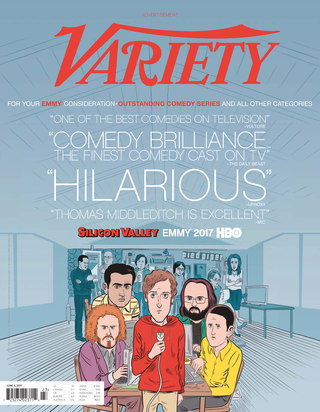
An old joke in the entertainment industry goes like this: “Variety is the spice of life –  and the bible of show business.” (I used to subscribe to Variety back when I was fascinated by Broadway shows.)

OK, it’s not hilarious…but it’s a good lead-in to what I want to talk about today: the need for variety in your writing.

I had my first encounter with this principle when I was still in elementary school. I loved to read (still do!), and I was happy to read just about anything. The Bobbsey Twins books were a great favorite.  I loved The Five Little Peppers and How They Grew. There was a wonderful series of biographies for children that was fun to read. I devoured the books about the Happy Hollisters and Honey Bunch. If it was a book, I loved it. (One of the few books I couldn’t get through was – oddly – Winnie the Pooh. I still have never read it.)

My favorite of all was the classic Heidi by Johanna Spyri. And so I was delighted one afternoon when I came across another book by Spyri: Cornelli. (It’s still in print, and you can also read it online free.) Of course I read Cornelli straight through with the speed of a lightning bolt.

Here’s a summary: A motherless little girl is living a very happy life under the care of a loving man. (In Cornelli’s case, it’s her widowed father.) But then everything changes, and she’s very unhappy.

If you read and loved Heidi as a child, you already know what I’m going to say: Cornelli is Heidi all over again. Spyri wrote the same book twice.

It was the first time I’d read a book with a critical eye. Maybe you could say that the door of childhood was beginning to close for me. I remember wondering if Spyri had experienced such a terrible loss in her childhood that she couldn’t think about anything else, ever.

Johanna Spyri was kind of a one-hit-wonder in children’s literature. Although she continued to write books for kids, none of them ever caught fire the way Heidi did. Perhaps the reason was that she got herself stuck on that one theme – a kind of Garden-of-Eden loss of wonder and beauty. (Of course I’ve never read any of her other books, so I don’t know if that’s true.)

It’s easy to slide into the habit of writing the same thing again and again in different ways. You don’t notice that you’re stuck in one idea, so you think every story (or blog post or article or whatever) is different. But it’s not.

Case in point: John Rosemond’s “Parenting with Love and Leadership” columns. Rosemond is a family psychologist who advocates a common-sense approach to parenting. He believes that parents today are too involved with their children’s lives. They need to back off and let kids grapple on their own with the everyday challenges of school, play, and family life.

That’s sound advice. (I know several wonderful parents who swear by Rosemond – they say he gives them courage.) But – damn it! – he writes the same column every blessed week.

Our local newspaper dropped Rosemond’s column several years ago (perhaps because he keeps saying the same thing over and over and over and over?). Last week I went online to see if I’d missed anything since his column disappeared from our paper. Nope. It’s like he didn’t even stop to take a breath.

Rosemond seems to be a smart and likable guy. I’m sure he’s wonderful with the families that he counsels, and he has a vast storehouse of experience and knowledge that he could bring to his column. I’m just as sure that Johanna Spyri had a treasury of wonderful childhood memories. The problem is with their writing: they both found one thing that worked – and worked well! – and they stayed there.

Don’t let that happen to your writing! Remember, variety is the spice of life and….

Share

All about Personal Essays

A recent New Yorker article announced that “The Personal Essay Boom Is Over.” Magazines aren’t publishing as many personal essays as they used to. Jia Tolentino – author of the piece – offered several reasons why. Many of the essays published during the boom were too personal. Sometimes the accounts were horrifically painful. And some topics were too big for the scope of a personal essay – a problem that Tolentino thinks became particularly troublesome during the last Presidential election.

I read Tolentino’s article with alarm – until I got to the end. I think personal essays are wonderful, and I wish more writers would experiment with them. They’re especially popular with the writing group I facilitate. In fact they’re some of the finest pieces I’ve read over the years that we’ve been meeting and critiquing one another’s work.

So I was relieved when Tolentino ended her article by saying that personal essays are “a valuable on-ramp” for writers – and that she enjoys “watching people try to figure out if they had something to say.” 

I read Tolentino’s article on the train to Savannah. (I had plenty of time to read and think during the eight-hour trip from Central Florida!) My brain kept circling back to a pair of personal essays I’d read in Woman’s Day long ago.  What was that all about? I finally decided that those essays hold an important clue to that “Do I have something to say?” question.

In 1971, Woman’s Day asked two readers to write about shopping for food for their families.  One woman spent lavishly, believing that mealtimes should be about pleasure. The other woman – wife of a minister – focused on economy.

Both women wrote about shopping, cooking, and the everyday issues that come up when you’re cooking for a family. Mrs. Extravagant had picky children and a fussy husband whose definition of “vegetable” was limited to potatoes and green beans. Mrs. Thrifty had three children who’d been taught to eat what was on their plates and a husband who valued economy as much as she did.

Sounds dull.

But what shone through those essays were the personalities and lifestyles of the two women and their families. There were quirks. Despite her “money-is-no-object” philosophy, Mrs. Extravagant had to buy margarine because her husband and children didn’t like butter. Mrs. Thrifty’s kids wanted to be like their friends, so she had to buy snacks for their school lunches.

Mrs. Extravagant wrote about following in the footsteps of her mother, who once wore out a stove because she enjoyed cooking so much. Mrs. Thrifty learned authentic Chinese cooking from her mother-in-law, who had lived in China when she was a missionary. Mrs. Extravagant served liver once a year when her husband was away on business. Mrs. Thrifty never served it (“I flunked,” she confessed.)

*  *  *  *  * 

During that long train ride, I thought about Charlie and me and our love of trains. OK, we’re not very interesting people. Still, you could have learned a lot about us if you’d sat in a nearby seat in that train car. We boarded the train with a framed picture we’d bought in Savannah (a picture of a bluegill that Charlie spotted in an antique store.) We kept checking the time to find out when the dining car opened for lunch. Charlie helped another passenger put her suitcase on the luggage rack.

We did a lot of reading. We did a lot of talking. After lunch we both took cups of coffee back to our seats. Charlie went online several times to look for updates about the Las Vegas hockey expansion draft. Neither of us did any texting, and we didn’t make a single phone call.

Nothing exciting there! But those details about this-is-who-we-are and this-is-how-we-live are the raw materials for personal essays.

*  *  *  *  * 

Now I want to go back to Jia Tolentino’s comment about “watching people try to figure out if they had something to say.” I think Mrs. Extravagant and Mrs. Thrifty are two women who figured it out. It’s not just that they spent a lot of time thinking about feeding their families. They were also able to dig into their values, habits, and challenges; organize them; and write them up in readable personal essays. Mrs. Extravagant sometimes had the voice and style of a stand-up comedian! I’d love to know what her life was like after she published in Woman’s Day. Mrs. Thrifty’s writing is less polished, but she seemed more honest and real.

What’s important to you? Do you ever watch yourself living your life? Do you enjoy digging into your values, habits, and challenges? You might find yourself writing a personal essay that readers will remember years later.

It sounds like an experiment worth trying.

Share

Savannah

Charlie and I are back in Savannah! We always ask for the same room in the same bed-and-breakfast. We always eat at Clary’s. We always take the Dolphin Magic boat ride. We’ve never lived here, but these trips to Savannah always feel like a homecoming.

Even the train rides here and back are fun. On one recent trip we decided to fly home rather than board a train at the ungodly hour of 6:40 AM. The trek through Atlanta Airport to our connecting flight turned out to be an ordeal, and we both decided that maybe getting up early wasn’t so bad after all. So on this trip we’ll be having breakfast on the train – maybe lunch too.

I find it odd that I – a big-city girl at heart – love this small Southern city so much. I can imagine myself living here, walking through Forsyth Park every morning, strolling down to the Riverfront to watch the container ships cruising back and forth, and then stopping at Leopold’s afterwards for ice cream. I wonder if the people who really do live in Savannah know how lucky they are.

* * * * * *

Writers need to be experts at switching identities. The mature me can look at Savannah with wise eyes and appreciate its history and charm – and my inner Peter Pan can have a wonderful time watching the container ships traveling back and forth along the Savannah River.

It was a delightful surprise to find out that my 84-year-old ballet teacher loves Savannah as much as I do. We were chatting and comparing notes, and I expected her to say something about Savannah’s beautiful parks and fascinating history.

“I like to watch the container ships,” was her comment. Seems she’s been able to keep in touch with her inner Peter Pan too. Good for her – and  good for us.

(Incidentally, she’s a terrific writer.)

Forsyth Park Savannah Georgia

Share

The Ultimatum

The older I get, the more amazed I am by everything that’s packed into our language. Let me amend that…packed into every language.

Great writers and thinkers can take a familiar word – one you and I have seen many times – and help us uncover meanings and implications we’ve never seen before. Playwright Bernard Shaw was a master at this. So was theologian Paul Tillich (I’m thinking of what he did with words like “grace,” “salvation,” and “sin.”)

Today I want to talk about a recent Washington Post advice column by Carolyn Hax that started me thinking about one of those familiar words. A woman wrote in because she was getting tired of waiting for a marriage proposal. Her beloved was a married man, they’d been together a long time, and he’d made many promises and declarations of love – but he was still legally married. The letter writer said she was thinking about giving him an ultimatum.

Here’s what Hax told her: “Ultimatums are a lousy decision-making strategy because they shift responsibility for your choices onto someone else. ‘If you [act], then I [react].'” She told the woman to take an honest look at the relationship and make a decision on her own: keep waiting, or leave.

I started thinking about a time when I too was thinking about delivering an ultimatum. It was long ago when I was committed heart-and-soul to an organization that didn’t seem to care much about me and my feelings.

I debated for a long time about laying down an either-or choice – “Fix this stuff, or I’m quitting” – and finally decided on a different route. I resigned. If they really wanted me to stay (as they’d assured me several times), the next move was up to them.

What happened next was…nothing.

It was a hard decision for me because I had a bright future with the group, despite the problems. Today, with the benefit of hindsight, I’m glad I took that step, and I also know that the person causing most of the problems was an alcoholic.

Back to ultimatums. It would have made a huge difference if I’d had Carolyn Hax standing by my shoulder to tell me that ultimatums always mean giving the final decision to the other person. I wasn’t thinking that clearly, and all I had to guide me was my gut.

* * * * * * * * * *

Our love of writing gives people like you and me an extraordinary opportunity to share our knowledge and experience with others. The trick – of course – is to get their attention. The more I read Carolyn Hax, the more dissatisfied I am with conventional advice columnists. Halfway through most letters I can predict what they’re going to say.

With Carolyn Hax, however, I almost never know what direction she’s going to take. If you can bring that same freshness to your own writing, you’re going to build your own loyal readership. Can you take a familiar word – airplane, Christmas, love, cat, breakfast – and bring it to life in a way your readers aren’t expecting?

Not easy to do – but a goal worth striving for!

             Ultimatum!

Share

The Debate about the Exclamation Point

I often hear questions about the exclamation point. I always respond that it’s an informal punctuation mark that rarely finds its way into formal writing. Professional writers reserve exclamation marks for two uses: dialogue and less formal writing situations (like this blog!).

My friend Margaret Swanson just sent me a wonderful article arguing for a more liberal attitude towards the exclamation mark. The article comes from a quality source – The Fresh Air radio show on NPR. You can read it here: https://n.pr/2s1b8lR. Geoff Nunberg is an excellent writer who makes a convincing case.

Here’s what struck me, however: He employed the exclamation point only once in his article! So he’s transmitting a mixed message.

Still, it’s worth reading and pondering. (If you’re thinking that I deliberately inserted two exclamation marks into today’s blog…you’re right! Make that three of them.)

Share

How to Add Value – and Sales – to Your Book

This post is for anyone who’s well on the way to completing a book. Here’s a book marketing strategy you should consider: Adding an extra feature at the end of your book to attract more buyers.

One possibility is to insert a Discussion Guide for book clubs. These are informal groups that get together once a month or so to discuss a book they’ve all chosen to read. Book clubs are everywhere (I belong to one myself, and the library in my town sponsors not one but two of them.)

You may have heard of a book called Divine Secrets of the Ya-Ya Sisterhood by Rebecca Wells. When it was first published, sales were slow – nobody expected it to become a bestseller. But then book clubs began talking about it, and soon Rebecca Wells was on her way to fame and a series of successful novels.

Another terrific strategy for book marketing is to create a Study Guide for schools, churches, clubs, and similar groups. Teachers and program directors are always looking for materials to use with their members. Wouldn’t it be wonderful if your book caught on with them? 

First – of course – you have to figure out how to create your Discussion or Study Guide. Suggestion: go to your library – or to a bookstore – to see what other authors have done. (You might be surprised how often I thumb through a book or article similar to what I’m writing to see how another author solved a problem.)

And there are other possibilities. When I wrote my police report book, I supplemented it with a free instructor’s manual and free videos. Those are wonderful marketing tools. My book What Your English Teacher Didn’t Tell You also has free supplementary videos. They’re fun to make, and each video ends with a short plug for my book.

Even if you’re lucky enough to have a commercial publisher, you’re going to need to do much of the marketing yourself. When you think about it, that’s a good thing. Who knows your book better than you do? No one!

Share

Templates – Yes or No?

For some writers, templates are hugely important. (Many teachers fall into this category.) Other writers feel stifled and confined when they’re confronted with a template. Who’s right?

That’s the wrong question.

What should you think about when you’re planning a writing task? (You do plan, right? Many writers don’t, alas). You should be thinking about the steps that will take your readers where you want them to go.

Many times a template is the answer, but it shouldn’t be your default. The “where you want them to go” principle should be paramount, and I have story that might clarify the point.

A friend of mine used to volunteer with the teen program at her church. One day she and the youth minister took the kids to a district youth event. To her chagrin, during the closing religious service they behaved badly, with giggling and horseplay. So she was surprised when the youth minister skipped the lecture when the kids boarded the bus to ride home.

Later, when she asked him why, he said the teens weren’t the real problem. The mistake was the way the event had been planned: A day of workshops and activities, followed by dinner, followed by the service.

“Dinner is social and relaxed,” he explained, “signifying that the serious stuff is over. The teens powered down – and then we asked them to make a quick transition into prayer and reflection. Not good planning.”

So how do you make a plan for a youth event – or a writing task? The usual approach is to list all the content you want to cover, and then arrange it so that it makes sense.

A smarter approach is to visualize your audience as you make your plan or design your template. So: if you’re planning a daylong youth event, begin by visualizing teenagers tumbling out of a bus. How are you going to engage them? When is the optimum time for lunch? Dinner? How are can you help them shift from one activity to the next?

Once you’ve made your plan, carried it out, and seen that it works, there’s nothing wrong with saving it to use again. Voila: a template!

But you also should be careful not to fall into the trap of thinking that every youth event has to be run the same way.

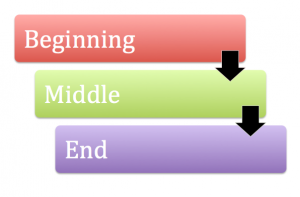
Similarly, many writing tasks – whether you’re writing a college essay or a business report – follow a standard format: beginning, middle, end. Attention-getter, thesis, development, wrap-up.

You know the drill (though you may not be following it as well as you think – I was still struggling in graduate school). But knowing how to follow a standard plan doesn’t mean you have to stick closely to it every time. Always think about your readers and your topic, and be willing to alter your plan if necessary.

Some suggestions:

  • State your point reasonably early, but it doesn’t have to be right away if you want to provide some background first
  • Tell stories – lots of them
  • Challenge conventional thinking
  • Avoid telling readers what they already know
  • Develop a toolbox of strategies for developing your ideas in the middle portion of your piece
  • Consider using the modes of development to help you make your point: process, definition, comparison, contrast, cause, effect, and so on
  • Know how – and when – to wrap up your piece so that readers don’t drift away before you’re finished

And always – ALWAYS – make sure you’re connecting with your readers.

(For more information about planning a writing task, take a look Getting Started and The Planning Step – free videos I’ve posted at www.PlanMyPaper.com.)
Share

Start a Blog!

Last month I urged you to make it easy for readers to find you online. Don’t procrastinate just because you haven’t published a book yet. You need to start building an audience before your book goes on sale.

One of the best ways to reach potential readers is through a blog. There are many advantages:

  • Google will send readers your way – free of charge
  • You’ll get a lot of writing practice
  • You’ll get useful feedback from readers
  • You may be able to repurpose some of your posts as a book
  • You can make useful connections with other writers
  • You can make money

I’ve used my own blogs to do everything on this list.

So how do you get started? I just came across a website that offers excellent instructions – free! – for setting up a blog. Go to www.makeawebsitehub.com and click the Start a Blog link.

The big question – of course – is what to blog about. If you’re writing a nonfiction book, the answer is easy: blog about your topic. I use a blog about police reports to publicize – what else! – a book I’ve written about police reports. Where do I get content? I’ve set up a free Google Alert that sends me a daily email with links to recent articles about police reports. I also look for newspaper and TV news items that might interest the cops who read my blog.

But what if you write fiction? There are still numerous possibilities for a blog. One approach is to blog about the theme of your novel. If it’s an espionage novel, you could blog about espionage news stories. The same principle applies to family life, a foreign country, a historical period, or a topic like bullying, higher education, Hollywood…you get the idea.

Or you could use your blog to brand yourself (something you should be doing anyway!). You can write posts about your everyday life, your interests, and your reactions to current happenings in the news and popular culture.

Here’s an example of what you might do (with the help of a little imagination!). My friend Coach Sokolove from Field Training Associates just sent me a link to an article about the unfolding James Comey story. (Comey is the former FBI chief who testified before Congress this week.) Although this is a political story, Beth Skwarecki turned it into a how-to article about becoming a better writer.

Tips for Bloggers

  • keep your posts short (a rule I regularly break, alas!)
  • post a picture with every post (making sure you’re not violating copyright)
  • make sure your typeface is large enough for easy reading (I use Georgia 12)
  • keep paragraphs short
  • avoid stating polarizing opinions about politics and religion that might turn off potential readers
  • keep your posts fresh – avoid telling readers what they already know
  • post often
  • use the preview feature for proofreading (it’s saved me from zillions of errors)
  • respond warmly to readers who post comments on your blog

Making Money

Your primary goal will be to sell books. But an active blog may also help you land consulting jobs (it’s happened to me) and make connections to other professionals who may turn out to be terrific resources. (Cherish those people! They’re solid gold.)

Many bloggers make money by posting ads on their websites. If you don’t want to clutter your blog with ads and pop-ups, there’s another way – and it’s easy and free: You can become an Amazon Associate. Every time someone clicks a link on your blog and makes a purchase, you’ll earn a small payment. Over time they add up!


Share