Don’t Hedge Your Bets!

Today’s topic is powerful writing. How do we get there? Here’s one piece of advice I’ve heard many times: “Strive for precision, and powerful writing will happen.” Who could disagree?

I could.

Take a look at this sentence: The ambulance rushed to the scene of the accident.

Ambulances don’t rush! It would be more accurate to write, “The ambulance was quickly driven to the scene of the accident.” But the revised sentence doesn’t have the energy and power of the earlier version.

So – what should you go for? Power – or accuracy?

Powerful writing should always be the goal – but that common-sense principle can get overlooked in writing courses. (I’m afraid that was sometimes true of the classes I taught myself.)

Students are routinely taught to soften their opinions  – for good reason. How can fourteen-year-olds formulate a workable set of guidelines for dealing with – say – the opioid crisis in the US? Every time a kid states an opinion, a teacher is going to jump on their case: “Johnny, that’s sometimes true.” “Susan, it’s rather important.” “Billy, it’s fairly common.” [My friend Darrell Turner makes an important point that I wish I’d included in the original version of this post: qualifiers like “some” and “many” are important when you’re talking about Christians, Muslims, or any group of people.]

The hedging habit results in student writing that’s filled with hedging: “I would argue….” “In my view….” “It appears that…”

Eventually those kids grow up, graduate, and get jobs where they spend hours churning out weak writing. The rest of us wring our hands and moan that kids today are unteachable and nobody knows how to write anymore.

I used to teach developmental students – kids who failed the placement exam and supposedly couldn’t write a sentence and were hopeless. After a lot of trial and error, I worked up a unit that was a lot of fun and produced some interesting papers. We studied the Lizzie Borden axe murders. (I’ve actually spent a night in Lizzie Borden’s bedroom. I am not making this up.)

Students did a lot of library research, so that they knew as much about the murders as I did. And then I showed them a short – and hokey – news report about alleged new discoveries about the murders. Their job was to respond to the news report.

You never saw such writing! Students had something to say. They wrote confidently. They created sentences that linked ideas and evidence.

All their lives they’d been talking with power and conviction. (“I’ll tell you the real reason Kathy broke up with Bob. It started a month ago when….”) But nobody had ever challenged them to write that way.

What does this have to do with you and me? A lot. The hedging habit is ingrained in all of us. (You’d be surprised at all the cautious qualifiers that creep into my own writing. I slash away at them – but the moment I turn my back, they creep in again. Sigh.)

We need to remind ourselves that writing begins – and ends – with having something to say. It’s about power and energy. Everything else is secondary.

I hope you’ll forgive me if I make a dance analogy. I take two adult ballet classes every week. It’s easy for a bunch of older women to sink into a hopeless I-can’t-dance funk. But then our teacher will remind us that we’re performers – and suddenly the room vibrates with energy. I sometimes steal a glance at the women standing in the line with me – and I see magic: glowing faces and arms and legs and bodies dancing.

If you – like me – tend to plod along in your writing, stop! Forget about grammar jargon and the teacher who used to scribble comments all over your papers. What do you have to say that’s exciting? Say it. Be clear and strong. When you see a hedge word, strike it out. Have fun! Empower yourself! Language is wonderful. You are wonderful. (If you didn’t believe that, why would anyone want to read what you have to say?)


Share

Jean Comes Up for Air

Earlier this month I decided to start writing a new book about Bernard Shaw. It is at last underway (I’ve drafted the first chapter). So here’s the second installment in the exciting adventure of What’s It’s Like to Write a Book – for real.

I’m joking about “exciting adventure,” of course. It’s a lot of hard work – but maybe I’m not entirely joking. It is immensely satisfying – joyful even – to watch the ideas take shape and start flying around my head.

My writing process violates the rules you find in how-to-write books. You’re supposed to push on without stopping to fix a sentence. Nope. I sweat over every sentence – at least in a heavy project like this one. Making the ideas flow is hard work. (“Absolute murder” is the phrase that just came into my head.)

Sometimes the transition from one paragraph to the next depends on a particular word. If I’ve already used that word in a paragraph – something that happens a lot – I have to go back and change everything.

Sometimes the word I want already showed up in one of the quotations from Shaw. Drat you, Shaw – stealing my best stuff.

Those paragraph transitions are the hardest part of writing. Years ago, when I was writing my doctoral dissertation about Shaw, my advisor kept pointing out my “weak paragraph transitions” (words that still ring in my head). I am still battling them.

Another problem (does anyone else struggle like this?) is that after a while the ideas get stalled. I’ve learned that (for me, anyway) 100% of the time the problem is that I didn’t have a strong enough point to begin with. That means I have to go back to the beginning and look for something better. @#$(%! As I said, that’s true 100% of the time.

(What’s also true is that I always say “This time it’s going to be different!” and stubbornly stick with it – until I’m forced to admit that I’ve hit a dead end. Some people never learn.)

Two more thoughts:

  • My best ideas come when I’m walking or driving. When I get stuck, I go for a walk. I don’t like to work on a book when I’m driving – I’d rather just relax and let my brain babble. But because I spend so much time driving to dance lessons, I’m trying to use that time productively.
  • I reread everything I write about a zillion times. Every time I sat down to work on Chapter 1, I went back to the beginning and read what I had already written. Invariably I found several things to improve.

On to Chapter 2! I came up with a tidy plan (ok – I thought it was brilliant) that fell apart when I got to second page…which means I don’t have a strong enough idea for that chapter. Rats. But fun. Exciting. Sort of like exploring a new country!

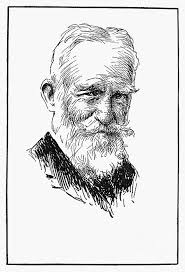
Bernard Shaw


Share

A Narrative about Overcoming Fear

“Use Language to Overcome Fear” is an 11-minute TED talk by my friend Mark Gai. It’s worth listening to for two reasons.

First, it’s inspiring. Second, he makes two important points that I keep harping on: language creates our reality, and stories (“narratives” is the term writing instructors use) are a great way to get a point across. Well worth watching!  https://youtu.be/ioWTafYtfoU

One of the best pieces of advice I ever heard came from an inspiring teacher I had in high school: “Collect stories,” he said. “They have a million uses.” He was right. Mark’s talk demonstrates how powerful a good narrative can be.

A name sticker with a message about courage

Share

The Oxford Comma: For and Against

Controversy has always surrounded the Oxford comma. The term refers to the optional comma you can insert just before the last item in a list: candy, cookies, and ice cream.

Notice I said optional.  There are misinformed people who will try to convince you that the Oxford comma is evil – and others who insist it’s the only correct way to punctuate a list. Both groups are wrong.

If you’re writing for yourself, you can use the Oxford comma or omit it. Your choice. If you’re writing professionally, you may be required to use it – or to omit it. (Professional writers check a style manual before they submit something they’ve written.)

My husband writes two newspaper columns every week. Because his newspaper prefers AP style, he never uses the Oxford comma. I write books for publication, so I have to use the Oxford comma.

Many companies and organizations have a policy about the Oxford comma. For example, The New Yorker always uses it.

And now things get interesting. I receive a newsy email from The New Yorker every day.  Last week I found this link in one of those daily emails:

Lucy Dacus, the man who invented the power chord, and the wise jazz of Fred Hersch  

I’m sure you were as startled as I was when I read it. Lucy Dacus sounds like a woman’s name – but the link suggests that she’s a man.

What it’s trying to tell you, of course, is that the link takes you to information about three people: Lucy Dacus, Link Wray (the man who invented the power chord), and Fred Hersch. But the Oxford comma makes “the man who invented the power chord” sound like an appositive describing Lucy Dacus.

People who hate the Oxford comma (and there are many of them!) love to use examples like this link to show how stupid and bad and awful the Oxford comma is.

I like the Oxford comma, and I almost always use it. So…why would someone who’s proud of her writing (like me) use a punctuation mark that can cause such confusion and awkwardness?

The answer is that I employ some common sense when I’m writing. If the Oxford comma makes a sentence confusing, I take it out – or I find another way to write the sentence.

If I’d been writing that email link for The New Yorker, for example, I would have just listed the three names:

Lucy Dacus, Link Wray, and Fred Hersch  BETTER

I could also have revised the list to include information about each person. This version is too jumbled for my taste (I like parallelism). But it’s better than the is-Lucy-a-woman-or-a-man version you saw earlier:

Singer-Songwriter Lucy Dacus, Link Wray (Inventor of the Power Chord), and Wise Jazz Musician Fred Hersch

Clarity and readability should always be your first goal. Many times – while typing for my husband – I’ve wished that the AP would forget about its stubborn rules once in a while to allow an extra comma for clarity.

In the same way, I sometimes delete an Oxford comma if I think it’s creating a problem. Good writing should always matter more than adherence to a rule.

                                Link Wray

Share

Why Does It Have to Be a “But”?


I just read an absolutely marvelous article: “Things I Learned in Therapy That I Still Use Every Day.”

Although the topic is anxiety, the author – Tom Vellner – offers practical suggestions that can help anyone manage the stresses and strains of everyday life.

Since this is a blog about writing, I’m going to change directions and talk about two writing ideas I found in Vellner’s article.

1.  You don’t need fancy words and elaborate sentences to impress your readers. I ran two paragraphs from Vellner’s article through a readability calculator. The average score was ninth grade.

And Vellner’s article is fun to read. Sentences are lively and natural:

If your mental health would benefit from saying no, say no. 

Moral of the story: Don’t believe everything you think.

2.  There’s no jargon.

3. The article makes an interesting observation about but. Vellner was telling his therapist that he had mixed feelings about moving in with his boyfriend:

I said something to her along the lines of: “I’m so glad I moved in with him, but I really miss having my own space, so, like, what gives? I thought this is what I wanted.” She asked me, “Why does it have to be a ‘but’?”

I don’t think she was issuing an injunction against but – it’s a useful word that I use all the time. What interests me is the hidden meaning she uncovered: but often implies a judgment or regret. Get rid of but, and you might be able to get rid of the judgment or regret as well.

My father was a loving man, but he had a drinking problem.

My father was a loving man, and he had a drinking problem.

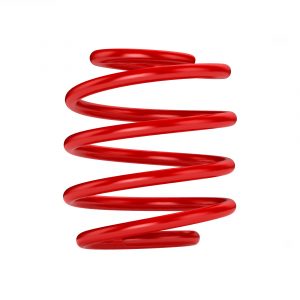
As the postmoderns keep reminding us, words aren’t inert transmitters of meaning. They carry their own complexity, like a coiled spring that’s hidden from view.

I hope you’ll read Vellner’s article!


Share

Hopefully….

I just discovered something amazing that I’d done several years ago. (Don’t worry: I’m not bragging!)

I was revising a 2010 post from my blog about police reports. See if you notice anything about this paragraph:

Let’s use an everyday example that might make the rule more clear. You can’t be the worst child in your family unless your parents had at least three children. If there are only two children, you’re the worse child. (Or, hopefully, the better one!) Best, worst, most, and so on require three or more people or things.

OK, here it is. “Or, hopefully, the better one” is a controversial way to use hopefully, which is supposed to mean “in a hopeful manner.”

Here’s the correct way to use hopefully:

Margaret looked hopefully at the door.  CORRECT

For some reason I’m proud of that not-quite-kosher “hopefully” sentence on my blog. (It’s still there, by the way – I liked it, and I’m not taking it down.)

Let me explain. I am hyper-aware of language. I know the rules. I automatically run everything I say and write through the usage-checking software in my brain. Of course I’m casual about language much of the time – but I always know what I’m doing.

Or that’s what I thought.

But now I have evidence that I didn’t notice I was using hopefully in a not-so-accepted way – and on a professional blog. Geez. I didn’t think I had it in me.

I’m going to start wearing a cap that says “I’m a human being!”

(By the way, I’m not alone in this. Mary Norris – author of the wonderful Confessions of a Comma Queen – does not approve of the singular they. But she used it herself in the same book where she denounces it: “Nobody wanted to think they were not essential.” Hey, Mary – you’re human too!)


Share

A Long Sentence!

I often warn writers against writing lengthy and tangled sentences. My friend Ellen Holder recently sent me an email with some perceptive comments about a long sentence she’d just read. I thought her analysis was wonderful, and she gave me permission to reprint it here. (Thank you, Ellen!)

From Ellen:

I’ve noticed some writers often use long, meandering sentences. One I just read is 99 words long, filling the whole paragraph. What is the reasoning behind such a long, rambling sentence? I can take thoughts in manageable bites, but one long, continuous stream of thought is hard to swallow.

Here is the sentence:

As I lie in my four-poster mahogany bed with the giant canopy, the one I made love to my husband in for decades, I raise myself onto my elbows and study his features across the room as the moonbeams stream through the crack in the curtains, pouring into the open, snoring mouth, revealing the secret that the teeth seen in the daylight are only another ruse, that time has taken yet another one of my husband’s rights; the confinement to the hospital bed is not the only indignity.

I guess it’s good for me to read other authors and study their writing styles, but I do get exasperated with a book where the enjoyment of reading is lessened by such quirky, rambling writing.

And maybe it makes me feel superior, because I think I could write it better. Not the whole book, but I do truly think that sentence could be greatly improved with a few periods.

Something in me thinks I have to keep reading until I get to a period, but that is the purpose of punctuation, isn’t it?

Back to Jean: Yes, Ellen – that’s the purpose of punctuation. And yes, I know you could write it better! (Thanks for sharing your thoughts!)

Share

Writing a Book


I am – heaven help me – writing a book about Shaw. I finally caved in and decided it was easier to start writing than to put up with visits from the ghost of Shaw at all hours of the night.

Today I’m going to talk about what it’s like to tackle a project like this one. Of course every writer has different issues! What I’m hoping is that you’ll get a glimpse of the quirks that authors have to deal with – and you’ll be patient and forgiving with your own odd habits.

One unexpected difficulty has been deciding how much my Interior Writer can reasonably demand from me. It’s hard to describe what this means, but it is a very real problem.

I’m going to make an analogy with dancing. I am a serious (that’s an understatement!) ballroom dancer. I go to dance classes and show up for lessons even when I’m broke, I’m tired, don’t feel like it, don’t have time, or come up with some other excuse. There are exceptions, but not many.

My Interior Dancer is a hard taskmaster, but there’s one thing about my dancing life that I really appreciate: the requirements are predictable. When I get home and put away my dance togs, I’m done (until the next class or lesson rolls around).

But how do I convince Interior Writer that I really am trying hard, and I’ve done enough for the day, and can I please stretch out on the bed and read a novel? Later, when the book is well underway, Interior Writer will decide that everything is under control, and she’ll leave me alone. But so far she has been relentless and annoying.

Problem number two is that Interior Writer doesn’t think I can write a book about Shaw. It doesn’t matter that I’ve already written one book about Shaw, and it was a success.

So when I sit down to write – heck, before I sit down to write – there’s this unpleasant chatter in my head about how stupid I am, my ideas aren’t going to work, I don’t know what I’m talking about, I’m a lousy writer…you get the idea.

I have a secret theory that Interior Writer is like a hypercritical parent or coach who keeps yelling at you in order to make you try harder and do better. I wish I could convince her that I don’t need that kind of help – thank you very much – and I’d appreciate it if she’d find someone else to annoy. But I haven’t had any luck with that so far.

Hey! Do you want to write a book? It’s fun!


Share

The Tenement Museum

Last spring I attended a college reunion in New York (I’m not saying which one!). It was amazing to discover that the connections from my college years were still there, as strong as ever.

One of many delights was discovering that a friend and I shared the same bucket-list item: we want to visit every museum in New York.

One place I’ve crossed off my list (but not really, because I’ll be going back) is the Tenement Museum on the Lower East Side. I’m interested in the history of New York, and I was excited about learning what tenement living was really like. (My grandparents probably lived in a tenement when they first came to the US.)

Avid readers will already have guessed another reason why I was so eager to visit a tenement: I loved (and still do) Sydney Taylor’s All-Of-a-Kind-Family books for children.

So I spent an afternoon visiting two apartments at the museum, watching a film, and talking with other members of the tour group. It was one of the best museum visits I can remember, and I immediately signed up for the museum’s newsletter.

It was through the newsletter that I learned something surprising. The Tenement Museum is not – as I had assumed – a NY history museum. It’s an immigration museum – and there was a huge controversy when it was first proposed because New York was already talking about starting another immigration museum: Ellis Island. (Yes, I’ve been there too.)

After I read an account of the dispute between the Tenement Museum supporters and the Ellis Island supporters, I thought about my own visits to both places. And I remembered that Ellis Island had displays both about the immigration process there and the broader history of American immigration.

The Tenement Museum docent (who was wonderful!) encouraged us to share stories about family members and friends who had immigrated to the United States. More recent exhibits tell the stories of Holocaust survivors, Puerto Rican migrants, and Chinese immigrants who lived in the building over the years.

The postmoderns were right: a name is much more than a label. Names create expectations, set limits, open up possibilities, and define experiences.  If that building at 27 Orchard Street had been called “The Lower East Side Museum,” it would have a different focus and mission, and it would be evolving in a different way.

I, for one, am glad it was designated an immigration museum. I only wish that my grandparents were still here and could pay a visit with me.

Share

A Slippery Sentence

What do you think of this sentence?

We were planning a shopping trip when Aunt Mary arrived.

It’s perfectly grammatical – but there’s a problem: It could have two meanings.

  • We planned our shopping trip around Aunt Mary’s arrival.
  • Aunt Mary’s arrival interrupted our shopping plans.

Language (as the postmoderns keep reminding us) is a slippery business. It’s always a good idea to ask someone else to read anything important you’ve written. An English degree isn’t required! We all use language all the time, and that means we all have expertise.

In the writing group I facilitate, I always recommend taking feedback seriously. If even one person sees an alternate meaning – or has trouble processing what you’ve written – consider revising what you’ve written. 


Share