Robert Caro

Robert Caro is one of our greatest nonfiction writers. For many years he’s been working on a multi-volume biography of Lyndon B. Johnson.

Below is a sentence from Caro’s account of the assassination of President John F. Kennedy. Lyndon Johnson (Kennedy’s vice-president) immediately became the US President. It’s a dramatic story, climaxing when Johnson took the oath of office on Air Force One, the official Presidential airplane.

It’s great writing, but that’s not why I’m posting it here. There’s something else that excited me: two words that I don’t think any other writer would have bothered with.

Can you figure out what they are? 

Taking his wife, Lady Bird, by the arm to bring her along, Lyndon
Johnson walked over to the fence and started to follow the Kennedys, but
the faces remained turned, and the arms remained stretched, toward the
Kennedys, even after they had passed, and Johnson quickly moved back to
the gray convertible that had been rented for him.

Here are the two words that excited me: Lady Bird. (I don’t mind if you think I’m nuts!)

Almost anybody interested in reading Caro’s book would already know the name of Johnson’s wife. She was an amazing woman who was in the news all the time.

But Caro is an exceptional writer. You can almost hear his thoughts clicking: Lyndon died in 1973. Lady Bird died in 2007. Some readers today might not know who they were! Caro didn’t want anyone to be confused – not even for a second.

There’s a reason I’m so excited about this. (In case you’re wondering, I lived through the Kennedy and Johnson years. Yes, I knew her name was Lady Bird!)

The New Yorker (where this chapter was published) is my favorite magazine.  But its writers have the annoying habit of mentioning a name and repeating it later – with no clue about who “Greg” or “Sam Smith” was. A brother? Childhood friend? Politician?

 I can’t count the number of times I’ve had to backtrack to figure out who’s being talked about.

Great writers think about their readers, making tiny changes that most people wouldn’t even notice. The goal? Creating a pleasurable experience for their future readers.

Do you edit your work with your audience in mind? Do you look for opportunities to make reading easier for them?

[Source: “The Day L.B. J. Took Charge” by Robert A. Caro from The New Yorker, April 2, 2012. https://www.newyorker.com/magazine/2012/04/02/the-transition?utm_source=onsite-share&utm_medium=email&utm_campaign=onsite-share&utm_brand=the-new-yorker]

Robert A. Caro

Robert Caro

Share

All about Copyright and Creative Commons

Because I’m a Shaw scholar, 2020 was an important year for me. Shaw’s writings went out of copyright. I saved some money! I’ll explain how in a moment.

Sixty years after an author’s death, copyright protections expire. That means you can do anything with them. If you want to stage Shaw’s play Pygmalion as – say – a vampire story – go for it! It’s perfectly legal.

You should also know that anything published before 1923 is copyright free. 

Here’s a sampling of writers and artists who have works that are out of copyright: William Faulkner, Louis Armstrong, Igor Stravinsky, Diane Arbus, Dorothy Parker, and A.A. Milne (author of the Winnie-the-Pooh books).

Let’s use Milne as an example. You can publish – and sell – the Winnie-the-Pooh books. You can turn them into cartoons and movies – anything you want. But be careful! The illustrator, E. H. Shepard, died in 1976. His Winnie the Pooh drawings are still copyrighted. You can’t use them without permission – and paying a fee.

If this sounds like a lot of legalese, it’s not. Last year I published a book about Bernard Shaw (Language and Metadrama in Major Barbara and Pygmalion: Shavian Sisters). In the past, I had to pay a fee to get permission to quote from his writings. But now everything is available to anyone to use, free.

And there’s more. Below is a painting I wanted to use in my book. Normally I’d have to pay a permissions fee to use it. (The Metropolitan Museum of Art owns the rights.)

Pygmalion and Galatea by Jean-Léon Gérôme

Pygmalion and Galatea by Jean-Léon                    Gérôme courtesy of KGBO

But it’s out of copyright – hallelujah! It went into my book – in color – at no charge.

And there’s something else important going on. The Metropolitan (and many museums, galleries, and artists around the world) is supporting a movement to make art more widely available to the public. It’s called Creative Commons.

Notice, though, that the Creative Commons movement has rules. Many artists and photographers have generously made some of their works available at no charge. But you may be required to credit them. Always check the instructions (“license”) to see what the requirements are.

How do you find Creative Commons (often called CC) pictures? I use two strategies. One is looking up a subject in Wikipedia. Almost every picture they use has a CC license.

I also use Google frequently. Type your subject into the Google search box. Click Images. Click Tools. Click Creative Commons License, and free pictures will show up.

But beware. Copyrighted ads often show up. Don’t use those pictures! And carefully check the picture you want to use to make sure it has a CC License. Always look for the license requirements and follow them scrupulously. 

Creative Comments License

Image courtesy of Peter Leth, CC License

Share

Two Sentences to Think About

If you’ve been reading my blog for a while, you know that I think formal grammar is a waste of time.

There’s a widespread belief that if you know grammar well, you’ll be able to solve every writing problem. I think that’s wrong, and I have an example for you today.

Take a look at these two sentences:

1.  We need to inventory the bikes, scooters, and wagons stored in the annex.

2.  We need to inventory the bikes, the scooters, and the wagons stored in the annex.

In #1, you know that everything – bikes, scooters, and wagons – is stored in the annex. But in #2 maybe only the wagons are stored in the annex – there’s no way to know.

I often hear from writers who are looking for an easy trick that will unravel a sentence problem. “If I move the comma, will that fix it?”

Usually my answer is sorryno. Most of the time you’ll need to rewrite the sentence. Here’s my version of today’s sentence:

We need to inventory the bikes and scooters in the showroom and the wagons stored in the annex.  BETTER

A child's red wagon

Share

Roy Peter Clark Writing Tools

Roy Peter Clark has made a list of 50 Writing Tools that’s worth reading. If you’re serious about writing, you can learn a lot by reading (and pondering) one or two of his tools every day. Here’s the link: https://drive.google.com/file/d/1JaNiIY3FL4rjVGhbwn3K_jQpHRM6DYWe/view?usp=sharing

I have two reasons for liking Clark’s tools so much. First, he knows what he’s talking about. Second, his crisp, concise style challenges you to think about what he’s telling you. You have to figure it out yourself – and that’s one of the best ways to learn about writing.

A cup of coffee with a message "Unlock your confidence"

Share

Make It about YOU

I wish I could remember who gave me this wonderful advice about writing: “Aim to write something that no one else could write.”

What does that mean? My friend Karen White (a superb writer) explains it this way: “If it’s already on the internet, don’t write it.”

Everything you write needs a perspective or experience that’s unique to you. That doesn’t always require I or me. It does require adding something that another writer might not have thought about.

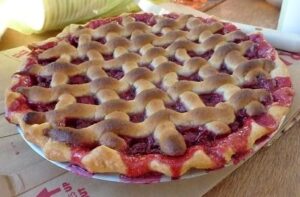
A cherry pie

Suppose you’re telling your readers how to bake a cherry pie. There are recipes all over the internet! Why would anyone be interested in your recipe?

The answer is that you know a trick that makes your pie better. Maybe you can make foolproof pie crust, for example.

Perhaps you can tell a story about discovering the magic ingredient or extra step yourself – baking with your grandmother when you were growing up, for example. (Stories are solid gold for writers!)

Picture courtesy of Ann Larie Valentine (CC License)

Share

Strain on My Brain!

Many ambitious writers believe that if you can just get the @##$%! grammar right, you’re going to be an effective writer. Sadly, that’s not true. Here’s a perfectly grammatical sentence from the Business Daily Review that – nevertheless – has a problem:

Abortion clinics and a doctor have launched a challenge at the Florida Supreme Court after an appeals court Wednesday rejected a temporary injunction that would have blocked a new law preventing abortions after 15 weeks of pregnancy.

First, it’s too long. More seriously, readers (at least the ones with a brain like mine) have to struggle to figure out what the sentence means.

I’m going to be folksy here and call this sentence a triple negative. A preventive measure was blocked, rejected, and challenged. Each step reversed the previous step. It’s like a shell game.

Be kind to your readers! Tell the story one step at a time.

Abortion clinics and a doctor have launched a Florida Supreme Court challenge. Florida has a new law preventing abortions after 15 weeks of pregnancy. That law started a chain reaction: a temporary injunction blocked the law and reinstated the right to abortion. But then an appeals court reimposed the 15-week limit. On Wednesday the Supreme Court accepted a challenge from an abortion clinic and a doctor who want to make no-limits abortions legal again.

Whew. (Incidentally, the Florida Supreme Court did reinstate the 15-week limit.)

Writing isn’t a contest to see who can cram the most information into a sentence. The goal is to communicate with your readers. The best writers are the ones who work hard to make things easy for their readers.

Share

The Meanings of Words

If you’re looking for ways to improve your language skills, you might enjoy this article: https://www.mentalfloss.com/article/505154/25-words-don%E2%80%99t-mean-what-you-think-they-do.

It’s a clear and engaging discussion of some words that have tricky meanings: luxurious/luxuriant and loath/loathe, for example. 

But be warned! There are some traps here. Right off the bat, the author notes that literally is often used to mean figuratively: “I literally laughed my head off.” Umm…no, you didn’t. Your head is still nicely attached to your neck and shoulders.

That literally/figuratively confusion is often used as a sad example of the deterioration of English nowadays. I’ve also heard people from the UK complain that it’s yet another example of American disrespect for English.

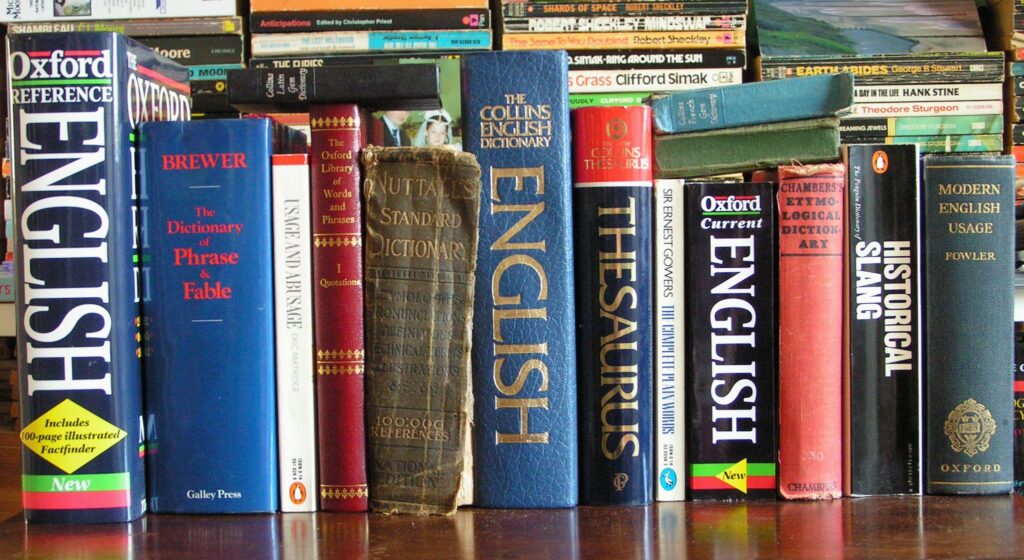
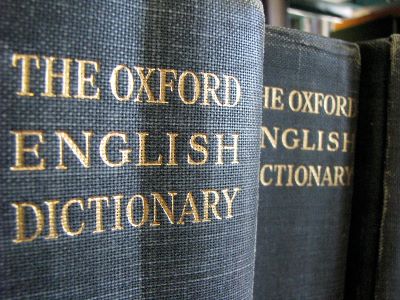
To settle the issue, I headed for the Oxford English Dictionary, which traces the history of English words over the centuries. And what I discovered is that literally was first used to mean figuratively back in 1769 – in an English novel, not an American one.

Words change over time. I’ve stopped yapping about the widespread misuse of disinterested, for example. It’s supposed to mean “impartial”: you don’t have an interest, or an investment, in a proposal or program.

But today it’s often used to mean “bored,” and I’ve stopped worrying about it. We haven’t really lost anything: you can always use impartial, as I just did.

I recommend a healthy dose of common sense as you go through this Mental Floss word list. Some words have always been so confusing that they should never be used.

Nonplussed is a prime example: “I was surprised” (or “taken aback”) will do nicely. (That confusion is nothing new, by the way – I remember struggling with nonplussed back in the 1970s.)

The reverse principle is also true. If you know the difference between – say – luxuriant and luxurious, you’ll impress people like me who still care about those words.

I’m one of those dinosaurs who still reserve enormous for negative sentences (“enormous damage”). Enormity continues to have a negative meaning, but the expiration date on that definition is looming.

Have fun with these words!

Oxford English Dictionary

                                       Photo courtesy of Emdot

Share

The Oxford Comma

What’s an Oxford comma? It’s the comma before and in a list. In the sentence below, there’s an Oxford comma after tea:

We served coffee, tea, and cake to our guests.

Students are sometimes told that God (or Moses, or someone) made a rule that the Oxford comma is wrong. (That happens to journalism students all the time.)

No, it isn’t. The Oxford comma is a choice.

That comma is wrong if you’re writing for a newspaper or magazine. (If omitting that comma messes up the sentence, you put it back in.)

Here are some rules:

  • If you’re a journalist, you omit it.
  • If you’re an academic, you use it.
  • If someone’s paying you to write, you ask them their policy about that comma, and you follow it.
  • If that comma (or the lack of it) causes a problem with a sentence, you fix it.
  • If you’re writing on your own, you make your own decision.
  • What you never (ever!) do is argue about it.

Share

The Man with the Broken Jaw

Here – courtesy of my friend Jenna – is an example of an indefinite pronoun reference.

The good news is that you don’t have to bother with the grammar gobbledygook. All you need to know is that he, she, and it are some of the trickiest words in the English language. (Strange but true!)

In today’s example, there are two men. Which one is having the surgery?

Here’s how I would fix the problem: The man is accused of breaking a State Trooper’s jaw, which will require surgery.

Take extra care with he, she, and it. Make sure your sentence is clear about who’s who. (And if you want to show off by talking about an “indefinite pronoun reference,” I’m not going to stop you!)

A fist that's hitting

Share