Category Archives: Writing Process

Don’t Let Them Confuse You!

I thought I’d heard all of the urban legends and other mistaken ideas about English. But I was wrong! Here’s a new one to watch for.

More and more people are insisting that everyday English is imprecise. If you want to be understood, you need to use formal English. Wrong!

There are two problems here. First, English is an amazingly powerful language. You can have razor-sharp precision in a sentence even with simple English:

All three judges voted for Sarah’s essay.
This morning the sun came up at 7:17.
I’m going to vote by mail again this year.

The second problem is that formal English is hard to pin down. Obviously the Gettysburg Address is formal English. But Lincoln didn’t have to use expressions like “four score and seven years ago” to be precisely understood. “Eighty-seven years” isn’t as poetic, but it conveys the same information.

Here’s another example: “In anticipation of heavy turnout, the election committee scheduled three extra days for early voting.” That’s pretty formal writing!

But this version is just as precise: “The election committee expects heavy turnout. They scheduled three extra days for early voting.” It’s not quite as formal, but all the information is the same.

Bottom line: don’t believe everything you’re told about English – and don’t be afraid to write plainly and naturally.

A confused smiley face

Share

Ten Writing Secrets You Didn’t Hear about In School

I’ve been using these writing secrets for years! Try them yourself. 

  1. Be careful with the word being. It’s a useful word — but it can gum up a sentence. “Because” is a much better choice than “being that,” for example.
  2. You can start sentences with and, but, and because. There’s never been a rule against it. Abraham Lincoln did it in the Gettysburg Address. Shakespeare did it.
    Every English-language book in your bookcase has sentences starting with butand, and because.
  3. Don’t be afraid of the singular they; “If someone needs a ticket, they can get one at the office.” The singular they dates back to 1375. Chaucer, Caxton, and Shakespeare used it; so did Jane Austen (75 times in Pride and Prejudice).
    We all use the singular they all the time. (If you’re nervous about it, read this from NPR: https://n.pr/1PXdiGW)
  4. Professional writers often end their paragraphs with a climax (“That was my favorite birthday gift”) or a closure sentence that repeats the point of the paragraph. (“I still think about that gift.”)
    Don’t overdo it, but it’s a great way to add polish to your writing.
  5. Never use “last but not least.” The pros use a climax phrase (such as best of all, most important, most seriously) to introduce their final supporting idea.
  6. Don’t use quotation marks for emphasis (He was my “favorite” teacher). The pros don’t do it, and you shouldn’t either.
  7. Don’t underline, ever. Add emphasis with italics or bold formatting.
  8. Always choose the simplest word. Nobody is impressed if you say, “The fluid supply in my writing implement is exhausted” when what you mean is “My pen is out of ink.”
    Impress people with your critical thinking and your knowledge, not fancy words.
  9. Delete words that don’t add anything useful to a sentence. “Their respective specialties” means exactly the same thing as “their specialties.”
    You wouldn’t put up with a lazy employee, and you shouldn’t tolerate lazy words.
  10. Don’t waste your time learning formal grammar. You learned most of the grammar you’ll ever need before you entered first grade. (Doubt me? If you didn’t know grammar, how could you have read this post?)

A file cabinet with a folder of secrets

Share

E. Jean Carroll in Court

The big news story this week was the jury verdict against former President Donald J. Trump. E. Jean Carroll sued Trump for defamation  – and won a five-million-dollar settlement. The case goes back to 2019, when Carroll claimed that Trump had raped her in a New York City department store.

What does all of this have to do with writing? Apparently very little – until you read a New York Times article about the clothes that Carroll wore in the courtroom. Journalist Vanessa Friedman makes the point that Carroll carefully chose outfits that sent a message about who she was: a serious person who doesn’t seek attention for its own sake.

Here’s how Friedman explains it:

Like all victims of sexual assault who take their cases to trial, her body was at the heart of the case. What she put on that body, how she presented it, mattered.

Words – like clothing – don’t just send a message: they are a message. Jumbled words point to a jumbled brain – even if you’re a genius who was experiencing a momentary lapse. Careless editing points to a careless person – even if you were in a time crunch for good reasons.

I know all about lapses. I make plenty of mistakes in my own writing, and I don’t always catch them. Nobody’s perfect. But I strive mightily to showcase my own competence and professionalism, for a very good reason. I know I have the power to control the message my words are sending.  That message matters – and I choose to wield that power every time I sit down to write.

Photo of E. Jean Carroll

Picture of E. Jean Carroll courtesy of Julieannesmo
Share

The @#$%&! Word “Had”

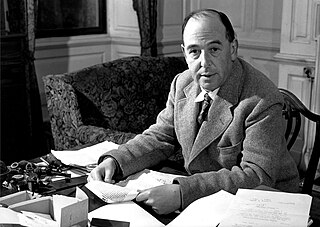
Although I never met British writer C.S. Lewis (1898-1963), he was one of my most important teachers. I’ve read just about everything he published, and the lessons I learned have stayed with me.

So I was pleased to read a New York Times article by Sarah Hart, a mathematician who admires Lewis as much as I do. But one sentence in her article troubled me:

I went off to Oxford to study mathematics, very happy to be living one street away from the pub where my childhood literary heroes C.S. Lewis and J.R.R. Tolkien had met each week to discuss their work.

More accurately, one word bothered me: had. I struggle with had the way some writers struggle with commas. I put had in, and then I take it out, and then I try it again…a huge waste of time. Usually the “take it out” impulse wins.

You might be wondering why I don’t just look up the rule for had and be done with it. The answer, unfortunately, is that I’ve done that – in fact I’ve taught the “had” rule many times. Sometimes it doesn’t help.

You’re supposed to use had any time you’re writing about two different times in the past. “I did the laundry after I had eaten breakfast.” Easy enough, and I use that rule often. But sometimes had  seems unnecessary. It would be more natural to write, “I did the laundry after I ate breakfast.”

I’m pleased to report that some editors agree with me. If an event obviously happened earlier in the past, you can omit that pesky had.

So there!

Photo  of C.S. Lewis courtesy of Aronsyne (CC License)

Share

An Interesting Sentence!

Today we’re going to look at a sentence that seemed simple to me – until I started an online conversation about it. Ray Lewis is an English teacher who saw something I didn’t!

Share

Words in Transition

Language is always changing! Rules come and go, and words acquire new meanings. No amount of hand-wringing will stop this process. We have to adjust our language practices as time passes.

Here are five words that are in flux right now. If you use them in your writing, be cautious. If you use the original meaning, readers might be confused. Make sure the meaning is absolutely clear. (I never use nonplussed, for example: too many people are confused about what it means.)

Notoriety is the wrong kind of fame. It doesn’t mean “famous”!

After his plagiarism was discovered, the notoriety cost him his job.  CORRECT

Unique means “one of a kind.” It doesn’t mean special or unusual.  My fingerprints (and yours!) are unique, but there’s nothing special or unusual about them.

Jackie designs and sew her own clothes because she wants a unique look.  CORRECT

Enormity means “a hideously bad action.” It has nothing to do with size.

That enormity deserves a long prison sentence.  CORRECT

Verbal means “having to do with words.” It can refer to both speech and writing.

Our students practice writing and talking because the school emphasizes verbal skills.  CORRECT

Nonplussed means “unsure” or “caught off guard.” 

When Mr. Brown asked me about the missing cash box, I was nonplussed.  CORRECT

A pocket watch showing the passage of time

                                      Words change as time goes by

Share

Revise, Revise, Revise – and Revise Again

Here’s a famous quotation from Blaise Pascal’s Provincial Letters: “I have made this letter longer than usual because I lack the time to make it short.”

That probably sounds as odd to you as it did to me when I first read it. Why would writing less take longer than writing more?

The answer can be found in that magical (or painful, depending on how you look at it!) word revising.

For most people (certainly for me), first drafts tend to be long, loose, and rambling. Unwanted ideas creep in. There are detours and side trips.

Blaise Pascal (a famous French mathematician and philosopher) knew that good writing = rewriting. And it’s here that the distinction between poor writers and the real pros becomes apparent.

Unskilled writers tend to stop with that awkward, error-ridden first draft. Professional writers, on the other hand, keep plugging away until they’ve come up with something they can be proud of.

How full is your wastebasket? Poor writers have an empty wastebasket; good writers discard so many drafts that the wastebasket quickly starts to overflow.

If you use a computer, how many times did you hit that delete key? If the letters on your keyboard are starting to wear off from overuse, that’s a sign that you’re a serious writer.

(Maybe you’re wondering how many times I revised the post you’re reading right now. One lovely feature of WordPress – the posting system I use – is that it keeps track of my revisions. The total number today is 21.)

office wastebasket full of discarded paper

Share

Jean Comes Up for Air

Earlier this month I decided to start writing a new book about Bernard Shaw. It is at last underway (I’ve drafted the first chapter). So here’s the second installment in the exciting adventure of What’s It’s Like to Write a Book – for real.

I’m joking about “exciting adventure,” of course. It’s a lot of hard work – but maybe I’m not entirely joking. It is immensely satisfying – joyful even – to watch the ideas take shape and start flying around my head.

My writing process violates the rules you find in how-to-write books. You’re supposed to push on without stopping to fix a sentence. Nope. I sweat over every sentence – at least in a heavy project like this one. Making the ideas flow is hard work. (“Absolute murder” is the phrase that just came into my head.)

Sometimes the transition from one paragraph to the next depends on a particular word. If I’ve already used that word in a paragraph – something that happens a lot – I have to go back and change everything.

Sometimes the word I want already showed up in one of the quotations from Shaw. Drat you, Shaw – stealing my best stuff.

Those paragraph transitions are the hardest part of writing. Years ago, when I was writing my doctoral dissertation about Shaw, my advisor kept pointing out my “weak paragraph transitions” (words that still ring in my head). I am still battling them.

Another problem (does anyone else struggle like this?) is that after a while the ideas get stalled. I’ve learned that (for me, anyway) 100% of the time the problem is that I didn’t have a strong enough point to begin with. That means I have to go back to the beginning and look for something better. @#$(%! As I said, that’s true 100% of the time.

(What’s also true is that I always say “This time it’s going to be different!” and stubbornly stick with it – until I’m forced to admit that I’ve hit a dead end. Some people never learn.)

Two more thoughts:

  • My best ideas come when I’m walking or driving. When I get stuck, I go for a walk. I don’t like to work on a book when I’m driving – I’d rather just relax and let my brain babble. But because I spend so much time driving to dance lessons, I’m trying to use that time productively.
  • I reread everything I write about a zillion times. Every time I sat down to work on Chapter 1, I went back to the beginning and read what I had already written. Invariably I found several things to improve.

On to Chapter 2! I came up with a tidy plan (ok – I thought it was brilliant) that fell apart when I got to second page…which means I don’t have a strong enough idea for that chapter. Rats. But fun. Exciting. Sort of like exploring a new country!

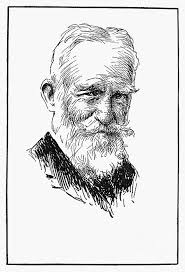
Bernard Shaw


Share

The Procrastination Problem

_________________________________________________________________________________________

If you’re a writer (or aspire to be one), procrastination is probably an issue for you.

Delete that “probably.” Writers are procrastinators! There’s nothing like a deadline, a blank sheet of paper, or an empty computer screen to stiffen your fingers and freeze your brain.

Today I’m going to offer you some unconventional advice about overcoming procrastination: Forget about willpower, and find a way to turn writing (or whatever intimidating goal is looming) into fun.

* * * * * *

When I was in college, I decided I wanted to learn some Welsh. (If you’re thinking “Richard Burton,” you’re right!) I traveled to Wales twice to study conversational Welsh, and I spent a summer at Harvard studying early Welsh poetry.

But as time went by, other interests came along (Shaw! ballroom dancing!), and I set Welsh aside. I still like to sing the Welsh hymns and folksongs I learned long ago (Wales is a supremely musical nation), but that’s about it.

There’s always been this nagging thought that I’d love to start studying Welsh again – but my life is already a tidal wave of goals and projects. No time.

And then something amazing happened. By lucky accident, I heard about Duolingo – a free app that teaches foreign languages, including WELSH. Seconds later I had signed up.

The lessons are short, easy, and so much fun that I can’t wait to get started every morning. (Here’s my favorite sentence from the course: “Dych chi’n gwisgo trowsus?” “Are you wearing trousers?”) And…big surprise…long-forgotten words and grammar have started bubbling up once again.

* * * * * *

Back to procrastination. If you want to overcome your inertia about writing, find a way to make it something you want to do. Stop thinking about shoulds, resolutions, and willpower. Close those doors and start looking for a new approach.

In my next post, I’m going to suggest a new door for you to try.

the Welsh flag

                                The Welsh Flag

Share

Hidden Figures

Here’s an important question for anyone who wants to be a writer: What strategies do you use to impress your readers?

Far too many writers come up with the wrong answer: “Big words and complicated sentences.” If you use that strategy, many of your readers are going to have a hard time reading what you’ve written. They may even give up after a few minutes.

Here’s the correct answer: Impress readers with your insights, experiences, and knowledge. Break through the cliches and limited thinking we’re exposed to again and again. Surprise your readers – broaden their thinking – take them somewhere they didn’t expect to go. 

I found myself thinking about all of this two weeks ago when I saw the movie Hidden Figures. (It’s terrific. Go!)

Hidden Figures is the true story of three gifted African-American women who made a huge contribution to the success of the American space program – but experienced discrimination because of their race. One of these women – Katherine G. Johnson – was a brilliant mathematician and the only person who could solve a problem that threatened the success of an important space mission.

Her mathematical genius first showed up when she started first grade. Back then, educational opportunities for African-American girls in the Deep South were limited. Katherine had an opportunity to attend a school that taught advanced mathematics. Her parents had to decide whether to keep her in the local school or enroll her in the alternative school.

In other words: Choose a normal childhood for her – or set her on a path that would make her different.

They chose the school – and Katherine went on to save a space mission.

Here’s what’s interesting. Before Hidden Figures started rolling, I saw a preview of another recent movie called Gifted. A seven-year-old girl, Mary, is a mathematical prodigy. Her family has an opportunity to enroll her in a school for the gifted. A fierce battle ensues. Grandma wants custody of Mary so that her granddaughter’s genius can be nurtured. Mary’s guardian, Frank, wants her to have a normal childhood. Mary’s dead mother, he says, “wanted Mary to be a kid. She wanted her to have friends and be happy.”

That’s an example of either-or thinking. You can be gifted, or you can be happy.  (Another name for this fallacy is “false choice.”)

Good writers need to be able to recognize this kind of cliched thinking (you can have friends, or you can be a genius) and break through it. Wouldn’t it be interesting to watch a movie about a little girl who’s a math prodigy – and still has friends and fun?

Come to think of it, one of my all-time favorite movies is Searching for Bobby Fisher,  a true story about a little boy who’s a chess genius. (Yes, he has friends and fun.)

When you watch Hidden Figures, you’re struck by how much the three NASA women are enjoying life, despite their hard work and the indignities they experience because of their skin color. They giggle, dance, and fall in love. Prodigies are still human, folks.

If you’re a person who longs to write, you need to focus your energies on having something interesting to say. Make it a habit to spend time every day thinking, observing, asking questions, and growing.

I wonder how many people in the audience at Hidden Figures caught the irony that afternoon. If Katherine G. Johnson’s parents had bought into the “I want her to have friends and be happy” fallacy, John Glenn might not have gone into space.

What are you writing about? Are your ideas fresh and stimulating? Do you ruthlessly delete ideas that seem tired or familiar? If the answer is “no,” you have work to do!
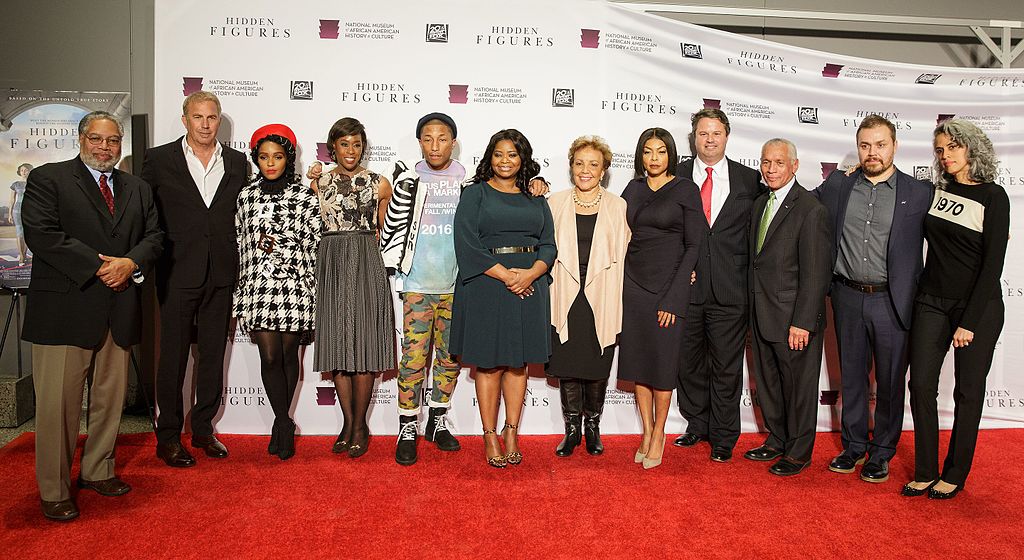
                     The Cast of “Hidden Figures”
 

Share