Sometimes we Americans are blamed for two annoying nonstandard English usages. One is ain’t, and the second is using literally to mean “figuratively”:
I ain’t got nothing left to say.
Joe literally laughed his head off.
Today’s post has two purposes. One is to correct the historical record. The second is to tell you about a resource you can use to research these questions yourself: the Oxford English Dictionary.
Let’s start with ain’t, a nonstandard word that could cause you to be passed over for a job or a promotion. Please don’t use it in a business setting!
But its history might surprise you. Ain’t was standard English from around 1600 to 1800. It used to be so respectable that it appeared in letters written by Jonathan Swift, Lord Byron, Henry Fielding, and George Eliot.
Literally was first used in the sense of figuratively in a British novel published in 1769: it’s hardly an example of twenty-first century decay.
The Oxford English Dictionary is a famous historical dictionary that traces the appearance and development of our English lexicon. When you look up a word (such as ain’t), you’ll get both the definition and the year it first appeared in print.
If the meaning changes over time, you’ll get the year that new definition first appeared. Quotations and sources are included to show how the word is used.
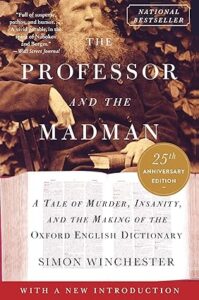
If you’re an avid reader, I guarantee that you’ll enjoy Simon Winchester’s book The Professor and the Madman, which tells the story of how The Oxford English Dictionary was compiled.
Or you might want to watch the 2019 film, starring Mel Gibson and Sean Penn. (Whichever one you choose, prepare to be shocked! There’s a raw and painful story mixed in with the intellectual content.)